
A new chapter in the history of three iconic Italian design brands—which have made lighting a cornerstone of their work and their collaborations with leading Italian and international architects and designers—began during Milan Design Week 2026: Venini, Nemo Lighting, and FontanaArte unveiled their new flagship stores in the Lombard capital, three projects well worth exploring.
At the heart of this evolution lies the strength of the Nemo Group, led by Federico Palazzari, which today unites the legacies of Nemo Lighting, FontanaArte, Reggiani, and ILTI Luce under a single dynamic vision, operating through a global network active in eighty countries. At the same time, Venini, under the leadership of the Damiani family, is strengthening the historic bond between Venice and Milan, thanks to which the expertise of Murano’s artisans has merged with a distinctly Milanese design culture. The common trend is the creation of hybrid spaces: elegant showrooms that combine spaces dedicated to design with stylish elements evocative of the history of the brands. In this context, the legacy of the great masters of the 20th century – from Gio Ponti and Carlo Scarpa to Le Corbusier and Charlotte Perriand –resonates with the visions of contemporary designers, reaffirming Milan’s central role as the beating heart of luxury and innovation.
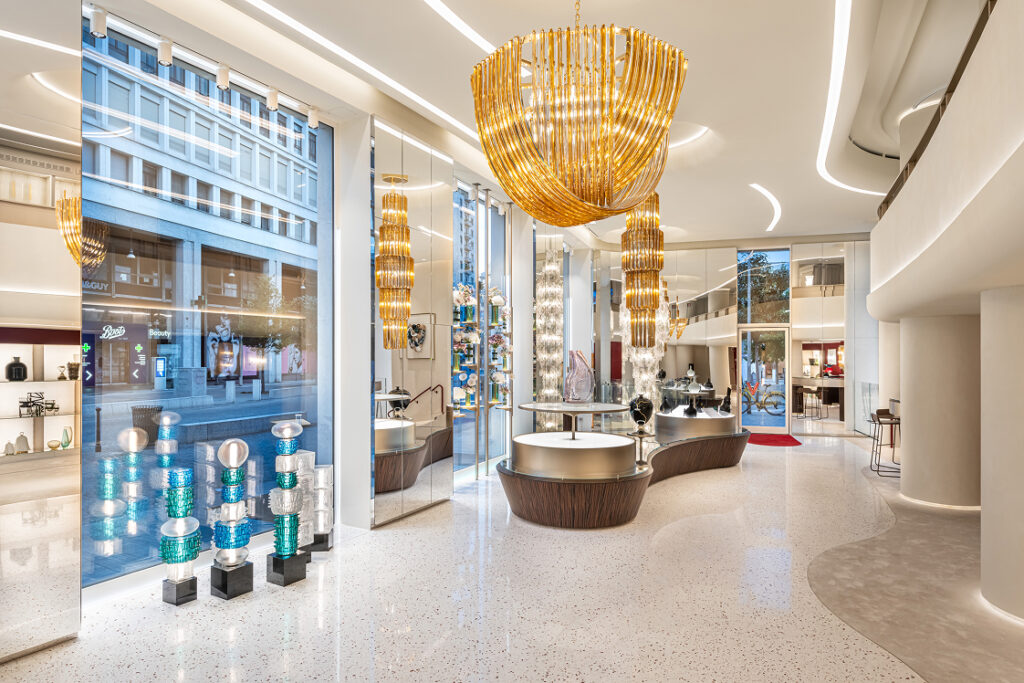
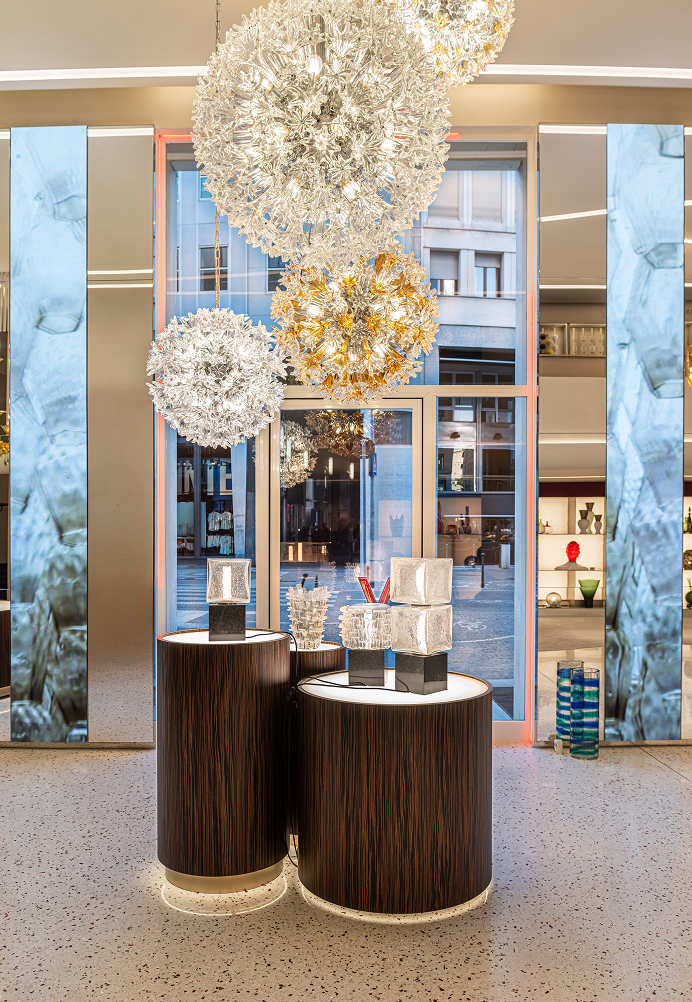
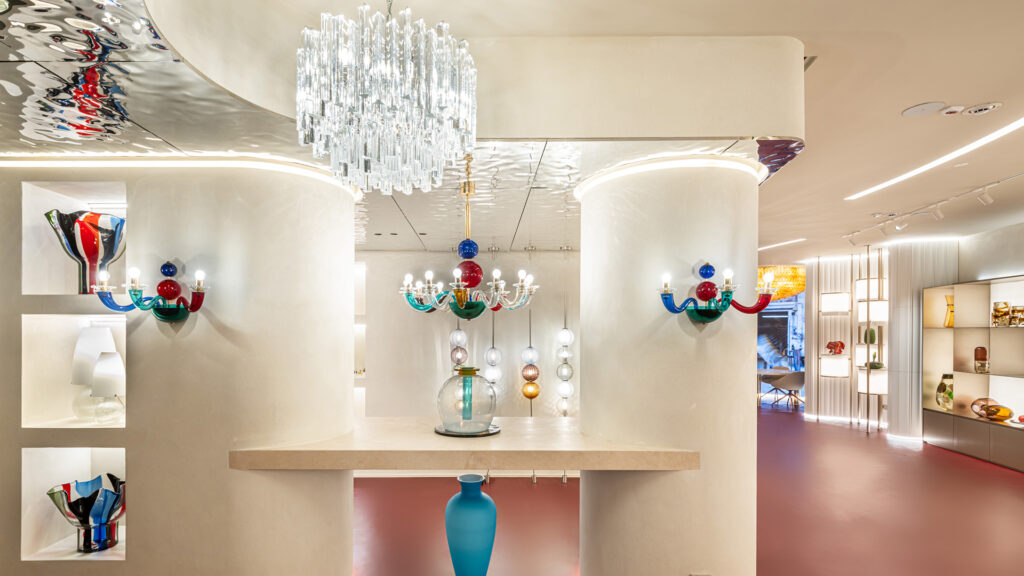
A dialogue spanning more than a century connects Venice and Milan: Venini’s first Milanese store was opened in 1923 by its founder, Paolo Venini. The new flagship store is located at Via Durini 27, one of the most strategic thoroughfares in the city center’s design district. The space, spanning over 500 square meters across three levels, was designed to showcase the brand’s two core identities: Art Glass and Art Light. The interior architecture features soft, enveloping lines that evoke the fluidity of blown glass, with a refined material palette that includes Venetian terrazzo floors, ebony and champagne travertine finishes, where Rosso Venini visually defines the space.
Connecting the floors is an installation over three meters tall, comprising a monumental version of Carlo Scarpa’s famous Poliedri, while the -1 level houses a tribute to Gio Ponti with a reissue of his Vetrate Grosse in cotisso. A key element is the atelier on the mezzanine level, a materials library housing samples of glass, colors, modules, and metallic finishes, dedicated to professionals for the development of new projects.
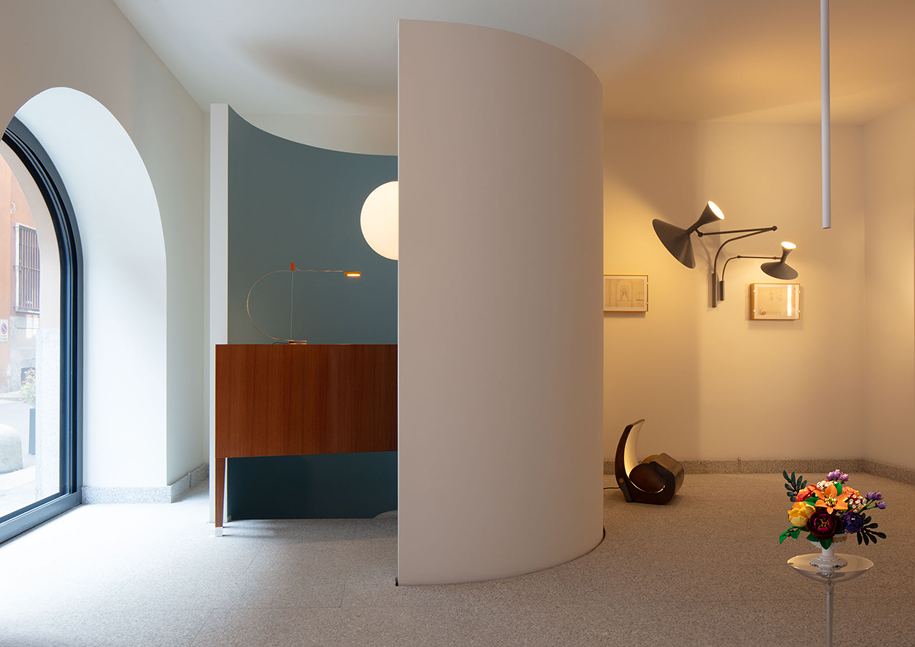
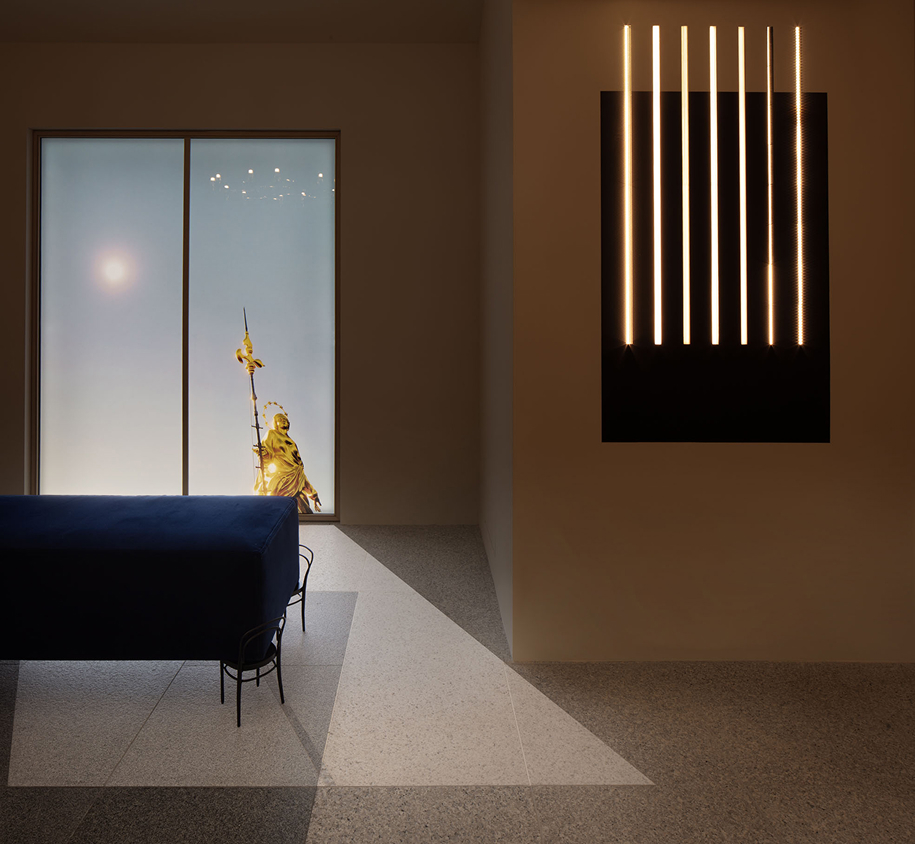
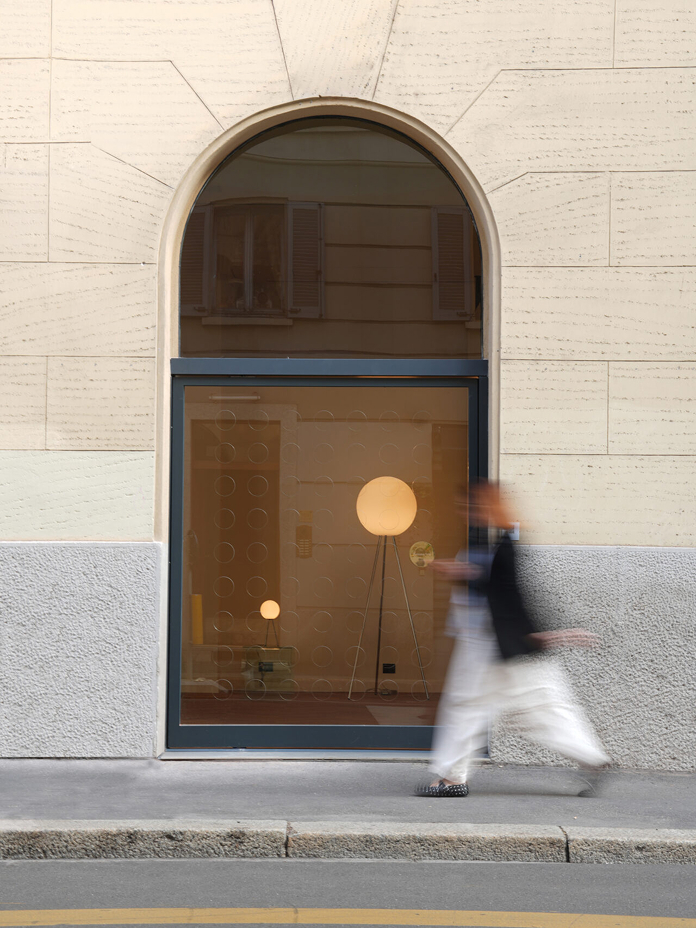
Nemo Lighting is revitalizing its presence in Milan with the opening of its new showroom at Via Santa Cecilia 4a, located just a short walk from its previous location. The project, entrusted to artist and designer Ron Gilad, transforms the space into a “field of light,” where the lamps are conceived as architectural elements that shape the space and guide visitors’ movements. Gilad’s vision translates into an intuitive and personal layout that deliberately eschews grand narratives to let ideas flow freely.
Unveiled between Milan Art Week and Design Week, the space conceives of light as a living material to be inhabited: the installations redefine the volumes and extend the dialogue with the city beyond the rigid confines of opening hours, remaining faithful to the designer’s purest statement: “I do not write stories. I design”.
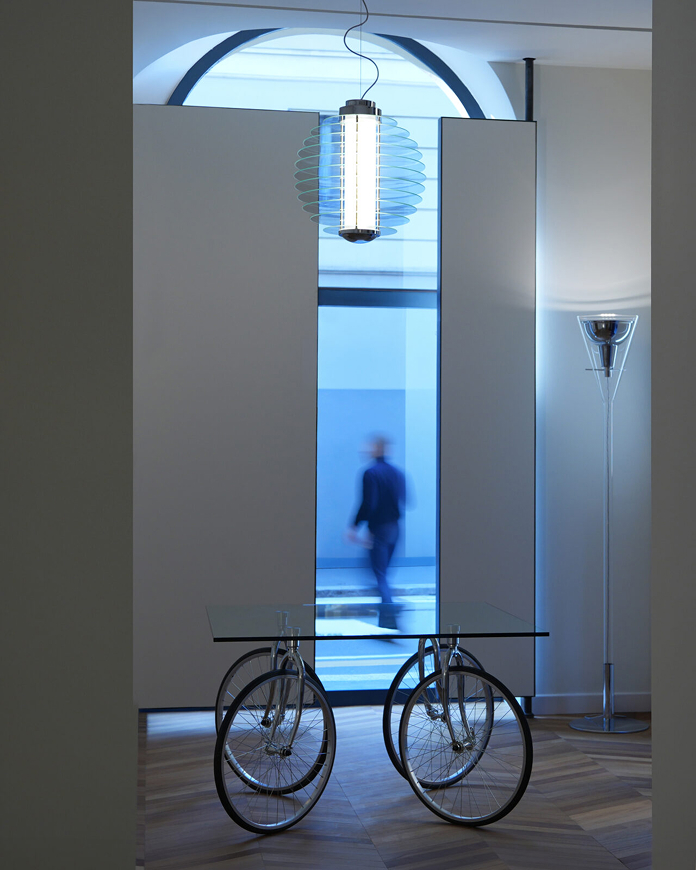
FontanaArte celebrates its long-awaited official return to downtown Milan with the opening of its new boutique at Corso Monforte 19/A. The choice of location is highly symbolic, as it occupies the spaces that for decades housed Nemo Lighting, marking an ideal passing of the torch within the Nemo Group.
The design by Franco Raggi—an architect and designer who over the years has helped define FontanaArte’s aesthetic language, atmosphere, and direction—echoes the historic characteristics of the brand founded in 1932 by Gio Ponti and Pietro Chiesa: understated elegance, iroko wood floors laid in a herringbone pattern, and a color palette defined by ivory white with iconic accents of blue and orange.
The entrance, featuring a door made of glass panels and a brass handle, leads into a space where movable columns create geometric backdrops for the collections, confirming the showroom as a go-to destination for architects and enthusiasts.
Atmosfera is an open space for dialogue. If light plays a key role in your research or a specific project, we’re ready to listen. We feature lighting design projects, art installations, photography series, and stories that explore the narrative potential of light.
Send us your portfolio or tell us about a project you care about.
It could become part of our editorial programming—or spark a new collaboration.
EMAIL US AT REDAZIONE@ATMOSFERAMAG.IT