To fully understand the Vela by Calatrava lighting project, it is important to consider the history of the structure and its current context: conceived in the early 2000s, the Vela was intended to be the centrepiece of the future City of Sport in Tor Vergata, a large complex designed to host the 2009 World Swimming Championships and become one of the capital’s main sports and university hubs.
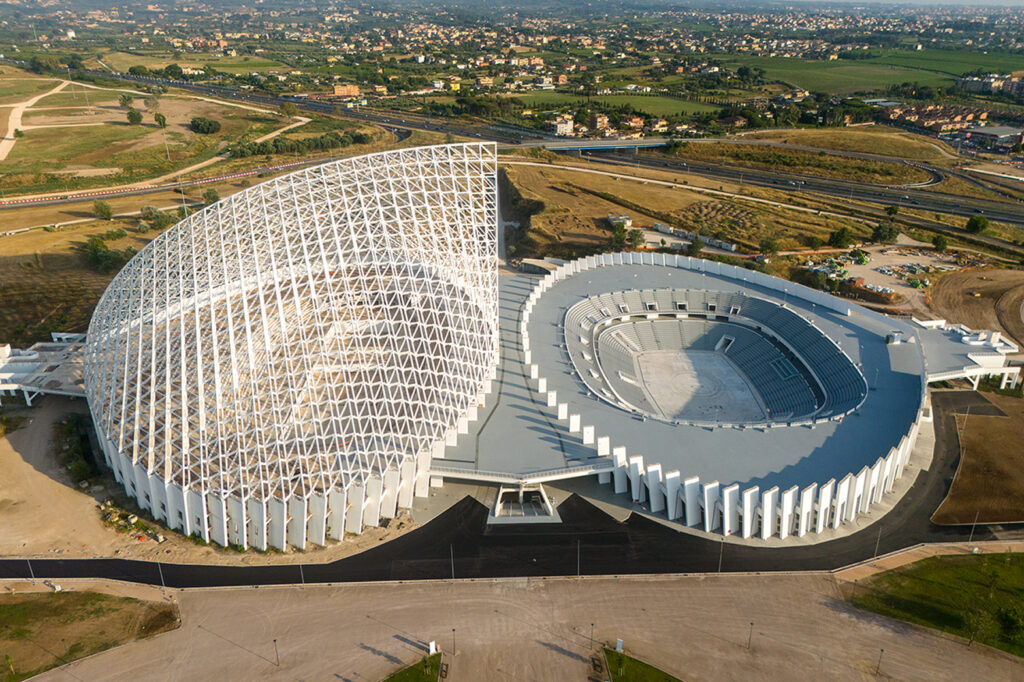
Designed by Santiago Calatrava, the project envisioned a monumental system extending over more than fifty hectares: two large, symmetrical arenas overlooking artificial lakes, designed for basketball, volleyball, and swimming. The steel and satin glass roofs evoked the image of sails filled with wind, hence the name by which the structure became iconic.
Surrounding it were plans for a university campus, swimming pools, exhibition spaces, parking areas, and a ninety-meter tower intended for the rectorate.
An ambitious masterplan, symbolizing modernity and innovation, which came to an abrupt halt. Funding ran out, construction stopped, disputes multiplied. What remains is only a partial realization: an unfinished work, both powerful and fragile, which for years became a symbol of abandonment and suspension.
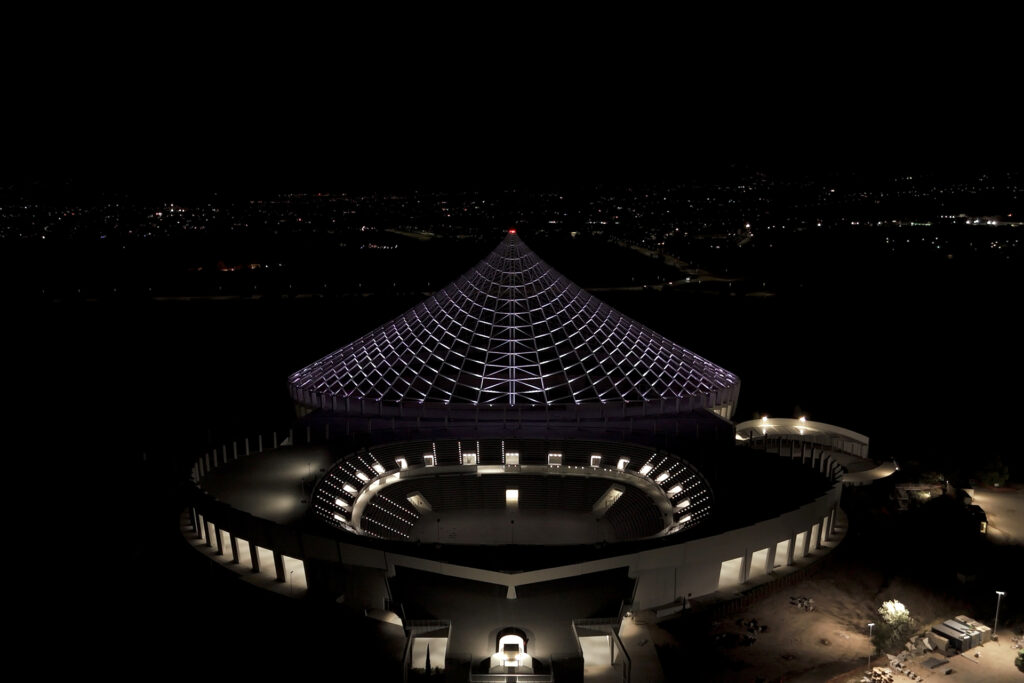
For the Jubilee 2025, the Vela entered a new phase. The completed arena has returned to active use, capable of hosting thousands of people, now integrated into a system of infrastructure, green spaces, and urban connections that redefine its role.
Within this process of reactivation, the lighting project by Dolce e Luce Studio, led by Barbora Nacarova and awarded the Darc Award 2025, played a central role in restoring identity and presence to an architecture that had long remained suspended.
The Vela remained unfinished for years. What was the initial intuition behind restoring its meaning through light and constructing the narrative of its “celestial journey”?
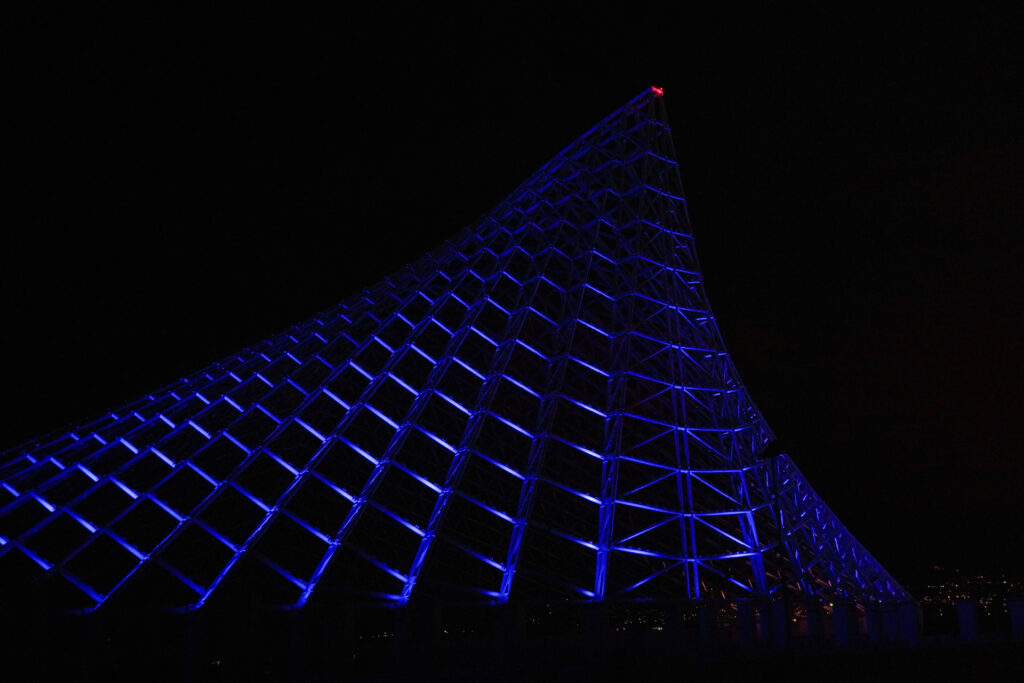
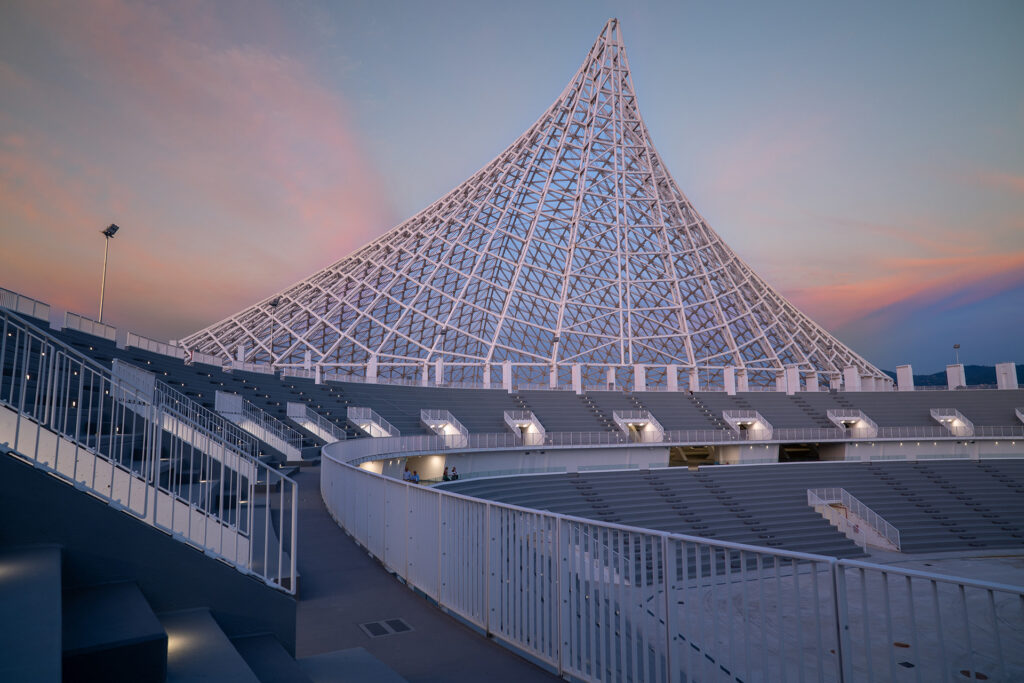
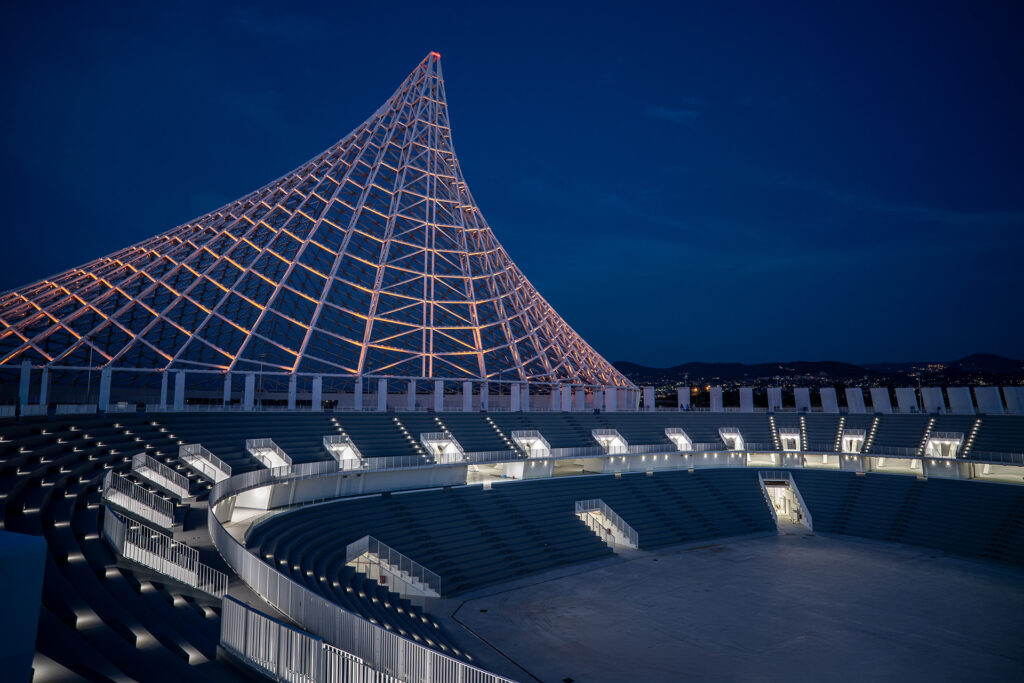
«The starting point was time spent on site, particularly at sunset. At that time of day, the structure reveals its most intense character, as the sun’s light shines through the space, filling it with warm, golden tones. We were struck by the idea that this condition—so evocative yet ephemeral—could be extended and transformed into an experience. That is where the project began: not as a static lighting system, but as a narrative that continues beyond sunset. The light gradually transitions from the tones of the setting sun to quieter atmospheres inspired by the night. These transitions are slow and measured, eventually suggesting the image of a night sky. In this sense, light does not simply illuminate the architecture, it constructs a narrative: a continuous passage between day and night, presence and dissolution, in harmony with natural cycles».
How did the lighting intervention help transform this “urban wound” into a new landmark for Tor Vergata?
«Working on a structure designed by a master like Calatrava does not simplify the process—quite the opposite. The real challenge was not illuminating an iconic building, but addressing an open wound in the urban landscape and collective imagination. Light became a tool to restore meaning and breath to this place, transforming a scar into a recognizable presence. Today, the Vela once again serves as a landmark for this part of Rome, thanks to its architectural scale and the symbolic value it has regained. The lighting intervention, carried out by the Italian State Property Agency in December 2024 as part of the Jubilee, immediately marked a new phase. Not a purely scenographic gesture, but a concrete signal of transformation and the beginning of a broader process of sustainable urban regeneration».
Between RGBW technology, precise optical choices, and DMX control, what were the main technical challenges, and how did you shape the Vela’s three-dimensionality while respecting the context?
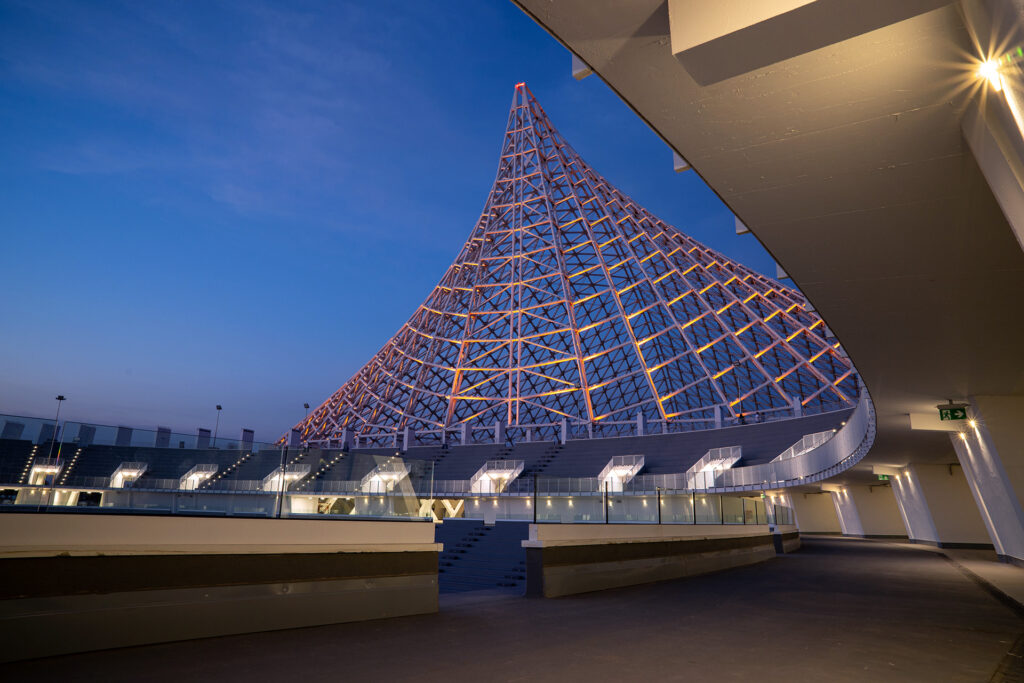
«We carefully observed how natural light behaves on the structure throughout the day. The Vela never reveals itself uniformly: some parts emerge, others remain in shadow. We did not want to “light everything,” but to reproduce this same natural dynamic of contrasts, appearances, and absences. The main challenges were the height of the structure—reaching 75 meters—and the geometric complexity of a volume defined more by void than by mass. The use of RGBW projectors with very narrow optics, combined with precise DMX control, allowed us to shape the light accurately while avoiding dispersion. The three-dimensionality is not forced—it gradually emerges, in continuity with how natural light interacts with the architecture».
The collaboration with astronomical observatories played a key role. How did it influence the project, and what solutions did you adopt to limit light pollution and comply with regulations?
«Collaboration with astronomical observatories was essential from the earliest stages. The Vela is situated in a sensitive location, close to three observatories and constrained by its proximity to the airport. All of these factors had a decisive impact on the design choices. Compliance with regional light pollution regulations was essential. We therefore worked on extremely precise control of light emission, avoiding any upward spill. In addition to the projectors’ narrow optics and precise positioning, custom shields were designed to minimise unwanted emissions even further. Protecting the night sky was not a constraint—it became an integral part of the project».