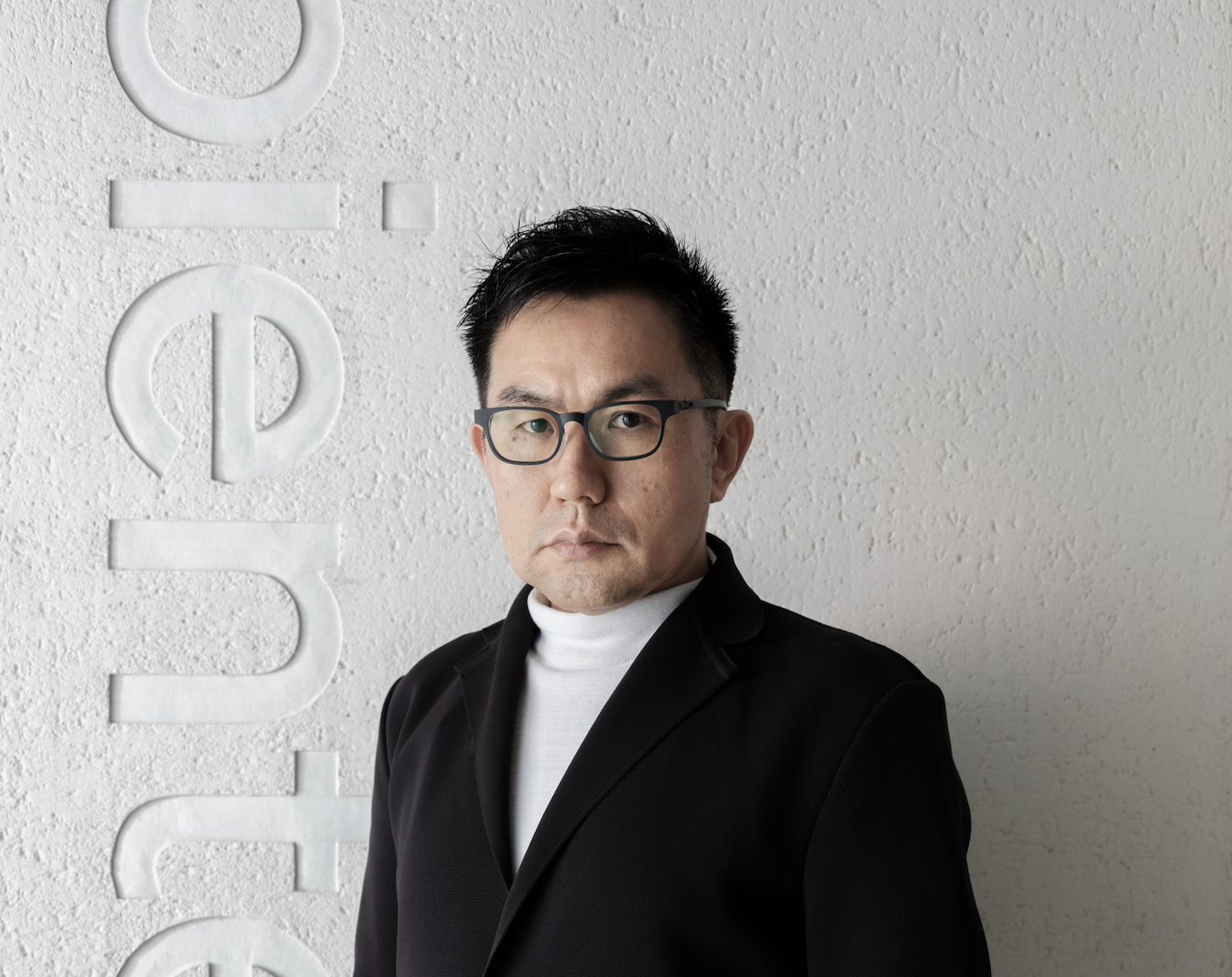
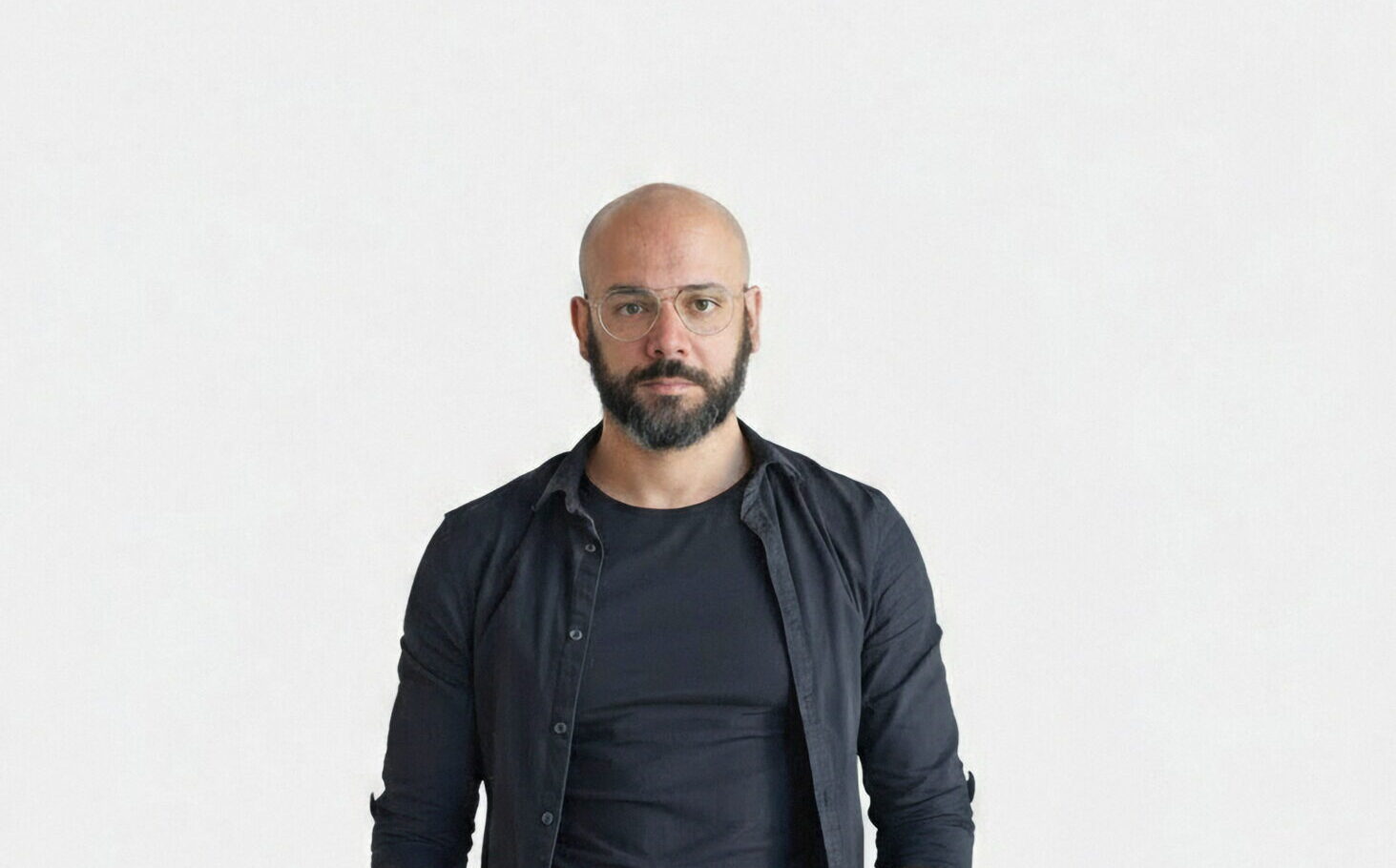
Engaging works made of lights and sounds that transform the perception of environments and use space as a canvas. This is the essence of the work and research of 1024 architecture, a digital-technology studio founded in 2007 by Pier Schneider and François Wunschel, classmates at the École Nationale Supérieure d’Architecture de Strasbourg. In 2014, the duo became a trio with the arrival of Nico Merlin, an architect and composer. Since then, the studio has focused on the creation and production of audiovisual installations, merging architecture and visual arts into a body of work recognized internationally.
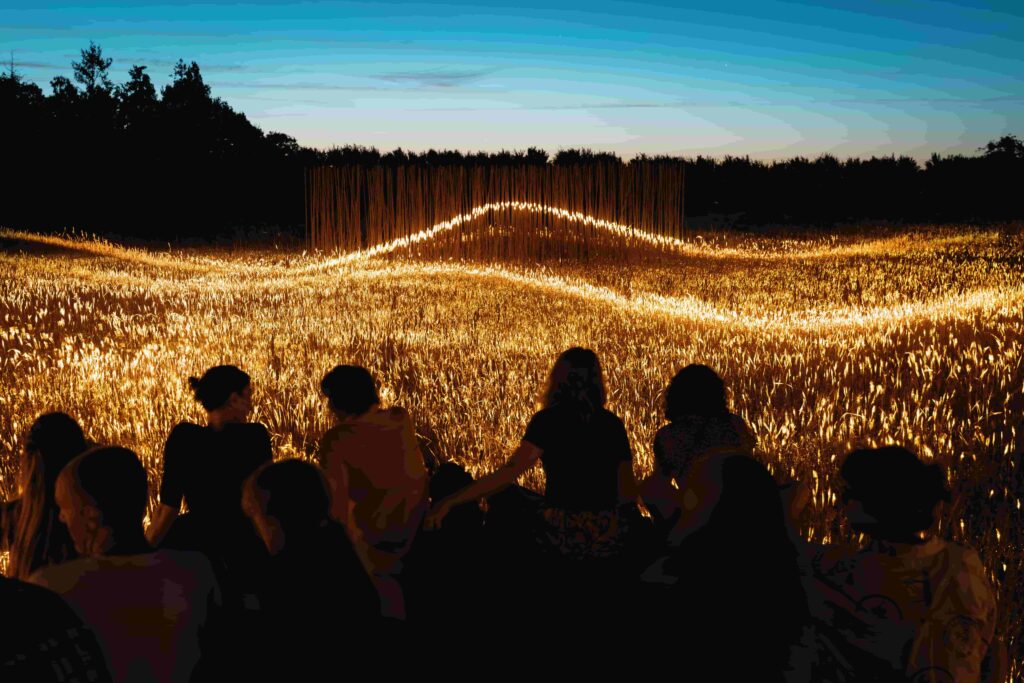
From small-scale objects intended for indoor exhibitions to monumental installations in public spaces, what sets 1024’s work apart is its unique approach to space, which makes use of geometry, light, sound, and movement. Urban landscapes, site-specific scenographies, and luminous sculptures: 1024 architecture works at different scales, playfully blurring the boundaries between senses and perceptions.
Where does the name of the studio come from?
PIER: «1024 is a magic number. It is equal to 2 to the power of 10 because there were two of us, the two founders, and we were the only members of the studio at the beginning. 1024 is a recurring number in computer science: for example, 1024 bytes equals 1 kilobyte. This was also the basic resolution for screen/video projection when we started the project. As for the architecture, we met at the Strasbourg School of Architecture at the end of 1993, so the architectural approach and creative process form the basis of our culture. Since the very first beginning, with 1024 architecture we wanted to blend architectural / space / physical work and practice with immaterial, digital code and pixels of light in movement».
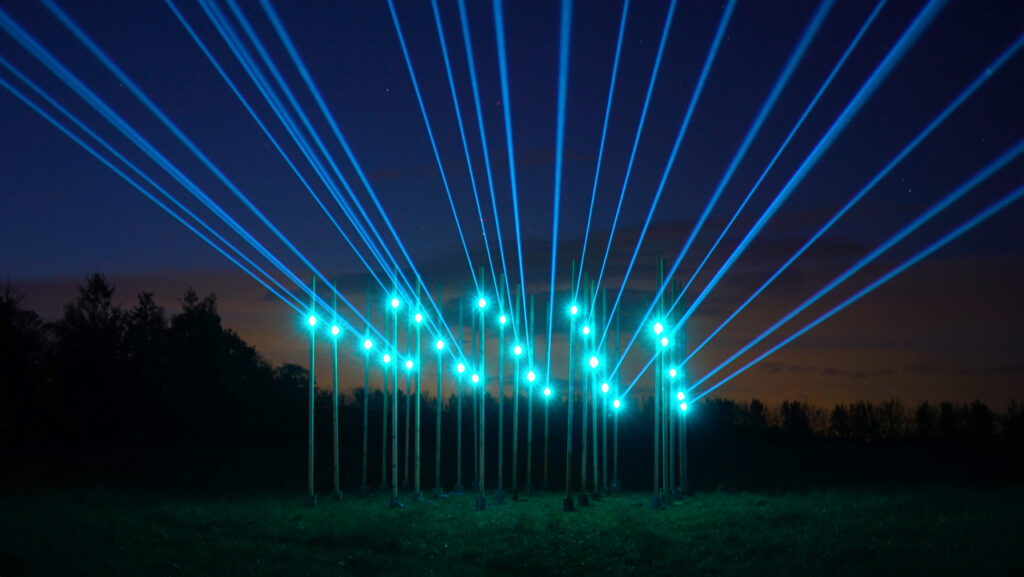
1024 Architecture has always worked with light and sound. How has your approach to design evolved over the years, and in what ways have new technologies helped you to bring your ideas to life?
PIER: «Not only light and sound, but space was our first canvas and center of interest as we trained as architects. We were always super curious about how we can make space more reacting/moving/changing, or even dancing. About technologies, we have developed our own software for more than 15 years to make the magic happen: MadMapper. It is the tool that we first dreamed about and that we finally produced to enable us to create the projects we have in mind. MadMapper has been the tool that we use in all of our projects; it’s also a commercial software that we share with a lot of the digital artists’ scene worldwide. We develop and design it as we like it to be for our own use, and we make it evolve every day, related to the new project and tools we need».
How do you divide tasks within the studio?
PIER: «François is more on the ‘1024 side of the work’, taking care of the immaterial aspect, numerical/digital coding, programming, and creative and technological input. ” I am more focused on the architecture, handling physical design & production, site-specific reflection, organisation, and public relations. Nico – who joined us more than 10 years ago now – trained as an architect, and he takes care of a lot of the design and production aspects of our projects. He also has good skills as a musician, which is why he is now doing a big part of the music and sound design of our installations, such as for the projects Ecrin, Volume, Space Beat, and Scanline. He also performs live with François for Reel Time Audio Visual shows such as 2048. A.D or Space XY, and when we do a live visual activation of the Vortex, we use to perform all together at the same time, but we often divide the media, one on the laser, the other on the video, and the third on the lights».
Who are your clients, and who do you primarily address with your work?
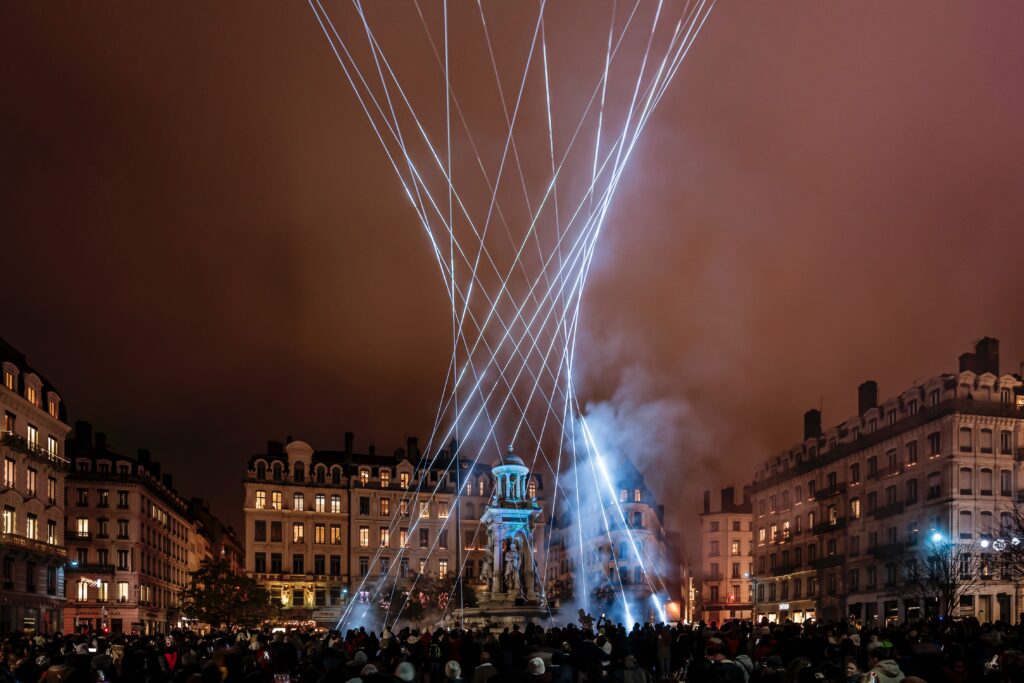
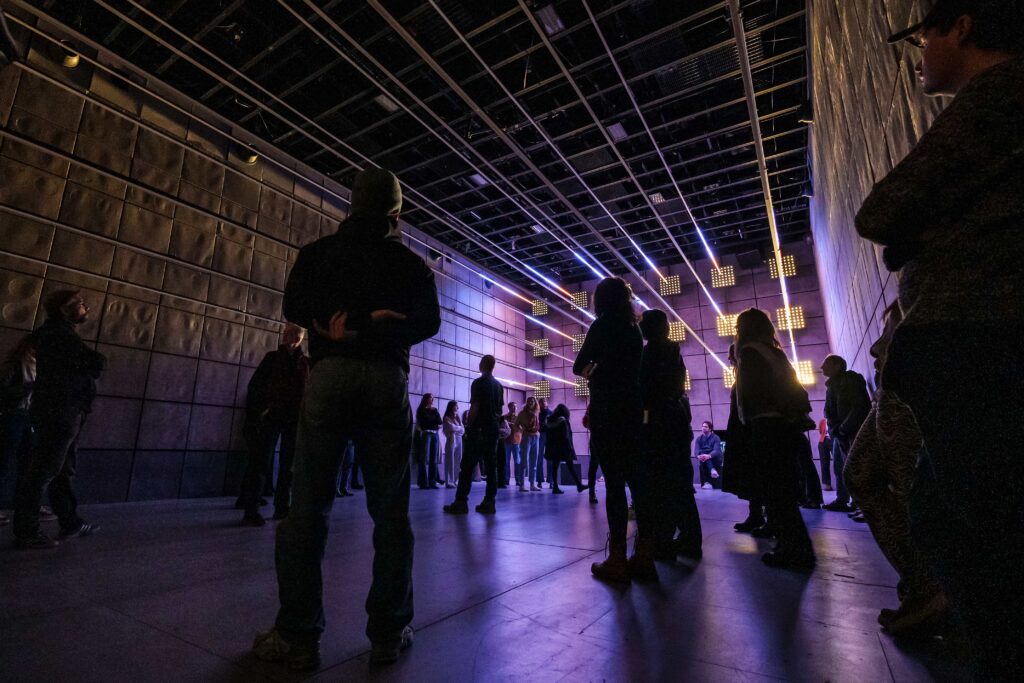
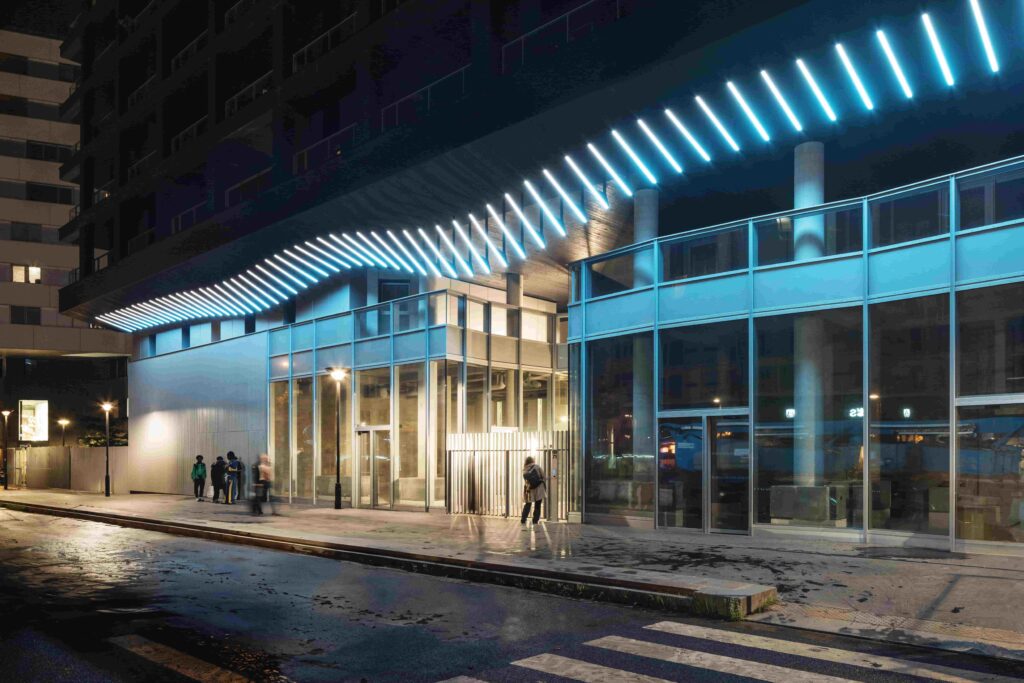
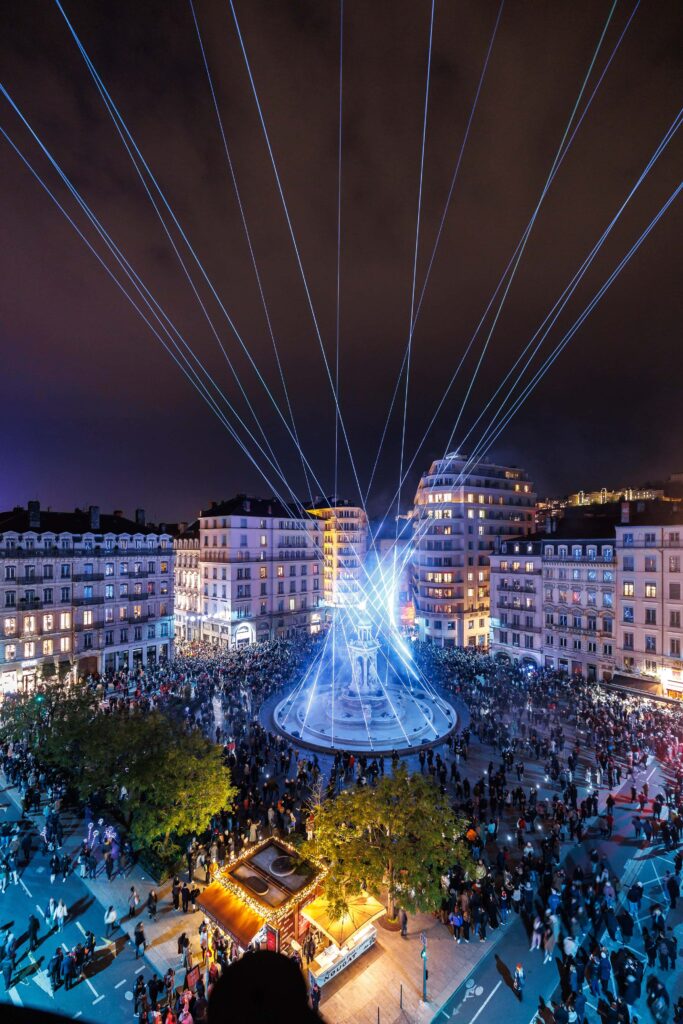
PIER: «Our clients are quite different and various, from public institutions to private clients. We work with cultural and arts centres such as the Philharmonie de Paris, for which we designed the Core in the Electro exhibition, and the Gaité Lyrique in Paris, for which we created Space Beat. We collaborate with art festival or exhibition producers such as the Biennale di Arte di Venezia, Nuit Blanche in Paris, Mutek in Montreal and Barcelona, and the Gloed Festival in Stavanger. We can take part in a specific event in a public space, as we did with the Ecrin project at the Fête des Lumières in Lyon. We collaborate closely with architects, construction companies, and builders on permanent installations for architectural projects and buildings. Examples include the Darwin Ecosystem in Bordeaux for the Vortex Project and AAVP Architects for the Phase project.
Our creations are for everyone, from 7 to 77 years old! I personally love the fact that children can like our projects as well as cultural and digital art addicts».
FRANÇOISE: «I am both the creator and the first spectator of my work. Work is created first and foremost because it has to be created — it must emerge and break free from within me to give rise to other works. This process is often a necessity rather than a response to a demand or a problem to solve. I tend to see clients instead as opportunities to bring pre-existing ideas into reality».
What emotions do you mainly aim to evoke through your projects?
FRANÇOISE: «As an artist, any emotion is worth provoking: rejection, fear, hatred, love, curiosity, suspicion, wonder. The important thing is to trigger a reaction and establish a relationship with the audience through the work. To raise questions about the world. The answers belong to the public. We observe nature and draw inspiration from it to recreate, through an artistic vision, what moves us. Often, these are organic movements — tremors, flickers, heartbeats — subtle rhythms that reveal that technology, too, can feel alive».
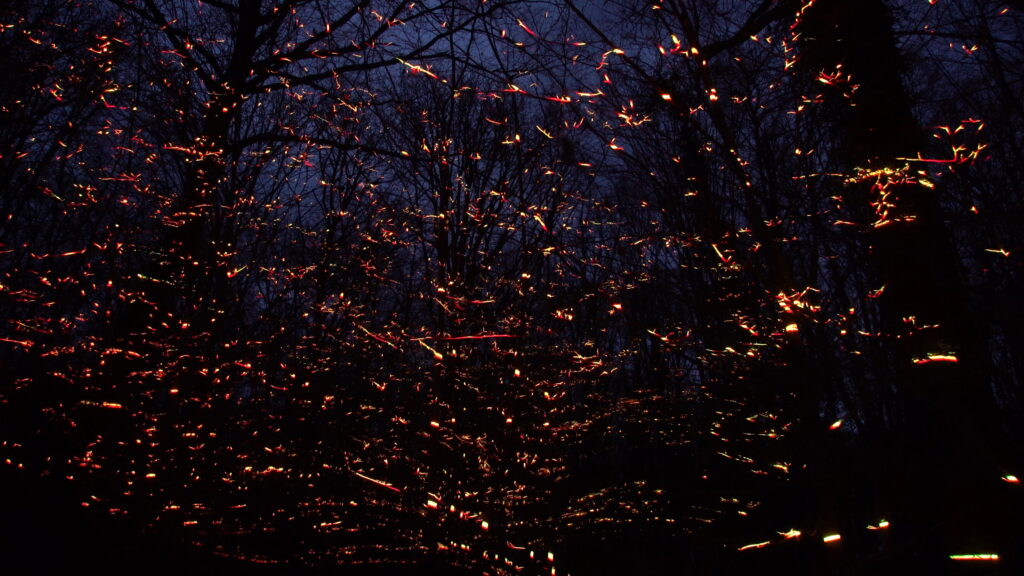
PIER: «We love to inject organic comportments into our project, to make them feel alive and to create deep and real emotions for people who see or interact with it. We like to reveal the beauty of a natural site situation, like in Phorest, or to expand an urban situation and make it poetic as well as grandiose, like for Ecrin, or to create a fun and playful experience with our 1D arcade series and Puppet or Playground, two interactive video games made with Vitalic. We love creating real, deep emotions through our projects, ranging from fear to joy. The Walking Cube, for example, has been a huge success with children. They first feel fear when they discover it, then they accept it, they start to tame it, and at the end, they all dance with it, reproducing his choreography all together».
NICO: «In music, I often draw from my own history as a listener. I like to incorporate passages or musical phrases that evoke a subtle sense of déjà vu, creating a familiar emotional entry point for the audience — a kind of comfort zone that is not always found within digital art environments».

Geometry, rhythm, and repetition are recurring elements in your work. How would you define your visual and conceptual language? Is there one project that represents your philosophy more than others?
FRANÇOISE: «Because ideas are a process, the most recent project is always the most current, the most representative. Our work is a path that winds through the meanders of life, the obstacles of production, and the harsh reality of budgets. Volume reflects our current tendency to draw inspiration from living systems and represent them through digital technology — animating them with sound-driven movement and shaping their form through algorithms».
PIER: «Indeed, we love basic geometries and form in our work, a pixel is square! At the beginning, we made a lot of cubical projects, starting with the Square Cube, the first project under the 1024 architecture name (2007). It’s a physical cube augmented by mapped visuals that sync to the music. It really started our artistic adventure and field of work, at the crossroads of architecture and digital art, blended with music. We love creating strong, deep relationships between spaces, pixels, and sound. Then we created numerous other cube-based projects, including Tessract, a cathedral of light and sound that people can explore from the inside, and the Walking Cube, a living, breathing cube that could move, jump, and dance. Core is also a basic cube of light where music is transformed into a volume of light dancing in this cubical form. More recently, Volume also joined the cubical geometry project: an organic volume of light that wants to explore the limit of the cubical space it inhabits. But we also love to explore other geometries, as we did in projects like Vortex or Ecrin, more exploded and hyperboloïdes than cubical, or quite different organic geometries and undulations as we did in the Phorest installation.»
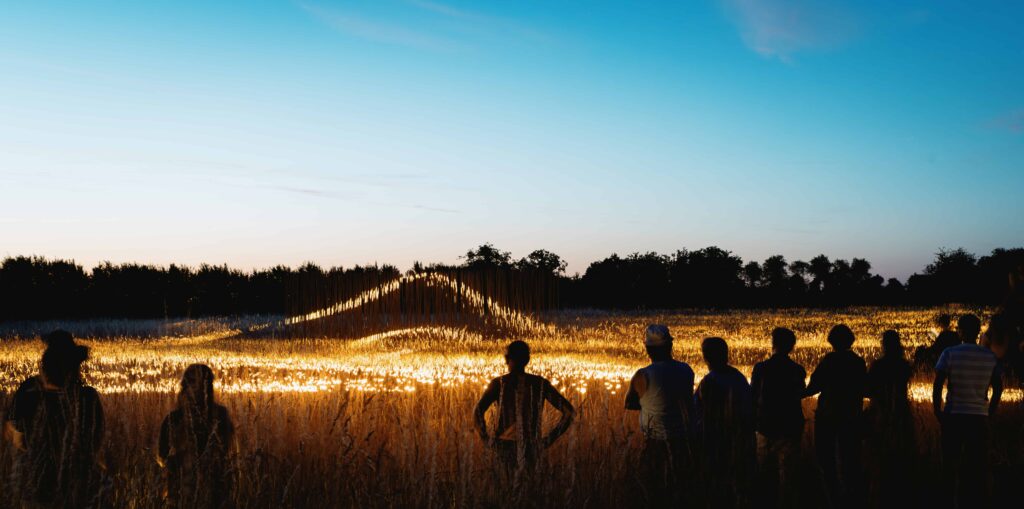
NICO: «When I think about geometry, rhythm, and repetition as they operate within our sonic and spatial universe, I see two opposed lines of research within our practice. On one side, there are projects such as Volume or Space Beat. In these works, part of the sound is literally produced by the installation itself. In Volume, for example, we developed generative models that create random frequencies at every cycle. These frequencies are analyzed and translated into parameters that drive the visual animation. As a result, each cycle produces a unique sonic event and a constantly evolving temporality — no iteration is ever the same. What interests me in this approach is preserving a certain degree of organicity within the work. We try to make the system behave as if it were a form of proto-life: autonomous, evolving, and partly unpredictable, rather than being entirely pre-composed. On the other side, there are projects such as Ecrin and Scanline, which I would describe as more “cinematic”. In these works, image and sound are assembled within a precise timeline. This enables us to carefully construct tension, release, and climax, shaping the audience’s experience through a controlled temporal structure that is closer to cinematic language. Both approaches explore the relationship between sound and space from opposite directions: one emerges from autonomous generative systems, while the other relies on composition and intentional dramaturgy. Moving between these two poles is central to how we work as a collective».
How does your approach change when designing for an indoor environment versus an outdoor or open space?
PIER: «Outdoor or urban environments often need a more architectural and site-specific relation for the conception of the art installation related to the site realities. Vortex or Ecrin are good examples of how a specific architectural or urban context generates the project’s idea. The context inspires the artwork; it’s the first input, the starting point of reflection. Indoor projects are more abstract; think of it as an autonomous sculpture of light, no context here, just the pure artistic questions matter. There are also times when technology inspires new works or innovative products. For example, the transparent LED screen gives us a focal point, and we experiment with it. We develop the project related to what we imagine with this new technological product and what we can do with it».
Who are your mentors or masters? Who inspires you the most? Are there other contemporary studios or professionals you particularly admire, and why?
FRANÇOISE: «Inspired by art and science, I like to ask myself what we are made of, where we come from, and where we are going. Quantum physics, for example, forms a strong link between abstract art and science, allowing us to question our reality. Curiosity is my greatest source of inspiration — and it is inexhaustible».
PIER: «We have many different mentors and masters, in various fields or arts… I would name contemporary artists such as Gordon Matta-Clark, Christo, Daniel Buren, James Turel, Andy Goldsworthy, JR, and Arne Quinze for the younger ones. Architects, from Tadao Ando to Toyo Ito, also talk only about Japanese inspiration. Musicians, obviously, too, from Pierre Henry and Philip Glass to Thomas Bangalter (Daft Punk) and Pascal Arbez (Vitalic). My personal mentors are Patrick Bouchain (architect) and Hubert Reeves (astrophysician). And yes, of course, many contemporary studios that I admire for their work and artistic direction, such as 404zero, Christopher
Bauder & Robert Henke, Nonotak, Refik Anadol, and many others, because they all have a clear artistic direction and they push further in different/personal direction what digital art could be today».
NICO: «One of the figures who has fascinated me the most, through his ideas, writings, and films, is Alejandro Jodorowsky. After all, someone had to bring a little magic into this Cartesian world… An artistic installation that deeply resonates with me is Beam Drop Inhotim by Chris Burden. What strikes me about this work is its monumental simplicity: everything unfolds through a single gesture. The very act of construction becomes the artwork itself, leaving a significant part of the process to chance and chaos. What I’ve been listening to a lot recently: Origin of Symmetry by Muse, Einstein on the Beach by Philip Glass, DIE by Iosonouncane, and Yousuke Yukimatsu’s set at Boiler Room Tokyo.
What are you working on at the moment? In which direction is your research heading?
PIER: «We are more and more focusing on Digital Land Art and how to blend digital art with nature… and it is super exciting and sense-making, artistically as well as ecologically: how to use digital art to focus and give us a sense of nature landscape differently.
NICO: «Currently, I divide my week between our Paris studio and a studio in the countryside, where I focus on prototyping new installations — especially outdoor works — as part of an effort to accelerate a shift toward a form of digital art that operates at a landscape scale. I also compose new sounds, which I keep carefully stored away, ready to be used when the right moment comes».