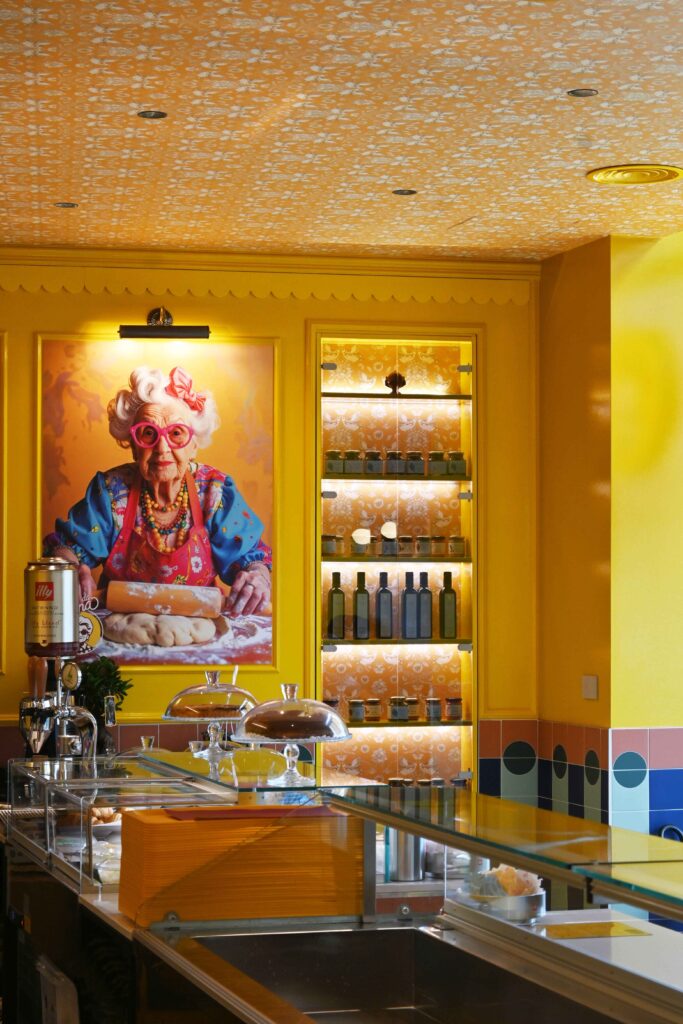
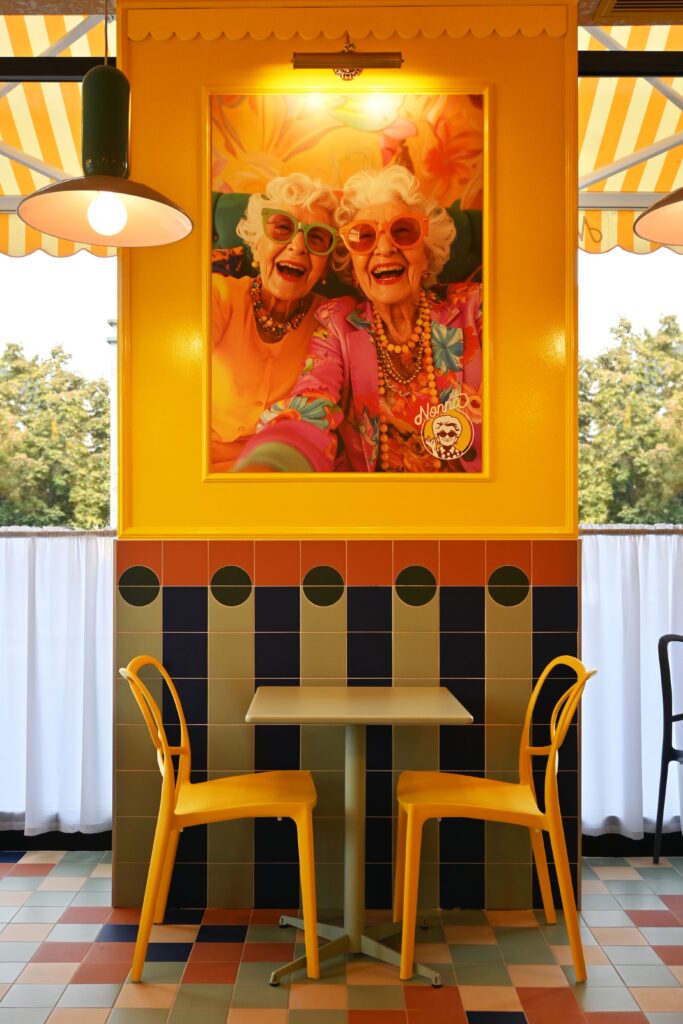

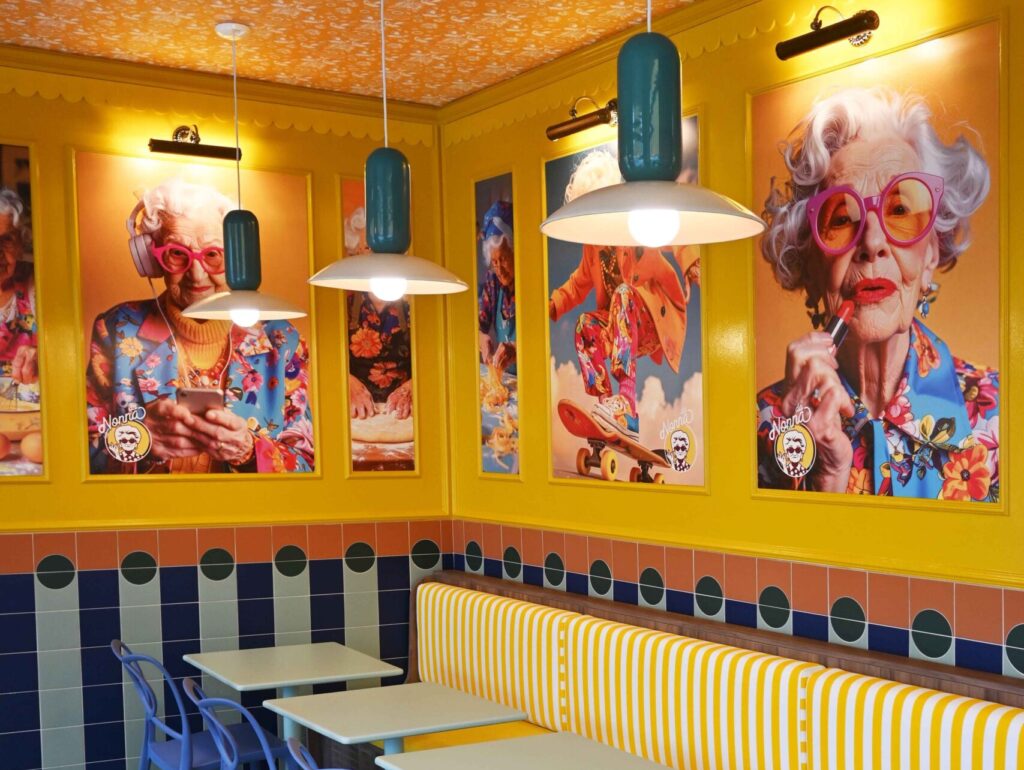
Sunday lunch, a leisurely summer dinner, or a slice of homemade cake with a cup of coffee—these are all synonymous with home-style hospitality: genuine, simple, and putting everyone at ease. The new Da Nonna restaurant in CityLife (Milan) aims to recreate that same feeling of family comfort. Designed by Nick Maltese Studio, the space reinterprets the idea of a home gathering through a design language that is both playful and deeply distinctive, where memory and pop culture coexist in an unexpected harmony.
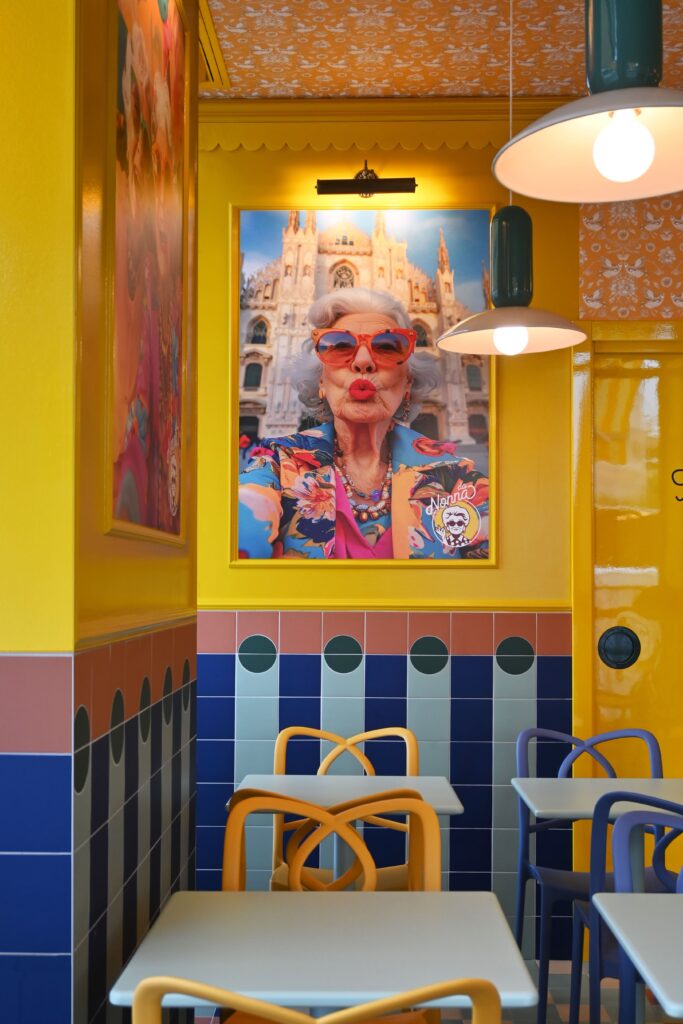
The restaurant draws inspiration from the figure of the “grandmother,” but without nostalgia. The restaurant’s symbolic figure is completely in step with the times; with her white, bouffant hair, she takes selfies in front of the Duomo, rides a skateboard, and applies makeup as if she were a beauty influencer. Starting from this image, the interiors construct a visual narrative that blends homey aesthetics with contemporary imagery.
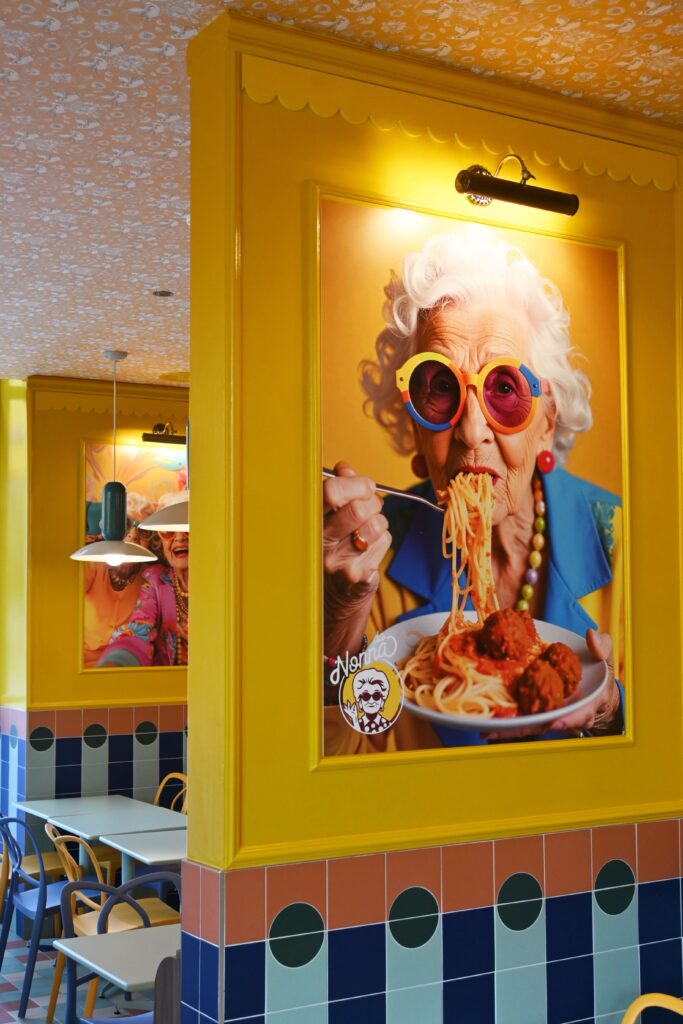
Everything is based on a conscious use of color. Sunny shades of yellow interact with accents of pink, blue, and mint green, creating a vibrant yet balanced palette that spans walls, furnishings, and ceramic surfaces. The glossy geometric tiles create a graphic rhythm reminiscent of Mediterranean kitchens, complemented by striped benches and pastel-colored chairs.
Architect Nick Maltese explains: “The design deliberately alternates domestic references with more graphic and contemporary elements: the floral motifs on the ceiling interact with the geometric patterns of the ceramic wall tiles, while decorative moldings and scalloped details introduce an almost theatrical dimension. This interplay of contrasts—between memory and pop, between intimacy and spectacle—creates a dynamic and deeply human space.”
Light plays a fundamental role in defining the atmosphere, interacting with the colors and visual references. Pendant lamps and retro-style fixtures create a sequence of luminous accents that highlight the surfaces and guide the eye toward the large portraits of the grandmother, accentuated by wall sconces specifically designed for illuminating the paintings.
Atmosfera is an open space for dialogue. If light plays a key role in your research or a specific project, we’re ready to listen. We feature lighting design projects, art installations, photography series, and stories that explore the narrative potential of light.
Send us your portfolio or tell us about a project you care about.
It could become part of our editorial programming—or spark a new collaboration.
EMAIL US AT REDAZIONE@ATMOSFERAMAG.IT