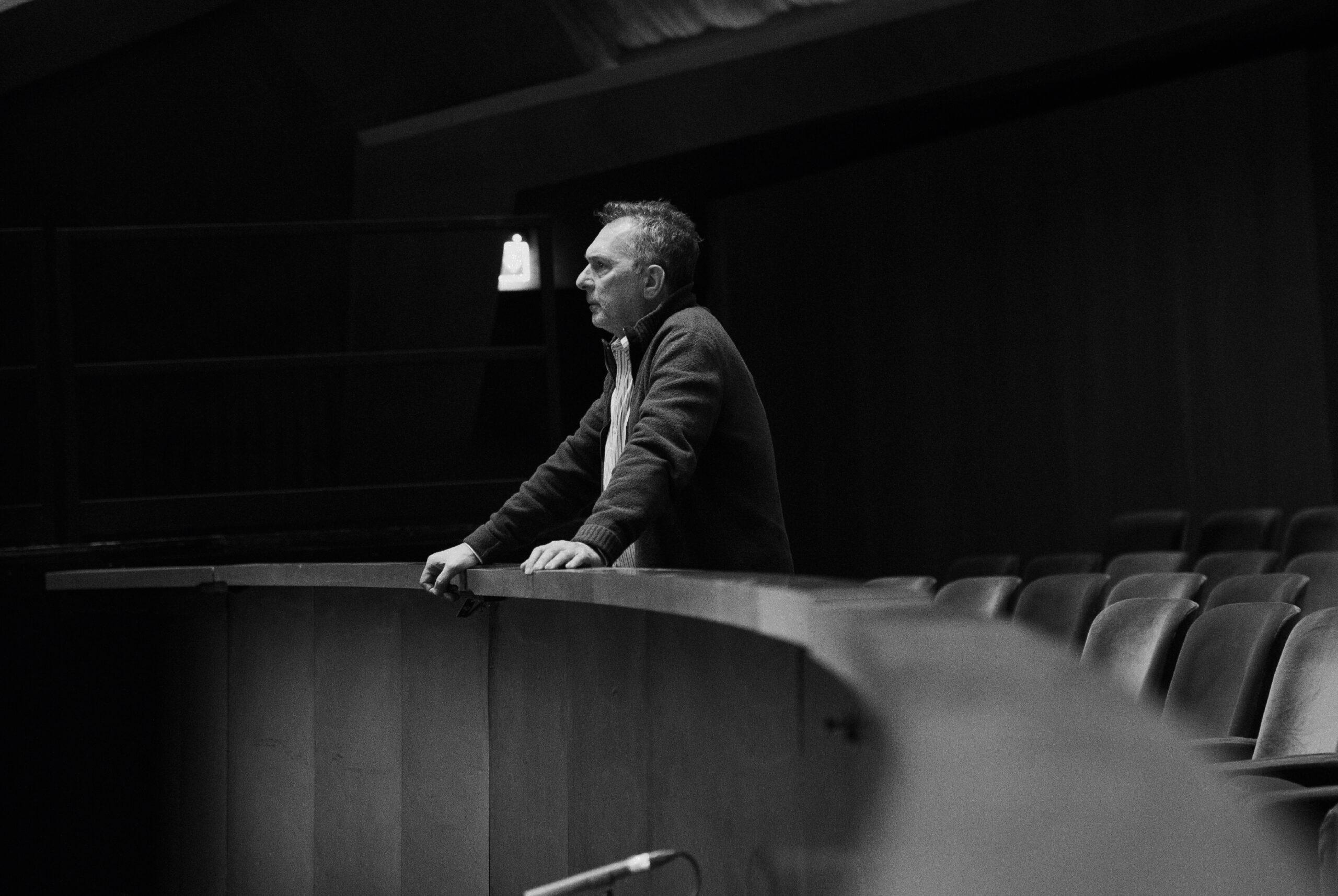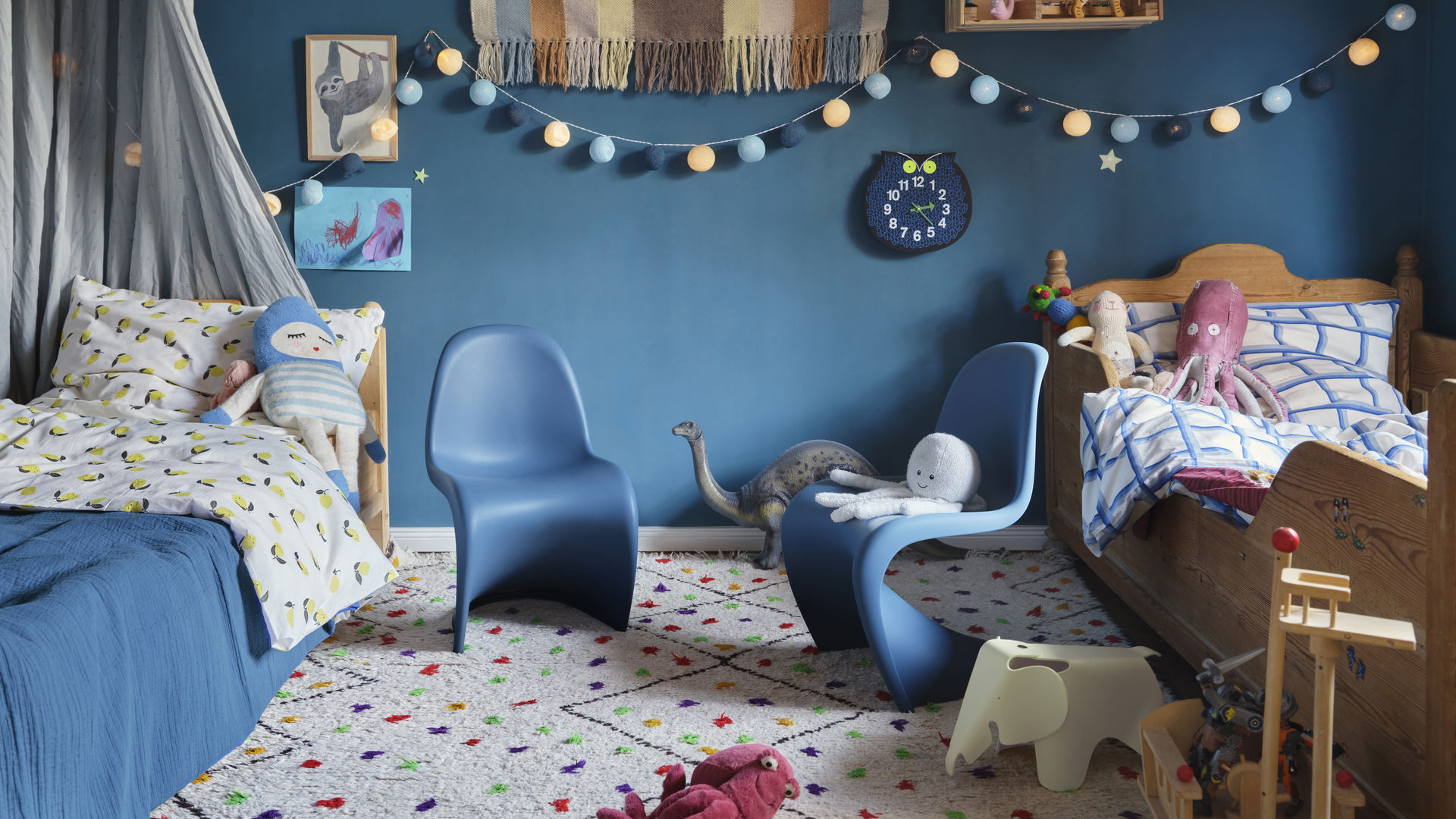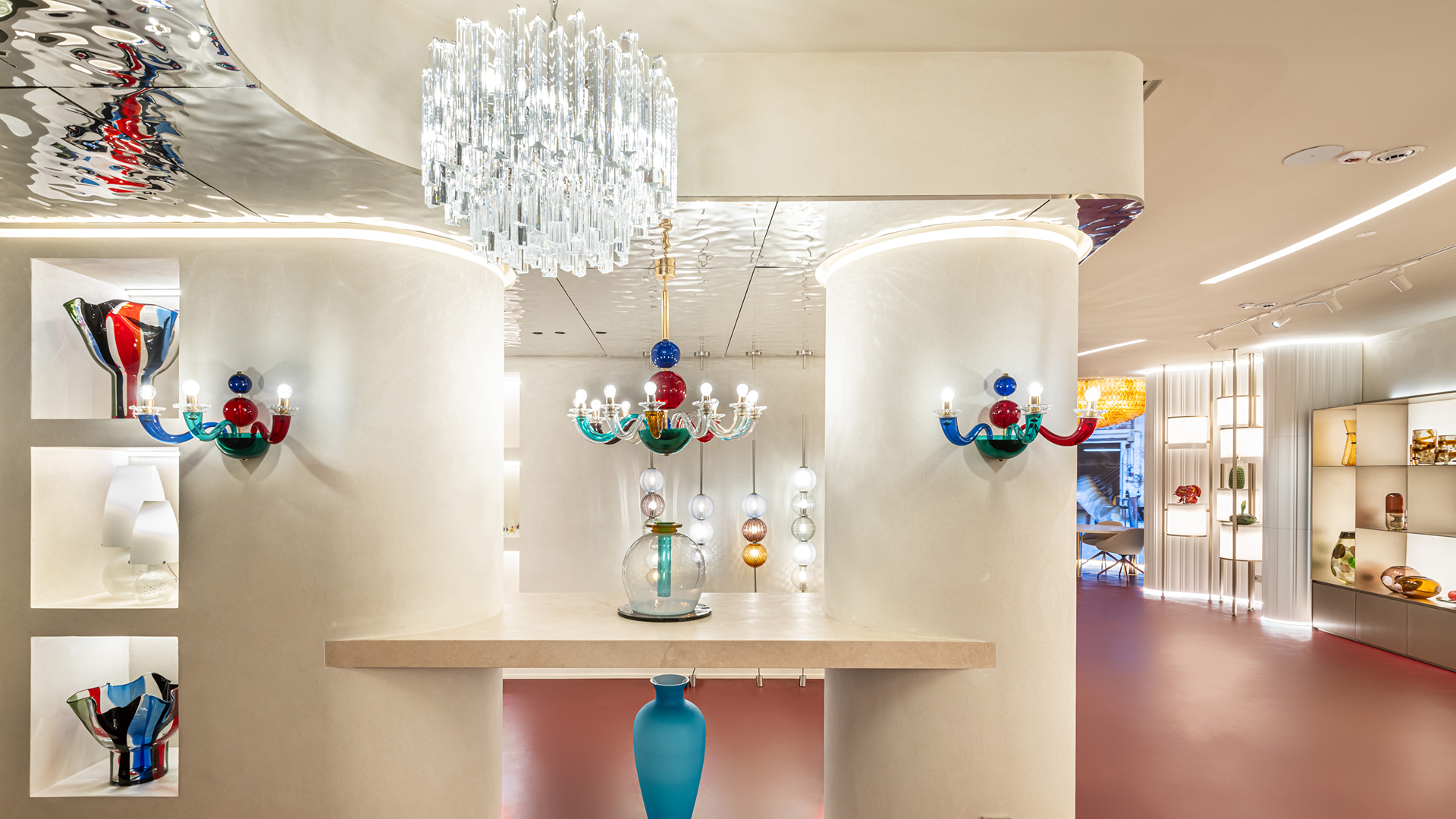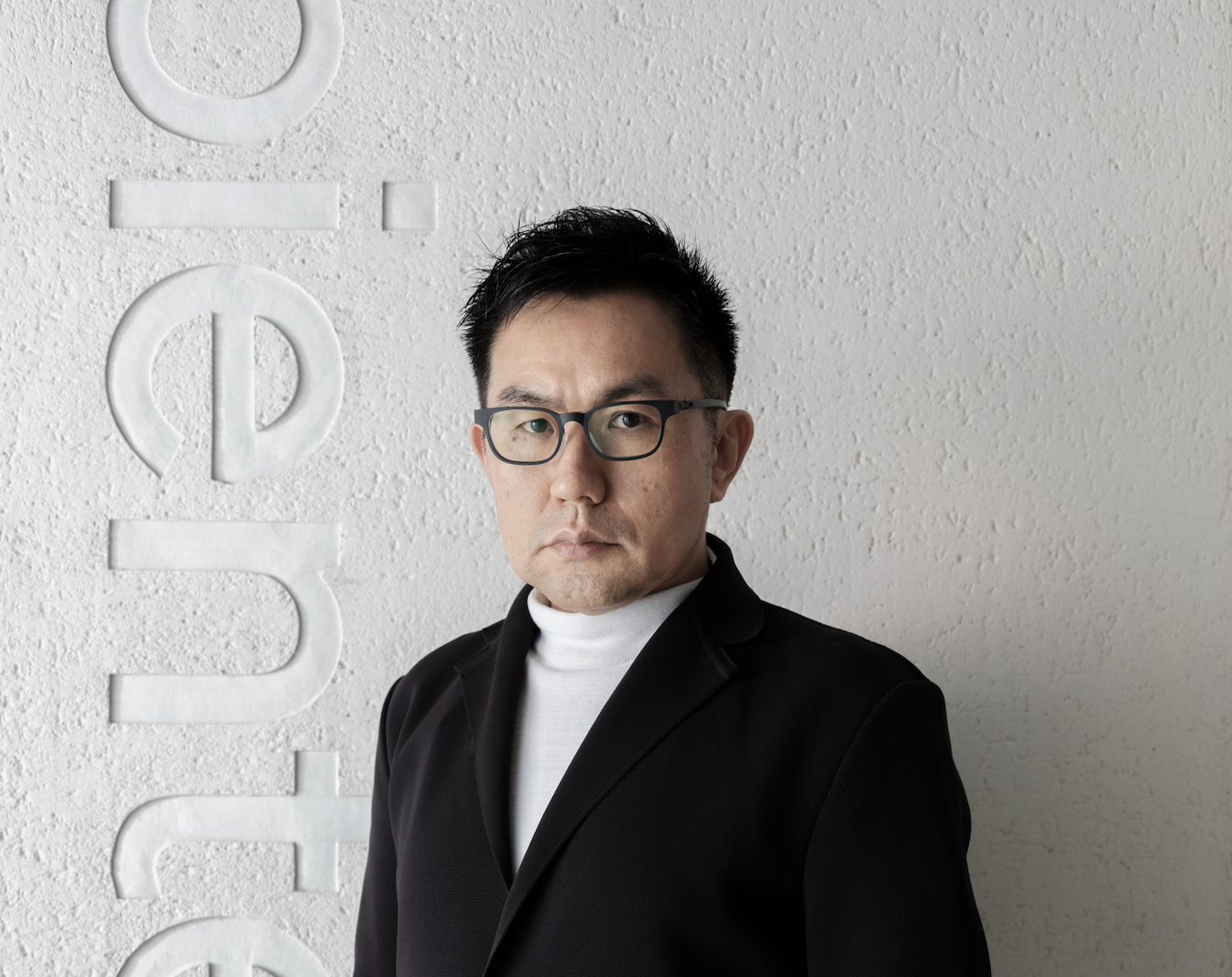
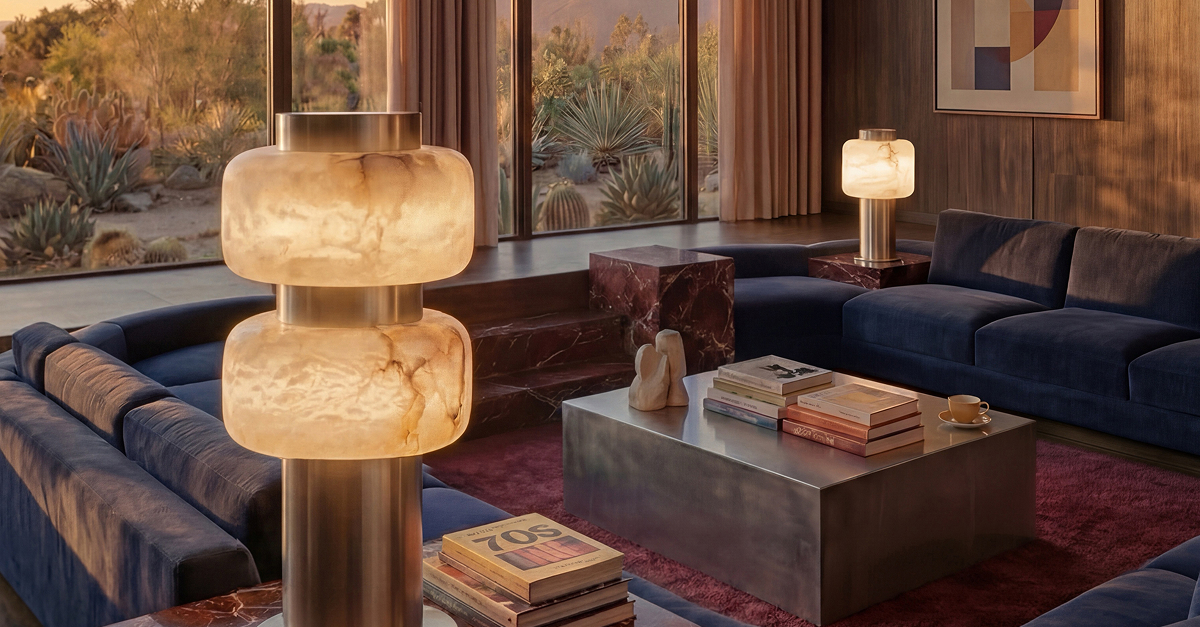
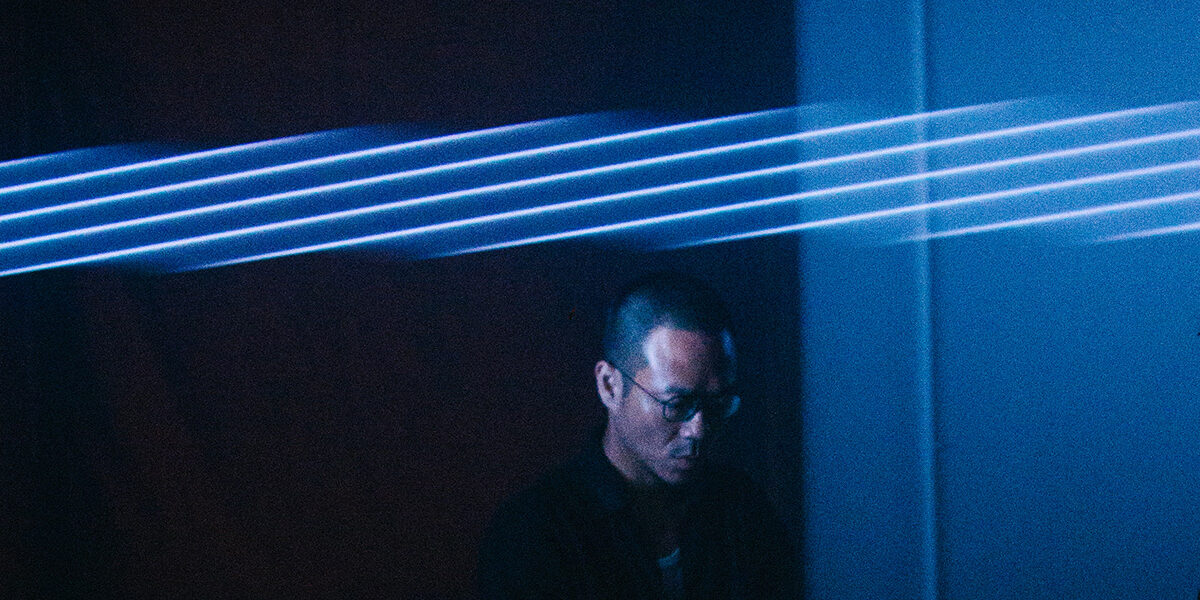
A Switzerland-based product designer and winner of numerous awards and contests—including international ones—Filippo Mambretti loves to balance creativity and discipline, pragmatism and freedom in his work, following a clear design identity that navigates between imagination, observation, and critical thinking, with a strong focus on the idea of conscious design evolution: “improve without erasing, update without betraying, innovate without forgetting.” From furniture and lighting to jewelry, and spanning artistic direction, set design, and styling, Mambretti is a keen observer of the paradigms of contemporary society: a designer of form but, above all, of content.
Let’s start at the beginning: what experiences and people sparked your interest in becoming a designer?
“My first exposure to design came from my family. I grew up among my grandparents’ workshops: Natale, my paternal grandfather, was a plasterer and shaped the material with impressive ease. He created anatomical figures, horses in motion, and classical busts. He was self-taught, but possessed a rare artistic sensibility.
My maternal grandfather, Angelo, on the other hand, was a carpenter—a tradition later carried on by my uncle Carlo. I spent a great deal of time in that old workshop; as a child, I observed everything as if they were magical pieces: machinery, tools, wood, dust, materials. I was deeply struck by the fact that inlaid furniture, sculptures, and objects full of character could emerge from seemingly simple elements. What truly left a mark on me about them was their attitude toward life. They were a generation that had emerged from the war and was seeking, through work and creativity, to rebuild something beautiful. This idea of the creative project as a form of redemption and dignity still stays with me today.”
What was your first project?
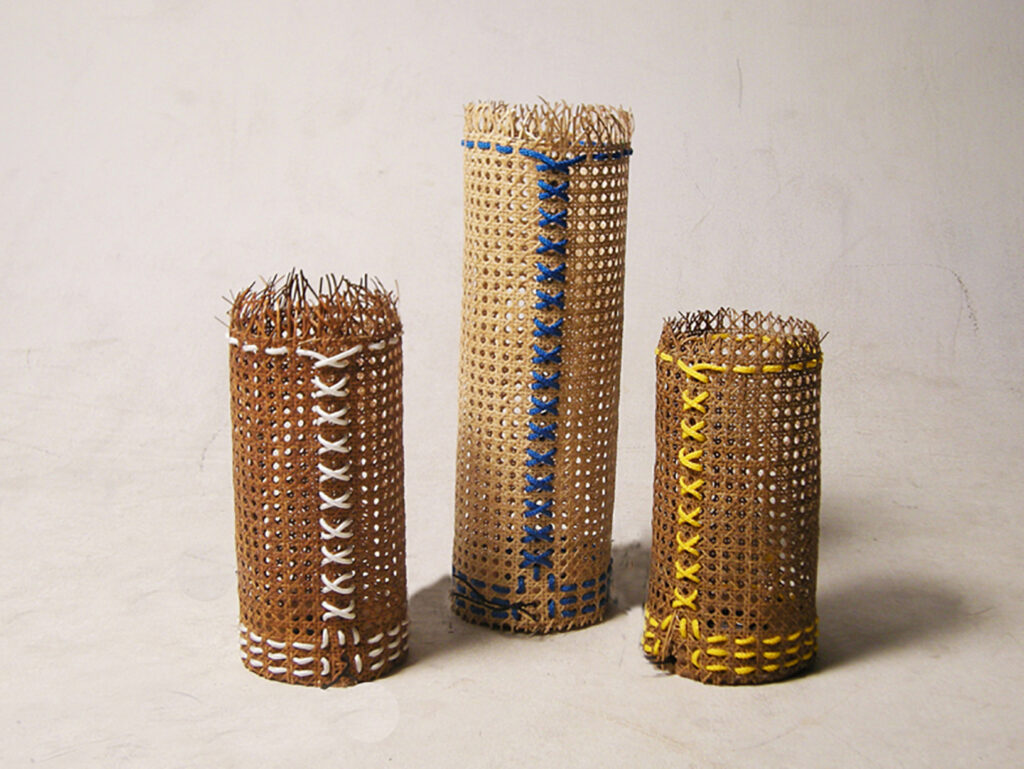
“After my uncle Carlo passed away, I salvaged some of the materials from his workshop. I found some old sheets of Vienna straw, soaked them in water to soften them, and used them to create one of my first self-produced pieces: Carletto, a lamp in his honor. It was a simple halogen spotlight set inside a cherry wood disc, around which the Vienna straw was wrapped. The light projected the woven pattern onto the walls, creating a three-dimensional effect. It was my first project exhibited at the Salone del Mobile.Milano.”
Tell us about your meeting with Bruno Munari…
“It goes back to my teenage years. Munari was invited to a conference organized by my principal at the CLAC in Cantù, the historic Permanente del Mobile—an institution that brought together designers, companies, students, and design culture: a space where ideas, industry, and experimentation engaged in a concrete dialogue. Hearing Munari talk about design with the enthusiasm of a young person was a revelation for me. I remember thinking: when I grow up, I want to have that same energy when talking about my work.”
Through material, light, and proportion, I seek a balance between design culture, functional intelligence, and contemporary sensitivity. What exactly do you mean when you talk about sensitivity?
“I’m not simply referring to aesthetics. For me, sensitivity means, above all, the ability to observe. It means being able to perceive how people are changing—their behaviors, their real needs—but also their relationship with objects, spaces, and time. An object does not exist in isolation: it enters people’s lives, altering gestures, habits, and perceptions, integrating with the dynamics that define the context and society for which that object was conceived. To give an example: a lamp does not merely produce light. It creates atmosphere, memory, and intimacy. The real question is not just: How do you turn on a light? but: What kind of light is needed? How does it spread? Where? To accompany what experience? Today, sensitivity also means responsibility. We can no longer design while ignoring issues such as the lifespan of objects, sustainability, overproduction, or aesthetic obsolescence.”
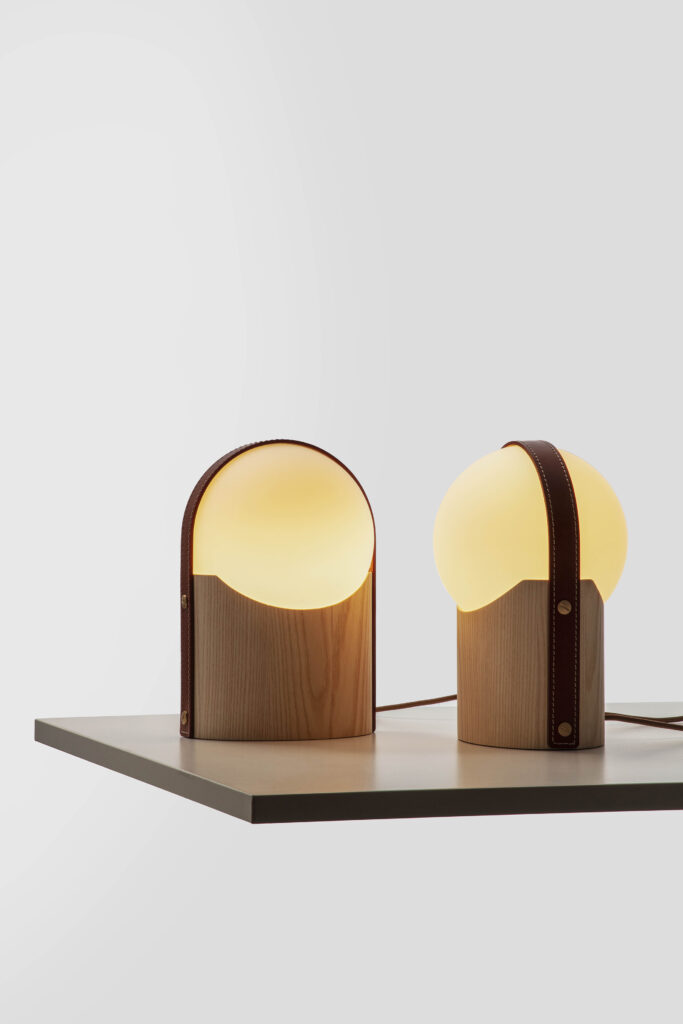
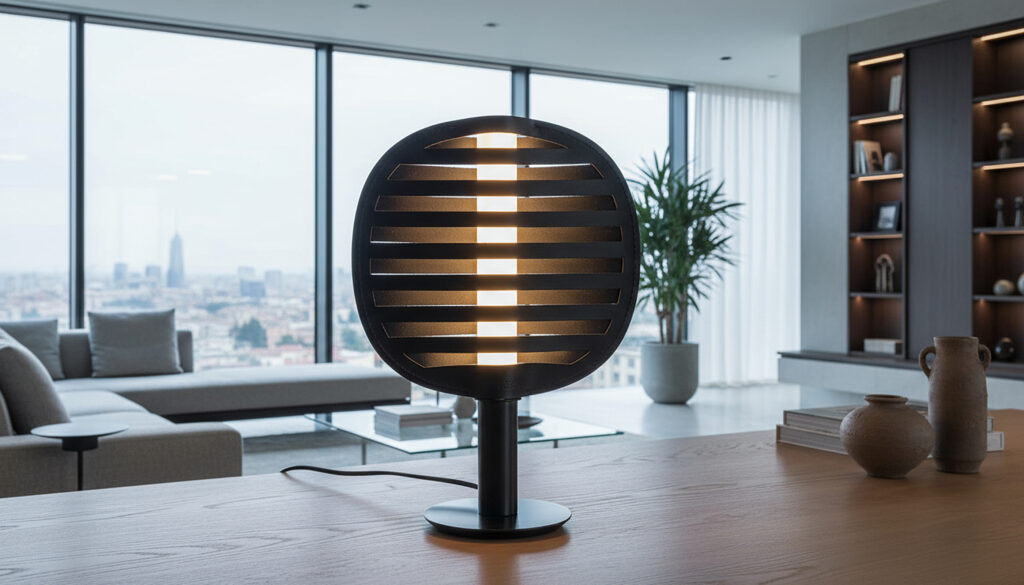
The Lume lamp won the 2025 edition of the LIT Lighting Design Awards. The leather shade, which evokes an organic form, creates a multifaceted piece…
“Lume was born out of a very specific need of the Enrico Pellizzoni brand: to enter the world of lighting with a product consistent with the company’s identity—as an expert in the production of leather furnishings—but one that was also simple to industrialize and manufacture. For this reason, I developed a lamp that is technically minimalist; I wanted to avoid unnecessary complexity—both in production and assembly—devoting the true heart of the project to visual perception and the artisanal quality of the details. Even the exposed, tailored stitching plays an important role: it not only serves to construct the lampshade but also becomes part of the aesthetic language. One of the most interesting aspects is the possibility of giving the object a new lease on life by replacing the lampshade and employing a specific approach to sustainable production by reusing leather scraps and offcuts from the company’s manufacturing processes.”
The Elo pendant lamp has also won two awards (the Good Design Awards and the Archiproducts Design Award), and is technically very interesting in its dynamism. Where did you draw your inspiration from?
“Elo stems from a passion I’ve always had for kinetic art and movement, inspired by artists like Alexander Calder and Jean Tinguely. I was fascinated by the idea of creating something with a strong artistic and dynamic component, yet one that was also a true industrial design product, technically well-executed. Most pieces of furniture are static; they occupy a space and always define it in the same way.
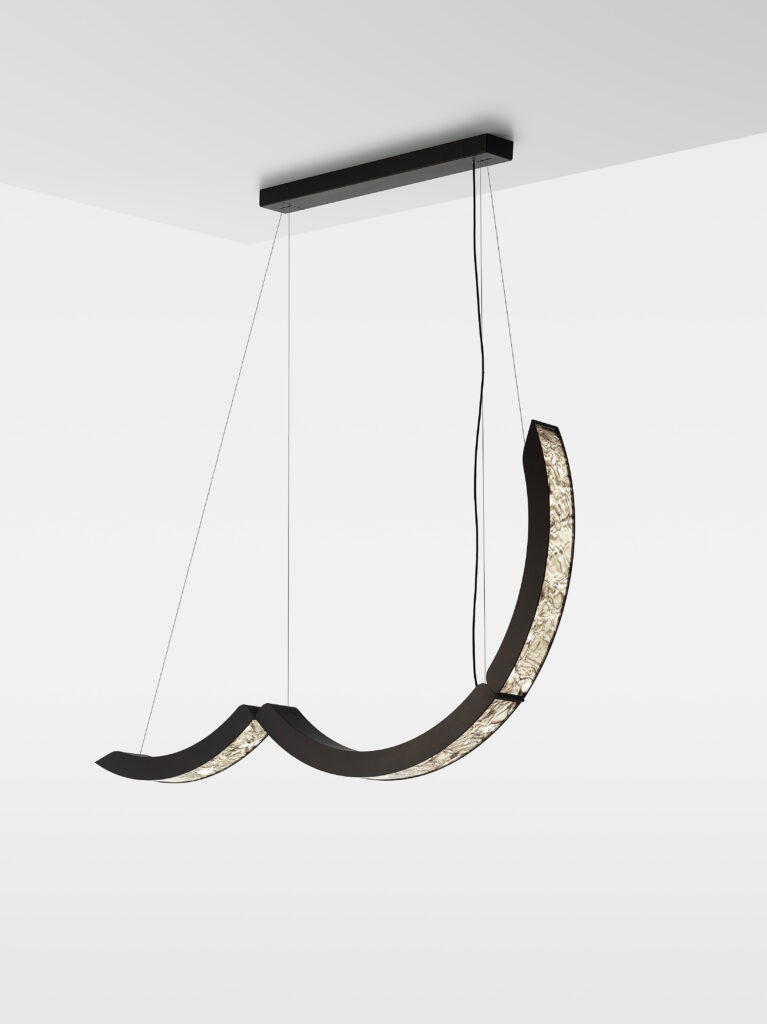
With Elo, however, I wanted to introduce a principle of continuous transformation through an interactive gesture that would allow the user to alter the lamp’s composition or their perception of the space. This led to the system of three movable aluminum arches, which can open, close, and create different configurations.”
Loop, on the other hand, is a lamp designed with versatility in mind: two luminous rings, differing in diameter and position, create an interplay of volumes and perspectives.
“The idea was to reinterpret the concept of a ceiling light in an unconventional way: normally, this type of lamp tends to remain very close to the ceiling surface. With Loop, however, I wanted the light fixture to detach itself—both physically and perceptually—from the ceiling, creating a more architectural and dramatic presence in the space.
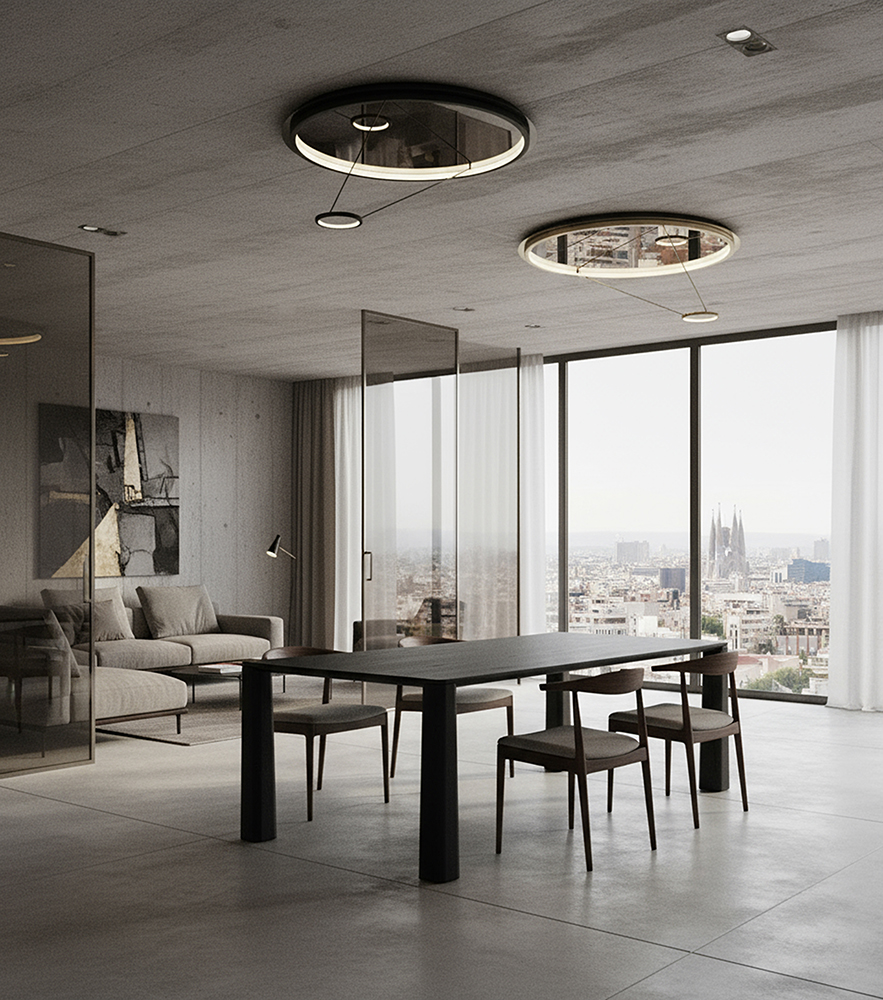
Hence the decision to develop two light rings positioned at different levels: the upper ring diffuses a soft, wide light, while the lower one brings the light source closer to the living space, creating more directional and functional lighting that highlights details, surfaces, and textures. The lamp can be interpreted as a suspended geometric composition, capable of generating different depths—thanks in part to a mirror placed within the larger ring—and levels of perception within the space.”