Cover: Photo courtesy of Fabbrica di San Pietro. Osram/Zumtobel project with architect Alessandra Reggiani
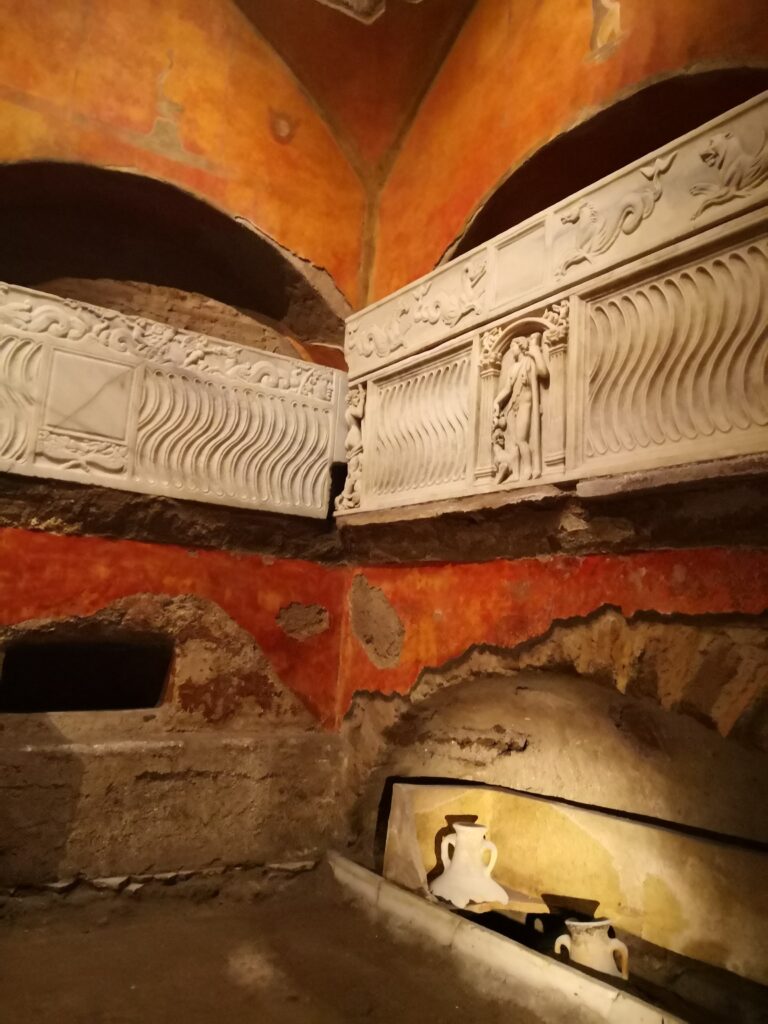
Beneath St. Peter’s Basilica lies the Vatican Necropolis, one of the most delicate and significant sites within the complex, which has recently been the focus of a new lighting project born from a partnership between Osram and Zumtobel, in collaboration with architect and lighting designer Alessandra Reggiani. The goal of this true “restoration of light” is to make the visitor’s journey safe and enjoyable without compromising the site’s conservation balance or spiritual dimension. From the descent along the evocative “stairway of time” to the encounter with the tomb of the Apostle Peter, light now guides visitors along a path that Alessandra Reggiani described to us firsthand.
The Vatican Necropolis presents particularly challenging microclimatic conditions. How did these constraints—in terms of humidity, conservation, and material compatibility—guide the development of the lighting system?
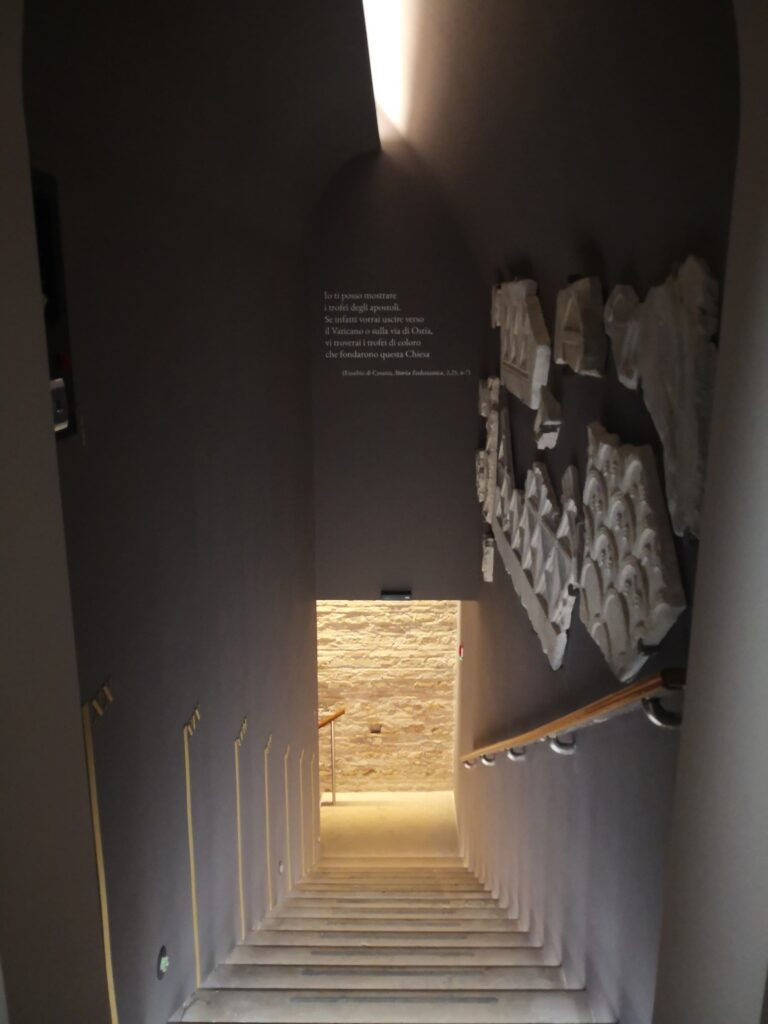
“The main challenge of this design project is undoubtedly linked to the specific microclimatic conditions of the underground space, so much so that, in addition to the lighting system, the air purification systems were restored and a disinfection system using germicidal lamps was planned, in order to reduce—in addition to issues related to light—biological risk factors as well. The development of the design concept for the new lighting was preceded by a careful and detailed analytical phase focused specifically on evaluating relative humidity levels, temperature, existing and desired lighting levels, as well as the specific characteristics of each material present on site. The results of these studies made it possible to propose customized solutions for each application area, eliminating the risk factors, which were already significantly reduced compared to the past thanks to the use of new LED technology.”
The project operates at very low illuminance levels and involves careful control of spectral components. What strategies were adopted to balance conservation needs with the quality of visual perception?
“The primary need to ensure optimal conditions for conservation—thereby applying light levels even below the standard 50-lux threshold recommended for highly photosensitive materials and spaces that are so fragile from a microclimatic standpoint, and using light sources characterized by a spectrum with reduced and controlled emissions in the red and blue ranges—which are stimulating from a photobiological standpoint—has made it essential to carefully apply perceptual qualities, gradually adjusting the transition between photopic, mesopic, and scotopic vision, thereby perfectly balancing the natural characteristics of the human eye. Visitors, guided by light—carefully calibrated in both intensity and direction—gradually adapt to the subdued light levels, promoting optimal visual response and acuity in the less-illuminated areas, which remain perfectly legible thanks to the subtle chromatic contrast between warm tones (2700–3000 K) and to the balanced interplay of light and shadow.”
The itinerary, starting from the “stairway of time,” constructs a very precise narrative sequence. How did you use light to structure this spatial hierarchy and guide the visitor’s experience?
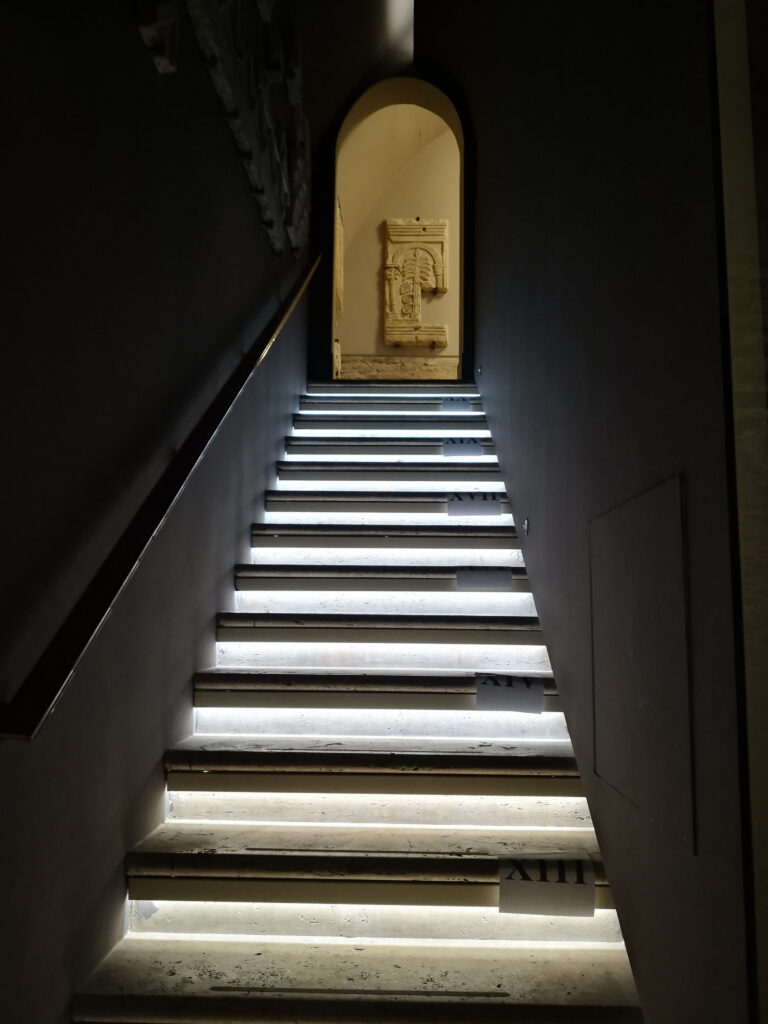
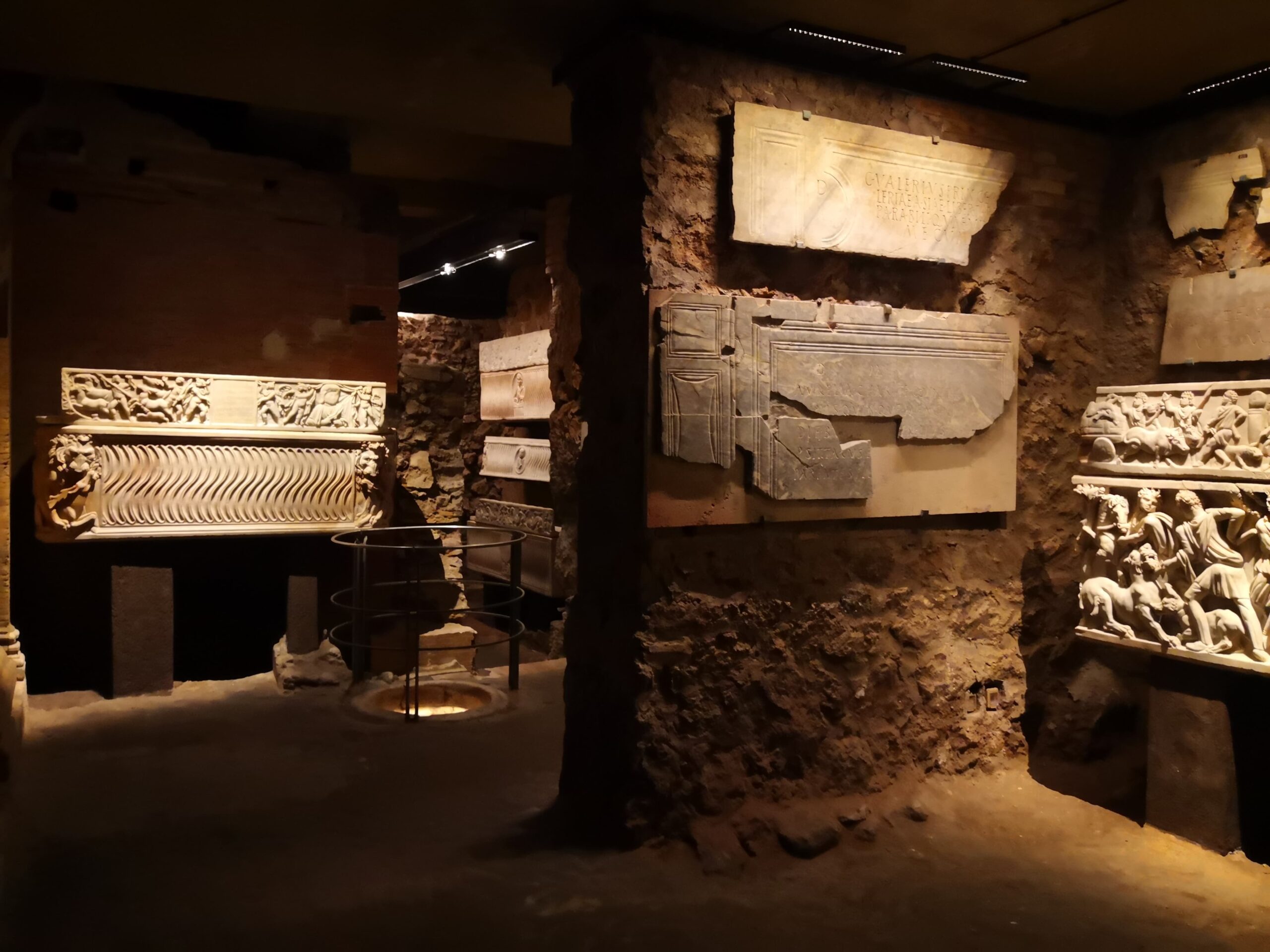
“For this important project, light was conceived as the cornerstone of the new exhibition design and proposed as the guiding element that takes the visitor by the hand and leads them on a journey back in time spanning some two thousand years, through a path of knowledge and faith that culminates in the sight of the humble pitched-tile tomb of the Apostle Peter, in a crescendo of emotions and spirituality. The light guides and narrates, striving to disappear as much as possible in its physical form—the lighting fixtures—to leave the stage entirely to the effects. A light that gently yet effectively caresses the surfaces, calibrating application methods and beam direction according to the geometric and material characteristics of the surfaces in question: grazing light beneath the treads with tunable white technology for the chronological staircase, where the color gradient emphasizes the concept of time passed; zenithal light with crossed wallwasher optics for soft, uniform illumination of the facades; projection effects to highlight details; diffused wall lighting along the path; overhead lighting for the interiors of the tombs and miniaturized accent lighting systems; and grazing light for inscriptions and engraved surfaces, designed to restore the texture and legibility of the artifacts. The light and the custom lighting fixtures are thus entirely shaped by the narrative and the dialogue they aim to create with visitors, producing an evocative and almost immersive effect.”
The project involves highly integrated solutions, featuring miniaturized fixtures and precision control systems. How crucial was the control of light output—in terms of directionality, intensity, and lighting scenarios—in defining the project’s final balance?
“This complex and delicate project could not exist without the aid of a control system precisely calibrated for each visual scenario conceived.
“All lighting systems, designed and implemented to address the specific challenges unique to each area of intervention, achieve their intended goals—visually, aesthetically, and in terms of conservation—thanks to the customization of light output, calibrated for each specific application. Equally indispensable was the flexibility of the lighting to properly apply the perceptual properties of vision, which form the foundation of the project’s structure. After the systems were installed, each area underwent a careful aiming of the lighting fixtures, supported by simulations and lighting calculations performed for each space, followed by a meticulous adjustment campaign aimed at balancing the light output according to the characteristics of the materials and textures—which vary greatly in terms of consistency and color—and at strictly ensuring that extremely low illuminance levels were maintained. Thanks to the flexibility of the light—in terms of direction and intensity—as well as the formal minimalism, perceptual and chromatic balance, and the equilibrium between light and shadow, this project is characterized by an evocative and harmonious visual atmosphere that makes a visit to one of the world’s holiest sites even more profound.”