Variables and unpredictability have never been as central as they are in SETUP Studio’s projects. Founded in 2018 by Dmitry Znamenskiy, Pavel Zmunchila, Anton Kochnev, and Stepan Novikov, SETUP focuses on building large-scale immersive environments—from live shows to installations to cultural and clubbing spaces—by integrating light, architecture, and technology into a single operational process. At its core lies a precise concept: light does not merely intervene in space, but constructs and modulates it through the use of illuminated surfaces, structures, and control systems that operate in an integrated manner.
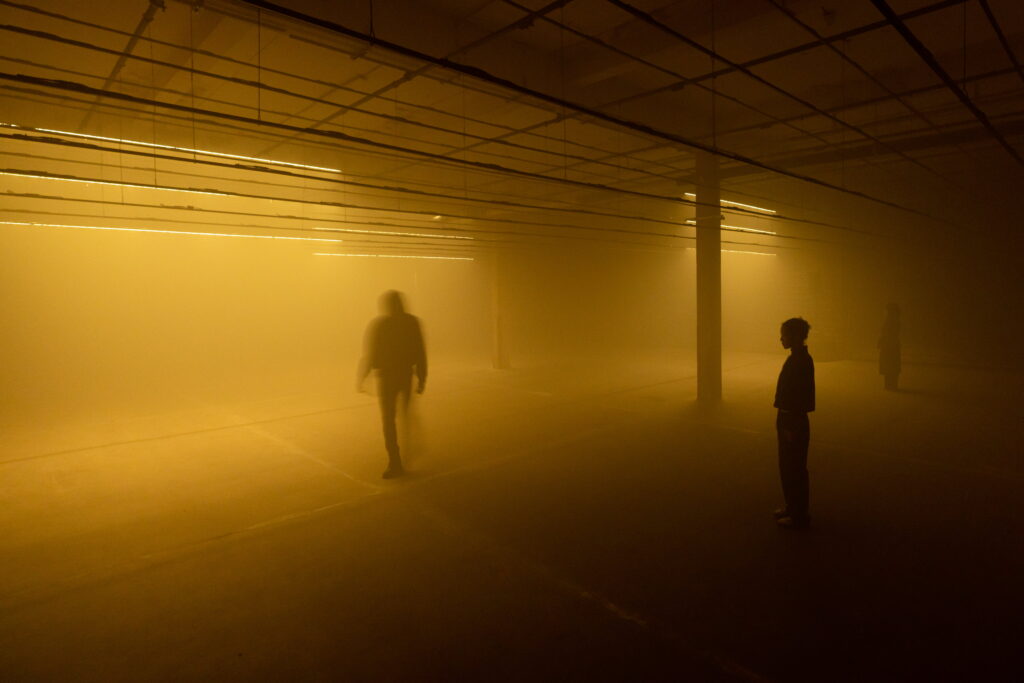
This is how true luminous worlds are born—dynamic places where the experience is never predefined but is generated in real time and in relation to variables such as time, context, and the audience. Every project is one of a kind: it exists only once and at that specific moment. This approach, which finds application in both artworks and large-scale productions—such as the audiovisual systems developed for the Red Hot Chili Peppers’ tours—demonstrates how technology can shape our perception of the environment and open up new possibilities for constructing or manipulating the image.
SETUP’s work lies between control and variability, in that narrow space where each project takes shape as a unique experience. Dmitry Znamenskiy, Founder & Creative Director, shares his insights on how design and the world of live performance are changing today, on the role of unpredictability in generative systems, and on how light and technology contribute to creating works, environments, and images that unfold and transform in real time.
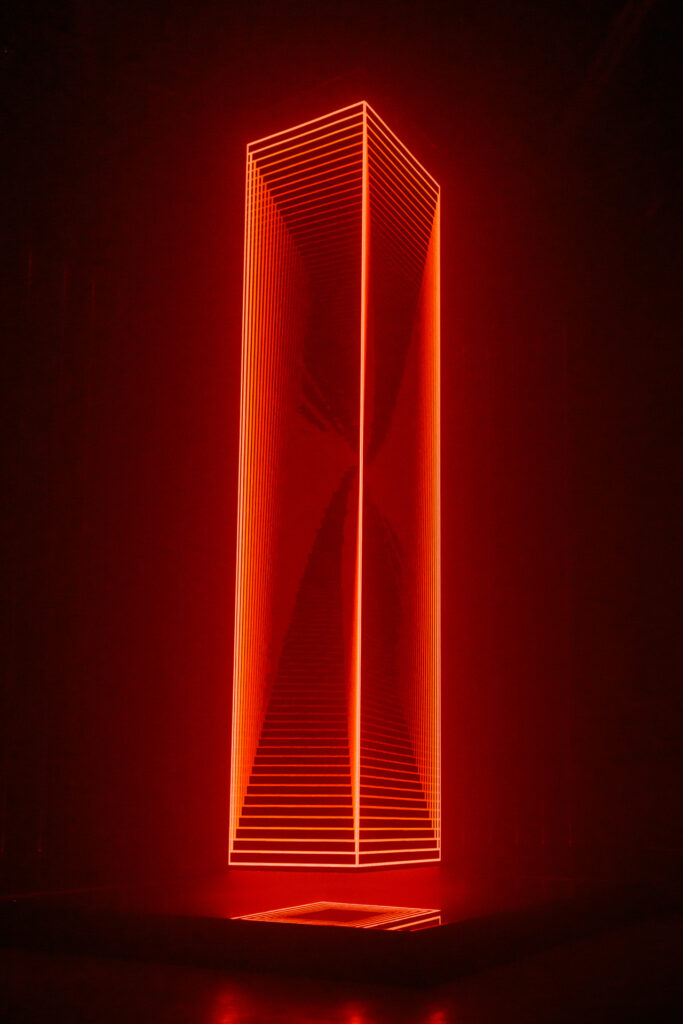
SETUP operates in the fields of architecture, performance, and real-time generative systems, where the image seems to generate itself rather than be designed. Does it still make sense to speak of traditional design?
“Design hasn’t disappeared, but it has transformed. We no longer design a final image, but rather the conditions under which it continues to generate itself: the geometries, the behavior of light, the rules of a generative system, the interface an operator works with during the performance. The image the audience sees is the final moment or layer, the one that appears at the end of the creative process, while everything that produces it and lies in between—from spatial decisions to the system’s architecture, down to the logic of the content and the relationship between sound and light—is an integral part of the work and is defined as early as the design phase. It is therefore not a matter of a contrast between traditional design and new forms, but a question of the location of authorship, which, for us, does not reside (only) in the final image but at the beginning and in the middle of the process, within the system and its framework.”
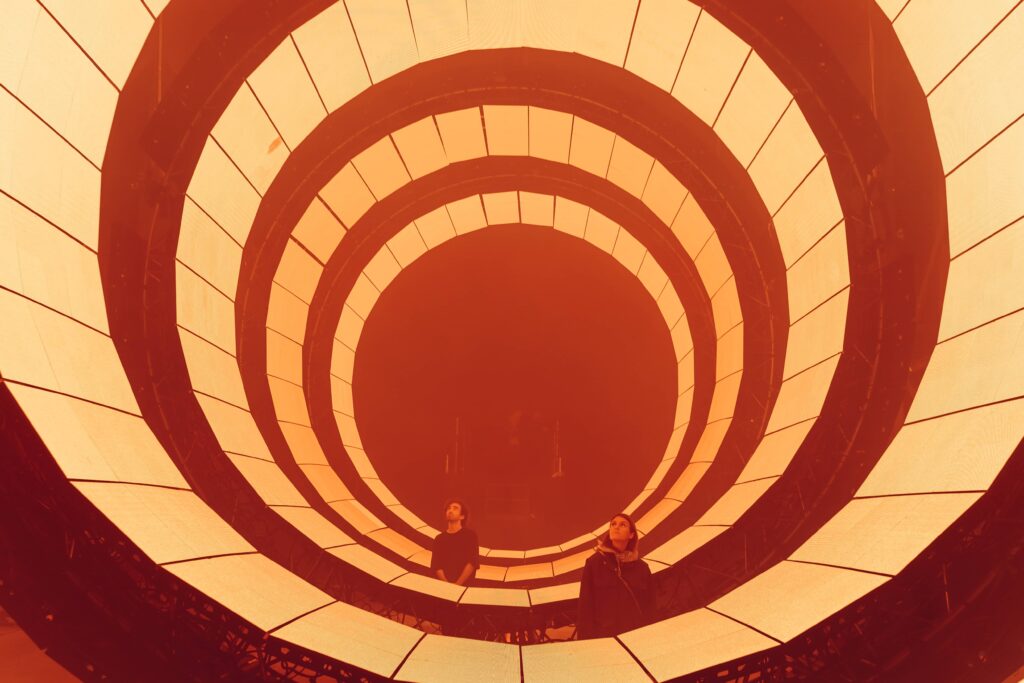
In projects like Coil or Lines, light does not merely define the space but seems to construct it. Is scenography still your starting point?
“Set design remains our starting point, but today space is conceived as a single material. In projects like Coil, for example, the LED rings do not merely illuminate a scene but become the installation themselves. When the audience walks through it, there is no longer a separation between set design and image: everything is part of the same experience. In this sense, set design is no longer a backdrop, a stage, lights, or music, but the very body of the project. It hasn’t been superseded; rather, it has transformed into a continuous, integrated system that is constantly evolving. This approach reflects a broader trend in which languages and techniques intertwine and set design becomes increasingly multidisciplinary. As artists, we consider ourselves an active part of this process.”
You often work with real-time generative systems, where each piece is always different. Is this unpredictability an aesthetic choice, or does it say something deeper about how we produce and perceive images today?
“Both, and they are closely linked. During a show, nothing is truly stable: the audience changes just as the energy of the moment changes. In this context, a static video feels artificial, because it doesn’t reflect what’s actually happening during the show, which is by its very nature unstable and constantly evolving. At the same time, images today exist within a system of continuous reproduction: everything is copied, everything tends to look alike. This is where a generative system comes into play that does the opposite: it produces an image that exists only once, in that space and for those people. Dynamism thus becomes a way to restore a contingent and non-replicable presence to the image.”
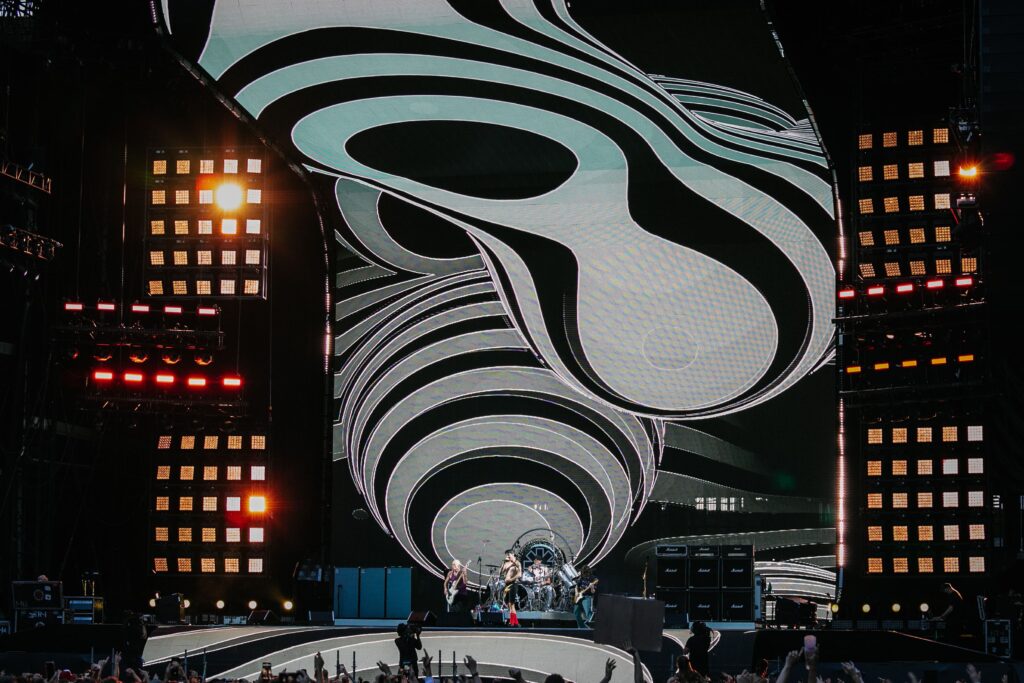
For the Red Hot Chili Peppers tour, you wrote algorithms that generate images. How important is control, and conversely, how important is unpredictability?
“First of all, these aren’t opposing concepts. It’s precisely this finely tuned control that makes unpredictability possible. For the Red Hot Chili Peppers’ shows, we’ve developed more than 150 scene algorithms, and none of them are pre-set videos: each one is a system for generating unique content in real time.
This design approach aligns with the band’s attitude of constant improvisation: songs change structure, duration, and intensity, transforming into jams. Lighting designer Scott Holthaus and the technicians monitor all of this on stage, selecting scenes and adjusting parameters via a console. The control system is rigorous precisely to guarantee freedom for those on stage and those working in the control room. If control is weak, unpredictability becomes chaos and cannot be managed. If, on the other hand, it is well-programmed, (unpredictability) can be used as part of the creative process. This balance is the true tool of the trade.”
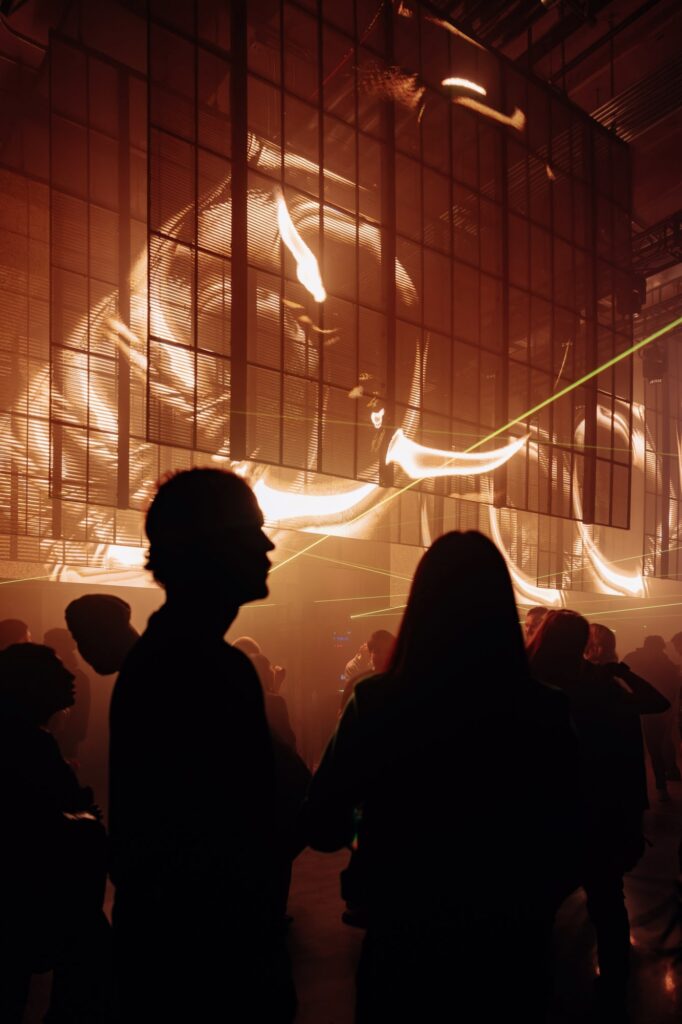
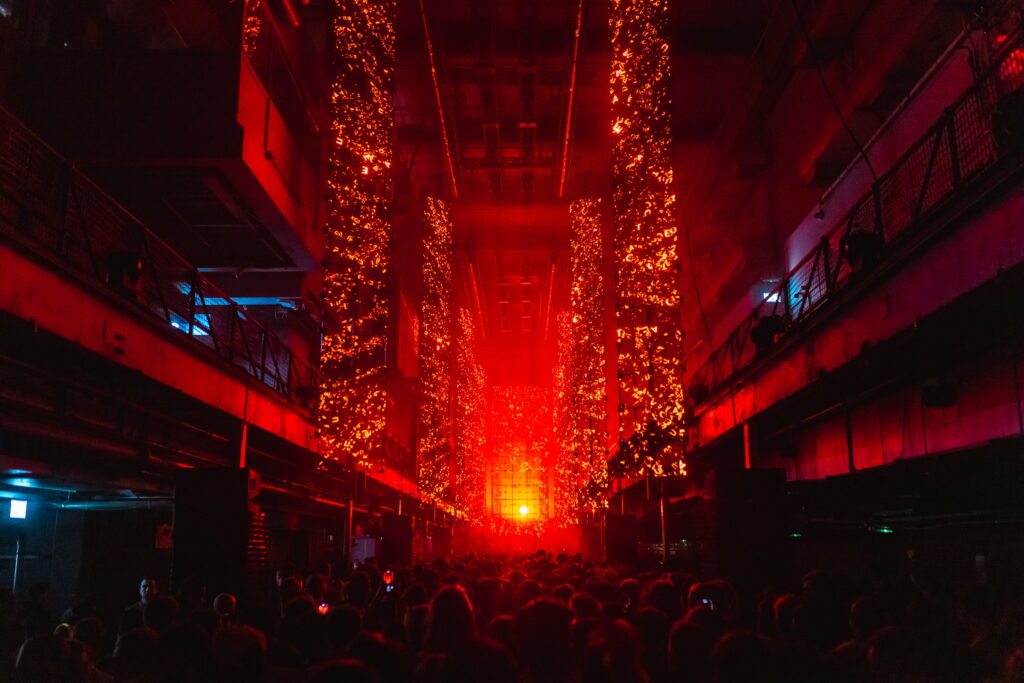
In works like Art-Club and immersive pieces, the audience actively enters the space and experiences it. Do you design more experiences to be observed or environments to be lived in?
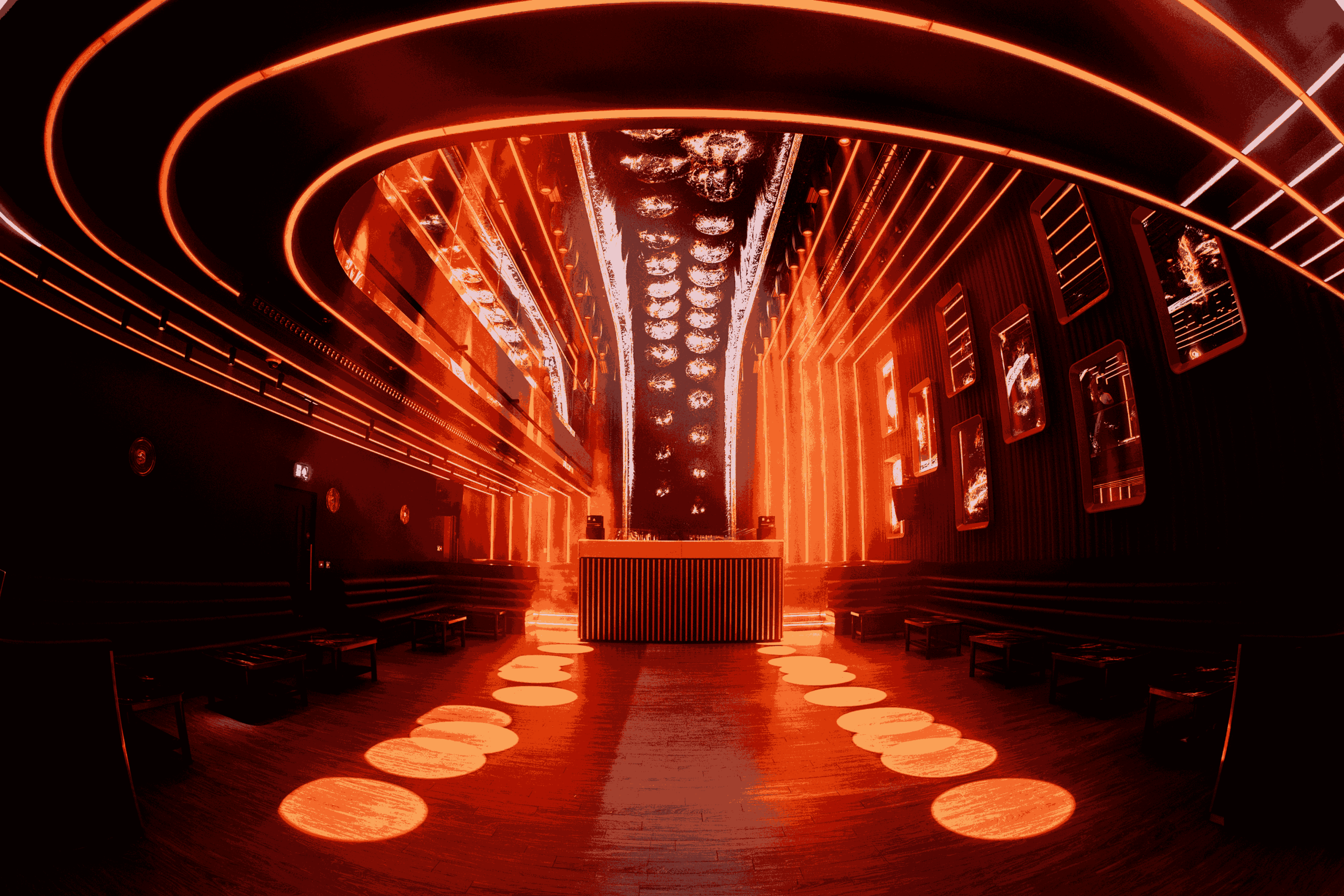
“It’s not a question that’s easy to answer directly, but I’d say they’re environments to be experienced. First, we physically construct the spaces, and everything else is organized from there. With Art Club at The Post in Houston, the space must function as a living, ongoing environment, not as a structure designed for a single evening—and therefore fixed and rigid. This changes everything: the scale, the sightlines, the way the system behaves at different moments of use, from the quietest to the most intense. People don’t stand still and observe; they move, talk, dance, and return the following week. Our job is to create a space that can accommodate all these situations and remain alive in different ways depending on the circumstances. The image is only one part of the project, along with the space, the light, and the movement of people.”
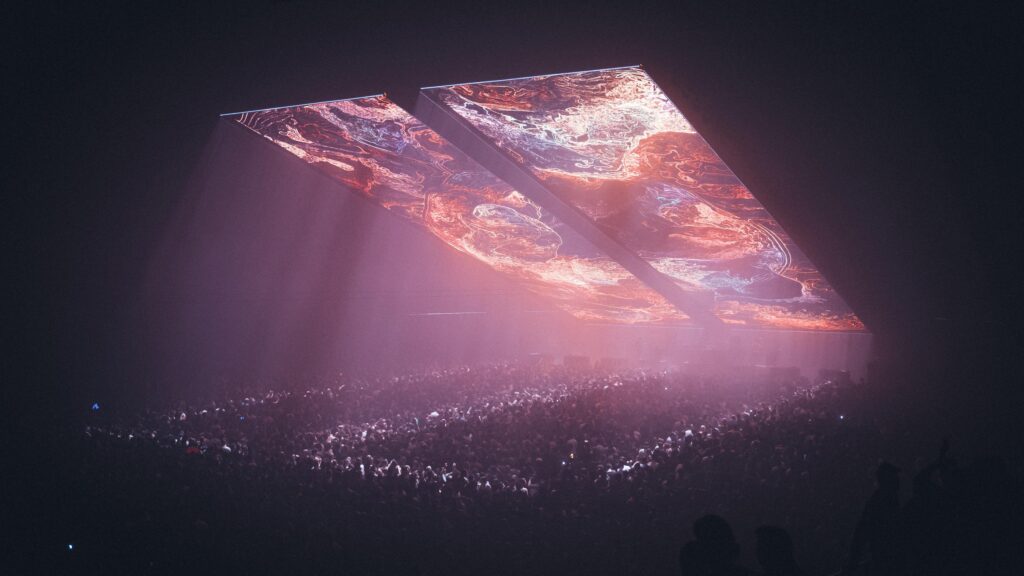
Between clubs, art, and live performances, your work increasingly blends technology and human perception. Are you interested in creating a show or in building a direct relationship with the audience?
“Honestly, the second option. Although it would be false to say that the idea of a performance never comes into play, in practical terms that is not the goal. Technology is treated as a design material—into which light, code, sound, and structure are integrated—and the focus shifts to what happens to the person within this system. The goal is to build a more intense perception of space and performance, a different relationship with time, and the feeling that what is happening can exist only in that precise place and moment. When a show becomes spectacular, it is usually not because it was intended to be, but because the system of relationships between its elements works. Conversely, when the spectacle becomes the end in itself, the result tends to lose its substance: it is loud, but without depth. And it is this kind of spectacle that we would like to avoid.”