What if emotions could be touched? What if memories could be seen again? These are questions Otto Plesner might answer through his work. A representative of a “new” generation of designers redefining the boundaries of lighting design—pushing it beyond its scenographic function—the Danish designer, founder of the studio RenaiXance, operates at the intersection of art and science, exploring human perception, even in its most intimate forms.
In his creative universe, light is never just illumination. It is a living element, capable of transforming sensations, telling stories, and giving form to what usually remains invisible. Raised between theater stages and authorial photography, Plesner developed an early sensitivity to the narrative power of light, shaped by a family legacy intertwined with a strong scientific curiosity. Today, this translates into immersive experiences where biological data and inner states become design material.
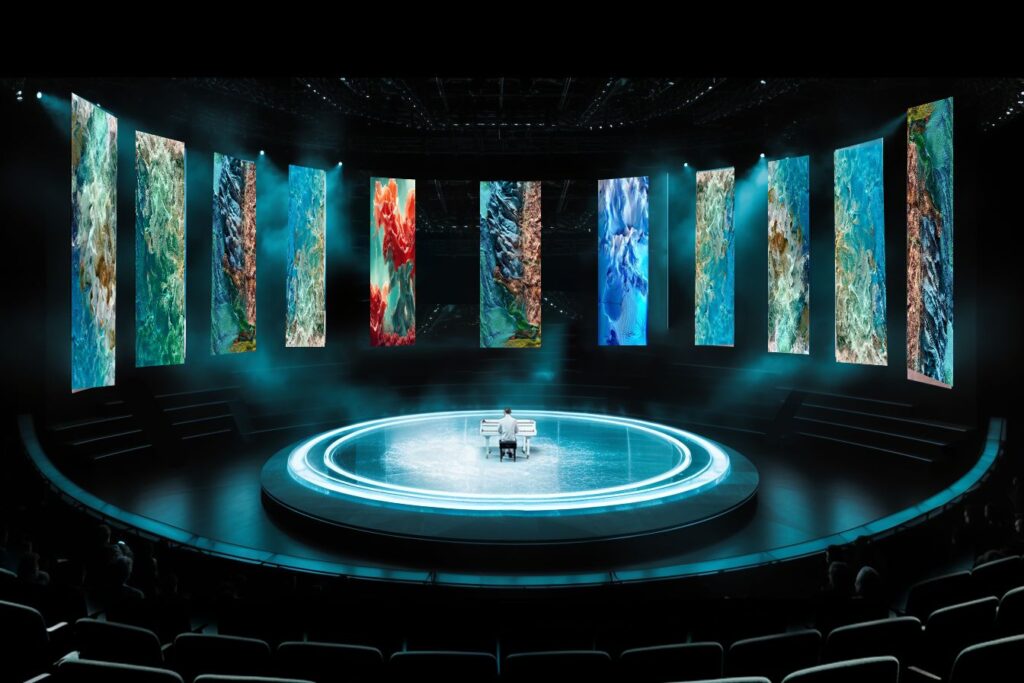

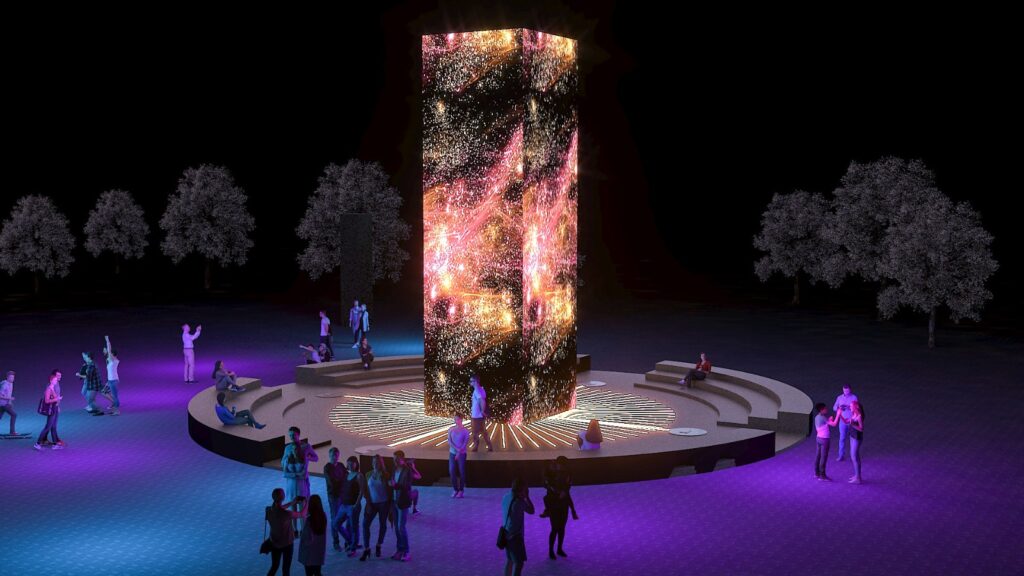
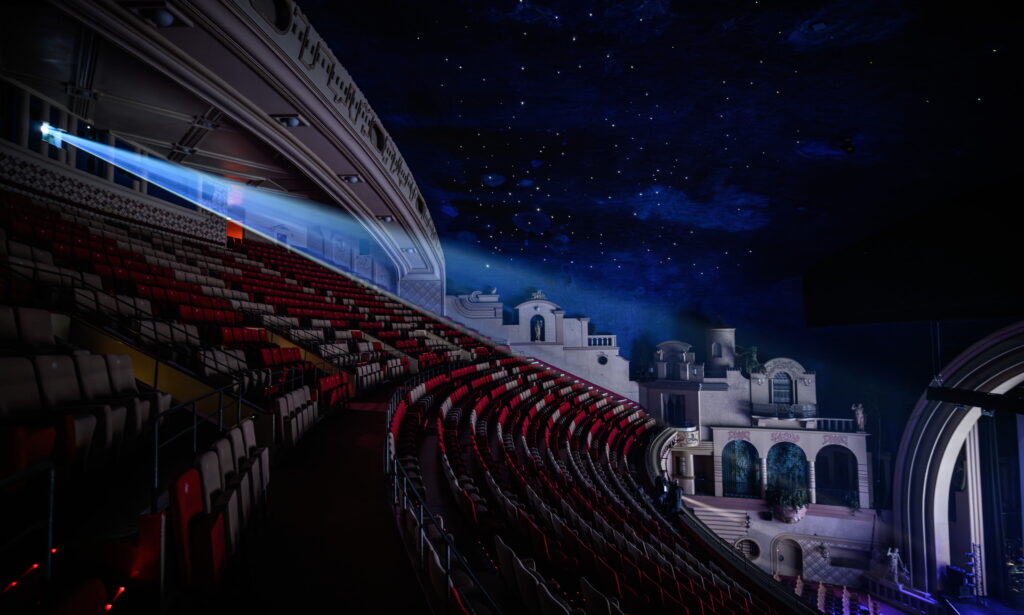
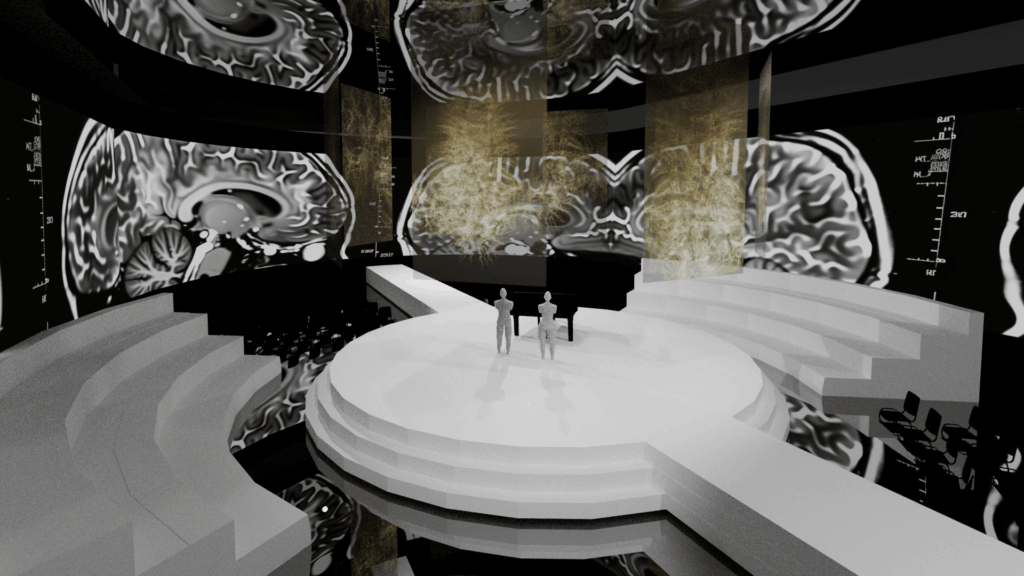
Among his works is The Art of Memory, a multisensory piece currently in development that explores the relationship between light, sound, and memory, examining how Alzheimer’s disease alters spatial perception and how light stimuli can evoke fragments of identity. In Echoes of Eternity, participants’ brainwaves are translated into real-time visual poetry, while PULSE – Untold Festival transforms the audience’s heartbeat into frequencies, colors, and dynamic light patterns.
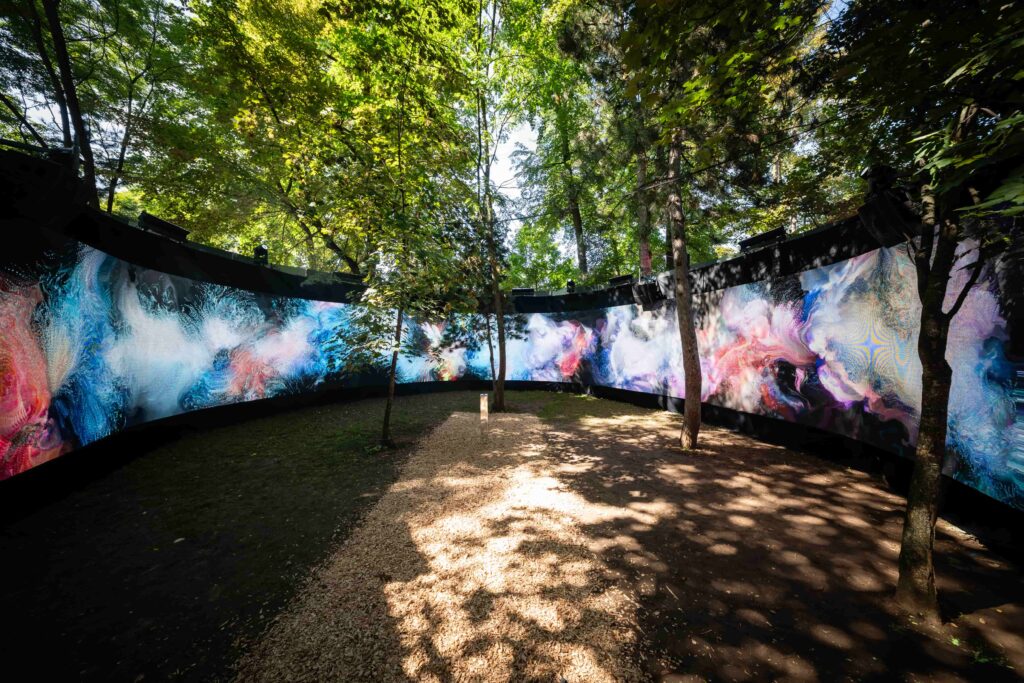
These projects sit alongside international productions across theater, performance, and large-scale events. Otto Plesner demonstrates how light can act as a tool of revelation—bringing emotions, memory, and instinct to the surface.
Within this landscape, RenaiXance functions as an avant-garde laboratory where art and science engage in dialogue. Through collaborations with neuroscientists, musicians, and digital artists, the studio develops works that move beyond the visual to become transformative experiences—bridges between what can be measured and what is deeply human, and therefore not measurable. In this “illuminated” interview, Otto reflects on his journey, the influences that shaped his vision—including his relationship with his father, also a lighting designer—and the research that led him to explore light as a revolutionary and revealing language.
You grew up in an artistic family, with a father who was a lighting designer. When did you first realize that light could become an independent expressive language?
«My father wasn’t just a lighting designer—he was also an inventor of lighting fixtures and a pioneer in early LED technologies. This deeply shaped how I see light: not only as an artistic tool, but as a physical phenomenon capable of altering our perception of reality. He would explain how it shapes what we see, influences our emotions, and even affects our perception of time. In a way, we never experience the world in real time; we see what has taken time to reach us. That idea has always fascinated me: light as a bridge between the present and the past.
Through a collaboration with NASA, he even placed my name within a light system projected beyond Earth. To this day, when I look at the stars, I think about that gesture, about light as something that can travel, leave traces, and tell a story. Another key lesson I inherited was understanding that vision is not passive: the brain constructs reality by combining light, memory, expectations, and patterns. This means that two people can perceive the same space in completely different ways. So it’s not just about illumination; it’s about a force that helps to create atmosphere, meaning, and emotion. I also remember that during one of my productions, a lighting designer told me something I never forgot: “We’re not designing light—we’re painting with it.” That’s when I truly understood that light is a narrative language, capable of building worlds and telling stories even before any performance begins».
You transform biological data and emotions into light-based experiences. How do you decide what to translate into light, and how does this process work in practice?
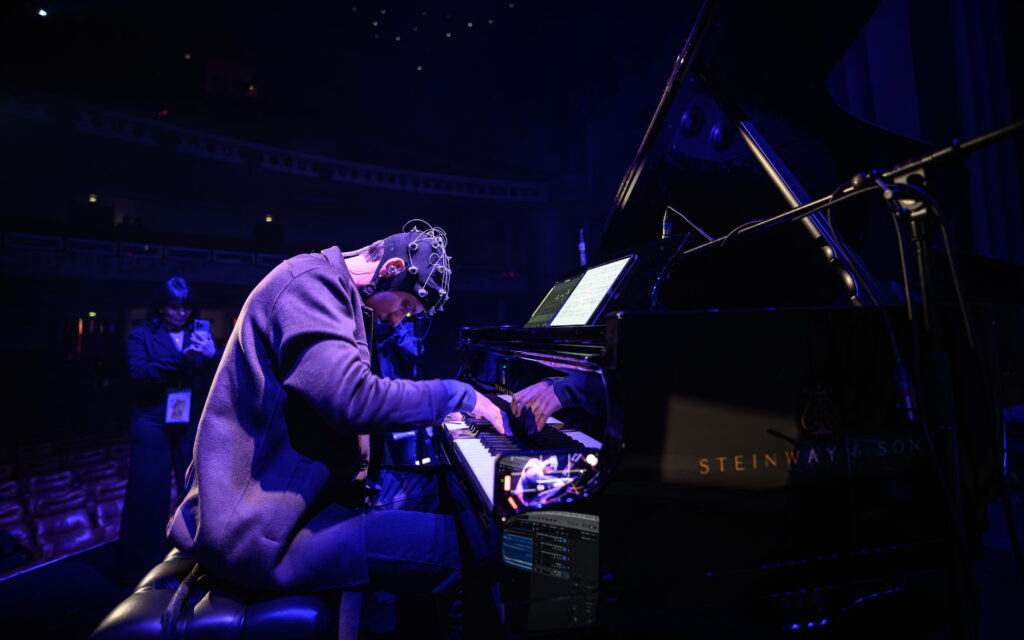
«At the core, there is always an extensive research phase. In Echoes of Eternity, we worked mainly with brainwaves: we received both raw data and processed interpretations through the neural software HABS, which categorizes them into emotional states such as joy, sadness, or anger. Based on this, the studio DECOL developed a visual encoding system in which each state corresponds to specific colors and light behaviors. These parameters are then translated in real time into light and visual content that continuously responds to incoming data.
For PULSE, we worked with a team of experts who developed biometric sensors able to detect participants’ heartbeats. In this case, the entire light and visual system gradually synchronizes with the heart rhythm: the longer the contact, the more the environment aligns with the pulse, creating a “living network” that responds in real time to human presence. The Art of Memory represents a further step, introducing a multisensory dimension. It’s not just about light and images, but also sound, movement, and even olfactory stimuli. Data activates all these elements simultaneously, constructing a complex experience that reflects the relationship between perception, memory, and states of consciousness. Developed in collaboration with neuroscientists, the goal is to move beyond simple data visualization, toward a deeper interpretation, exploring how light can evoke memories and shape perception itself».
In your work, light often feels like a living character guiding the experience. How do you balance technical aspects with poetic and narrative intent?
«I tend to see technical constraints as an exciting challenge—an opportunity to constantly push the limits of what’s possible. I usually start from a very clear narrative idea: I know what story I want to tell through light and what emotion I want to create. Of course, constraints emerge throughout the process, such as budget limitations, technical restrictions, and installation complexity. But these are precisely the moments when the process becomes more interesting. Instead of seeing them as obstacles, I turn them into opportunities to experiment and find alternative solutions with the technical team. That’s where my work takes shape: in the balance between intention and constraint. Technique is never separate from poetry—it becomes the means through which the narrative comes to life. Ultimately, we’re not simply designing light, we’re constructing images, moments, emotions that together tell a story».
In PULSE – Untold Festival, visitors’ heartbeats generate colors and light patterns in real time. What were the main challenges—technical and emotional—in making something so intimate and invisible visible?
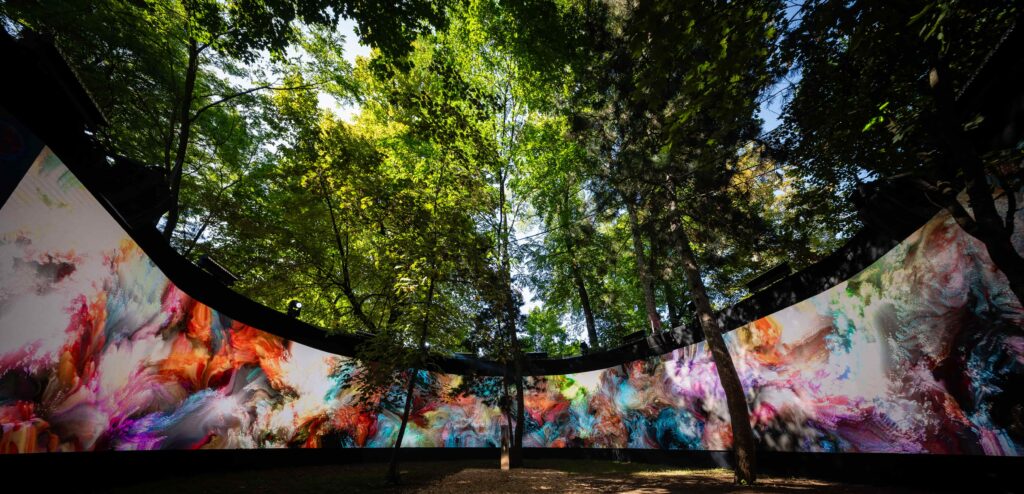
«The biggest challenge was the context. The installation was meant to take place in the heart of a forest, but we found ourselves in a completely different environment, much more complex from a technical and structural standpoint. What initially seemed like a limitation became the core of the project. Instead of forcing the space, we chose to integrate it: the trees became part of the work, and the light and visual content began to interact with nature, making the experience more immersive and organic. Another major challenge was time. Rather than trying to control every detail, we embraced this condition and worked more instinctively. This also shaped our approach to biometric data. Instead of building an overly complex system, we focused on the essence: the heartbeat as a primary impulse. This more “raw” approach is what made the piece so powerful. The final result was a living system, where light responded to people’s hearts, transforming invisible data into a collective, physical, and emotional experience».
You often collaborate with neuroscientists, musicians, and digital artists. How do these partnerships transform your design vision?
«Collaboration is fundamental. My starting point is always narrative: I want to tell a story and create emotion. But to build that immersive moment, all elements—light, sound, data, technology—must align perfectly. Working with neuroscientists, musicians, and digital artists means entering a continuous learning process. Every scientific discovery, technological innovation, or sonic experiment can reshape the vision of the work. These collaborators help translate complex data and concepts into visual and sensory experiences, expanding the language of light. Music, in particular, acts as the invisible conductor of emotion: it guides perception, interacts with light, and amplifies the narrative».
In your future projects, what role do you see for light in expanding human perception and our understanding of memory and emotion?
«Every year, every decade, we discover new dimensions of light and its relationship with our world, our ecosystems, and the universe itself. I believe it will play an even more central role in the future. Today, immersive light-based experiences are among the most powerful and sought-after forms in art. But for me, light goes beyond aesthetics: it doesn’t just illuminate a space, it shapes how we perceive what surrounds us, how we respond emotionally, and how we remember. It influences atmosphere, rhythm, and intimacy. In this sense, it becomes a bridge between the physical and the emotional, between science and narrative, between what can be measured and what cannot (at least apparently).
In projects like The Art of Memory and Echoes of Eternity, light becomes a pulsating language for what usually remains invisible: emotions, memory, biological states, even forms of presence that are difficult to express in words. It’s not just about illustrating data, but about giving form to fragility and transformation. What fascinates me most is that, even before a story is told or a performer enters the scene, light has already begun to suggest how to look, how to feel, how to enter another reality. I believe the future of light is not just illumination, but revelation, a tool to better understand ourselves, others, and our place in the universe in new and profound ways».