
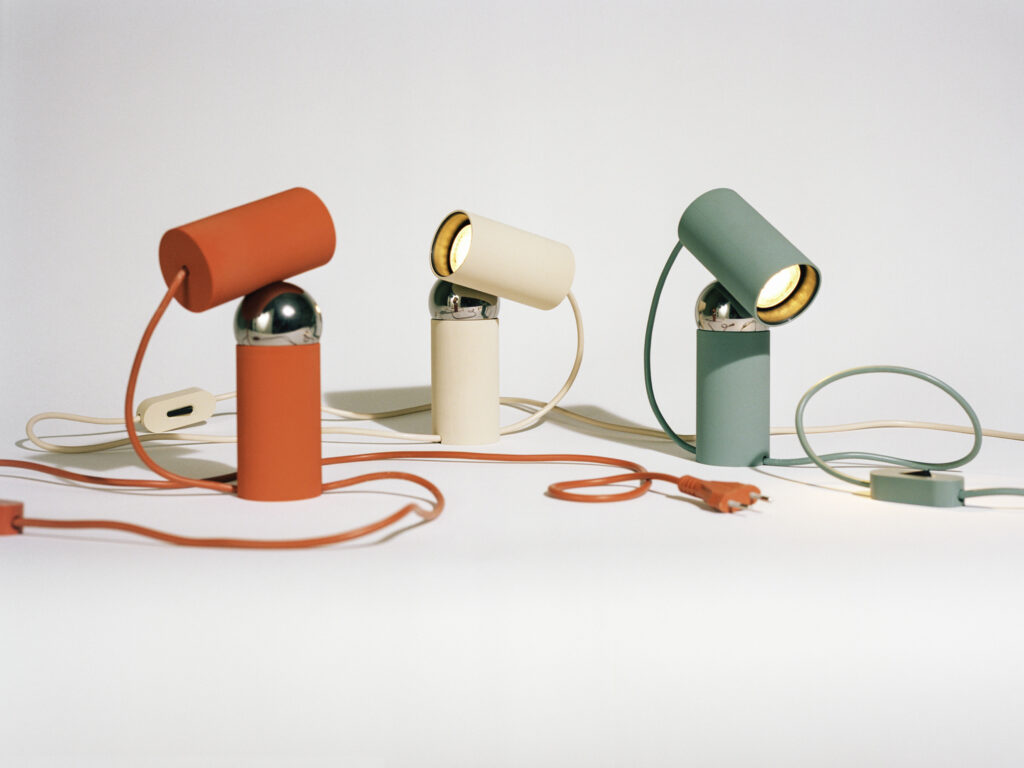
Cover photo: “Bilboquet” lamp by Philippe Malouin
While the Fiat Topolino emerged as one of the standout protagonists of the XXIX Compasso d’Oro Awards ceremony held last May—winning over both the jury and the public, to the point that it is increasingly being hailed as a status symbol—our attention naturally turns to another of this year’s twenty award-winning projects. One that speaks the language that interests us most: light. Smaller in scale, certainly, but not in ambition. It is Bilboquet, the table lamp designed by Philippe Malouin for Flos.
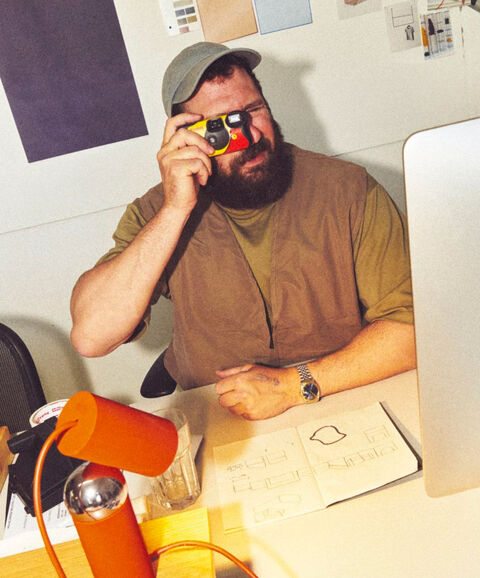
Everything begins with a 16th-century game
A sphere, a cylinder, and a long cable that, rather than being concealed, is fully integrated both chromatically and formally, assuming the same importance as every other element of the lamp. It is in this idea of balance and simplicity—borrowed from the past and reinterpreted through a contemporary lens—that Bilboquet finds both its personality and, without question, the distinction it enjoys today.
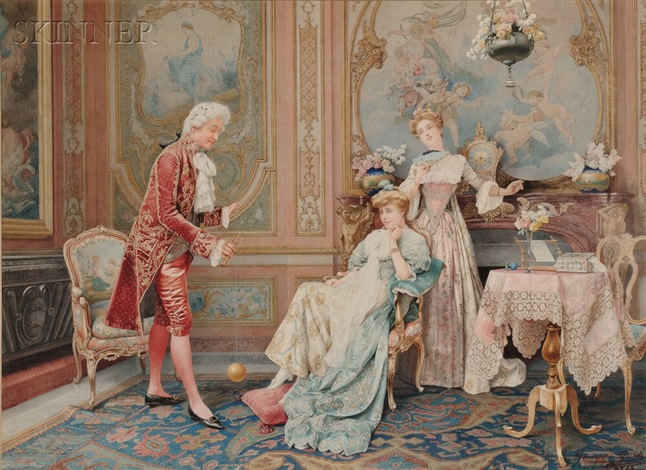
From the past, as we were saying, because the concept behind the lamp is inseparably linked to the wooden game of the same name. Traces of it can be found among Asian civilizations and Indigenous communities in North America, yet it was during the 16th century that it achieved extraordinary popularity in France under Louis XV, becoming one of the aristocracy’s favorite pastimes. The game consists of a ball attached to a handle by a string, which must be swung and caught inside a small cup. Its name derives from the combination of the words bille (marble or ball) and bouquet (small bouquet). A seemingly simple game that, in reality, demands coordination, precision, and a constant search for balance, qualities that helped it achieve a kind of pre-digital “virality”. From Europe, it spread eastward, particularly to Japan, where it became known as Kendama (and where anyone who missed a move was reportedly required to drink a shot of sake), before making its way to other parts of the world.
Inspired by this history, Philippe Malouin focused on designing a magnetic sphere that allows the lamp head to rotate and be directed with exceptional ease. As with the original Bilboquet game, movement sits at the core of the project. A principle translated into the same immediacy with which users instinctively understand how to interact with it, as though they were being invited, this time, to play with light.
The jury’s rationale
It was precisely this theme of balance that guided the jury’s decision. In the official statement, the jury wrote: «The memory of a small object from French tradition is reintroduced through the code of “surprise.” The use of primary forms makes the function of directing light evident through an apparently impossible balance, becoming a metaphor for the difficult equilibria that life imposes upon us.» Malouin’s achievement lies in taking an object that has been embedded in collective memory for centuries and transforming it—without resorting to easy nostalgia—into something that speaks directly to the present, while preserving and reinterpreting the logic of play at the heart of the interaction.