
Cover photo: ph. Bridgit Beyer
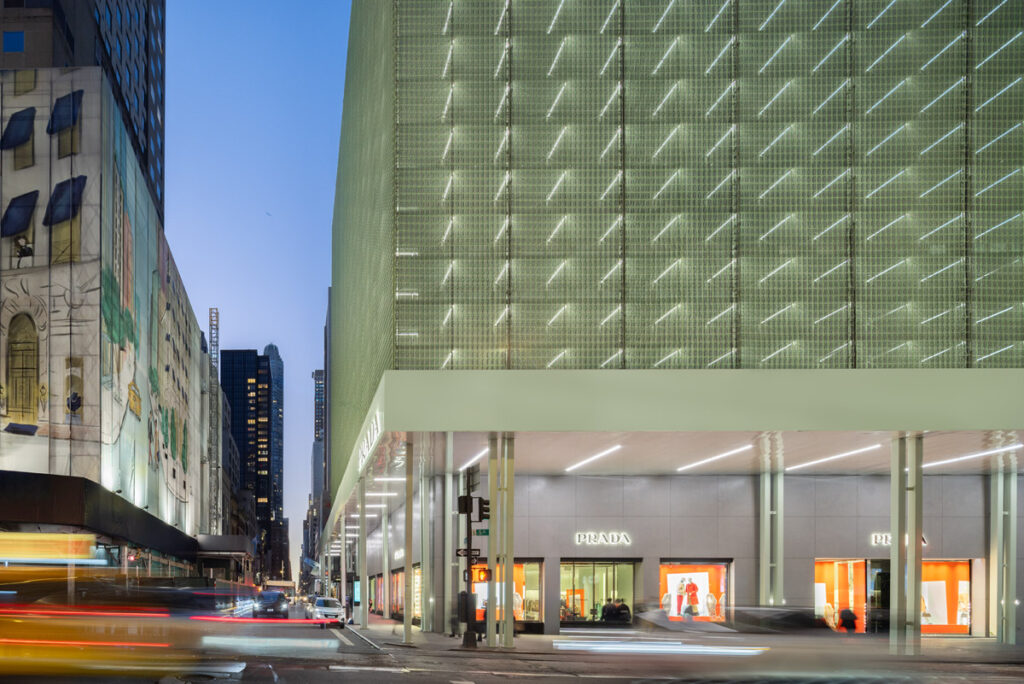
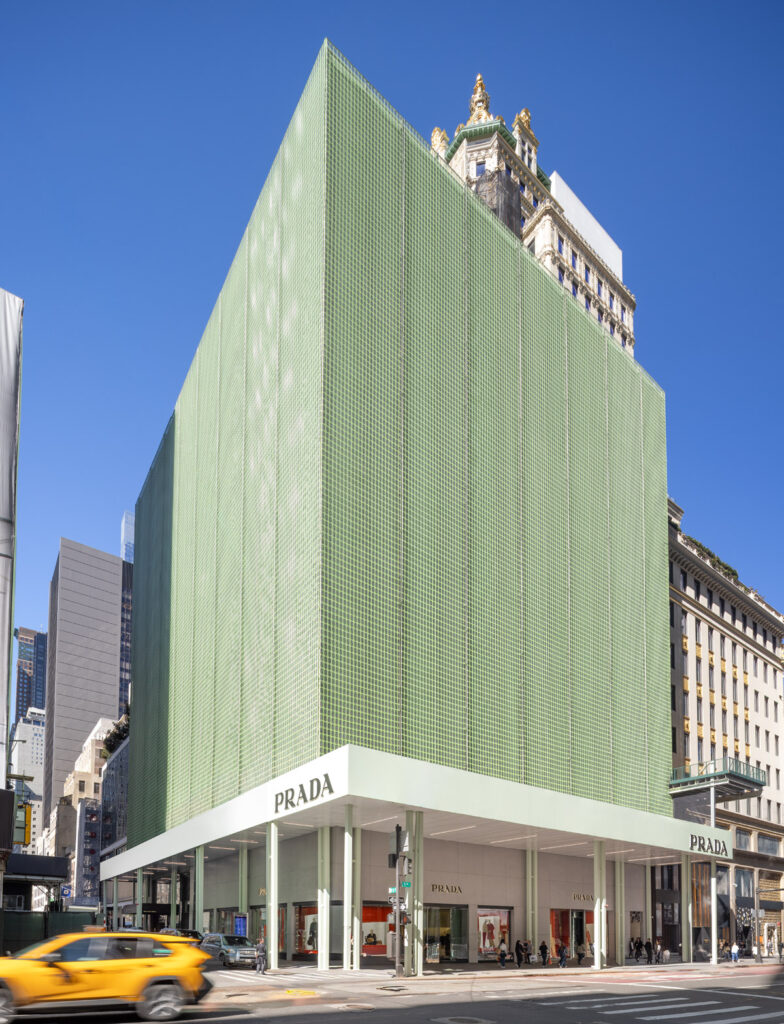
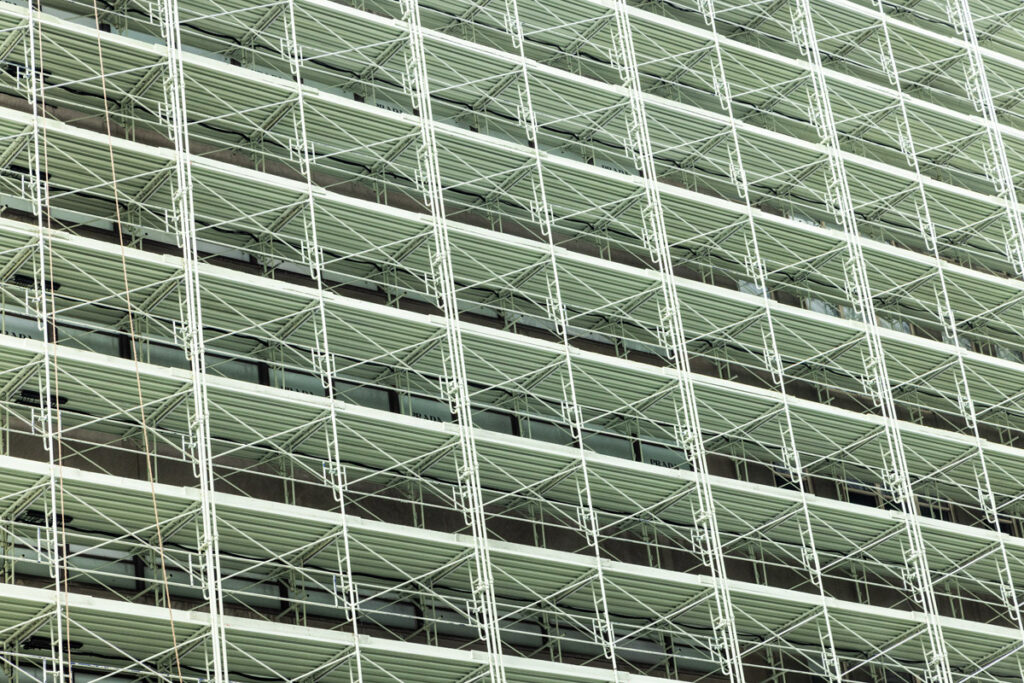
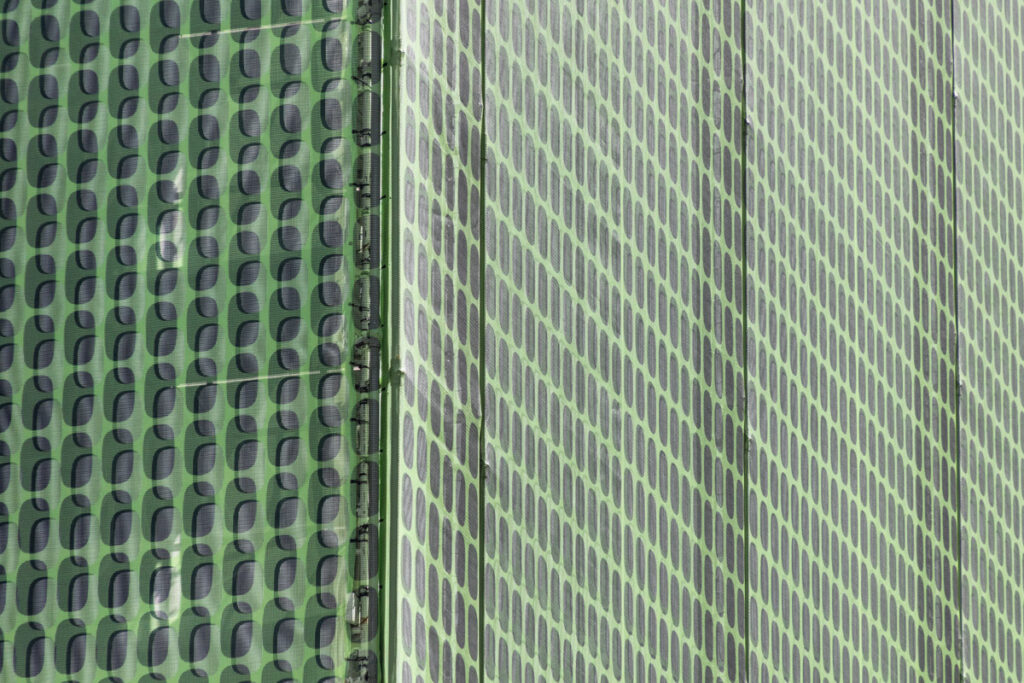
In New York, tubular scaffolding structures, protective netting, and construction lighting applied to building façades are so widespread that they have become familiar elements, almost part of the city’s visual identity. Reinterpreting this condition is 2×4, the multidisciplinary studio founded in New York in 1994 by Michael Rock, Susan Sellers, and Georgianna Stout, which recently designed a bespoke temporary wrap for the Prada store building—its long-time partner—at the corner of Fifth Avenue and 56th Street. A double layer of semi-transparent scrims creates a moiré effect that shifts depending on light, weather conditions, and point of view. From a distance, the façade appears compact, almost monolithic; as one moves closer, it opens up, becomes lighter, and reveals the underlying structure. At night, a linear LED lighting system gently dissolves the outer layer. The result is an intervention that reflects 2×4’s holistic approach and its ambition to construct a coherent narrative, one that brings together research, strategy, and visual and spatial experience.
How does the temporary installation created on the façade of the Prada store on Fifth Avenue fit into [your work with Prada]?
This project sits within a broader trajectory of how Prada engages architecture as a medium of communication. Rather than treating the façade as a purely functional surface, we approached it as an architectural condition in itself. Working within a standard scaffolding system, the project transforms a regulatory structure into something more architectural. It extends Prada’s ongoing interest in dualities by operating between building and image, infrastructure and expression, permanence and ephemerality.
Could you explain the role of light within the project, and whether it aligns with a coherent idea of lighting aesthetics that has already emerged in your previous collaborations with the brand?
Rather than treating lighting as an additive feature, we also approached it as part of this kit-of-parts system. It extends the perceptual depth of the façade and allows it to transition from a graphic surface into something more spatial and atmospheric. Across our work with Prada, there is a consistent interest in how materials and light interact to produce ambiguity. Here, that idea is applied to a temporary construction system, giving it a level of precision and presence that exceeds its typical role.
In percentage terms, how much of the process is about interpreting the brand, and how much is about constructing something new?
It’s less a split and more a feedback loop. The brand provides a framework, but the project tests and extends that framework through form, material, and perception. In this case, we began with a very pragmatic system defined by efficiency and compliance, and used it as a constraint to develop something more deliberate and architectural. The result is both an expression of Prada’s sensibility and a proposal for how these kinds of structures might operate differently within the city.
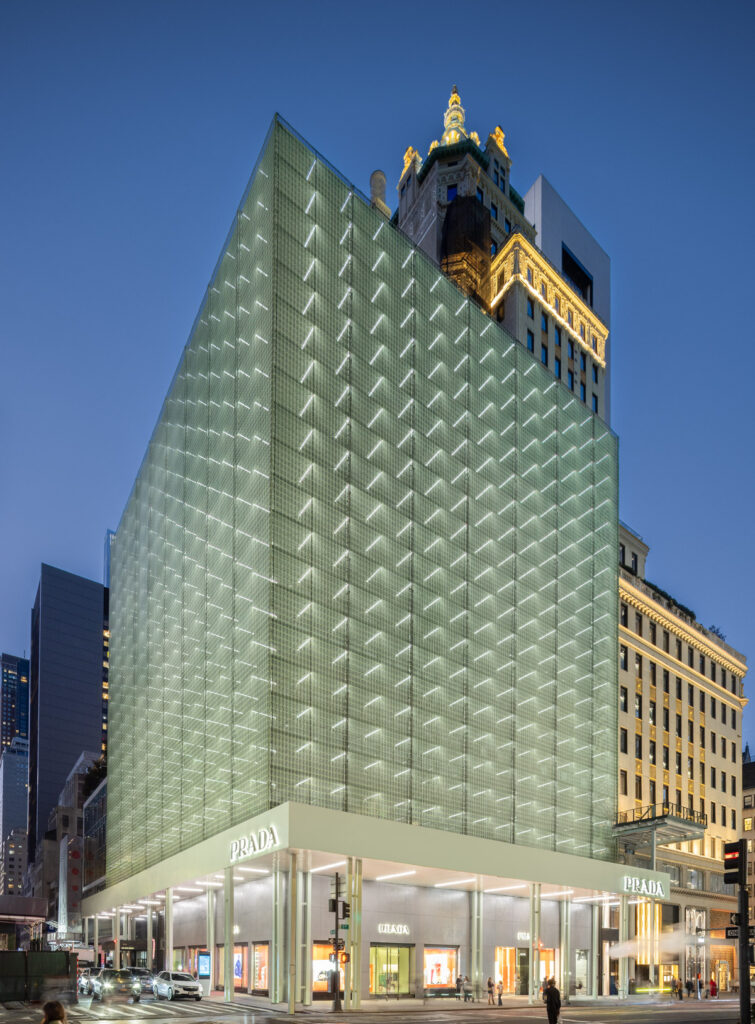
This is a temporary installation, yet highly visible. What kind of experience were you aiming to create for the public?
We were interested in creating something that rewards attention over time rather than delivering a single fixed image. The façade shifts subtly depending on how you encounter it, whether you are passing quickly along Fifth Avenue or standing still across the street. There is also a broader ambition to reframe a familiar condition. Scaffolding is typically understood as a visual obstruction, something to be minimized or ignored. Here, it becomes an active participant in the streetscape, offering a moment of visual complexity and ambiguity within the city. Even as a temporary intervention, it suggests that these ubiquitous structures can carry a different kind of presence, one that is more considered, more integrated, and more engaging and generous to the public.