
We all have artworks hanging on our walls. Whether simple decorative elements, visual expressions of a passion, “family” pieces, or part of a curated collection, they are quiet companions of everyday life, enhancing interiors while subtly reflecting those who inhabit them. But how should artworks be lit? A seemingly simple question that opens up a broader discussion, from practical tips to more technical guidelines, all aimed at enhancing them without causing damage.
Lighting artworks: basic rules to avoid damaging them
Ideally, artworks should be placed on walls that are not exposed to strong natural light. This helps prevent pigments from fading over time, paper from yellowing, and paintings—especially oil works—from deteriorating or developing craquelure, that network of fine surface cracks which is a natural aging process but can worsen significantly under direct sunlight.
In general, LED sources are the best choice for lighting artworks, as they do not emit infrared or ultraviolet radiation, both of which are harmful to surfaces. In many cases, they are also dimmable and allow for precise electronic control.
Whenever possible, light sources should have a high CRI (Color Rendering Index), at least 90, to accurately reveal the details of both prints and paintings.
What color temperature should you choose for lighting artworks?
A general guideline is to use light sources between 4000K and 5000K for artworks with predominantly cool tones, and around 3000K for those with warmer colors. That said, the choice should primarily respond to the atmosphere you want to create and the overall mood of the space.
How to light artworks like in a gallery
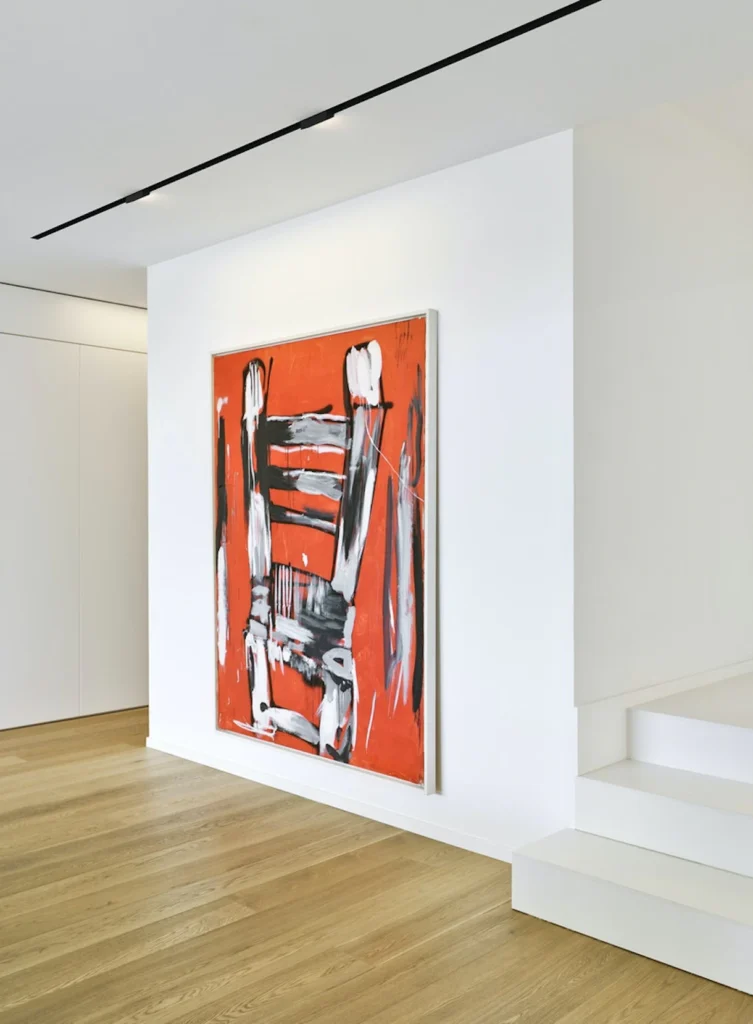
Some home lighting solutions replicate—though in simplified form—typical museum applications. Electrified tracks with adjustable spotlights are a good option, particularly for small collections or long corridors.Their main advantage lies in the ability to direct the beam precisely, creating focused lighting on the artwork. Lighting designers often recommend a 30° angle as optimal to avoid unwanted shadows. Alternatively, fixtures with wall-washer optics can be used to illuminate both the wall and the artworks evenly. Another option is indirect lighting directed toward the ceiling, creating a softer, more diffused effect.
Lighting artworks with picture lights and dedicated fixtures
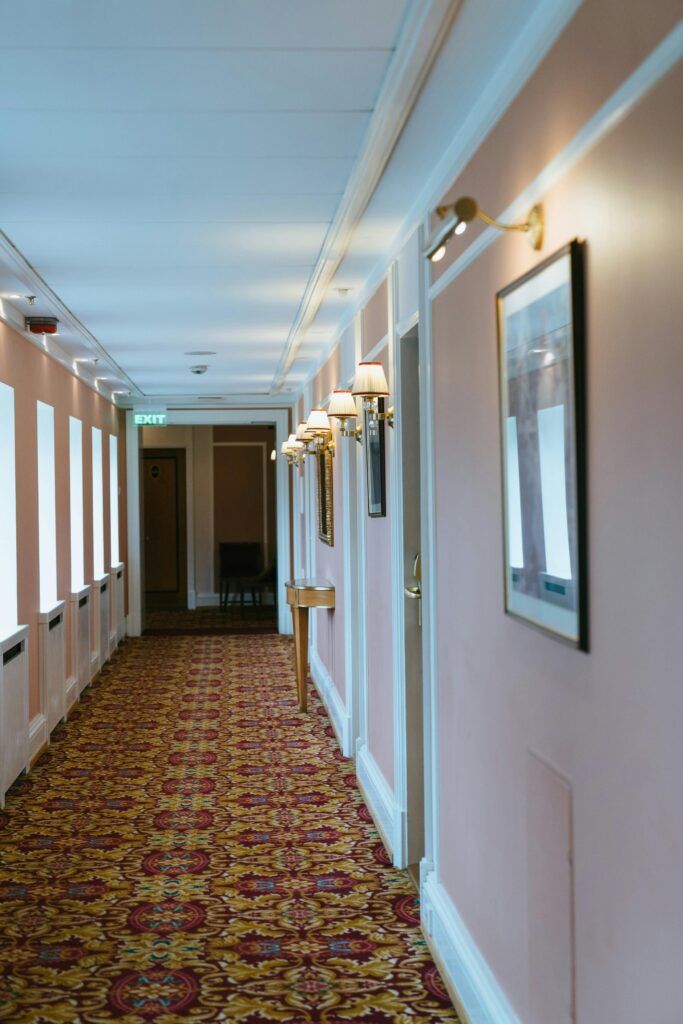
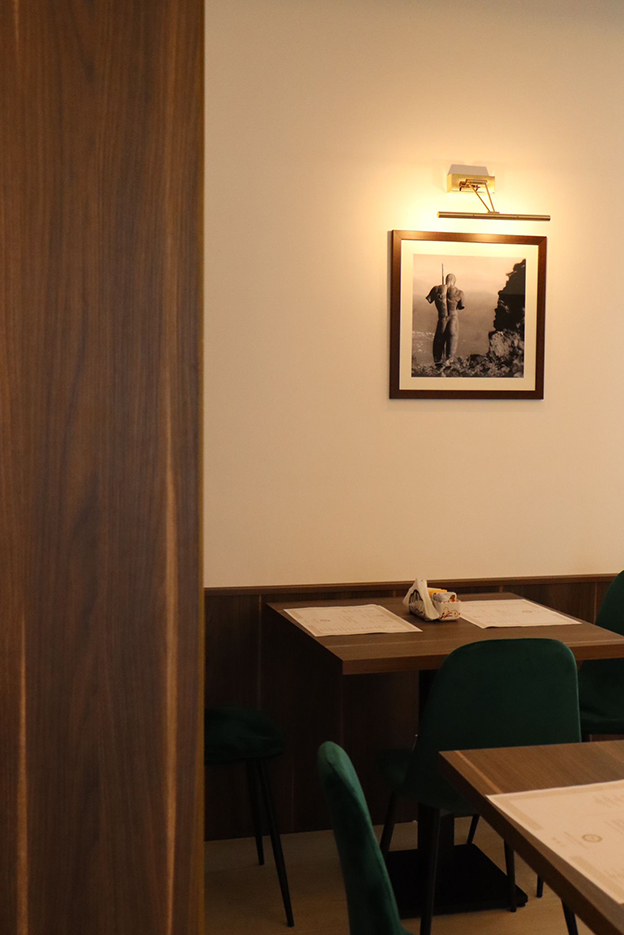
The most classic solution is to install a light fixture directly above the upper edge of the frame, either a linear LED profile or a small arm-mounted picture light. There are many options available on the market, ranging from more decorative, traditional models to technical solutions that combine minimal design with high-performance LED technology.
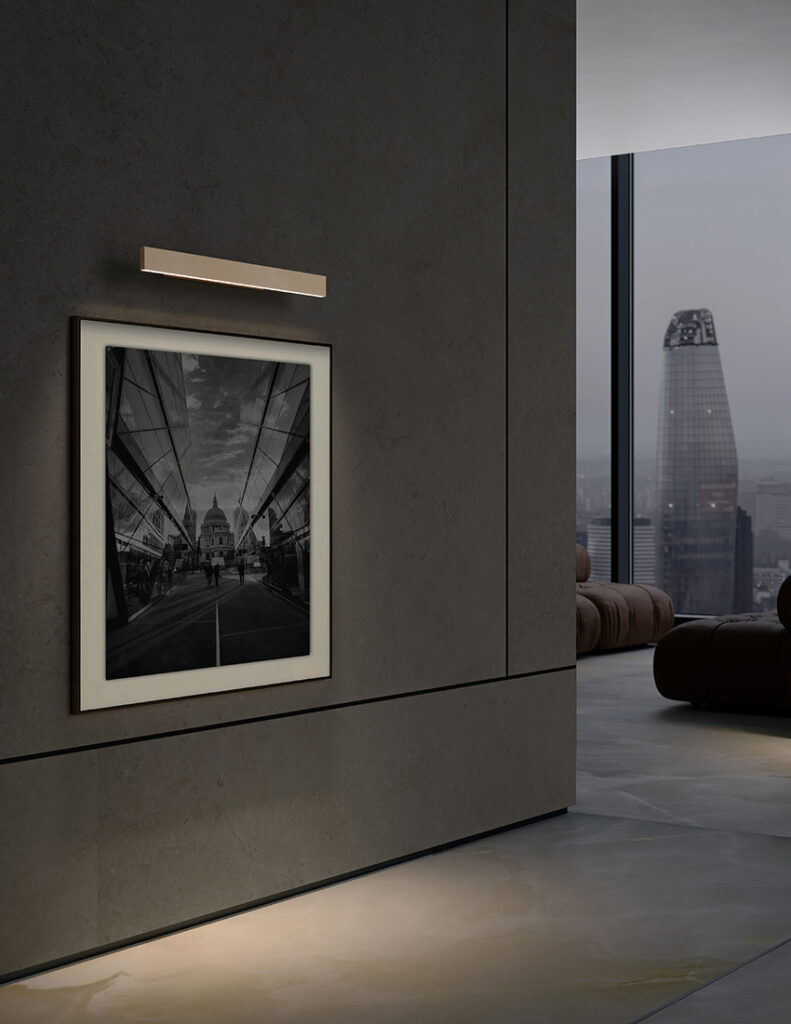
Fly Wall Picture by Contardi is a clean, essential lighting profile ideal for artworks, with a CRI above 90. Available in three lengths (60–90–180 cm), it comes in finishes such as champagne, brushed nickel, bronze, and anthracite.
Straight_W by Linea Light Group is a minimal wall-mounted fixture with an ABS body available in white, chrome, and black, paired with a polycarbonate diffuser.
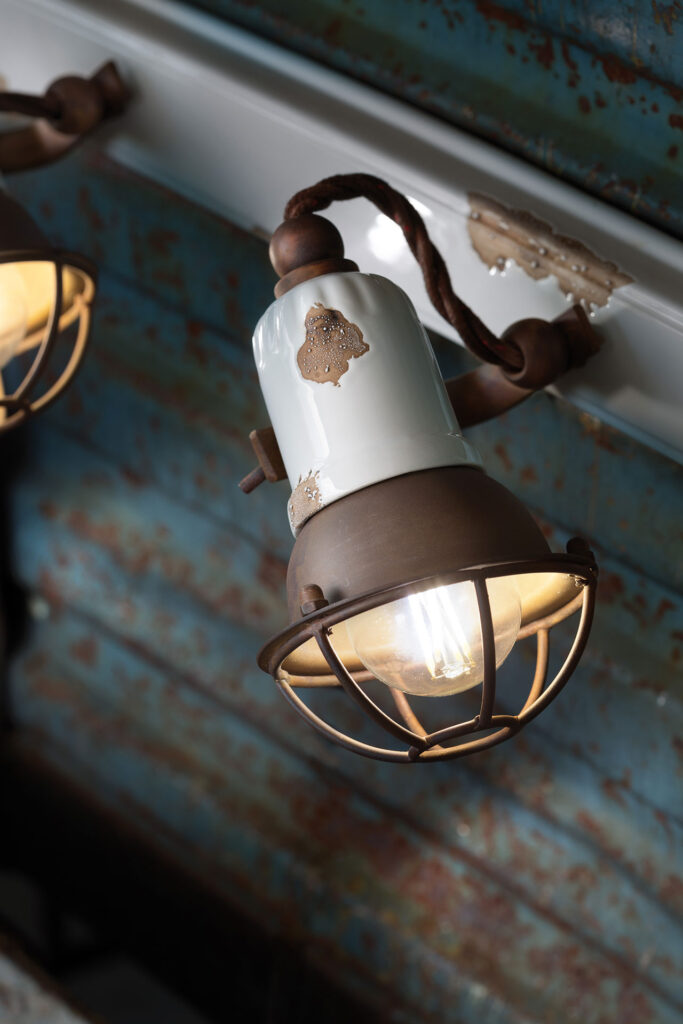
Loft by Ferroluce offers a less technical but more decorative approach, with a vintage feel and an artfully oxidized metal body.
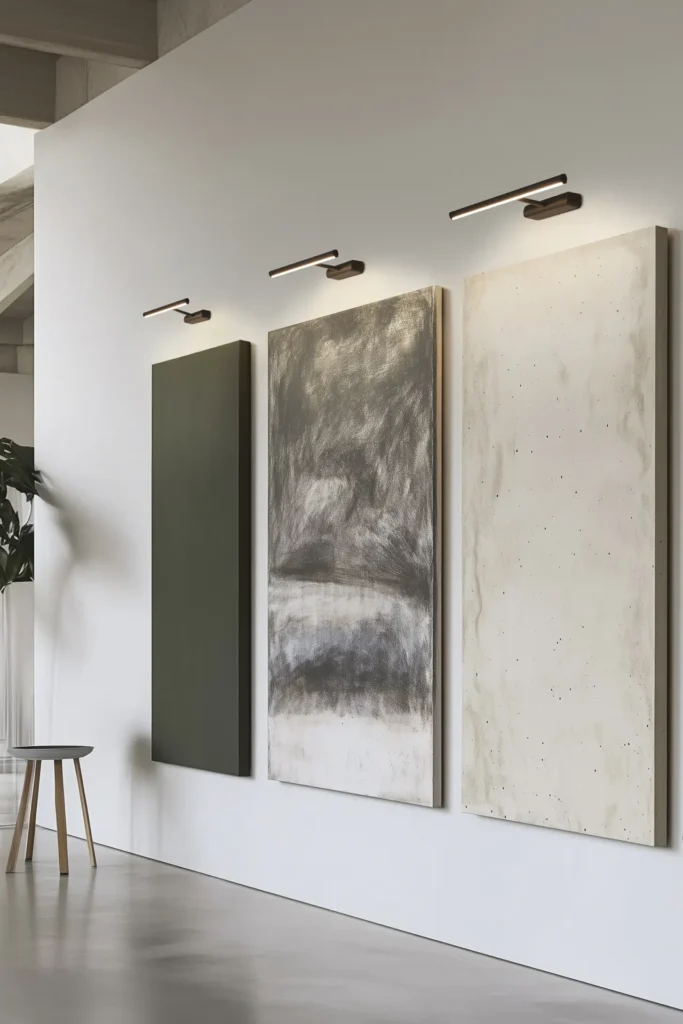
Ikon by Egoluce features an adjustable arm that can be precisely positioned to avoid glare and unwanted shadows.