The Flex by KIDZ rethinks the women’s fitness club through light, creating a calm, judgment-free environment
Designed by studio KIDZ, The Flex is a 739-square-meter women’s fitness club where soft materials, neutral colors, and differentiated lighting scenes follow the activities they serve, from relaxation to strength training. Even the relationship between light and mirrors is designed to make the moving body easier to look at.
Designed by Craft & Concept in collaboration with November Architects, the lighting project
Cover: Photo by Dmitry Suvorov
The client’s brief, brought down to earth by studioKIDZ, was not simply to build a well-designed, functional gym but to create an environment where physical and mental well-being comes first. Conceived exclusively for women, the 739 square meters of The Flex unfold around a precise idea: to turn the place where you train into a welcoming space, far from the traditional, hyper-masculine imagery of the gym, with its flat, uniform lighting and insistently technical aesthetic.
Photo by Dmitry Suvorov
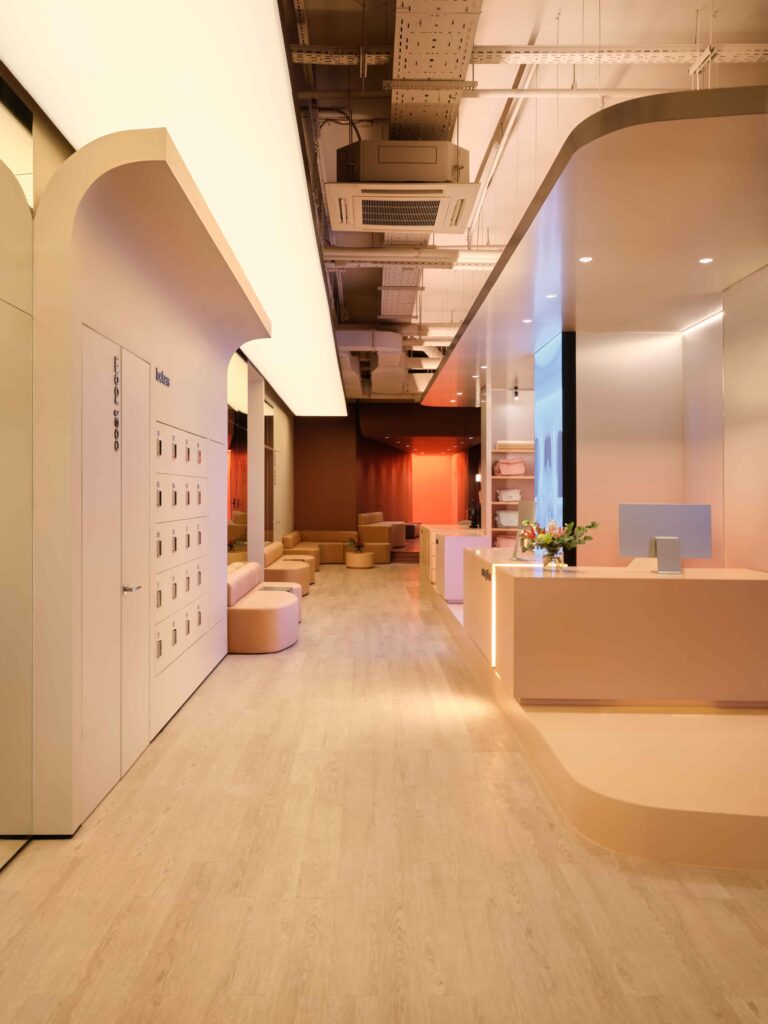
Inside The Flex, soft-finish materials and a neutral color palette reduce visual stimuli, encouraging focus and a sense of calm. The space speaks the same language as the women who use it: discreet, gentle, reassuring. Light plays a central role here, well beyond its primary function; soft and diffused, it wraps the rooms and conveys serenity.
Photo by Dmitry Suvorov
How the light at The Flex changes with the workout
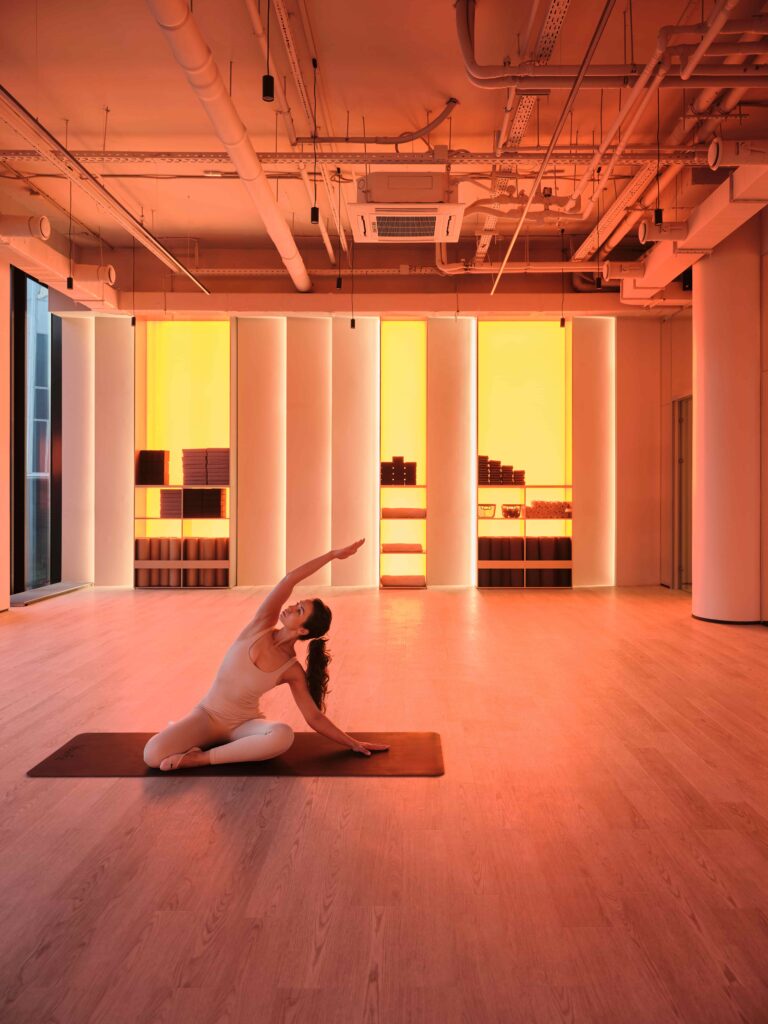
One of the most compelling aspects of the lighting design at The Flex is the set of lighting scenes calibrated to the different activities. Every room has its own atmosphere: in the rooms given over to gentler disciplines, warm, diffused light prevails, encouraging concentration and release, while the spaces for more dynamic, strength-based training are lit intensely, in a way that transmits energy without turning aggressive.
Photo by Dmitry Suvorov
Lighting mirrors without emphasizing imperfections
Another question the studio tackled—one with an interesting psychological dimension—is the way light works with the mirrors: the lighting design was developed to accompany the perception of the reflected body in motion without emphasizing its imperfections. Sharper lighting accents are reserved for specific areas, such as the locker rooms, the retail space, and the branding elements.
Photo by Dmitry Suvorov
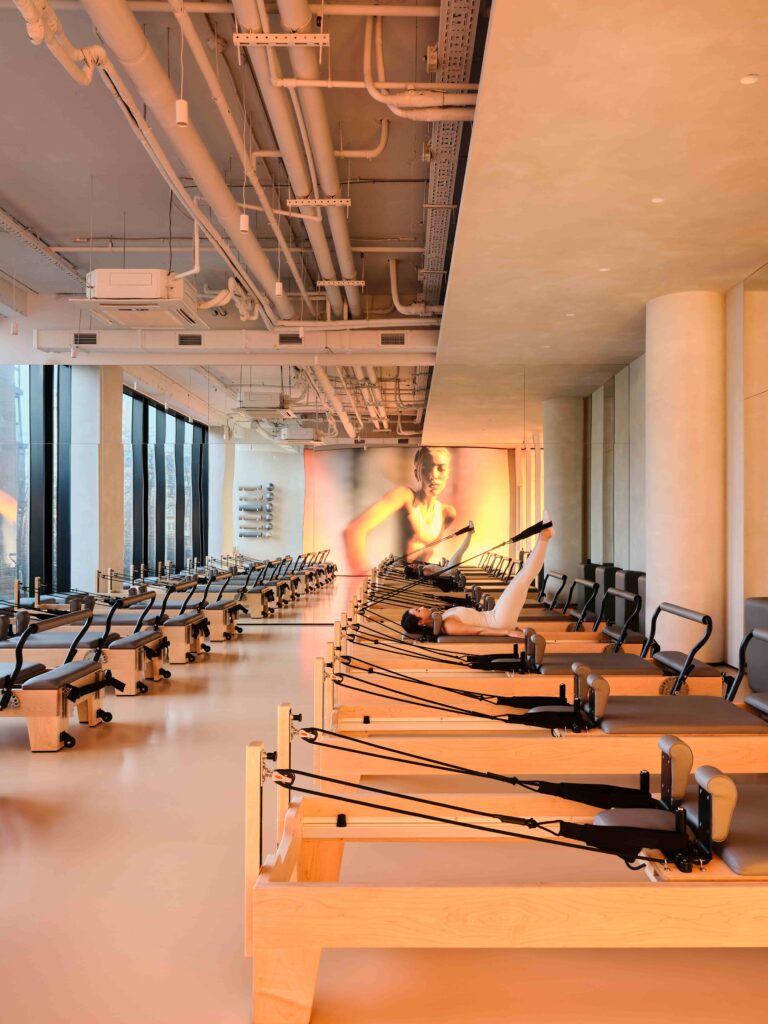
Structurally, the designers had to contend with a number of complications tied to the building systems; the sheer quantity of technical equipment at ceiling level, for instance, called for solutions that would preserve the linearity of the space, protecting both perceived height and a sense of airiness. Each room was therefore developed as a project in its own right, integrating systems and fixtures into the architectural logic: rather than being concealed, the custom luminous elements became part of the design. The same approach was applied to the building’s many columns.
Photo by Dmitry Suvorov
A fitness club designed around people’s well-being
The Flex proposes a different way of designing spaces for physical activity, giving them a broader, more holistic meaning. The architecture stays in the background, a white frame in which light—together with elements such as the color palette and the furnishings—makes the rooms more comfortable and more relaxing. The project shows how design can shape not only the quality of a space but the quality of the experience itself.
Do you have a project to share?
Atmosfera is an open space for dialogue. If light plays a key role in your research or a specific project, we’re ready to listen. We feature lighting design projects, art installations, photography series, and stories that explore the narrative potential of light.
Send us your portfolio or tell us about a project you care about. It could become part of our editorial programming—or spark a new collaboration.
A few months after the Venetian designer’s passing, the Danish company adds this refined lighting object to its catalog, a piece produced for only a short...
Neuroscience, environmental psychology, and architecture meet at the 14th edition of the conference organized by APIL, the Association of Lighting Professionals,...