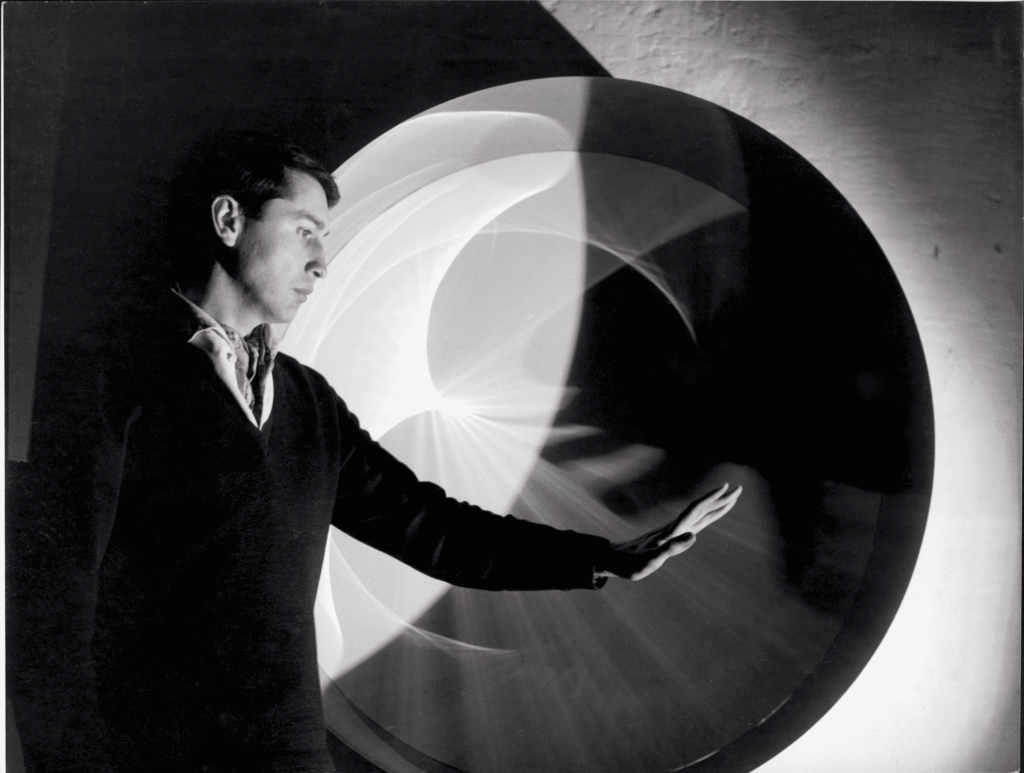

«So I began using the little lights not for the light itself, but as an element that would help me visualize images, and gradually, as I experimented with different works, I realized there were other possibilities».
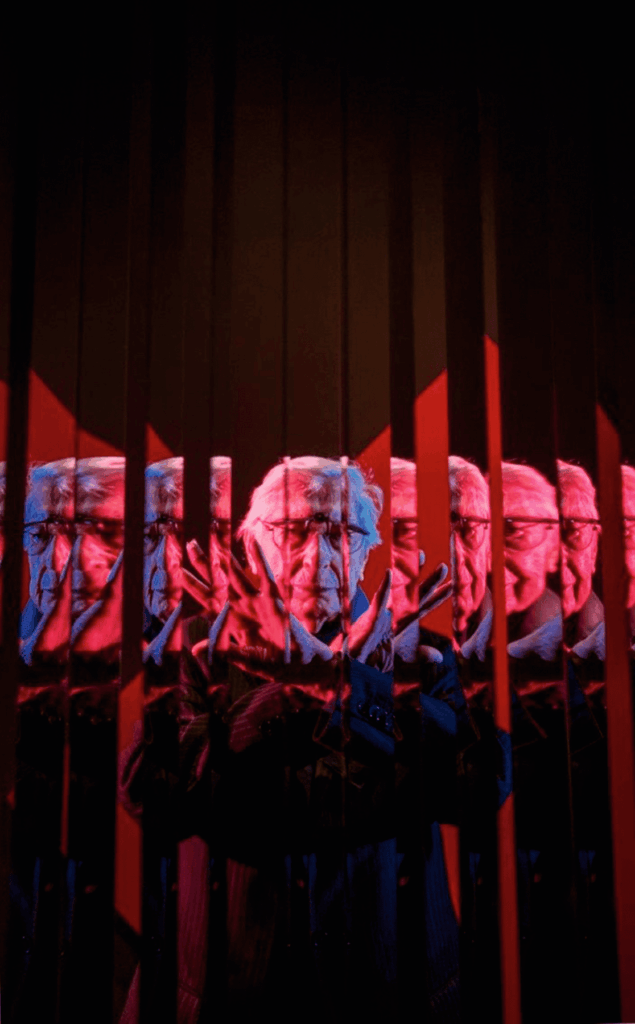
In a 2014 interview with Caroline Menezes for Studio International, Julio Le Parc describes the decisive turning point in his artistic exploration: light, he says, can be understood as a tool capable of generating images and challenging perceptions, to the point of altering the relationship between the artwork and the viewer.
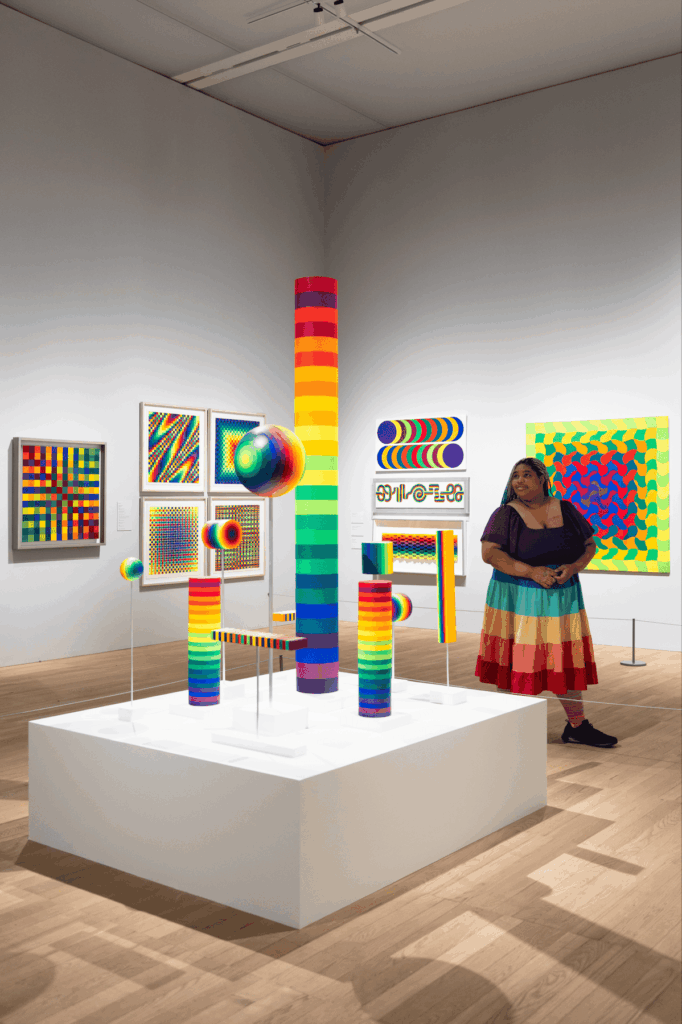
The major retrospective Julio Le Parc: Light. Color. Action, on view through May 3, 2027, at the Tate Modern in London, traces over seventy years of work by the Argentine artist – who passed away on May 3 – through more than sixty works, ranging from his early optical experiments of the 1950s to his most recent installations and chromatic explorations. The exhibition layout, conceived as a dynamic sequence of spaces, reflects one of the fundamental principles of his practice: the artwork is not a static object to be observed from a distance, but a phenomenon that is completed through the movement and physical presence of those who pass through it.
Born in Argentina in 1928, Le Parc moved to Paris in 1958, joining an artistic scene focused on exploration of abstraction and technological experimentation. In 1960, he helped found the Groupe de Recherche d’Art Visuel (GRAV), a collective that challenged the traditional notion of the artwork as a finished object and of the artist as the sole creator. In 1966, he won first prize at the Venice Art Biennale, while, alongside his artistic practice, he maintained a strong commitment to social causes. A defender of human rights and an opponent of Latin American dictatorships, in 1972 he refused to hold a retrospective exhibition at the Musée d’Art Moderne de la Ville de Paris, leaving the decision to chance by flipping a coin.
In the 1970s, his exhibition activity slowed, and his work received less attention on the international scene, but he continued over the decades to work with light and movement, creating new sculptures such as the Torsions series in 2004 and receiving major accolades, including a solo exhibition at the Palais de Tokyo in Paris in 2013.
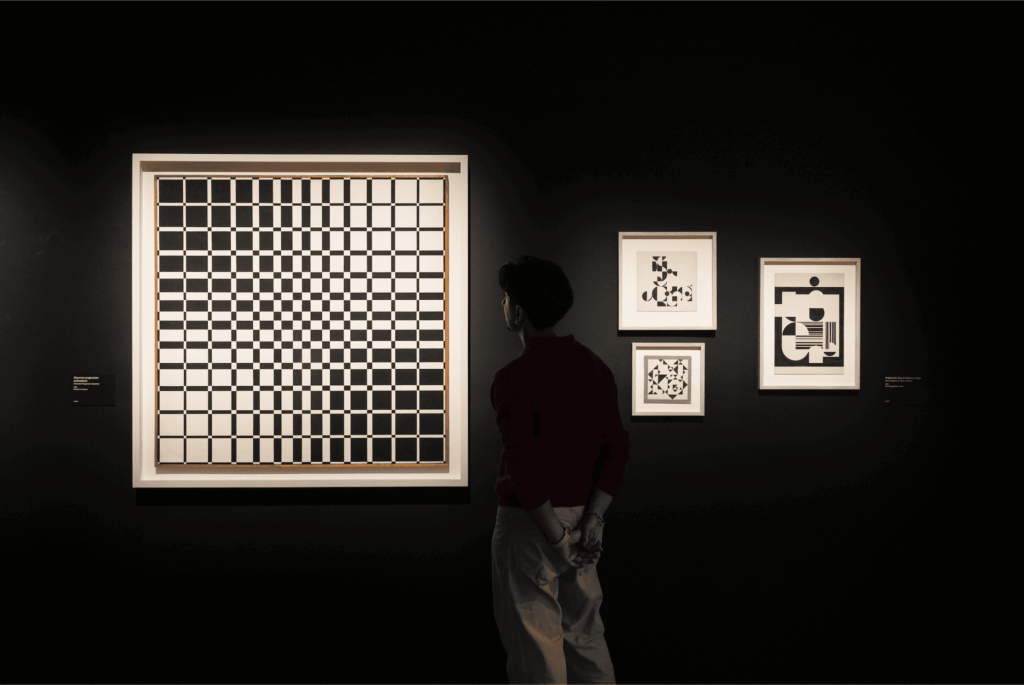
The exhibition at the London institution opens with the Surfaces series, created after he arrives in Paris in the late 1950s. In the black-and-white paintings and gouaches, geometric shapes repeated in mathematical sequences produce effects of optical instability; similarly, in the 1959 works Instability and Progressive Sequences, the surface seems to vibrate and shift before the viewer’s eyes. Le Parc also explores the phenomenon of the afterimage on the retina, using chromatic contrasts and modular structures to engage the eye in an active process of completing the work.
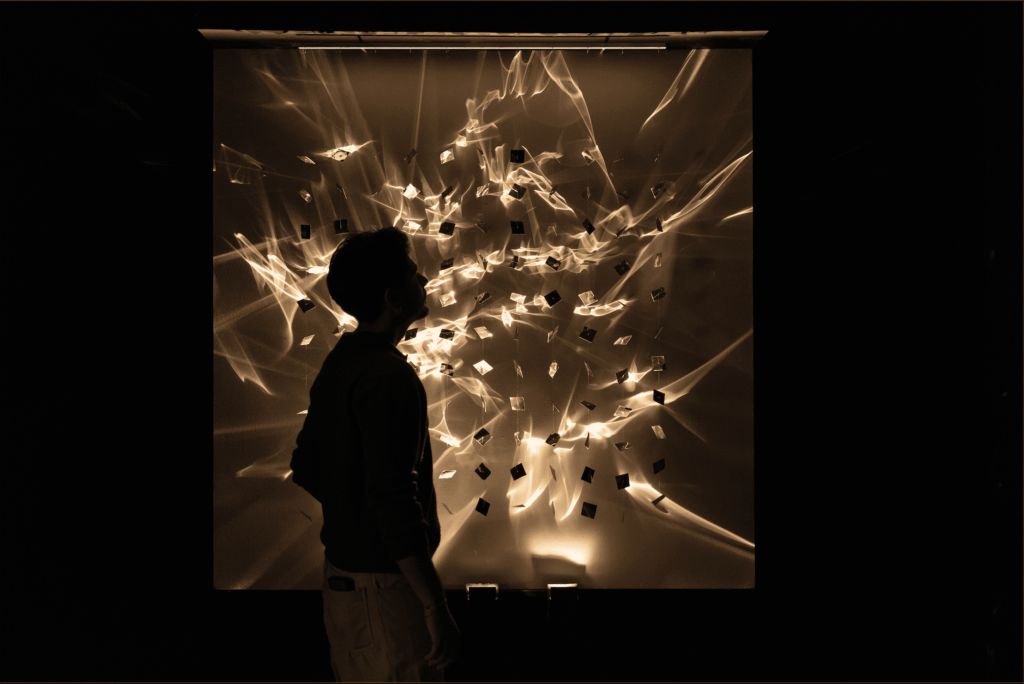
This research quickly led to an exploration of the three-dimensionality of light, and in 1959, Le Parc created his first Light Boxes – mechanisms in which light sources, transparent materials, and reflective surfaces produce constantly changing visual sequences.
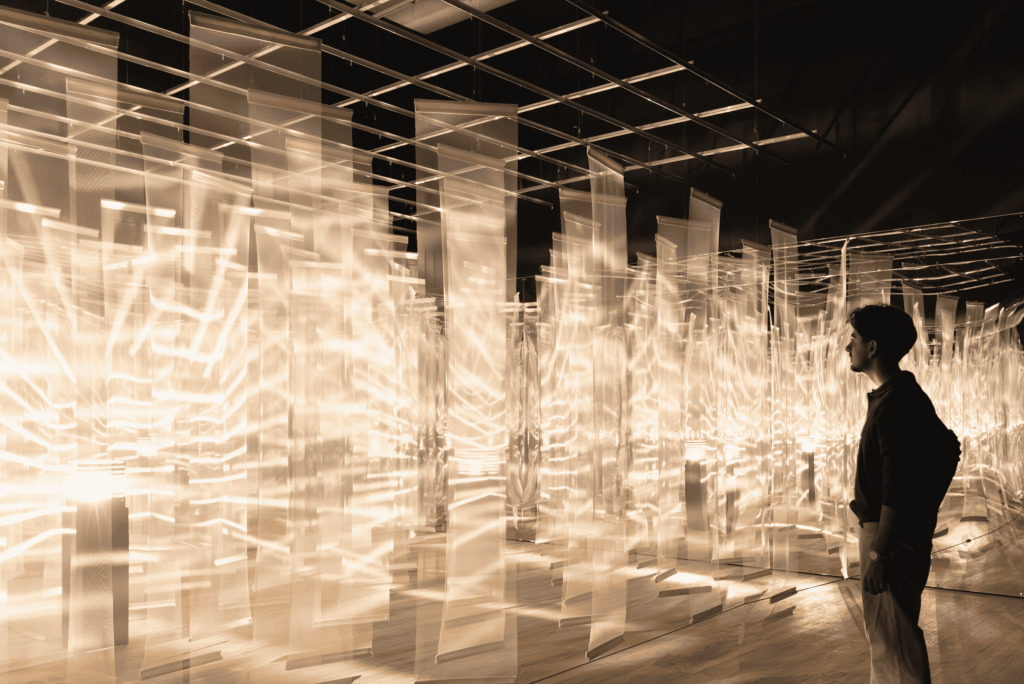
This experimentation gave rise to the Continual Light Mobiles, developed beginning in 1960: suspended elements, metallic surfaces, and reflective materials intercept beams of light, giving rise to varied configurations that cannot be fixed in a definitive form. The same research also gave rise to Unique Continual Light Cylinder (1962) and Vibrating Light – Tulles (1968), works in which refraction and variations in light interact with the spatial dimension.
Alongside light, color also plays a fundamental role in Le Parc’s work. In 1959, the Argentine artist developed a palette of fourteen colors, which he used as a combinatorial system in his subsequent series, from the Colour Project to the Modulations” and the Alchemies.
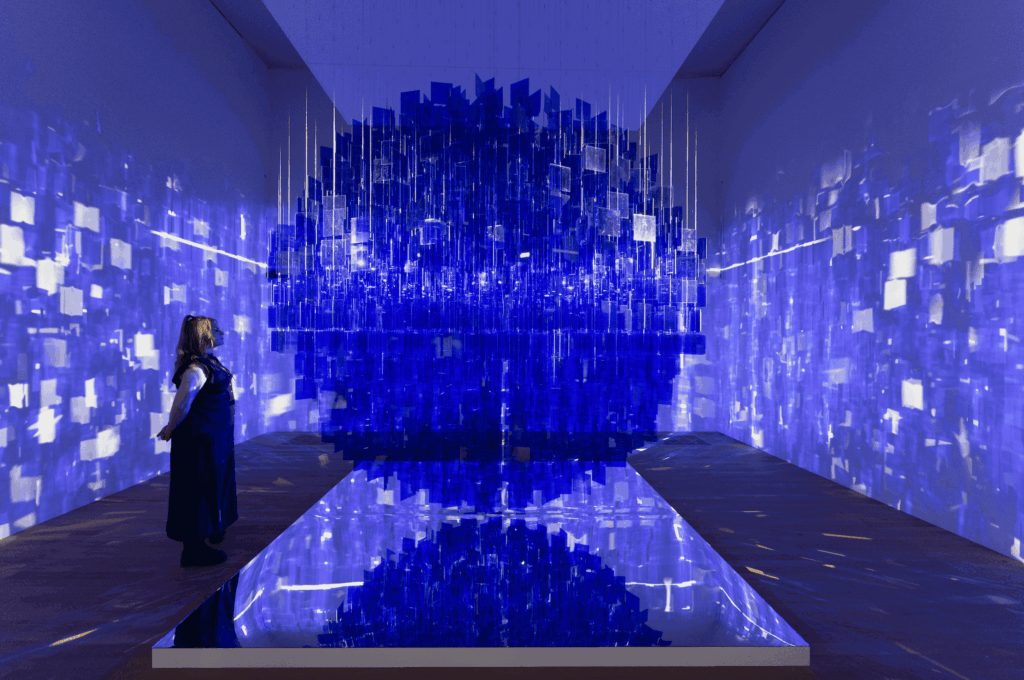
The sculpture Blue Sphere (2001–2022), acquired by the Tate in 2024, echoes the logic of his kinetic installations through reflective surfaces and variations that continuously adjust the relationship between the work and the audience.
A new Continual Light Mobile, created specifically for the exhibition and installed in the atrium of the Blavatnik Building at Tate Modern, extends this exploration into the present by welcoming visitors. The work reaffirms a central idea in Le Parc’s practice – that of light shaping space through movement and its relationship with those who pass through it.
When asked how contemporary audiences – immersed in an ever-increasing flood of images and stimuli – would receive the works created in the 1960s, Le Parc replied: «I think people will see them in the same way. They are the opposite of sensory overload. Today we are surrounded by images and lights coming from every direction, but we often get lost; there is no common thread, no clearer connection. In my works, however, richness arises from multiplication, variations, and sequences within a single experience.
Atmosfera is an open space for dialogue. If light plays a key role in your research or a specific project, we’re ready to listen. We feature lighting design projects, art installations, photography series, and stories that explore the narrative potential of light.
Send us your portfolio or tell us about a project you care about.
It could become part of our editorial programming—or spark a new collaboration.
EMAIL US AT REDAZIONE@ATMOSFERAMAG.IT