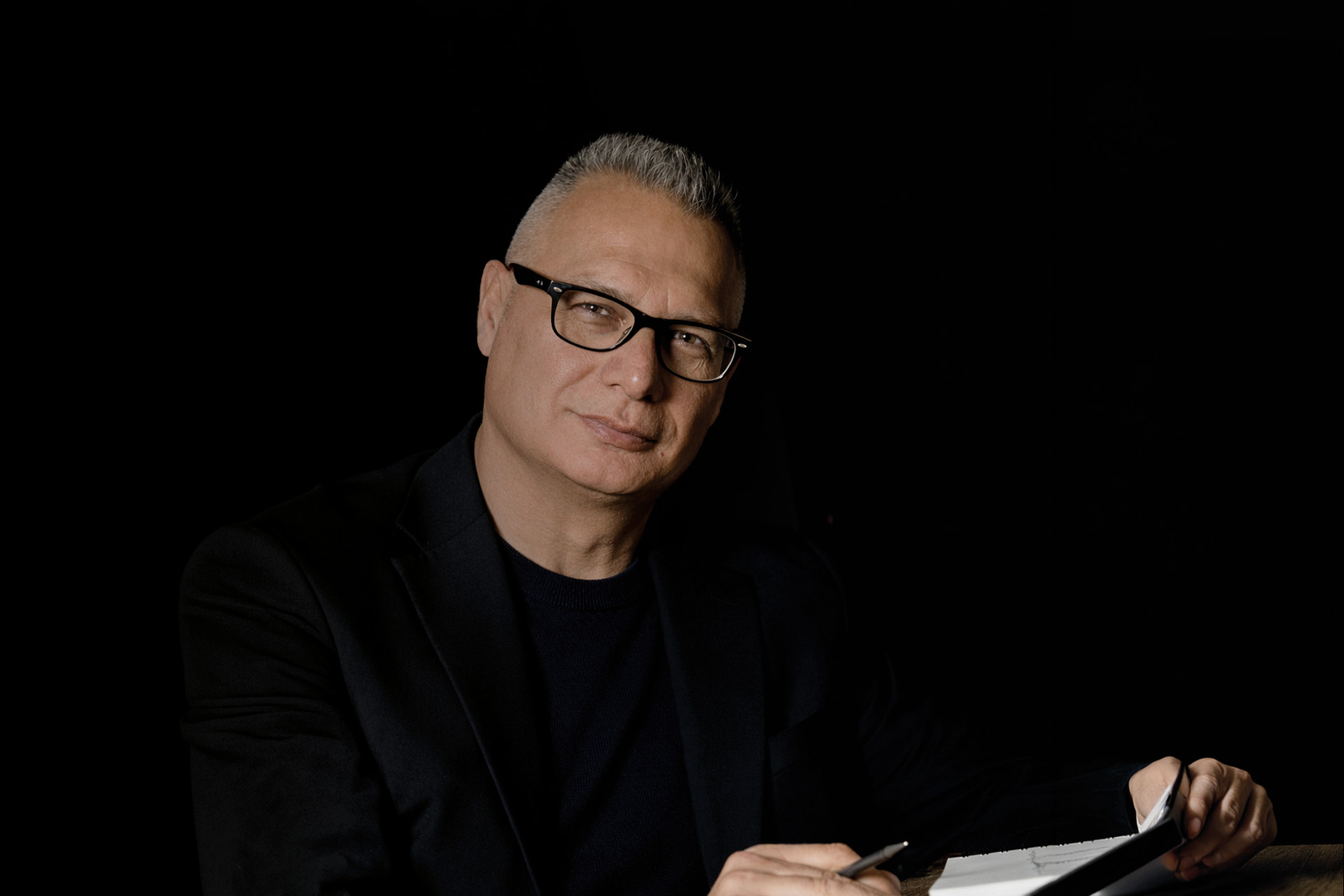
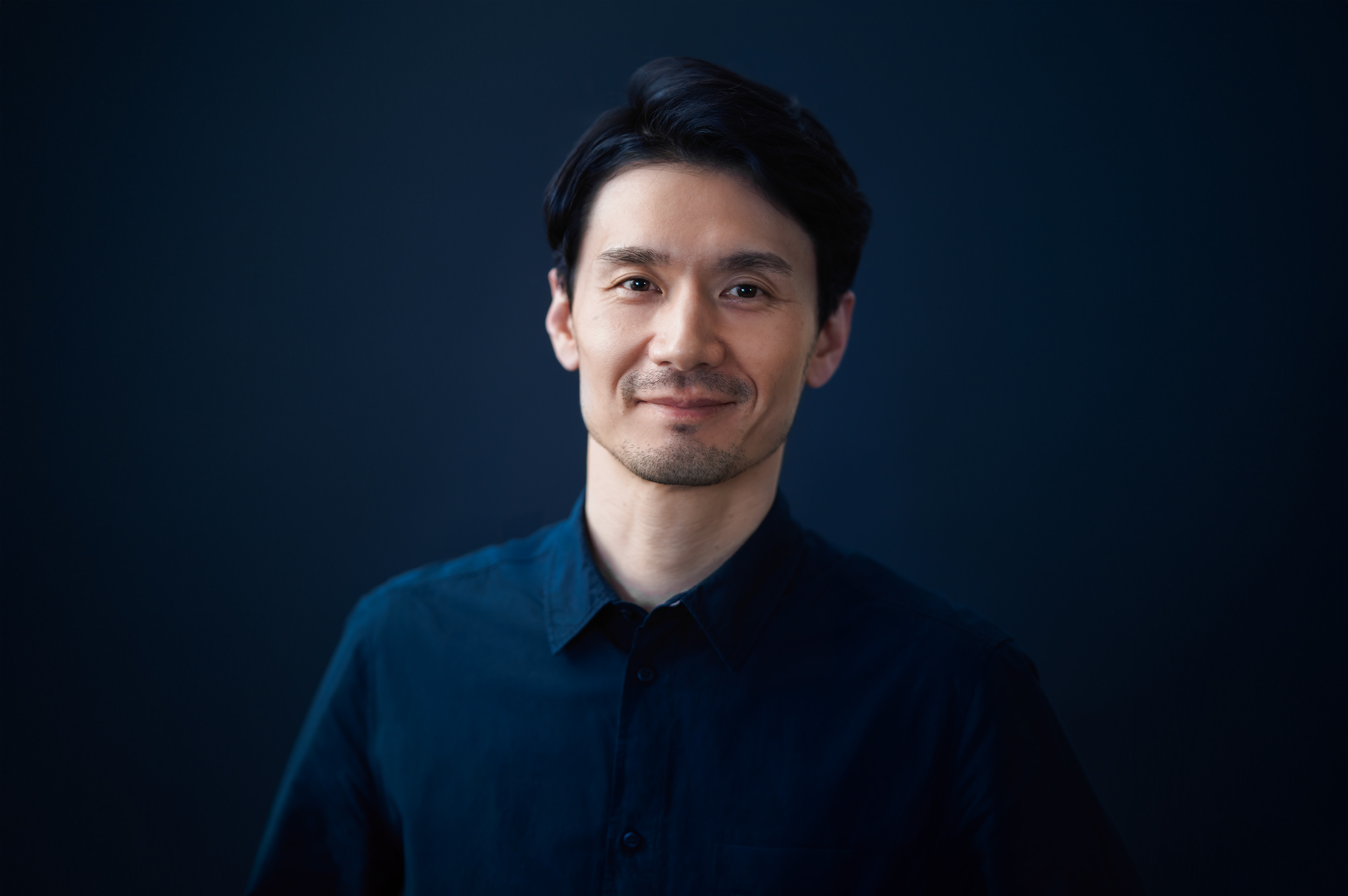
Cover photo: Vitamin Studio: Javier Mujica and Pablo Alpe
Not merely a decorative element but a medium with which to shape volumes, depth, and rhythm: light can construct a space, alter its proportions, and change our perception of it. It is from this conceptual starting point that the work of Vitamin Studio takes shape. Founded in Valencia in 2013 by Javier Mujica and Pablo Alpe, the studio is now active both nationally and internationally. For the studio, even the invisible and the intangible become design material: in this way, data, sounds, and movement (i.e., abstract phenomena) are translated into visible and perceptible forms through light.
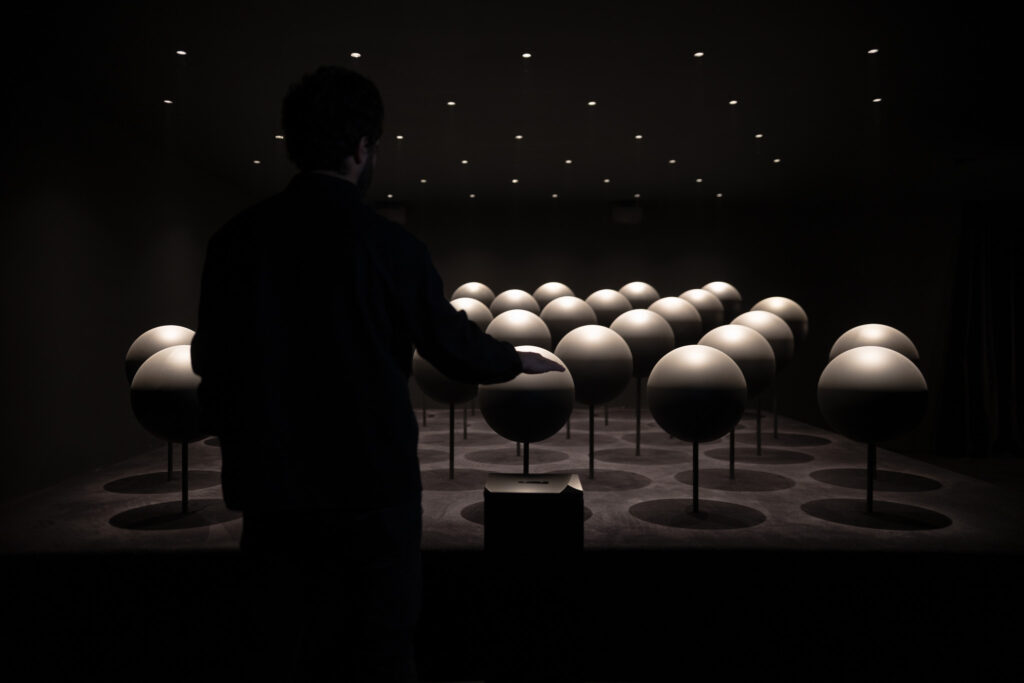
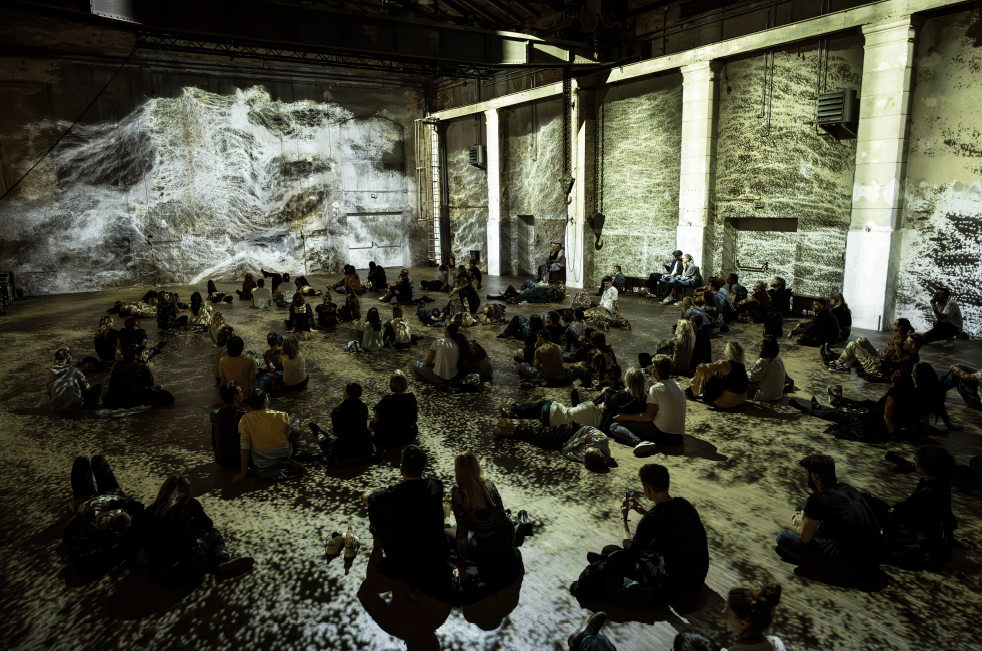
What role does technology play? It accompanies without imposing itself and is always at the service of the idea, because the physical space and the presence of those who move through it remain at the center. This dualism is fundamental to Vitamin Studio, in whose work the visitor ceases to be a mere passive observer and becomes an active part of a living system. Javier Mujica and Pablo Alpe—Creative Director and Creative Technologist, respectively—explain all this to us through a reflection on the role of light as a design medium, on the relationship between the physical and the digital, on the possibility of making invisible phenomena perceptible, and on new (and potential) forms of interaction between technology, space, and people. In all of this, of course, light has its raison d’être.
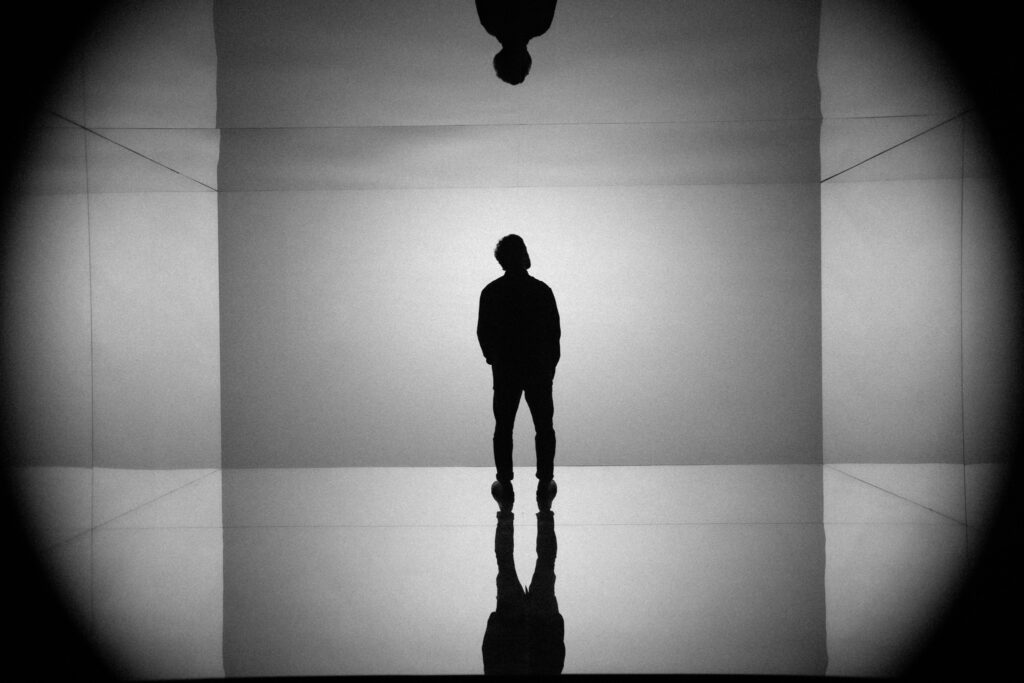
For you, light is not just decoration, but structure, material, and language. What does it mean, in practical terms, to design with light as a material, and how does the perception of space change when light becomes part of its structure?
“Light is something that can truly construct a space: it can define its volumes, create depth, alter its proportions, and completely transform the way we perceive an environment, even without physically modifying it. When we work with light, we consider it almost as another material: it has intensity, density, rhythm, texture, and movement. But unlike most physical materials, it can constantly change over time, and it is precisely this temporal dimension that particularly interests us, because it allows architecture itself to generate very different atmospheres and sensations. Light thus ceases to be something that is simply added to a space and becomes an integral part of the way that space is experienced.”
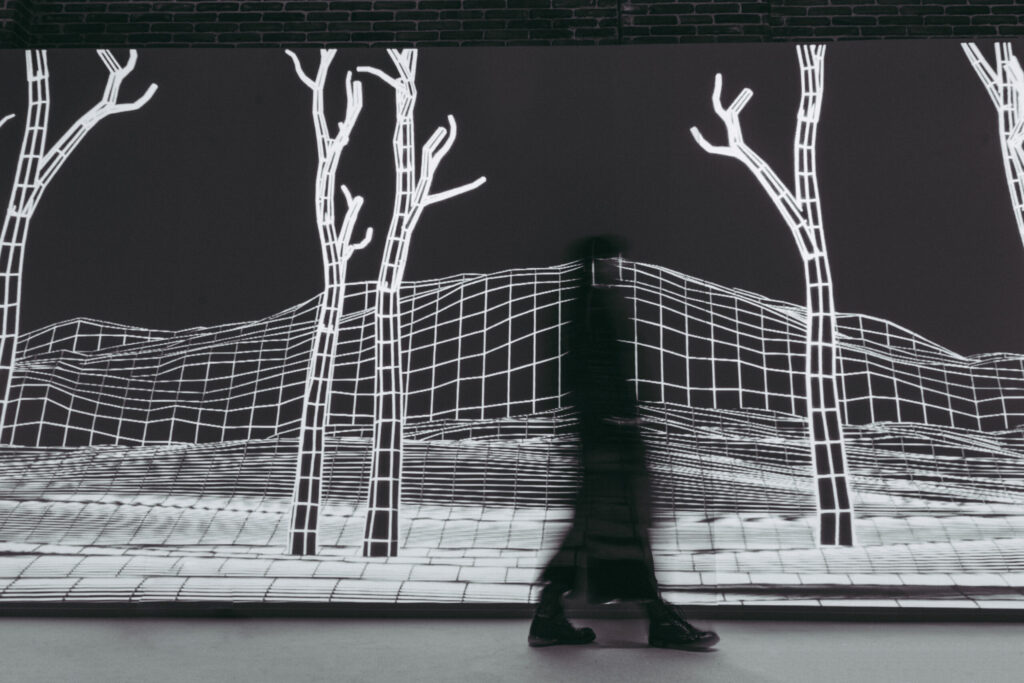
Giving visible form to imperceptible phenomena is a hallmark of your research. What fascinates you about this transformative process?
“We’re very interested in the phenomena that occur around us but that we normally can’t perceive: data, signals, sounds, movements, forces, or environmental information. We’re fascinated by the possibility of translating these invisible systems into something spatial and intuitive, and instead of merely visually representing an abstract concept, we seek to understand its internal logic and use that behavior as a starting point to build an experience. This can then take the form of light, movement, sound, particles, or generative graphics, but we should point out that the goal is not necessarily to explain the phenomenon in a broad sense, but to allow people to experience it through perception and space.”
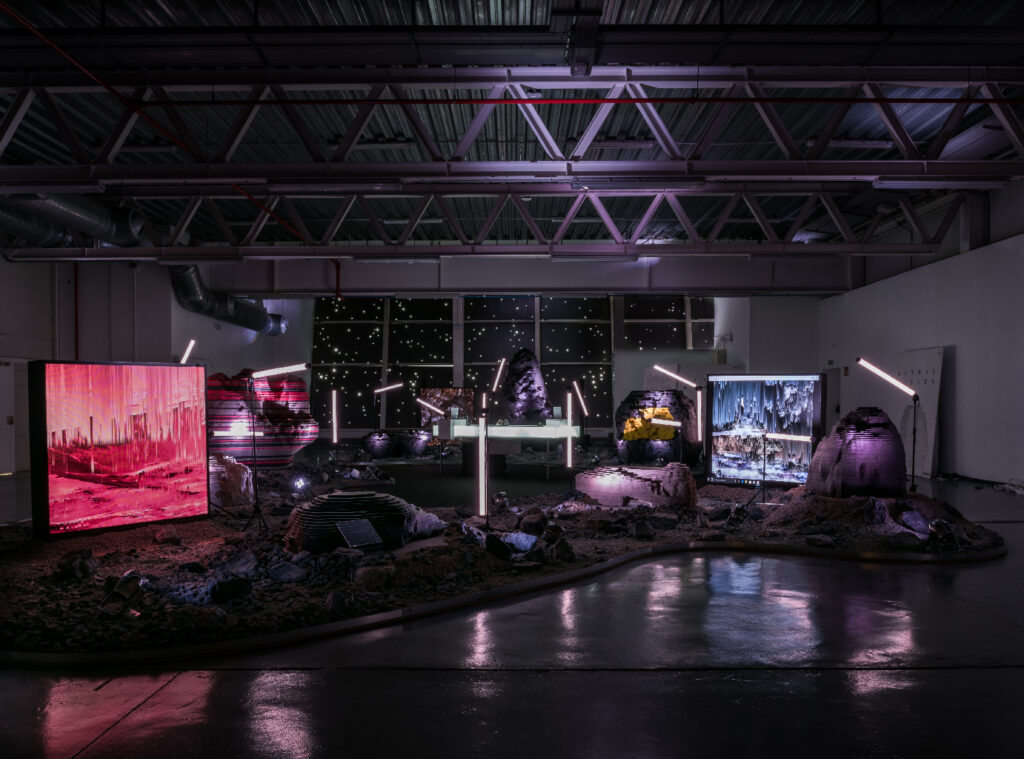
In your work, light and darkness seem to engage in a constant dialogue: what role does darkness play for you? Is it simply what allows light to emerge, or is there more to it?
“Darkness is a design tool for us. It allows us to control attention, contrast, and the amount of visible information at any given moment. It can conceal the boundaries of a space, isolate certain elements, make a room feel more spacious or more abstract, and create a rhythm of discovery. For example, in Feel the Light, the installation we created for Arkoslight, this relationship between darkness and light was particularly important because the experience wasn’t just about illuminating the space, but about its gradual revelation. Sometimes what you choose not to show is just as important as what you decide to illuminate.”
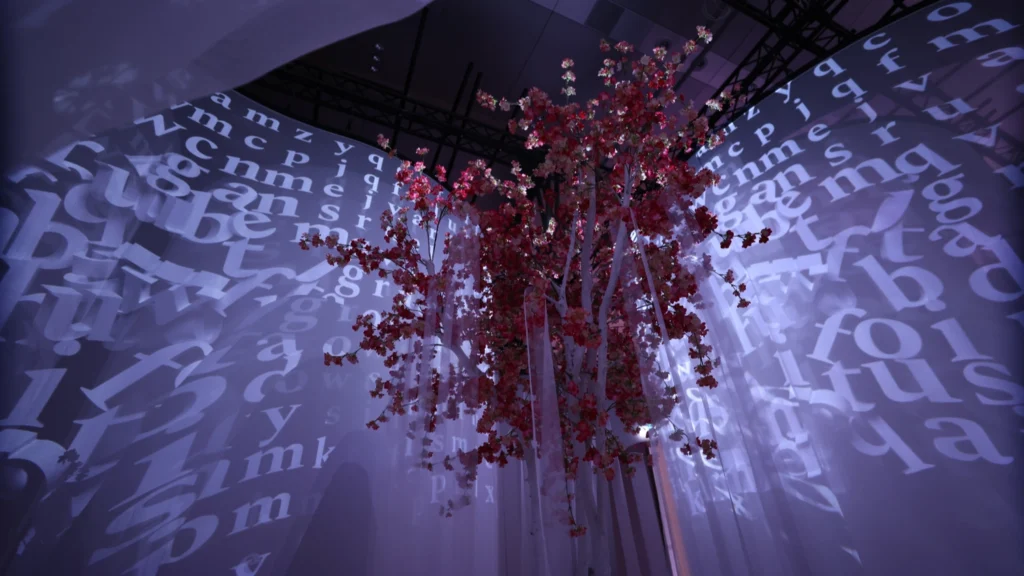
Your process stems from the intersection of visual research and high-tech tools. Does technology follow the idea, or is it the other way around, with technology shaping the design vision?
“We usually try to start with an idea, a concept, or an experience, rather than a specific technology. Technology has to have a reason to be there and must help us create something that otherwise wouldn’t be possible. At the same time, experimentation is a fundamental part of our process: discovering a new sensor, software, material, or technical system can reveal behaviors and possibilities we hadn’t considered before. So there’s always a dialogue between concept and technology. Sometimes the idea defines the tool; other times, the tool paves the way for the idea. What’s important to us is that technology doesn’t take center stage, unless the project specifically calls for it.”
Often, the viewer ceases to be a passive observer and becomes an active part of the system. How does the designer’s role evolve when the final experience depends directly on people’s actions?
“When interaction comes into play, you’re no longer just designing an image or a space; you begin to design a system of behaviors. It’s not possible to completely control what will happen, because (obviously) every person interacts differently. What we can do is define a set of rules, reactions, and possibilities, so that the final experience emerges from the relationship between the visitor and the installation. This significantly changes our role, as we must consider not only aesthetics but also intuition, timing, responsiveness, and feedback. For us, the best interactive experiences are often those in which the technology almost disappears and the relationship between action and reaction feels natural.”
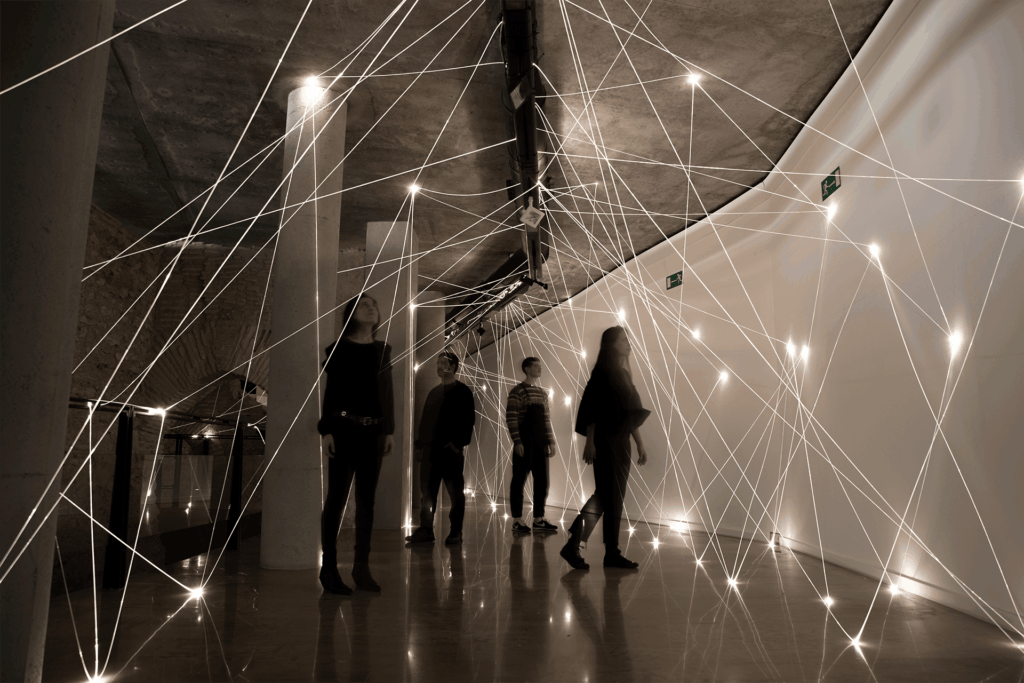
You constantly move between the physical and digital realms. When designing an immersive experience, how important is it to maintain this connection?
“It’s essential. We use many digital tools, but ultimately we’re creating experiences that take place in physical space and are perceived through the body. Scale, distance, materials, sound, light, and movement influence perception in ways that can’t truly be understood through a screen. In Astral Bodies, created with ENORME Studio for Finsa, the physical materiality of the installation was essential. The digital and lighting layers did not replace the physical elements, but transformed the way they were perceived and the relationship visitors established with them. This relationship is one of the central aspects of our work: using technology not to replace space, but to expand its possibilities.”
Looking to the future, what directions are you interested in exploring through light? Are there phenomena or spatial dimensions that you haven’t yet managed to translate into an experience, but that you’d like to tackle?
“We’re increasingly interested in creating spaces that behave like active, ‘living’ systems: environments capable of sensing what’s happening around them and evolving, rather than repeating a predefined sequence. Real-time technologies, computer vision, sensors, and generative systems are opening up numerous possibilities in this direction. AI is also becoming particularly interesting when connected to physical environments, taking it beyond the screen. Projects like the pavilion we created for the Frankfurt Book Fair have already allowed us to take a fully integrated approach, combining architecture, content, and interaction. We’d like to push even further, creating experiences in which all these layers become increasingly interconnected and responsive. Ultimately, what interests us is bringing to life works that aren’t simply observed, but that respond, transform, and establish a relationship with the people within them.”