Cover: Photo by Matthieu Salvaing
Inside the Hôtel Barrière Fouquet’s Courchevel, light becomes a true design material. While it’s cold outside, the hotel’s interiors welcome guests with a blend of natural materials, chalet-chic style, and lighting that enhances finishes, spaces, and volumes. This isn’t merely functional lighting, but a lighting scheme designed to create the right atmosphere, with an emphasis on theatricality.
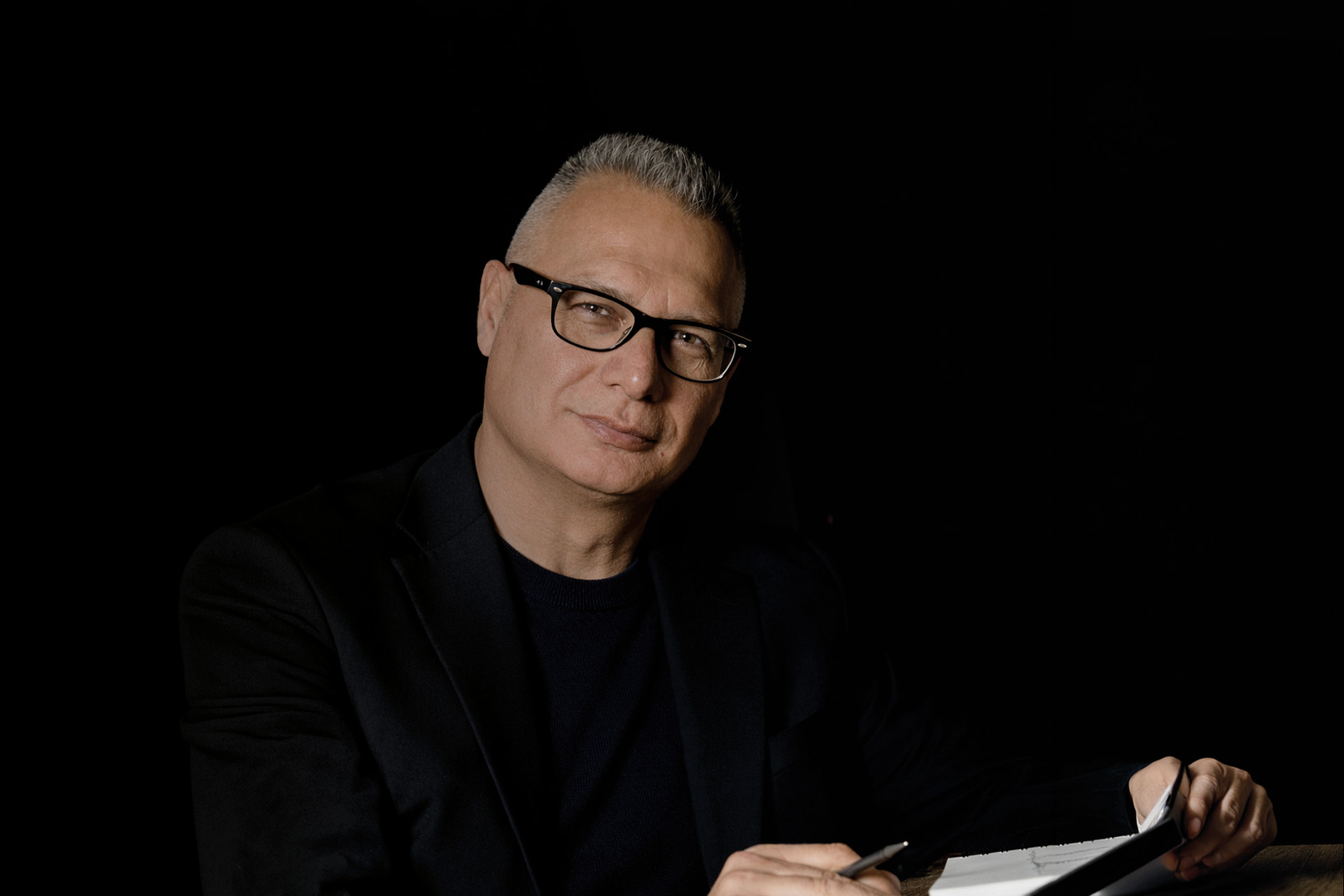
This is the essence of the work carried out by L’Observatoire International, one of the leading names in lighting design, founded by Hervé Descottes in 1993 and with offices in New York, Seoul, and London. The hotel, the crown jewel of the Courchevel ski resort in Haute-Savoie, France, was recently renovated by interior designer Corinne Sachot. The warm lighting blends seamlessly with the materials, the building’s timber, and the rich velvets of the furnishings.
The quest for “invisible light” and the central role of the staircase
“The main technical challenge was to strike a balance between the perception of softness and the integration of light, combined with the need to comply with the illuminance levels required by regulations, ensuring that lighting details could be elegantly concealed and integrated while still providing adequate illumination,” the team at L’Observatoire International explains.
The monumental spiral staircase defined the character of the entire project; it literally runs through the Hôtel Fouquet’s Courchevel, connecting all the floors and culminating in a splendid arched dome. Several layers of lighting are integrated into the steps and the sculpted handrail to highlight the curve of the staircase and the craftsmanship of the balustrade, while the dome is illuminated from below with soft, indirect light. “During the day, the goal was to balance the natural light coming from the adjacent rooms so that the interiors would appear balanced and bright even in spaces without direct natural light. At night, however, the intent was the opposite: to ensure that the hotel radiated light outward, like a warm heartbeat pulsing through the rooms and beautifully framed by the numerous openings and connecting doors. The result needed to be an inviting space, capable of welcoming guests and guiding them toward the true heart of the hotel.”
The atmosphere is achieved not only through the careful placement of the fixtures but (above all) thanks to the color temperatures chosen for the light sources. When working with rich and sophisticated materials, it is very important to ensure that the lighting enhances their depth, richness, and warmth. L’Observatoire International continues: “The color temperature of the lighting generally ranges between 2,200 and 2,400 K when the light is positioned close to a material, so as to highlight its tones and warmth. In some cases, 2,700 K was used for accent lighting or to illuminate works of art. It should be emphasized that when working with such warm color temperatures, the CRI (color rendering index) also becomes particularly important, so that the light can faithfully reproduce the nuances, tones, and details of the materials it illuminates.”
Common areas and decorative accents
In the common areas—the lounge, barbershop, and vanity rooms—the lighting is integrated into the wood paneling and shelving and is also designed to highlight the decorative elements of the ceiling. “In these spaces, it was essential that the lighting meet technical requirements without sacrificing a simple, clean aesthetic free of superfluous elements. For this reason, the decorative fixtures were chosen in close collaboration with the interior designer in terms of position (at face level), type (a soft, diffused light, with a three-dimensional form capable of 360-degree light emission), and color temperature (a warm white with a high color rendering index, for facial lighting that is as natural and flattering as possible). Since the eye is naturally drawn to the decorative fixtures, it was possible to introduce an additional layer of architectural lighting—cooler and more functional—to ensure optimal illumination of the stylists’ work areas. Directional fixtures made it possible to aim light at key areas, leaving the rest of the space with a more intimate level of lighting.”
Decorative lighting is reduced to the essentials, not only because it contributes significantly to the character and atmosphere of the interiors, but also because it draws the eye toward specific volumes and focal points, defining the perimeter of the spaces and establishing boundaries and thresholds within the hotel. Lamps and technical fixtures are perfectly synchronized, even in terms of control systems, with evocative transitions from day (more functional) to night (more theatrical).