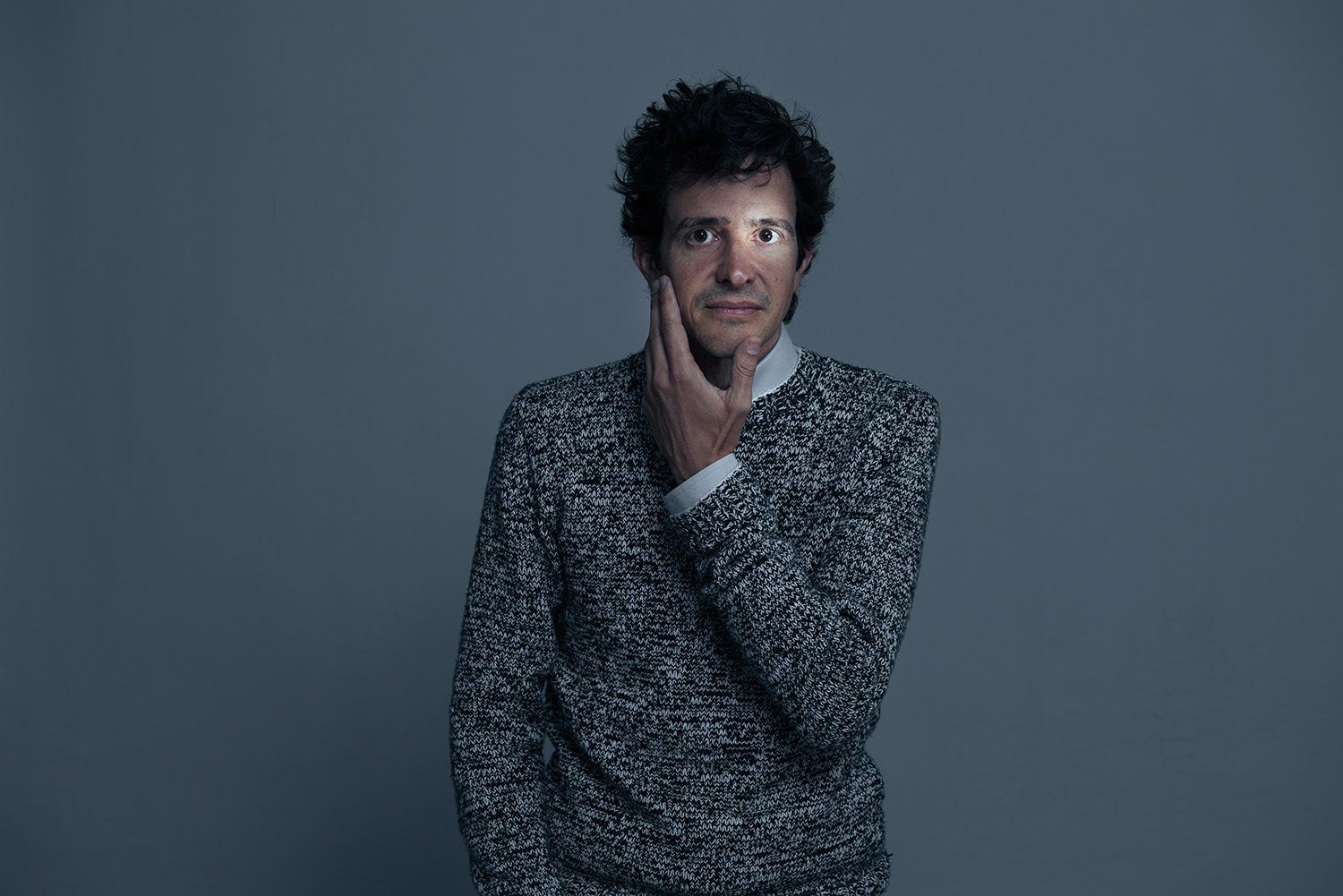
Cover photo: Shintaro Monden, founder and director of Medum
Technology and poetry, light and shadow, design and observation of reality. Seemingly oxymoronic pairings that, when they meet technical expertise and a creative eye, can become something new. It is precisely this approach that leads the Japanese design and research studio Medum to view inorganic electroluminescence (EL) from a different perspective: a technology already used for signs, displays, and backlighting systems, which becomes (in their hands) a tool for designing light.
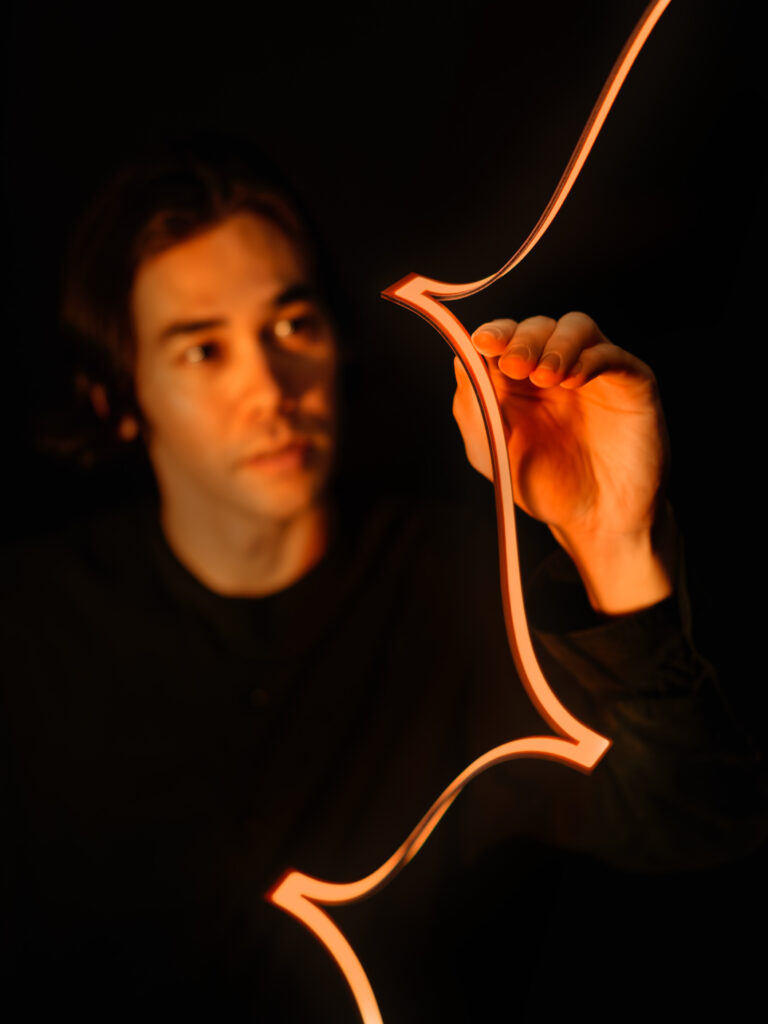
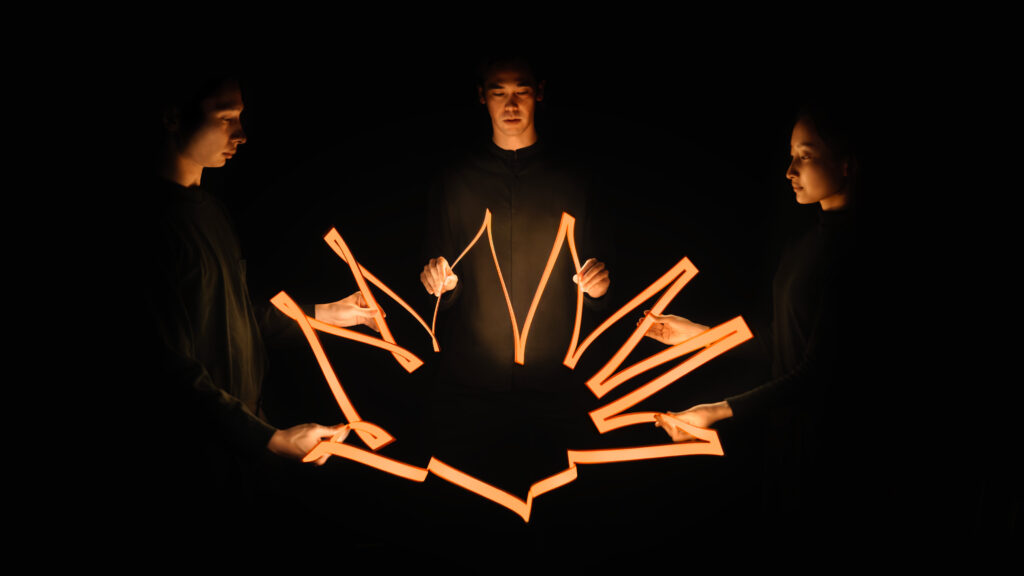
It all begins with a two-dimensional sheet—just 0.5 mm thick, lightweight, and flexible, capable of emitting a soft, uniform light—and a simple, everyday gesture: cutting, which in this case becomes a true transformative force. When applied to the luminous sheet (inorganic EL), this gesture acts like a pencil that draws new shapes and volumes, transforming flat surfaces into three-dimensional structures. This is how Medum experiments with and explores the material’s possibilities: simply changing the way it is cut yields new elements—in short, different ways of creating light.
This research served as the backdrop and focus of Light is Shadow, the installation presented by Medum during Milan Design Week 2026 in the Tortona district, where the exploration of lighting also extends to the relationship with shadow and the way in which, together with light, it influences our perception of space.
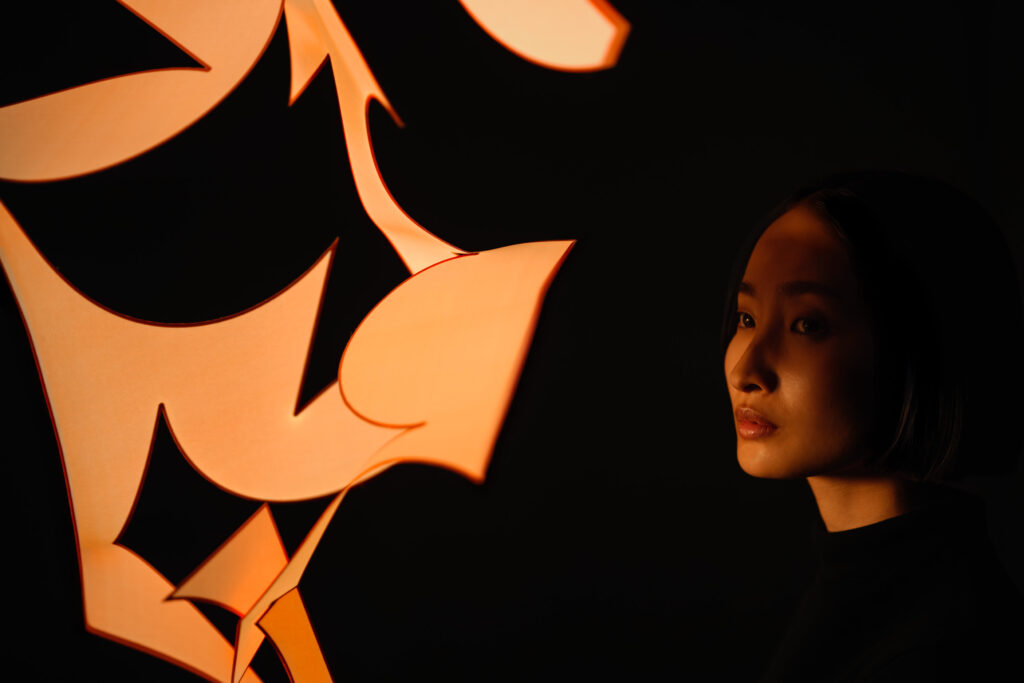
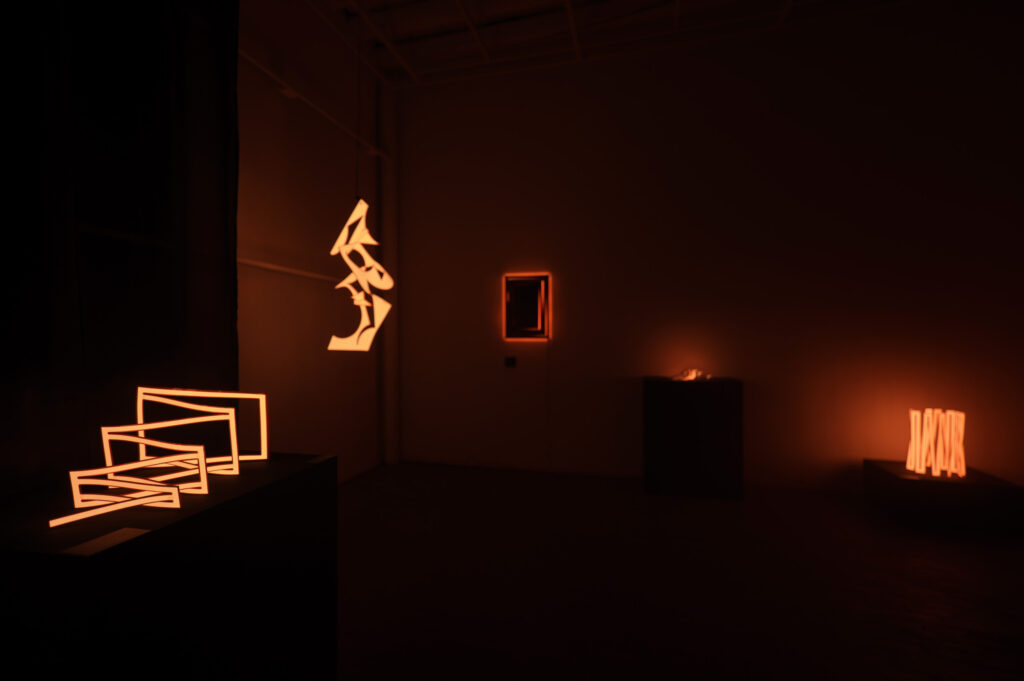
For the occasion, the twelve lighting prototypes presented were not designed simply to illuminate, but also to create a space of stillness, suspension, and contemplation. At the heart of the project lies the Japanese concept of Awai—the blurred threshold between two states—which leads Medum to view shadow not as absence or lack, but as an integral part of the experience of light and, more broadly, of sensory perception. Medum’s work lies at the intersection of (technical) material research and (cultural) reflection: inorganic EL—flexible, energy-efficient, and processable without producing waste—opens a viable new path for lighting design. This is the starting point for our conversation with Shintaro Monden, founder of Medum, to understand how a common technology can find new possibilities through design, and how designing light means, for the studio, giving form even to what remains in the shadows.
What motivated you to explore the potential of inorganic electroluminescence (EL), and why did you choose to work with this technology?
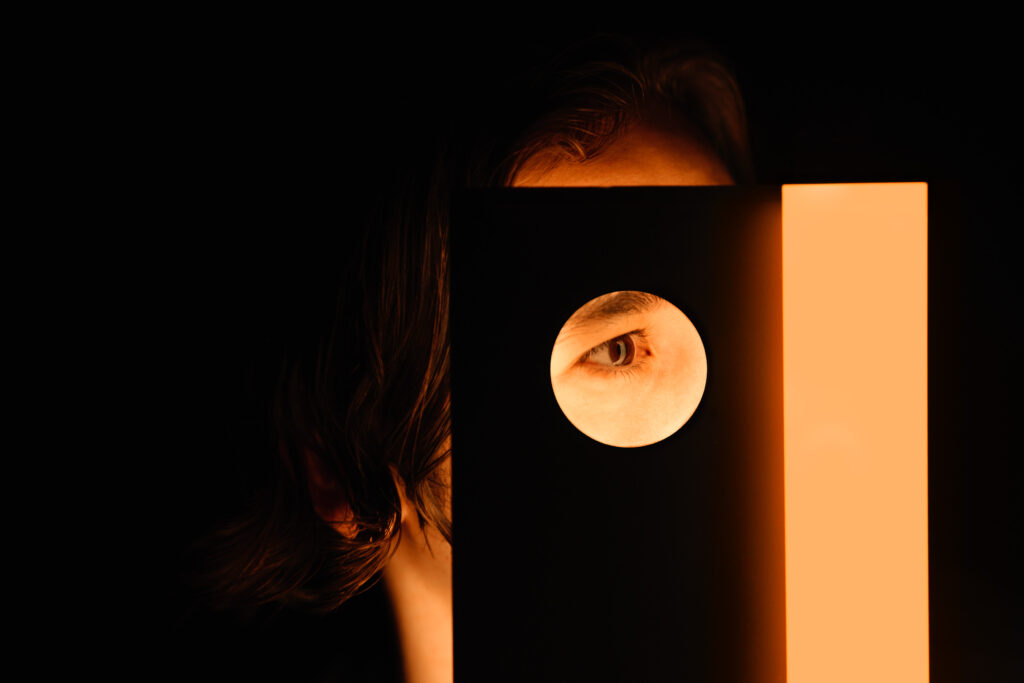
“When designing a new light, our goal was to design the way it exists within a space, rather than the object that produces it. Furthermore, we believed that a new concept of lighting could emerge from viewing light as an action rather than as a fixture. During our research, we were struck by Kirie, the Japanese art of paper cutting, in which the image arises simultaneously from two elements: the paper that remains and the void that is cut out. We wondered if it were possible to create a luminous element consisting simultaneously of light and shadow by cutting directly into the light source: the material that allowed us to do this was inorganic electroluminescence. This is a well-known technology, used for signs and displays, yet it possesses unusual characteristics: it emits light across its entire surface, is about 0.5 mm thick, is lightweight, and flexible enough to be bent or cut. We thought that by looking at this common material from a different perspective and applying a new design approach to it, we could transform it into something completely new. Furthermore, it is a low-impact light source: it consumes little energy, produces little heat, and has a long lifespan. These characteristics align closely with our approach to design, which is based on rationality and sustainability.”
What sets this technology apart from more conventional lighting solutions, and what new possibilities does it offer for lighting design?
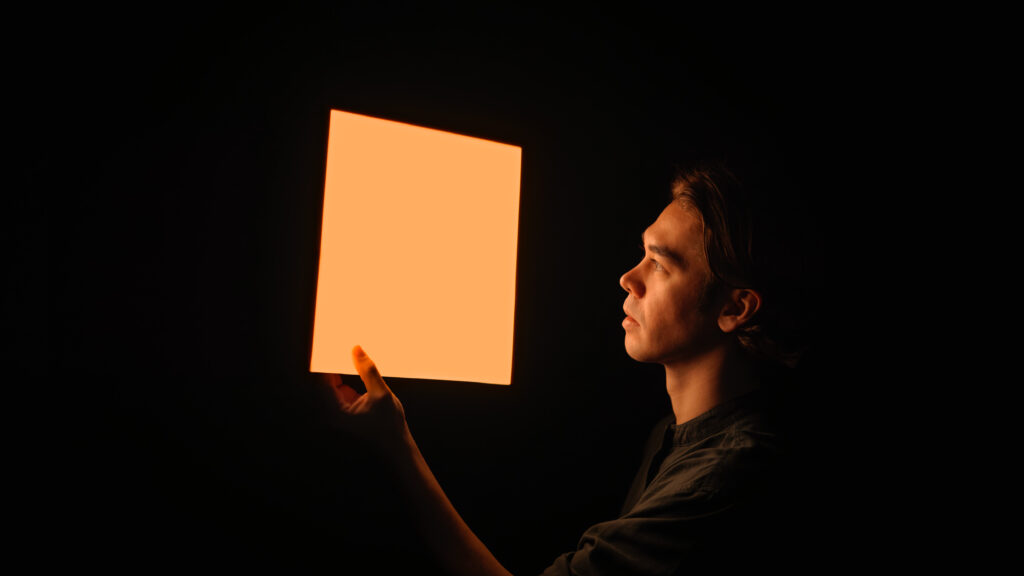
“Unlike conventional lighting technologies, such as LEDs, inorganic EL does not emit light from a single point but produces a soft, uniform glow. From an expressive standpoint, it allows us to create three-dimensional, dynamic light from a single flat sheet. From a functional standpoint, because it is so thin and flexible, it can be easily packaged and transported, reducing the environmental impact associated with shipping. In the Light is Shadow series, rather than uniformly illuminating a room, the soft, diffuse light interacts with shadow to shape the way we see things. This light embodies Yohaku—what a European designer might call negative space—although in Japanese ink painting, the unpainted paper is by no means empty, but rather mist, water, and air. It is a luminosity that leaves something for the viewer to complete (or imagine).”
How do these characteristics influence your creative process and the forms your projects take?
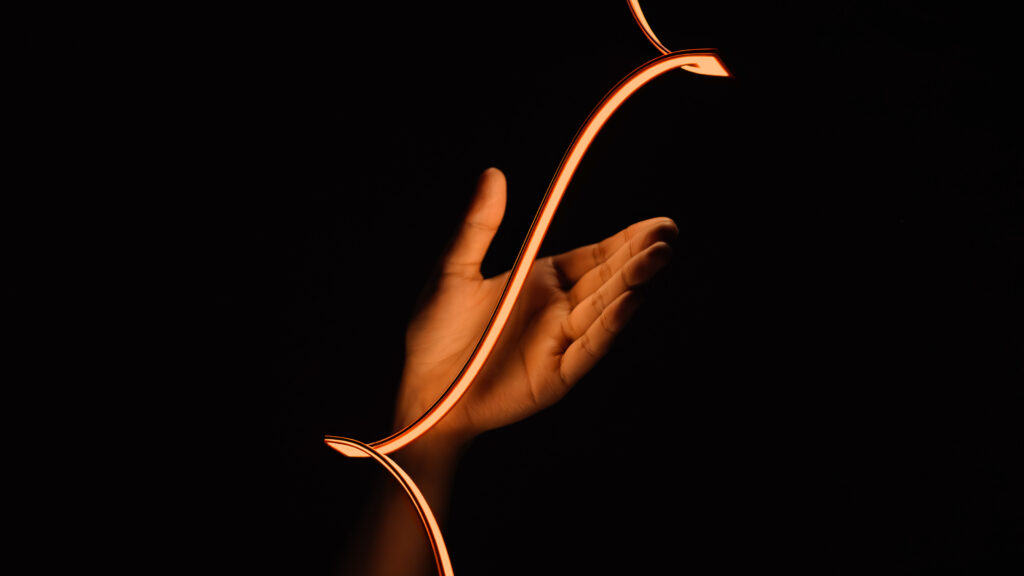
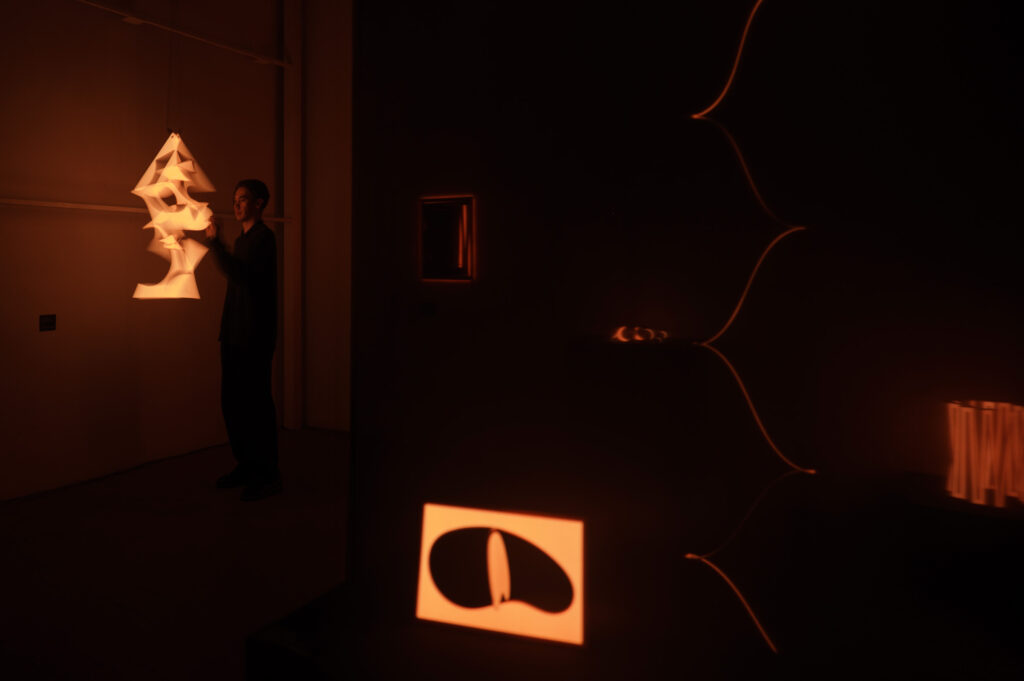
“The thinness and flexibility of inorganic EL led us to choose the simplest process we could imagine: cutting. We decided to work exclusively with standard sizes, from A1 to A5, working only on the surface and producing no waste. This approach leaves nowhere to hide: every design intention translates directly into form, and for this very reason, each designer’s sensibility becomes much more evident. For example, Tangle (one of the 12 prototypes in the Light is Shadow series) was conceived by a graphic designer and was created to be beautiful as a flat drawing, but also surprising when, upon opening, it transforms into a three-dimensional object. Another designer, from the world of industrial design, limited the cuts to thin parallel strips, giving the sheet flexibility and elasticity, and created three elements with different structures and characteristics: Spark, Ladder, and Crown. In this case, the focus was on understanding how much formal variety could emerge from a structural approach, working with gravity, resistance, and tension. Simply by changing the way the sheet is cut, a two-dimensional surface transforms into a three-dimensional object and begins to alter the space around it.”
Why was it important for you to show that light does not necessarily have to eliminate darkness, but can instead enter into a dialogue with it?
“Contemporary society demands light everywhere, day and night, prioritizing safety and efficiency. This constant brightness makes life more convenient, but it also comes at a cost: excessive energy consumption, light pollution, and the disruption of our circadian rhythms. Tokyo, where we’re based, is one of the brightest cities in the world at night, so this is an issue that’s particularly close to our hearts. We do not view shadow as an inconvenience but as a value: a stillness that helps calm the mind, making room for imagination and for what we cannot see. This sensibility is also explored in In Praise of Shadows, the 1933 essay by writer Junichiro Tanizaki. That is why it was important for us to consider light and shadow as equivalent values, rather than as opposites.”
How does the concept of Awai influence the way you think about and design light?
“When designing an object, you typically focus on its form and the presence it brings as a physical element. With Light is Shadow, by introducing Awai as a formal concept, we began to think about something different: the boundary between the object and the space surrounding it. Awai is what lies in between—that delicate threshold that is neither completely light nor completely shadow. We focused precisely on this point of intersection because we weren’t (just) designing a fixture that would illuminate a room from a single direction, but rather an experience of space. The twelve light elements, each with its own character, were arranged at intervals within the darkness, creating an immersive and meditative environment: a place where people could escape the noise and harsh light of everyday life. During Milan Design Week, we noticed that most visitors, upon entering the room, automatically slowed their pace and spontaneously lowered their voices.”
What role do you think inorganic electroluminescence (EL) might play in the future of lighting design? Can it contribute to a new culture of light—one that is more sustainable and more attuned to human perception?
“We don’t expect inorganic EL to become a dominant technology and replace traditional lighting, but we believe it can represent an important alternative. It isn’t cutting-edge technology, but rather a common, well-known material, and with our project, we wanted to demonstrate that by changing our perspective and applying design to it, it could take on a completely new value. In a world that consumes excessive amounts of energy, the low power consumption and soft light of inorganic EL make it a truly sustainable option: we can transform it from a simple functional tool into a means of creating an experience. A change of this kind can only be achieved by continuing to experiment.”
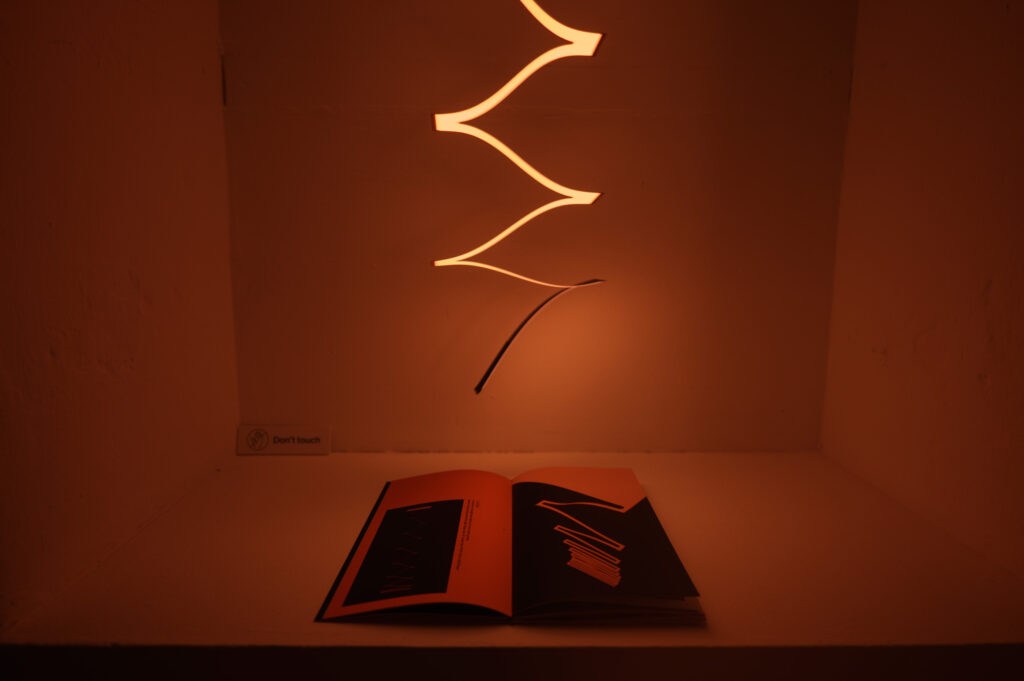
“For us, prototyping isn’t simply a step toward the final product, but a genuine research method. One of the prototypes from the 5lights series, presented in Milan in 2023, was subsequently produced by Alessi under the name Tsumiki and was selected for the ADI Design Index 2025. We are now working to bring the Light is Shadow series into production as well and, looking further ahead, to move from an object placed within a room to the very surface of the room itself, thus working on the scale of space. We would love to embark on this journey together with interested manufacturers and architects. Our goal is not a relentless pursuit of greater brightness, but a new culture of light: a light that invites us to pause, to appreciate half-light, and to discover the beauty of dialogue with shadow.”