In its purest form, nostalgia is less about what actually happened than about what we’ve chosen to hold on to—even when it doesn’t quite match our lived experience. To capture those twoyears, Sydney Sibilia’s 883 series—produced with Matteo Rovere for Sky Studios and Groenlandia—relied onheart and, above all, on light. Because, when you think about it, we perceive the 1990s almost as a color temperature.
What color are the ’90s?
Between the basement den, the Jolly Blu arcade, a Pavia shrouded in fog from the Ticino River, and Riccione’s Aquafan—recreated at Hydromania in Rome—a cosmogony of the ’90s takes shape. Valerio Azzali, director of photography alongside Davide Manca, lays out in the production notes the thinking behind the series’ cinematography: to create a world suspended between the real era and “the viewer’s perception of that period today,” avoiding obsessively literal period reconstructionto focus instead on the mise en scène of a memory—on the ’90s as they’ve stayed with us.
From the beige of provincial life to the petrol blue of success
“These are television years: everything you see, you’ve learned from television, with those colors,” Sibilia explains in an interview with Valentina Ariete of Movieplayer. The ’90s thus reemerge as a visual code that cinematography can bring back to life.
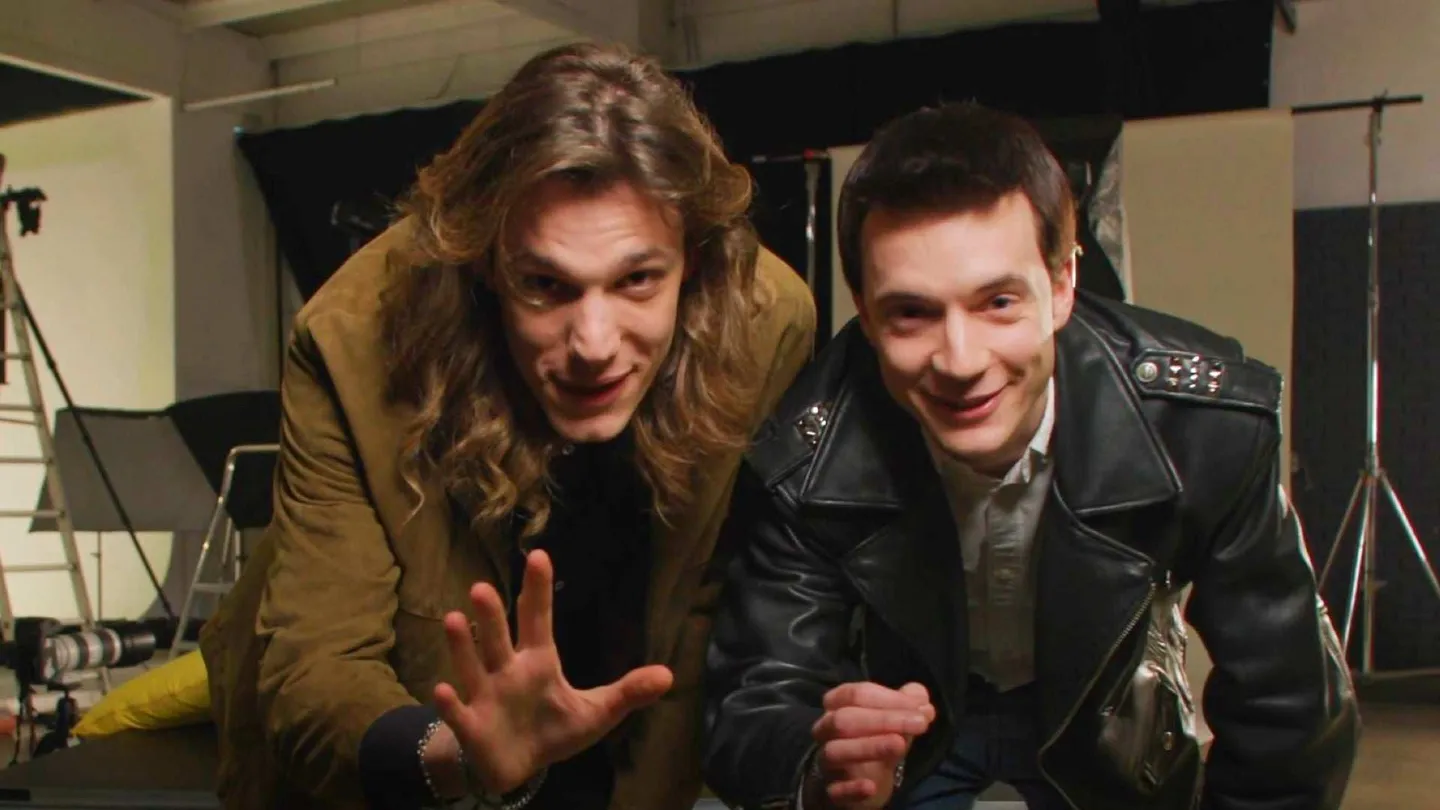
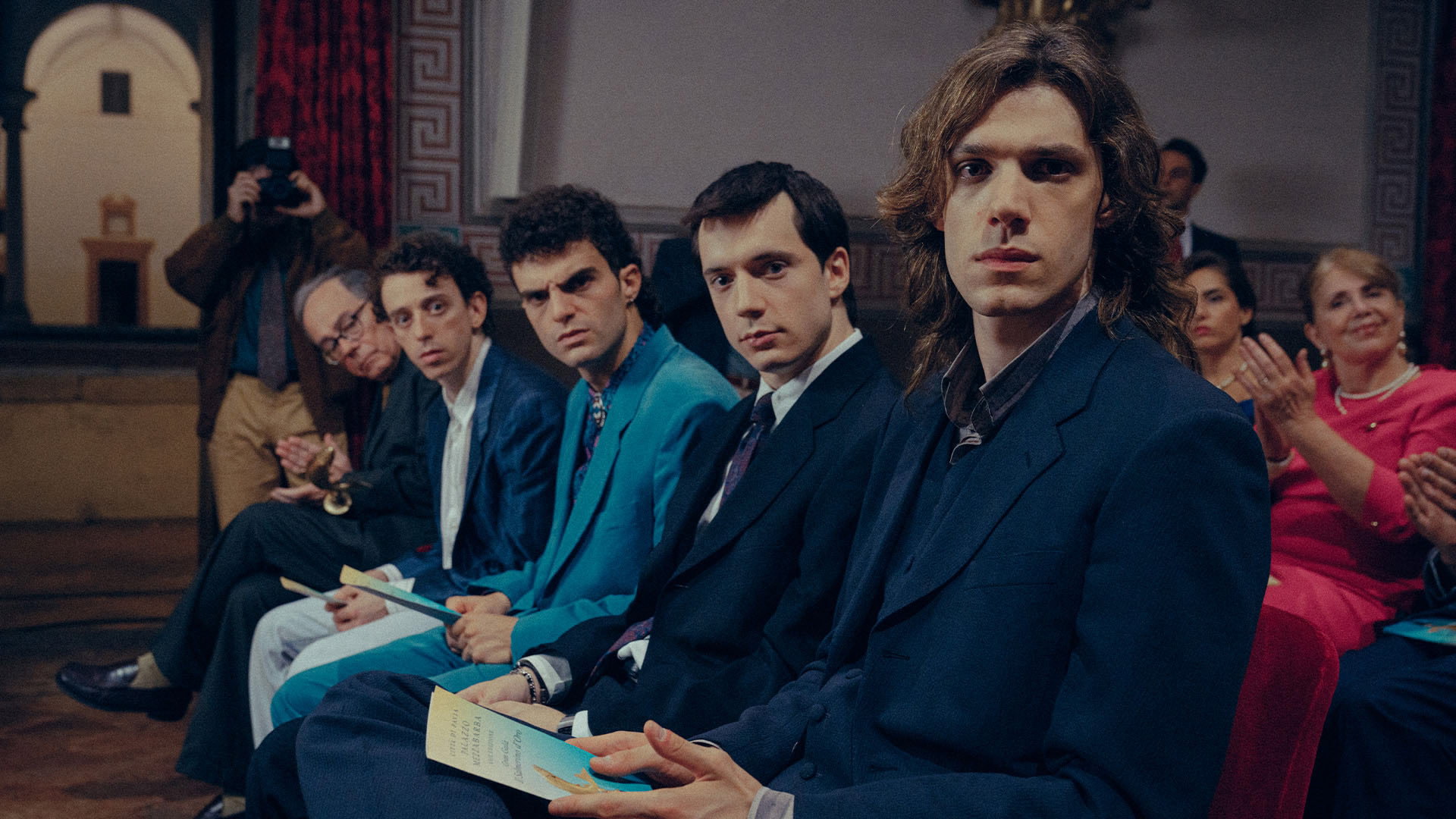
In the first season, Pavia is a faded watercolor of ochre, yellows, and beiges, crisscrossed by blue shadows. Luisa Iemma’s production design portrays it as monotonous and monochromatic, shaping a place any 18-year-old could only long to escape. Valentina Taviani’s costumes all but blend the kids into the city’s walls: Max in black, gray, and white; Mauro already more colorful; the adults still stuck in the 1980s.
In the interiors, the lighting helps build the image of a province that could be anywhere—a sort of symbolic Texas. The warm glow of lampshades, the orange casts of household lamps, and pockets of shadow create intimate spaces, sealed off from the outside world. It’s a light that seems to belong more to family photographs than to cinema, thanks to that amber patina we instinctively associate with memories.
With Nord Sud Ovest Est, however, success saturates even their world. As the shadows soften, the lights of the music world start to move, laden with flares, and Iemma leaves behind the timid colors of the provinces for the augmented reality of the Radio Deejay studios. Mauro trades sky blue for petrol blue (and cotton for silk); Max gets slightly more polished, while Righeira, in the fabulous mise en abyme of the first episode, take us back to the decade of soap bubbles—all neon and shoulder pads. The 1980s reemerge within the 1990s, in a game of Russian nesting dolls where the past, in turn, contains the past.
Imperfection as proof of authenticity
When Non è la Rai and Karaoke enter the scene, Azzali abandons the cinematic gaze to adopt that of the small screen—made up of Uniposca colors and cathode-ray-tube contrasts—working on the video grain as if it were a watermark of authenticity.
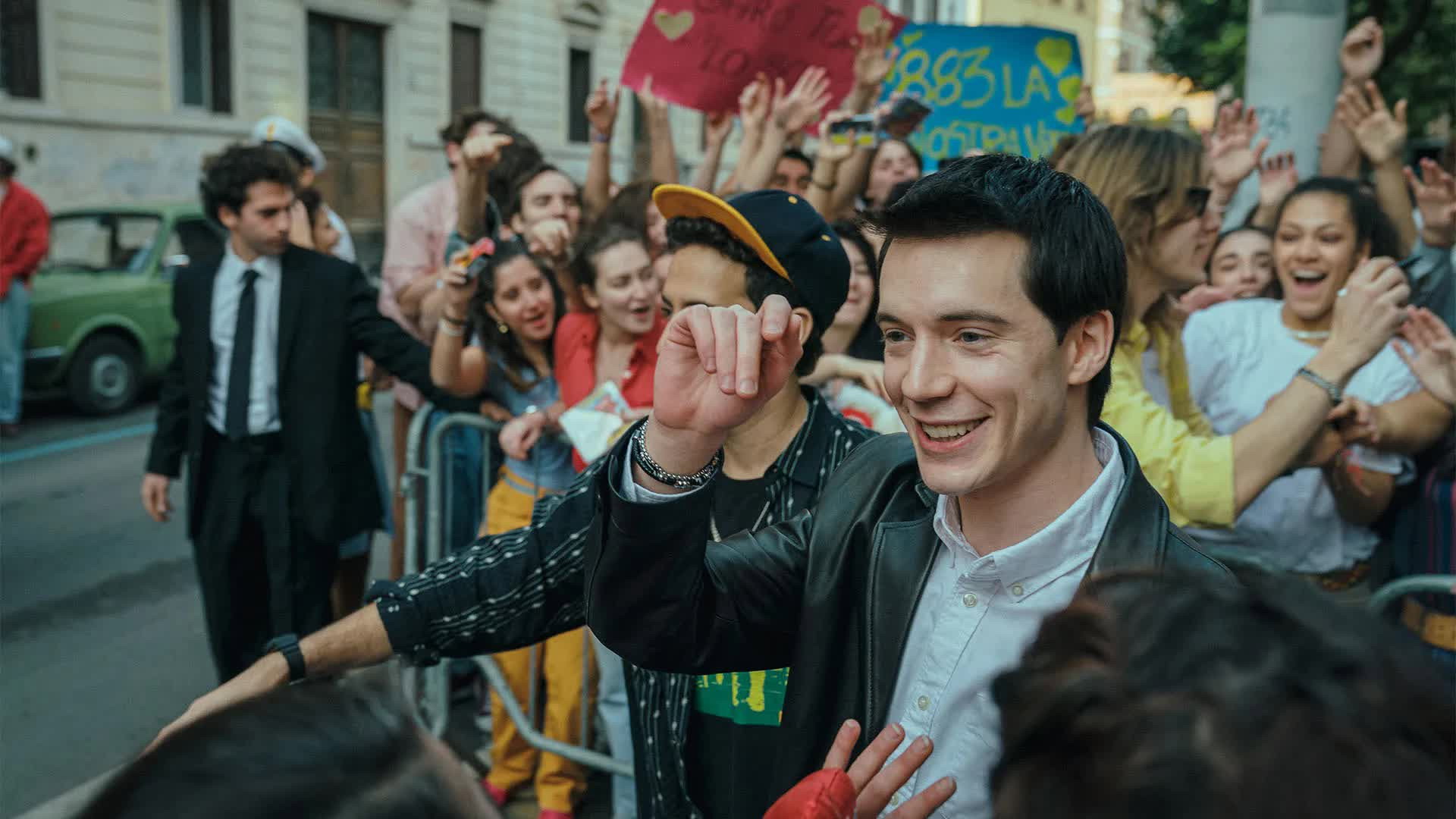
As Azzali explains in a note in the pressbook, it is the vintage Xtal Express anamorphic lenses, with their optical imperfections, that lend the province an epic dimension. These lenses—which render a less clinical image than contemporary optics—help create a look with a recognizable personality, where light generates reflections and flares. The result is an intriguing contrast: a broad, almost spectacular cinematic language applied to the everyday lives of two young men from Pavia.
But the decade is also (and above all) recognizable in the way the camera captures “non-places.” In the third episode, after a failed New Year’s Eve party, Max, Mauro, and their friends end up at an Autogrill highway rest stop over a beer and a Camogli sandwich, just like in the song “Rotta per casa di Dio.”
Even the CD that Max pulls off the shelf—an edition that didn’t yet exist in 1993—seems to hint at it: the series doesn’t tell the story of the 1990s, but of how we remember them.
How can you feel nostalgic for a time you’ve never lived through?
Why does that “we have to go back” light (as they’d say in Lost) hit so close to home? In 2016, a study conducted by researchers at Tokyo Metropolitan University and other Japanese institutions used functional magnetic resonance imaging (fMRI) to observe how images associated with childhood simultaneously activate the hippocampus—which is involved in autobiographical memory—and the ventral striatum, one of the key nodes in the brain’s reward circuit.
The intensity of this co-activation was found to correlate with an individual’s predisposition to nostalgia, as if the memory itself became a reward. Nostalgia is also an emotion capable of altering even our perception of heat: according to a study published in Emotion in 2012, cold can evoke nostalgia, and, in turn, nostalgic memories can make us perceive the ambient temperature as higher.
How, then, can we explain the emotional response of those who weren’t even born in 1993? Psychologists Carol Lynne Krumhansl and Justin Adam Zupnick, in a 2013 study, describe the phenomenon of cascading “reminiscence bumps”: the music of one generation helps shape the memories and emotional responses of the next, even when it belongs to an era the latter never lived through. By analogy, Pavia’s ochre becomes an intergenerational thermostat.
Nord Sud Ovest Est: beyond the nostalgia filter
In the magazine Cinergie, Luca Bertoloni speaks of a “nostalgia filter” that normalizes the imagery of the 1990s to the point of turning it into a branded myth. At Giffoni, Sibilia admitted, “I’m not a nostalgic person.” He misses certain objects, such as records, but says he’s all for modernity and the digital.
The lighting translates this distance into a meticulously calibrated visual poetics. In The Future of Nostalgia (2001), Svetlana Boym distinguished between restorative nostalgia and reflective nostalgia: the former emphasizes nóstos, the return home, and aims to reconstruct the lost past; the latter dwells on álgos, the pain of desire and distance, accepting the impossibility of that return.
Nord Sud Ovest Est seems to choose the latter. Pavia’s pale yellow doesn’t prettify the past; it gives form to the distance. The flares of success dazzle, and the cathode-ray grain openly declares itself a secondhand image. Azzali writes that he doesn’t simply want to reconstruct an era, but to inhabit it with greater awareness.
A postcard is something you look at; this light is something you pass through. And on the other side, what awaits us is less the 1990s themselves than the era that turned them into legend.