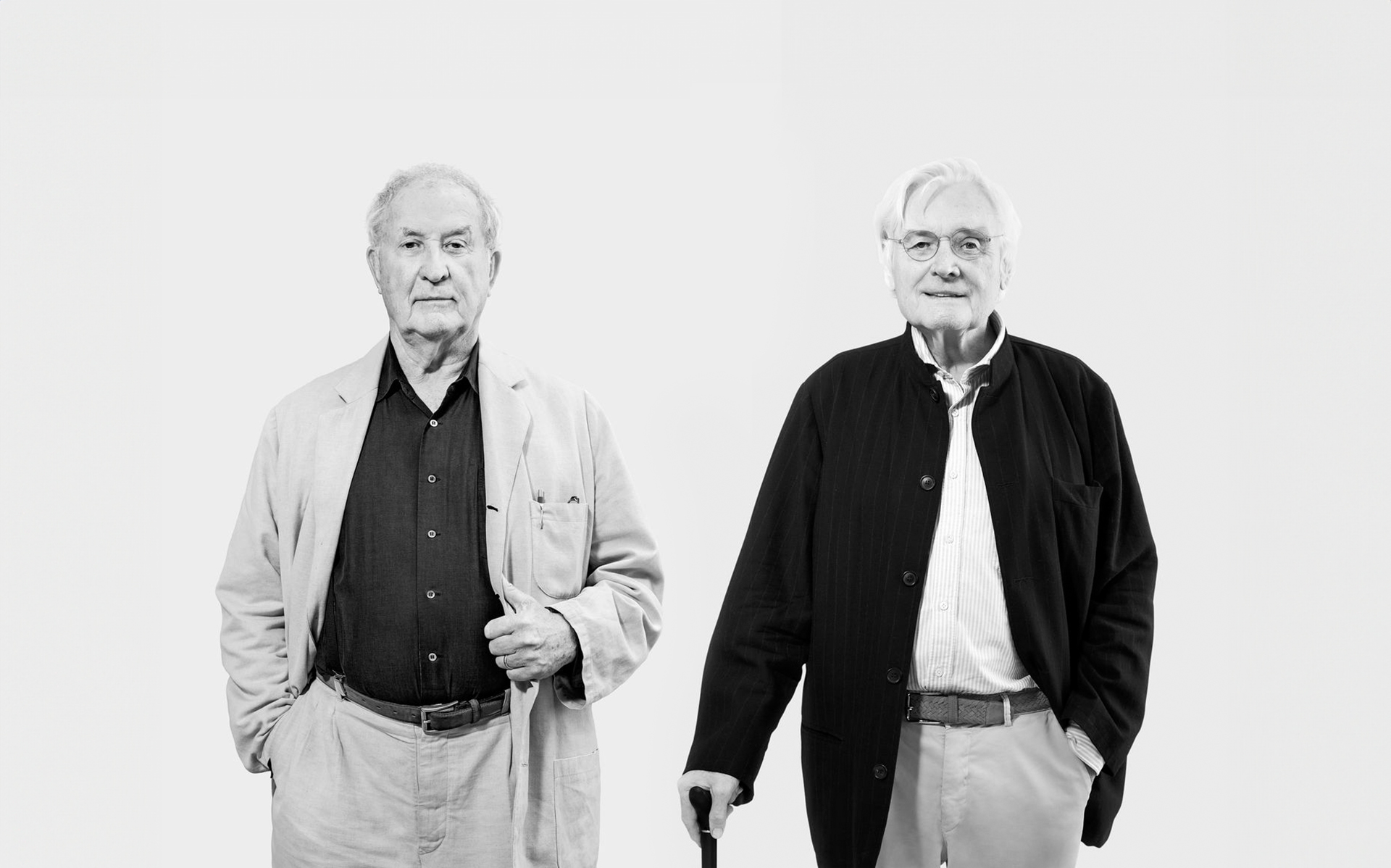
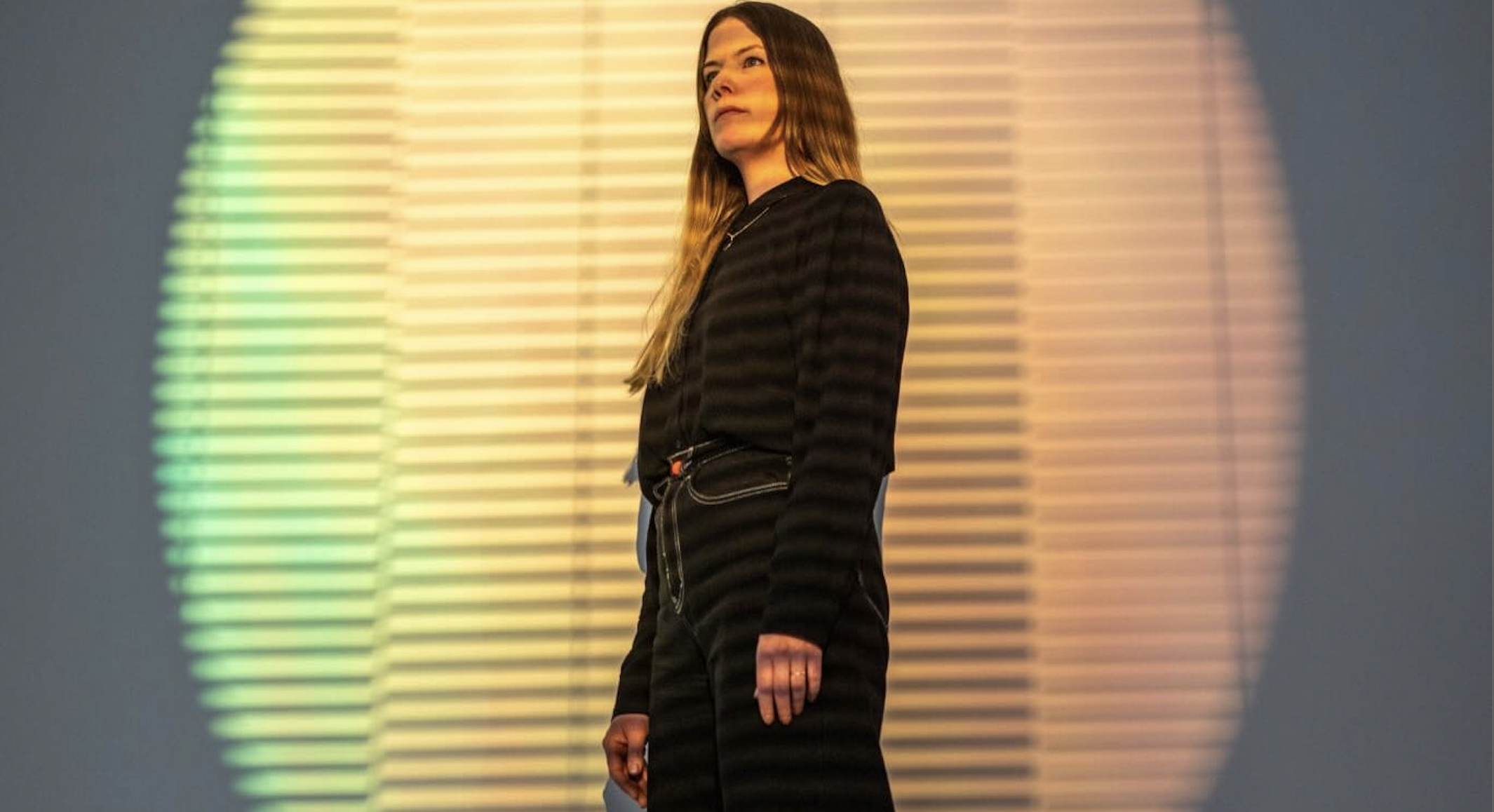
Cover photo: Yoshinori Kuno, founder and CEO of Ambientec
Ambientec is a Japanese brand that has been around for more than 15 years but is still emerging in Italy. For now it is a connoisseur’s find, a maker of high-end rechargeable table lamps built to last a lifetime. Deep technological research—partly inherited from the brand’s “previous life”—meets fine craftsmanship to produce small sculptures in precious materials. What drives the choices is neither the cost of the raw material nor the pursuit of maximum profit, but the desire to make something beautiful. We spoke with Yoshinori Kuno, founder and CEO of Ambientec, to find out more.
How did the Ambientec brand come about, and how did your earlier experience in technical lighting shape its development? What led you to focus exclusively on rechargeable lamps?
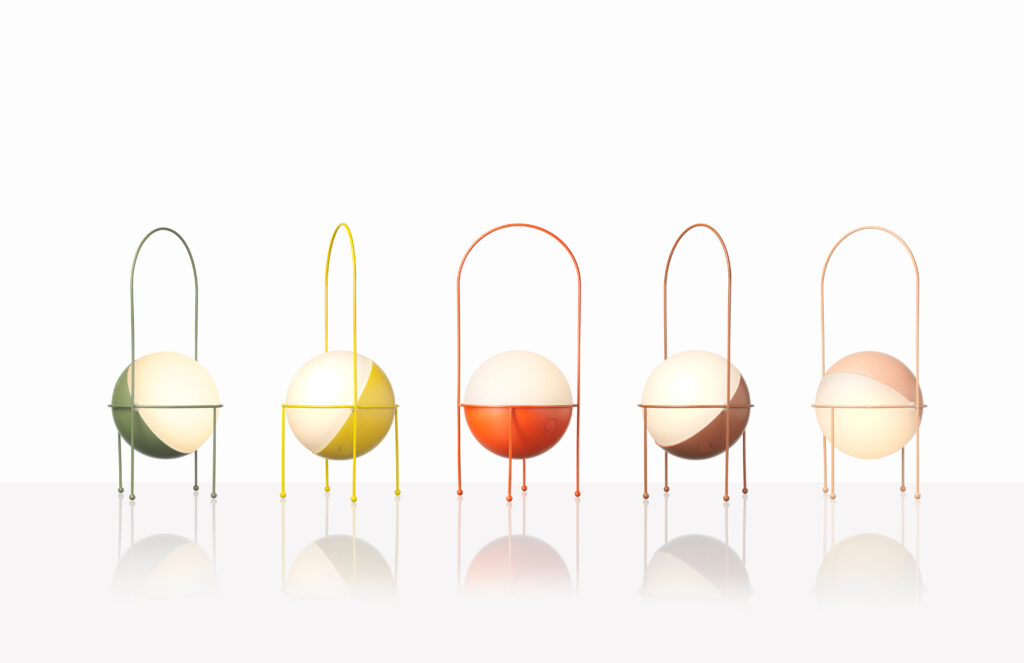
“For many years, well before founding Ambientec, we developed and manufactured underwater camera housings and lighting equipment. We wanted to bring the technologies we had perfected in technical lighting into interior lighting and everyday life: waterproofing able to withstand depths of 100 meters, the ruggedness demanded of professional tools, and our know-how in controlling battery-powered LEDs. At the same time, the great earthquake in eastern Japan in 2011 was a major turning point for me.
Rather than creating products destined for mass production and rapid consumption, I wanted to make objects that could be used for a lifetime, that people could love and keep for their beauty. Ambientec was founded to give that vision a form. We chose to specialize in rechargeable lamps because advances in LED and battery technology, combined with our experience, could free light from its dependence on power outlets and allow entirely new forms of lighting. We were convinced that this would let us—despite entering the industry relatively late—build a brand with an authentic, meaningful reason to exist.”
Where are your products made? Who handles the design, and where is the brand distributed in Italy?
“We are a Japanese brand, and all product development, engineering, and quality-standard setting happen in-house, in Japan. A wide range of components—metal parts, glass, wood, and washi paper—is made by our trusted manufacturing partners in Japan and China. Our products come to life through close collaboration between outside designers and our in-house engineering team. The designers behind Ambientec products include Nao Tamura, Hiroto Yoshizoe, Yoshiki Matsuyama, Ryuichi Kozeki, Elisa Ossino, Kensaku Oshiro, and Norm Architects. In Italy, Ambientec products are available through Porro, with whom we have a special partnership, and through Mohd. They can also be bought online through our partner Archiproducts.”
Your collection is defined by an “industrial approach combined with the precision of high-quality craftsmanship.” How do you balance these two seemingly opposing aspects?
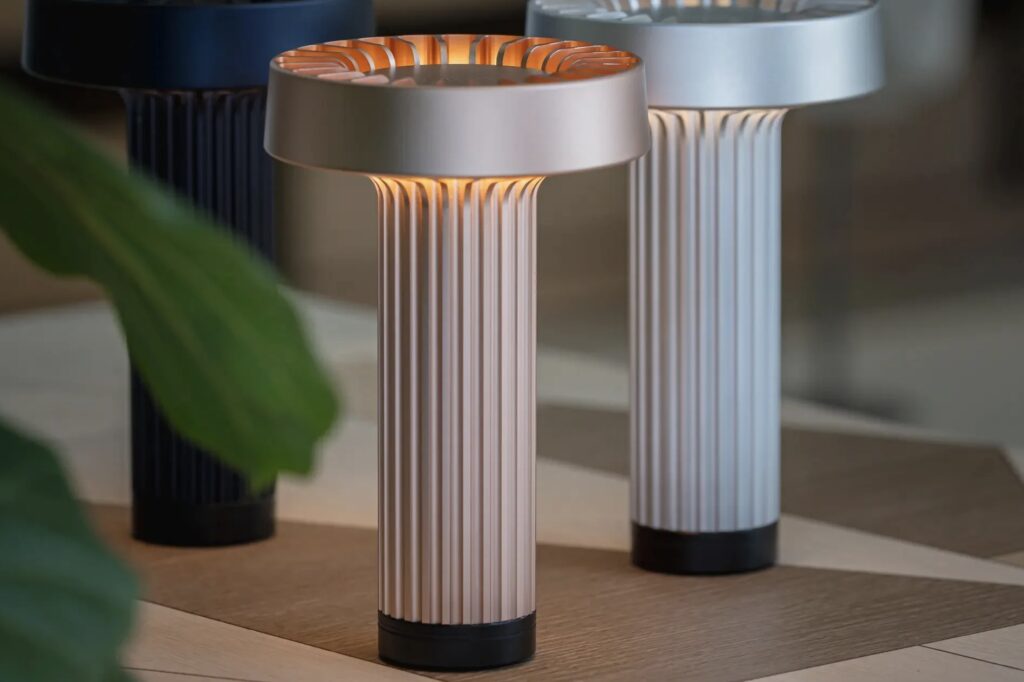
“Structural components and optical systems are made through industrial processes that give absolute priority to precision, while exterior parts and finer finishes are worked by hand. Metal cutting, for example, is executed with precision on CNC machines, while surface texture and polishing are entrusted to the expertise of specialized artisans. And because the crystal glass is entirely handmade, the interfaces between it and the precision components are designed from the earliest stages to absorb the material’s natural variations. These practices rest on the philosophy of finding the best possible way to realize what the designer imagined and designed.”
Which materials do you use, and what criteria guide your selection process?
“We mainly use durable materials that do not degrade easily over time, such as metal and glass, to ensure a long product life. As for plastic, we use virgin material where high transparency and strength are required, and recycled material from our own production processes for painted parts or components that do not affect the final appearance. Recently we have begun to bring in natural materials such as wood. We were not used to working with materials that vary from piece to piece, and combining them with precision components is a new challenge for us—and a great opportunity to bring out their particular charm. In every case, we do not base our choices on material costs or production efficiency: our absolute priority is to select materials that maximize the value of the collection.”
What are your iconic products, and what makes them distinctive?
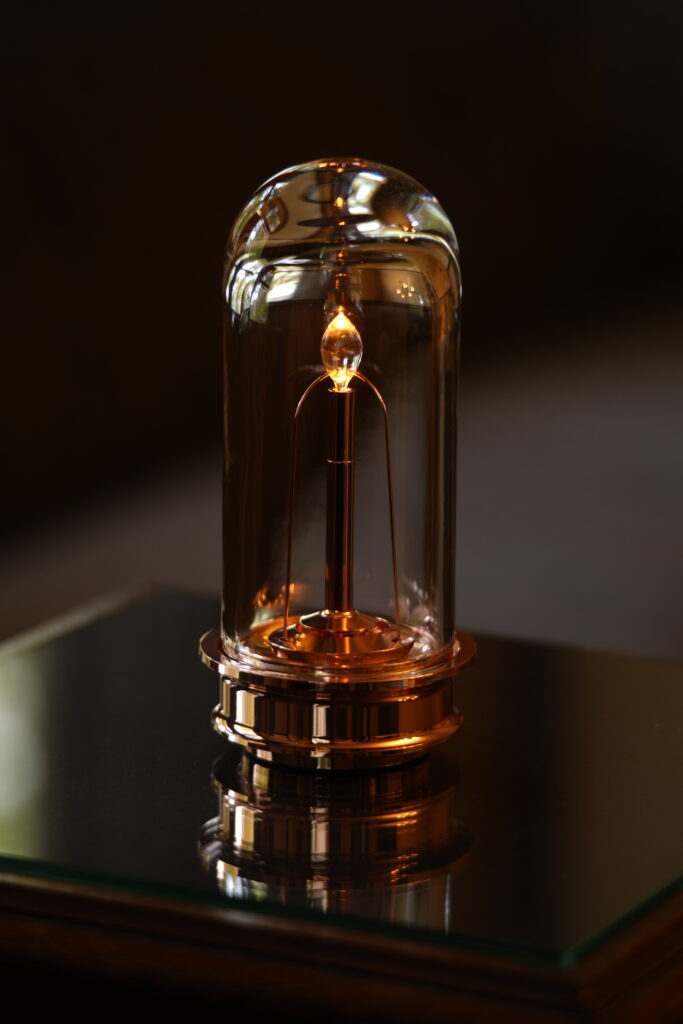
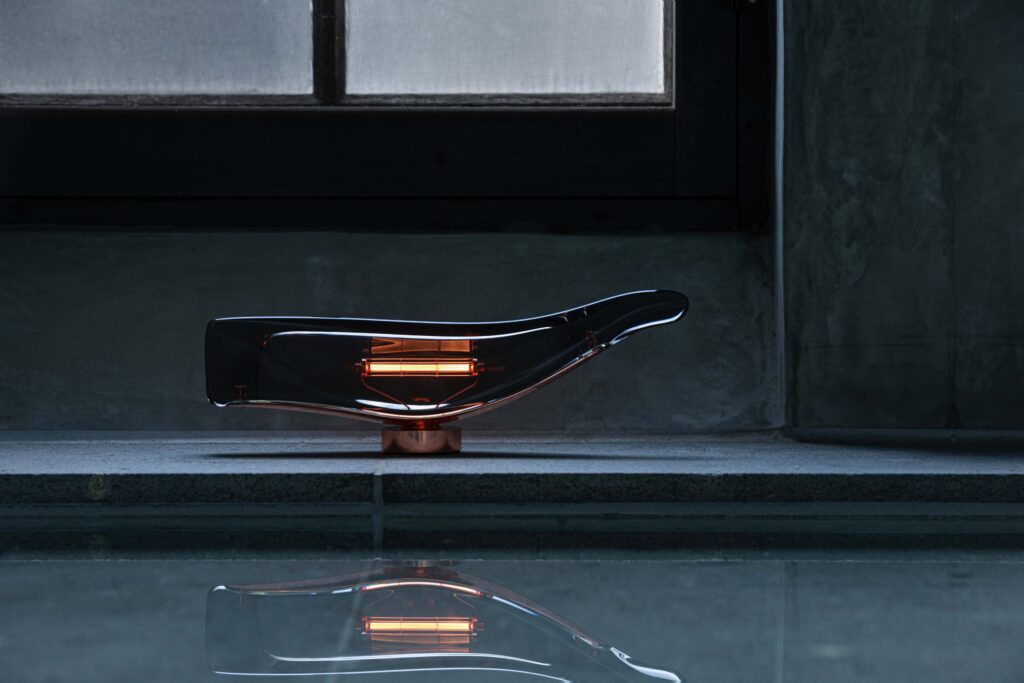
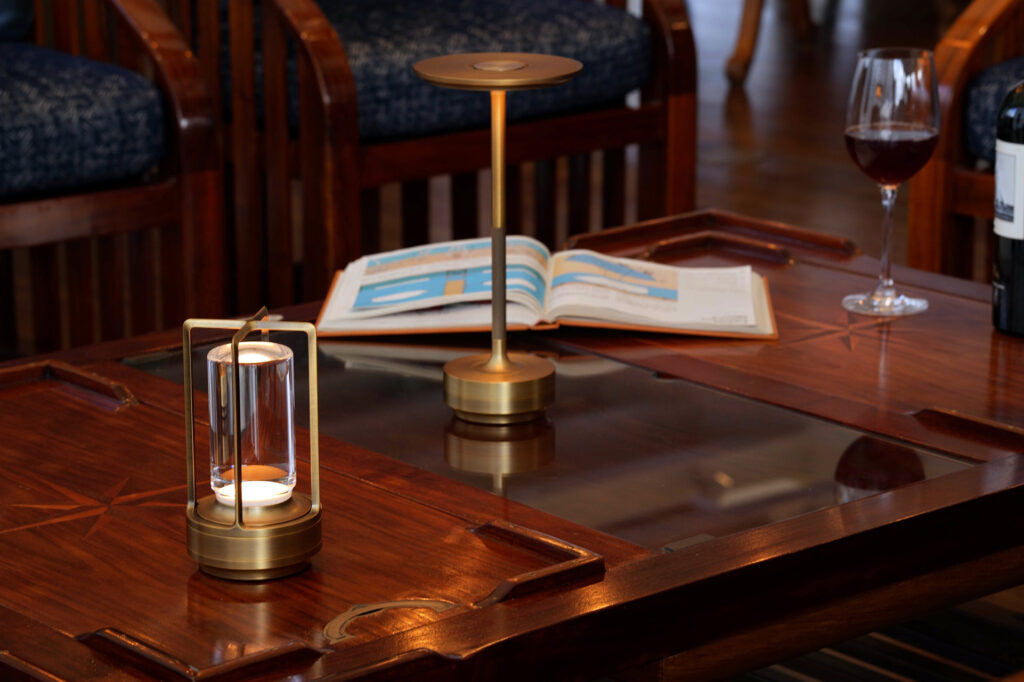
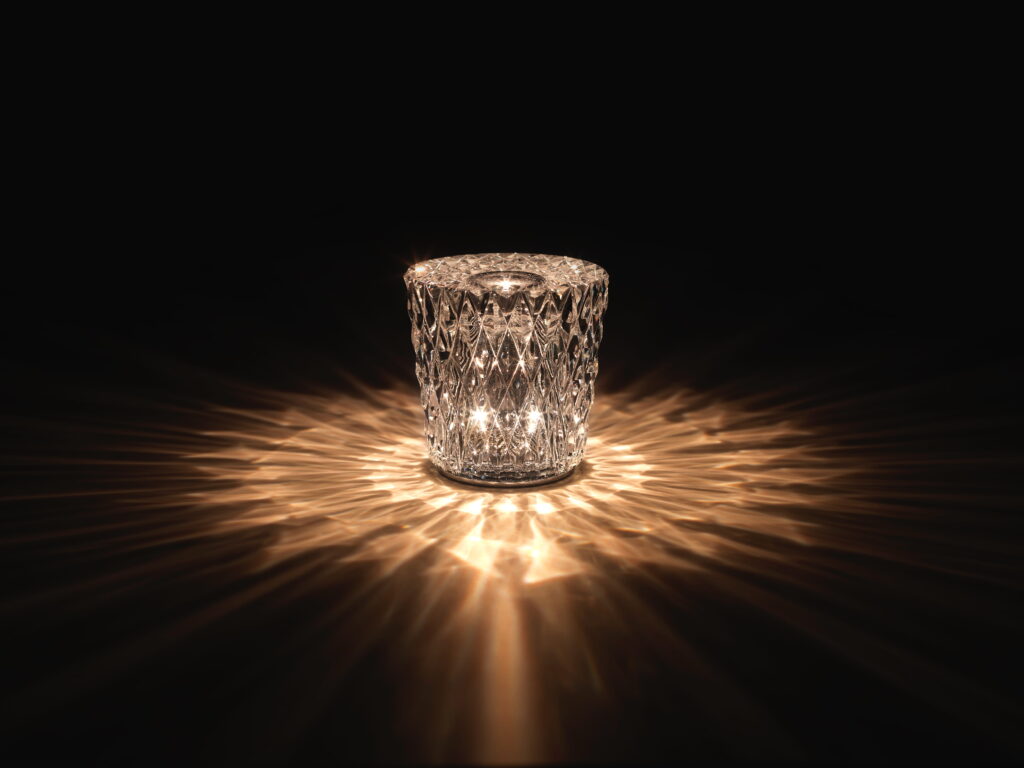
“One of our flagship products is the Turn series. Machined from a single block of solid metal and marked by a striking material solidity, Turn is a task lamp that elegantly lights the hands and the space immediately around them. Its “sister” version, Turn+, is an ambient lamp designed to create evocative, welcoming rooms. Table lamps though they are, both have a waterproof construction that allows use indoors and out. Xtal is a lamp the size of a tumbler, available in several crystal-glass treatments. Through its play of reflections, it elegantly enhances any surface. Hymn is a contemporary reinterpretation of the traditional candle flame. Light passes through a gently moving refracting lens, creating a delicate, vibrant effect that recalls a flame’s natural flicker. Cachalot, finally, is a sculptural lamp inspired by the sperm whale. It stands out for the crystalline transparency of its high-purity acrylic, paired with a warm light that seems to rise from its depths. It combines the elegant presence of a decorative object with a soft, reassuring light for everyday use.”
What are your next projects, and how do you see the company growing and where it is headed?
“At the moment, alongside developing new collections, we are deeply committed to the dialogue with users through the Ambientec Gallery, which opened a year ago. Our next presentations at Salone del Mobile.Milano, during Euroluce, will be crucial for us. We don’t want to limit ourselves to showing new products: we intend to express our philosophy and demonstrate our commitment to redefining what it means to do business and to manufacture in the contemporary world. Although our company is still on the way to becoming a truly global brand, we have no intention of endlessly expanding the catalog or chasing unlimited growth. Our goal is to offer only what genuinely deserves to reach the market, in considered and appropriate quantities. Beyond that, we want to promote a culture of longevity, making sure the products we have already made can be repaired and handed down, staying with people for a lifetime.”