
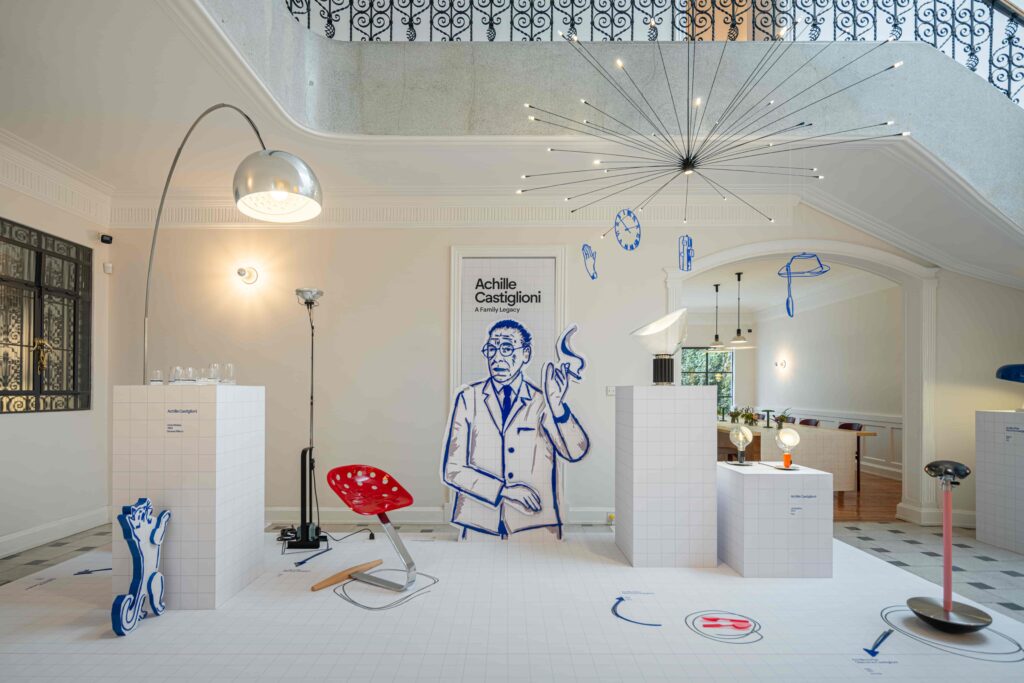
Cover photo: Achille Castiglioni: A Family Legacy, Photo Courtesy DIEZ
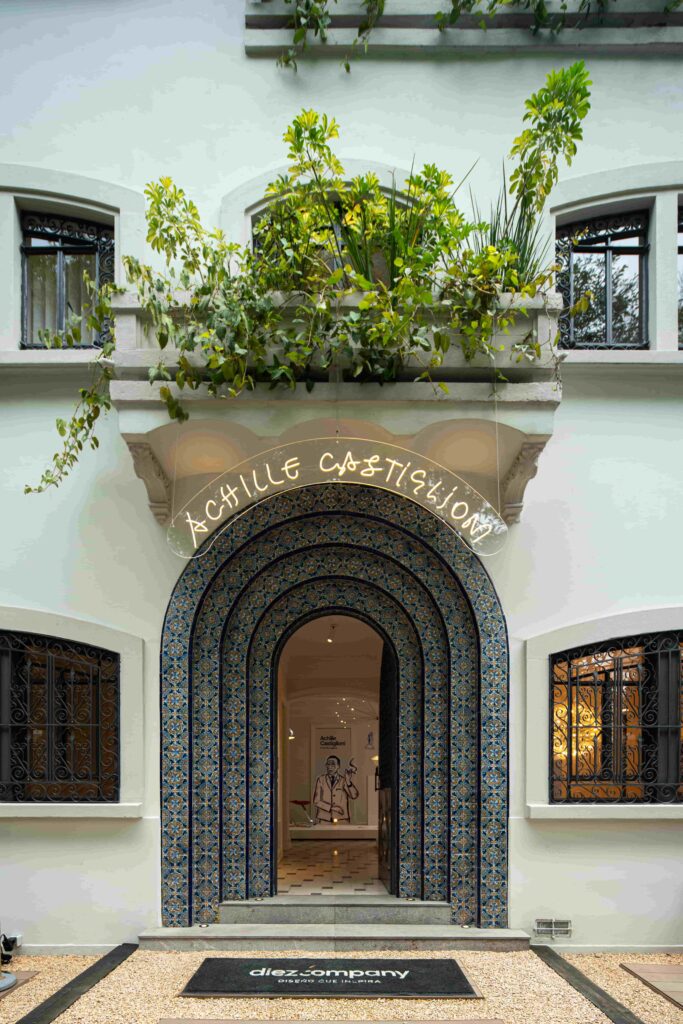
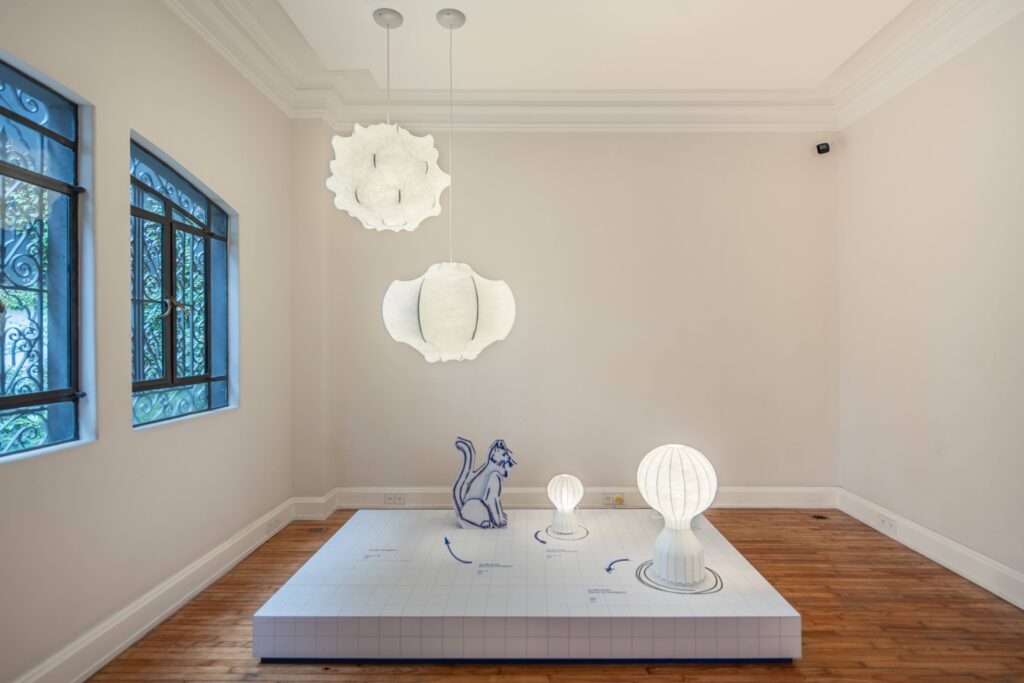
For over twenty years, Rodrigo Fernández, founder of Mexico-based Diez Company, has worked to bring international design to Mexico, convinced that every object carries a history and cultural significance that can take on new meaning in another country. This belief led him to collaborate with Giovanna Castiglioni, daughter of Italian design master Achille Castiglioni, on Achille Castiglioni: A Family Legacy, an exhibition on view until November 15 at the Diez Company showroom in Polanco, Mexico City. Conceived not only to introduce the designer through a selection of his most iconic objects, including the Arco, Taccia, and Toio lamps, alongside the Mezzadro and Sella seats, but above all to explore his methodology, shaped by curiosity, intelligence, and humor, the exhibition opens up a broader conversation about the relationship between contemporary Italian and Mexican design.
Do you remember the first Castiglioni object that caught your attention? What struck you about it, and what keeps you fascinated today?
One of the objects that best represents what I admire about Achille Castiglioni is Ventosa. It’s an incredibly simple idea: a small light bulb with a suction cup that can attach to different surfaces. Almost nothing, and yet everything you need. What fascinates me is the intelligence behind that simplicity. Castiglioni didn’t need to create something monumental to make a statement. He could take an ordinary object, question its conventional use, and transform it into something unexpected, useful, and even humorous. We often associate great design with iconic objects, but I believe true innovation can be found in the smallest gestures. Ventosa reminds me that good design is not necessarily about adding more, but about knowing what can be taken away. That is what continues to fascinate me about Castiglioni: his ability to make us smile while making us think.
How did you first connect with Giovanna Castiglioni, and what shared interests sparked the idea for this exhibition?
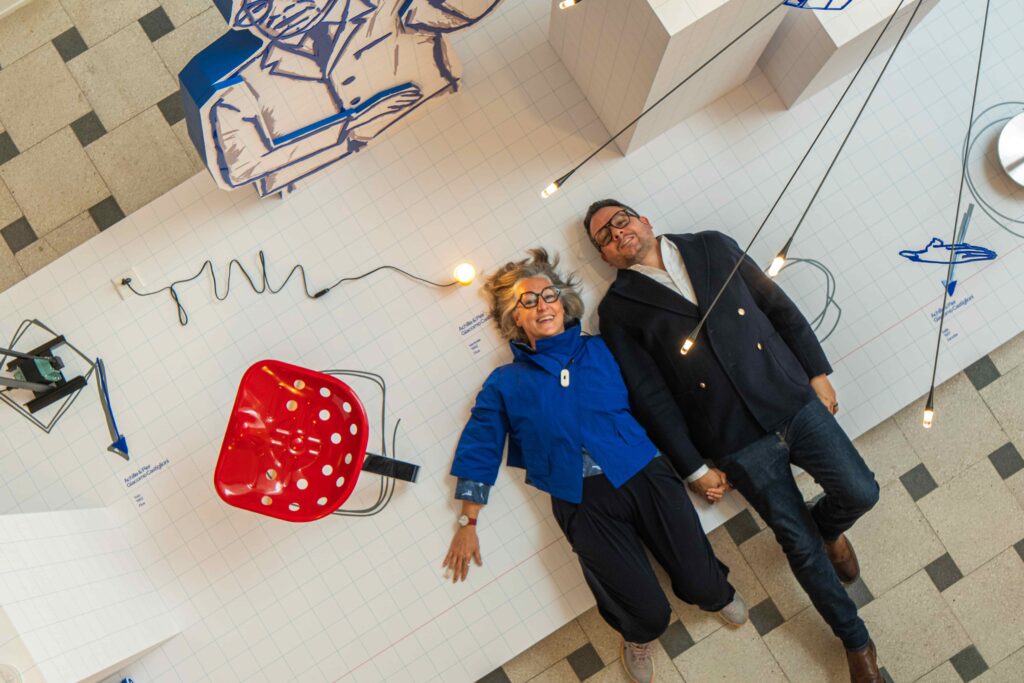
I had encountered Giovanna several times in Milan at Fondazione. She has an extraordinary ability to communicate her father’s legacy with warmth, humor, and generosity, keeping his curiosity alive. The exhibition grew from a shared belief that design should be experienced, questioned, and discussed. We wanted to bring that conversation to Mexico, without being associated with any brand, but rather with the creator and the woman behind preserving his legacy. This is why there are no sponsors or brands associated, even when we display Zanotta or Flos products.
What drew you to amoATO Studio, and how did you work together to translate Castiglioni’s playful spirit into the exhibition space?
For this exhibition, we wanted to avoid the conventional language of a retrospective.
The collaboration with amoATO Studio on the exhibition’s visual identity was an opportunity to approach his legacy through a contemporary graphic language. I designed the exhibition, and they completed it with beautiful graphics. The challenge was to communicate the intelligence, spontaneity, and humor of his work without competing with the objects themselves.
For me, the exhibition is not about nostalgia. It is about making the ideas behind these objects relevant to a new generation.
Play was central to Castiglioni’s approach. Where do you see that spirit in Mexican design, and which designers would you mention?
I think play is deeply embedded in Mexican culture. We have an extraordinary ability to combine humor, craftsmanship, color, and imagination, often in ways that challenge conventional ideas of beauty and functionality. Late Pedro Friedeberg is perhaps one of the clearest examples. His work challenges the boundaries between furniture, sculpture, and fantasy. The Hand Chair, for instance, transforms something familiar into an entirely unexpected object.
I also think of the work of the late Ricardo Legorreta, whose architecture used color, light, and proportion to create emotional experiences. And in contemporary design, I admire the way designers such as Héctor Esrawe explore materials, craftsmanship, and experimentation.
What connects these different approaches to Castiglioni is not necessarily a shared aesthetic, but a willingness to question conventions.
From your perspective, how has Italian design influenced Mexico, and how is it perceived beyond the design community?
Italian design has had an enormous influence on how we understand contemporary interiors, architecture, and the relationship between industry and creativity.
In Mexico, Italian design has traditionally been associated with quality, sophistication, and beautiful objects. But I think its most important contribution goes much deeper. Italy demonstrated that design could become part of a country’s cultural identity. That a chair, a lamp, or an everyday object could represent an entire way of thinking. Beyond the design community, many people recognize iconic Italian objects without necessarily knowing who designed them. That is precisely what interests me. At Diez Company, we have spent more than twenty years trying to move the conversation beyond the object itself. We want people to understand the ideas, the experimentation, and the cultural context behind what they see. An exhibition like this allows us to reach people who might never attend a design fair or enter a traditional design showroom.
What do you hope Mexican visitors will discover about Castiglioni that you yourself have come to love?
His humanity. We tend to celebrate great designers through their masterpieces, but what I find most extraordinary about Castiglioni is his way of looking at the world.
He was curious about ordinary things. He collected anonymous objects, observed everyday gestures, and found inspiration where others saw nothing particularly interesting.
His famous phrase, “If you’re not curious, forget it”, is probably the most important message we wanted to communicate through this exhibition. I hope visitors leave understanding that creativity is not reserved for designers. It begins with curiosity, observation, and the willingness to question what we take for granted. And perhaps, after visiting the exhibition, they will look at an ordinary object differently. That would already be a wonderful achievement.
What can Italian and Mexican design learn from each other? Would you like to extend this dialogue through collaborations with contemporary designers?
Absolutely. I think there is an extraordinary opportunity for dialogue between the two cultures.
Italy has developed an exceptional relationship between designers, manufacturers, industry, and cultural institutions. There is an understanding that design is both an economic activity and a cultural responsibility. Mexico, on the other hand, has an extraordinary richness of materials, craftsmanship, traditions, and creative perspectives. Our design culture is deeply connected to the human hand, to community, and to the emotional value of objects.
I believe Italy can learn from Mexico’s relationship with craftsmanship and cultural identity, while Mexico can continue learning from Italy’s ability to transform creative ideas into enduring industrial and cultural legacies. I would love to see more collaborations between contemporary designers from both countries, particularly projects that bring together Mexican craftsmanship and Italian industrial expertise. For me, the future of design is not about defending national identities in isolation, but about creating meaningful exchanges between them.
If you could bring to Italy the work of a Mexican designer whose impact in Mexico rivals Castiglioni’s in Italy, who would you choose, and why?
I would choose Luis Barragán. Of course, Barragán was an architect rather than an industrial designer, but I believe his cultural significance makes the comparison particularly interesting.
Like Castiglioni, Barragán developed a language that was unmistakably his own, yet universal in its emotional impact. Where Castiglioni used humor, observation, and ingenuity to transform everyday objects, Barragán used light, color, silence, and proportion to transform the experience of space. Both understood that design is not simply about solving a functional problem. It is about changing the way people experience the world. I would find it fascinating to present Barragán in Italy through an exhibition exploring his relationship with light, emotion, and Mexican identity. And perhaps that is where the most interesting dialogue between the two cultures could begin.