
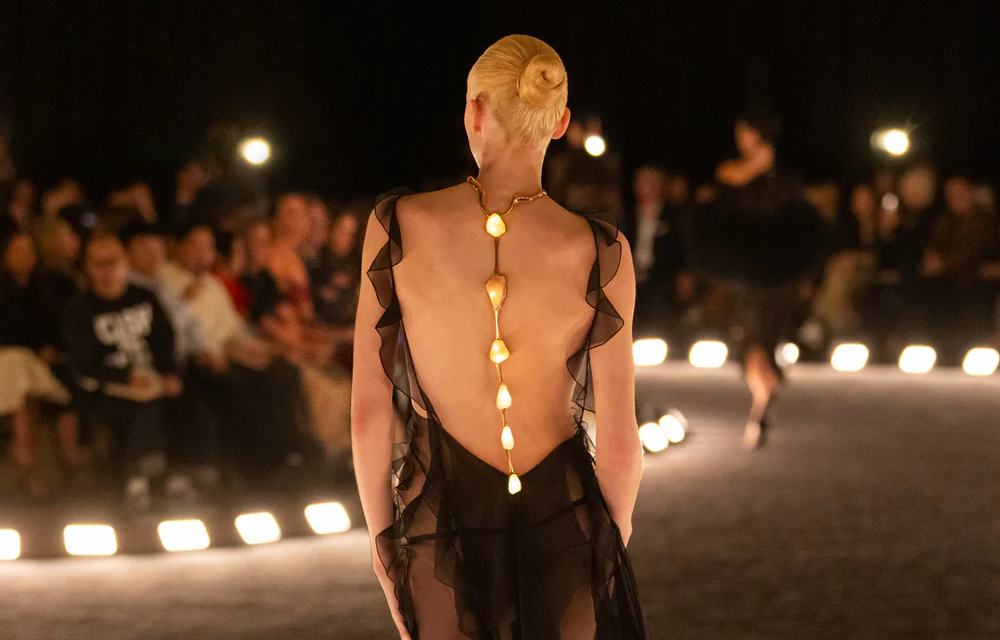
Photo: ©Schiaparelli
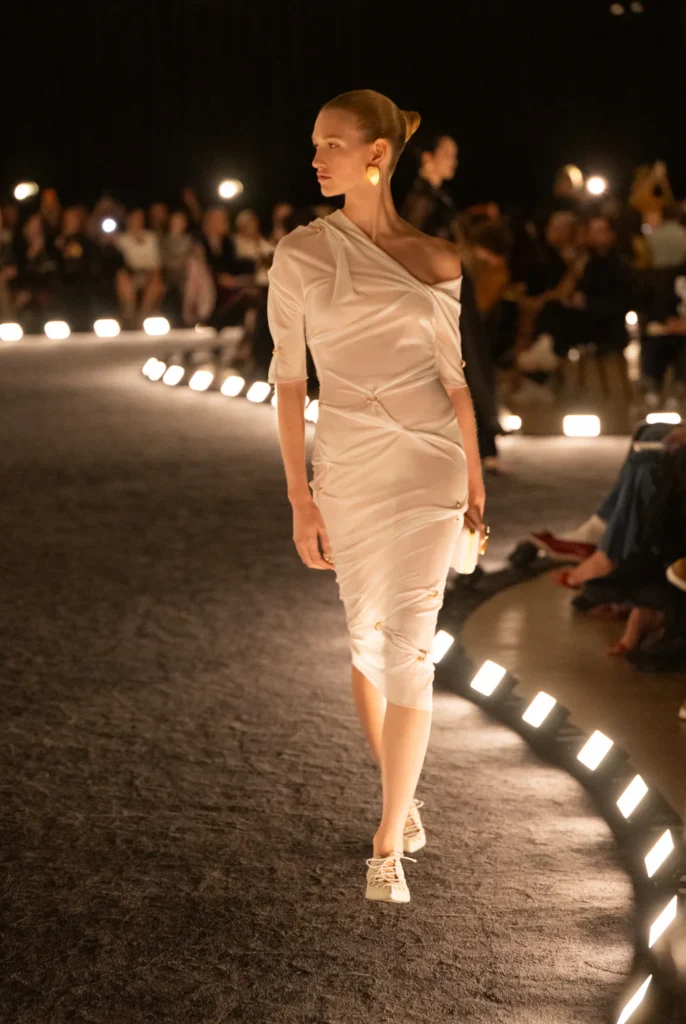
In the velvety darkness of the Centre Pompidou, during Schiaparelli’s Paris Fashion Week ready-to-wear show “Dancer in the Dark,” flickering flames appeared as the models walked with sophisticated grace. These were not torches, but jewelry: Schiaparelli’s salt lamp jewelry.
A New Age Symbol of the 2000s
Salt lamp jewelry features warm, slightly “salty” lights that do not reflect light but emit it, replicating the principle of salt lamps on a miniature scale. This home décor trend exploded in the early 2000s to express New Age philosophies and a holistic concept of well-being that would develop in the years to come.
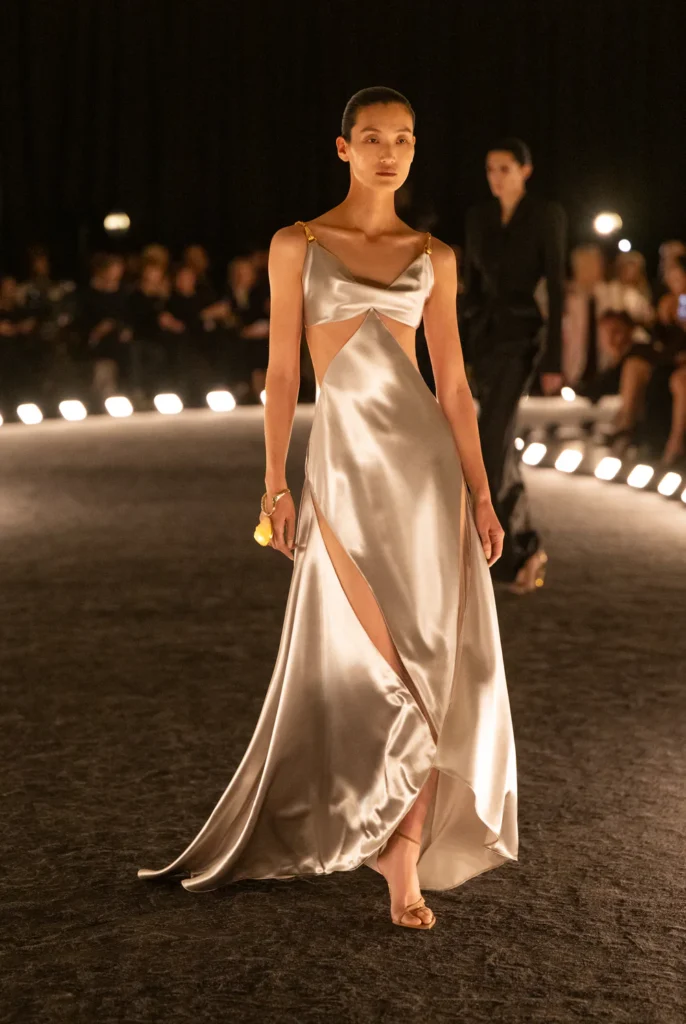
But how were these pieces created, and what effect does an object that glows with its own light have on the Schiaparelli runway? The Himalayan salt stones were hollowed out to house a battery-powered micro-LED. The principle is the same as that of the salt lamps so beloved in wellness décor of the 2000s: the naturally translucent salt diffuses a glow that no traditional gemstone can imitate. Thanks to the presence of trace elements and chromatic variations, the light takes on shades of coral, gold, and amber-yellow.
Schiaparelli: Between Luxury and Surrealism
Set in necklaces, bracelets, and earrings, salt becomes the luminous star of the runway, bringing with it its own symbolism of purification, along with the light that serves as an allegorical path to follow in the spirit of Dancer in the Dark.
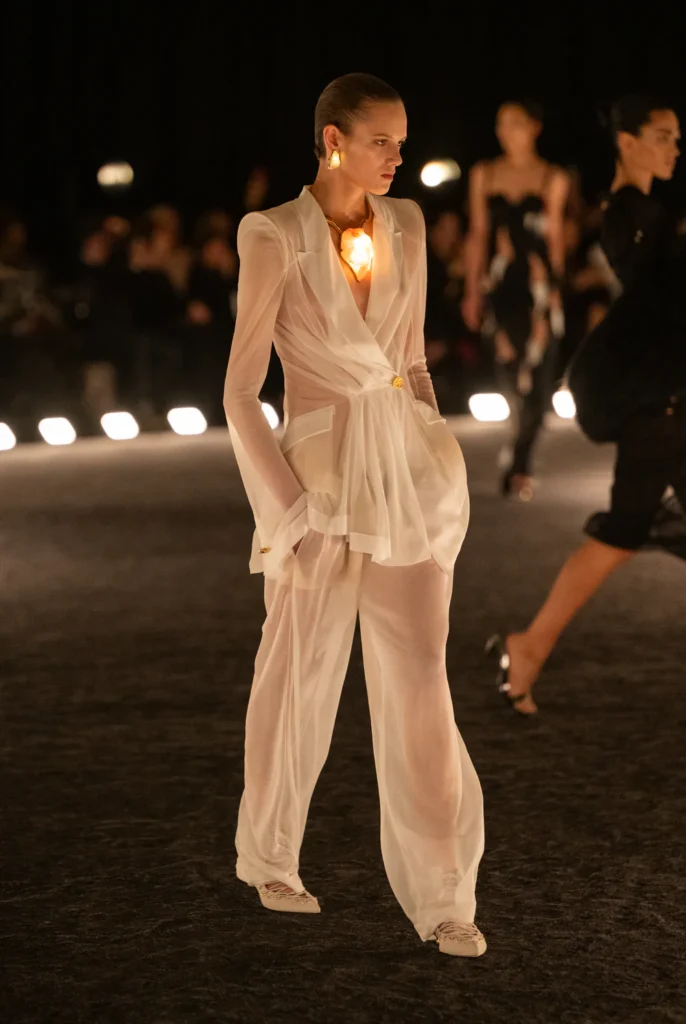
The design also draws inspiration from art: necklaces with layered stones, earrings featuring irregular, luminous spheres, and angular bracelets, all designed to highlight the luminous power that contrasts with the fragility of form. On the runway, the jewelry “paired” with looks designed to showcase them: trompe-l’œil effects, gold-toned metals, tulle, rhinestones, cutouts, minimalist details, asymmetrical collars, and deconstructed ruffles. These images, inspired by Salvador Dalí’s surrealism, appeared ethereal and intangible, just like a work of art. Schiaparelli, a fashion house attentive to the concept of culture, advances a philosophical idea: even a humble material like salt can become luxury.
The Meaning of the “Dancer in the Dark” Fashion Show
“Attending a Schiaparelli fashion show should be like visiting a museum: an experience that is at once inspiring, aspirational, and reassuring. […] It should be like dancing in the dark: just as liberating, just as intimate, just as joyful.” Creative Director Daniel Roseberry explains that, for the Schiaparelli Spring/Summer 2026 fashion show, he drew inspiration from the “fast” consumption of experiences in the modern era of social media posting, where the greatest need is to be “inspired for a moment,” no longer “entertained for a long time.”
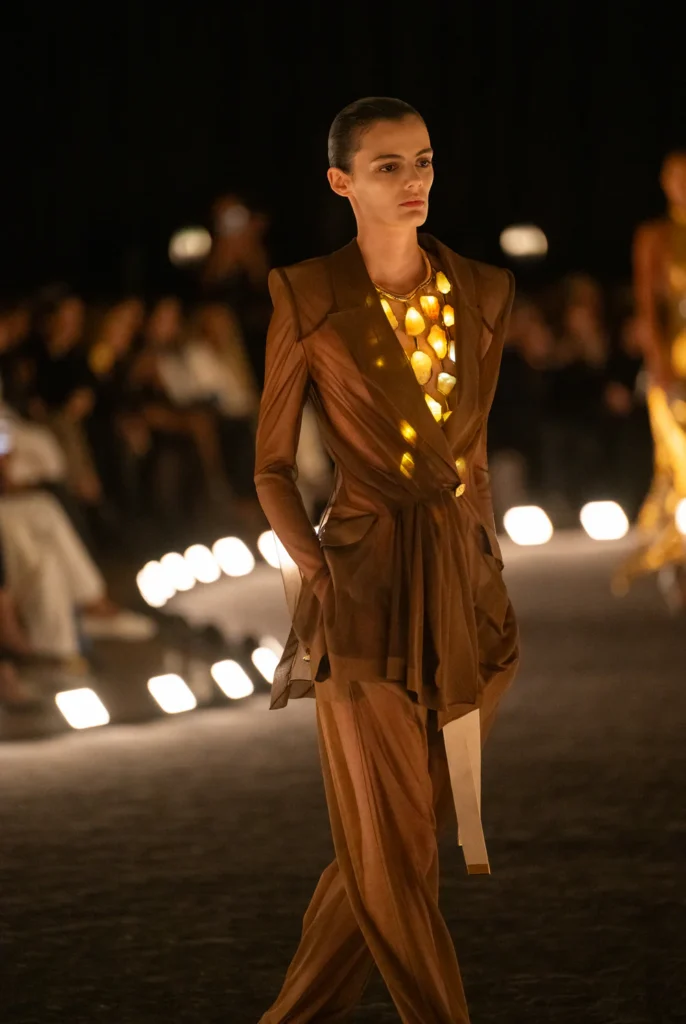
But that’s not all: drawing on the fashion house’s historic connection to the world of culture, the “Dancer in the Dark” collection represents the light of beauty and the philosophy of fashion in a world that may have fallen—or is falling—into a dark forest. We might also detect a reference to Lars von Trier’s Dancer in the Dark and Björk’s iconic role. This magical transformation—of salt becoming a luminous jewel—is made possible by fashion, or rather by the creative act that gives rise to a museum, a dress, or a piece of jewelry; a magic that transfigures things and renders them translucent.