The Substance: how light reinterpreted retro aesthetics in a Moscow pool hall
A billiards bar that reinterprets the retro aesthetic through light: structural lightboxes, chromatic variations, and luminous cuts transform the space into an immersive and ever-changing environment, where lighting becomes the structure and soul of the project.
The (real) challenge in design often lies not in merely reproducing a familiar image, but in reinterpreting it in a recognizable way, creating something new and unique. It is from this approach that Substance | Bar & Billiards Club in Moscow was born: a contemporary billiards bar with a retro aesthetic, where materials and stylistic elements—such as wood, vintage touches, and a green/burgundy color palette—are reimagined through an experimental design language.
Designed by the Amsterdam-based firm KIDZ, the project does not merely recreate a bygone style but distorts and reimagines it through unconventional choices, manipulation of light, and the integration of technical and decorative elements. The goal? To maintain a welcoming atmosphere while establishing a strong and distinctive identity.
Photo by Dmitry Suvorov
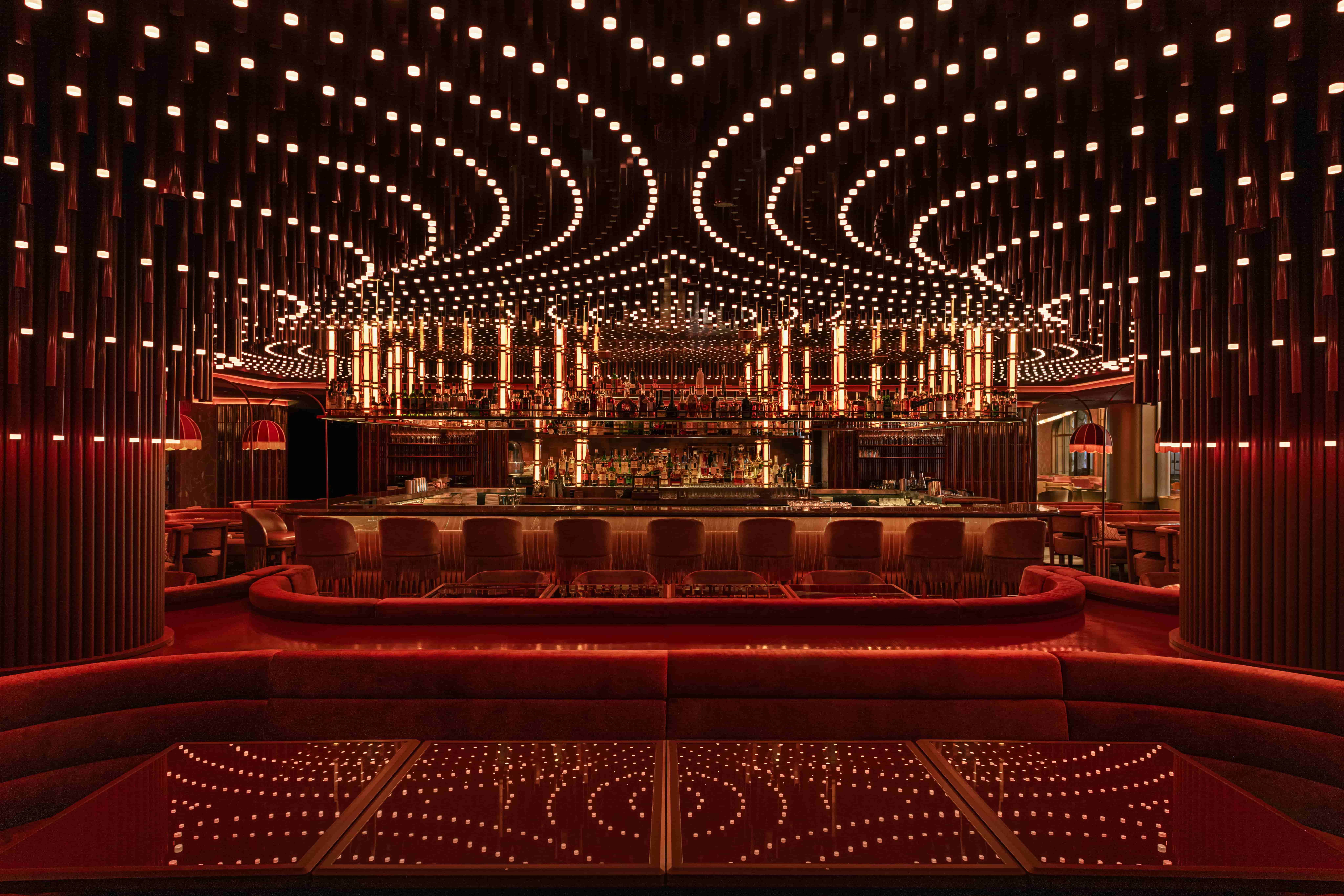
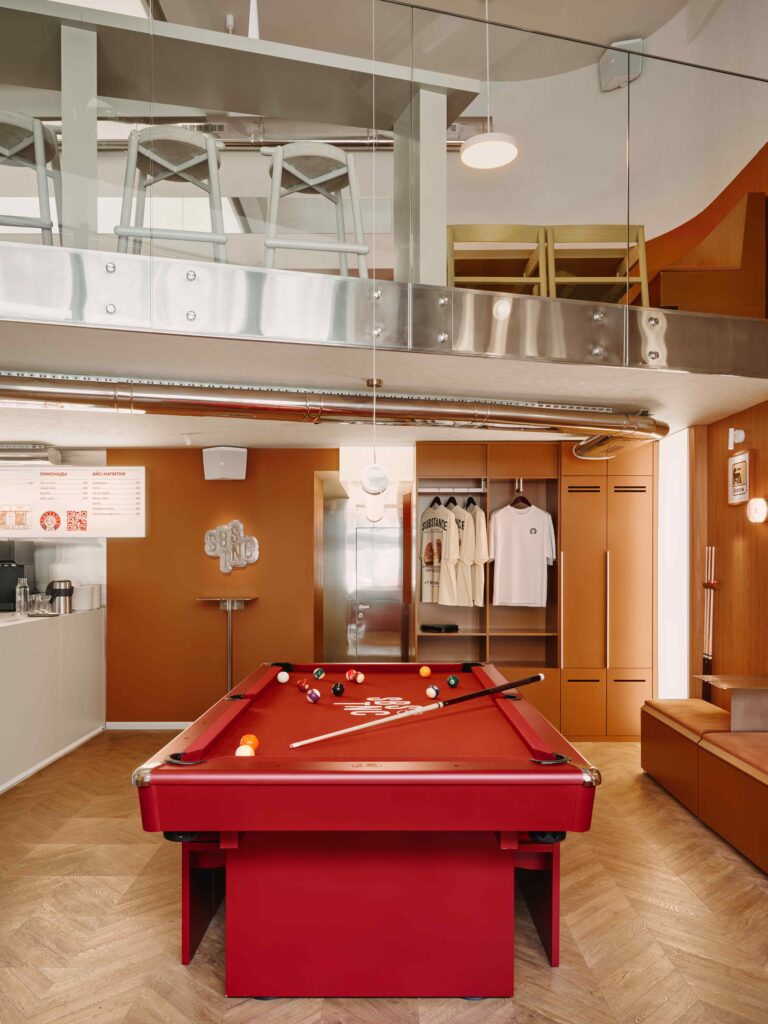
The center of the space is occupied by a mezzanine featuring a non-orthogonal shape that defines the character of the environment and organizes its spatial dynamics. It is precisely from this structural element that the lighting design unfolds, a key element in shaping the soul of the venue where light is capable of transforming perception: it not only illuminates but also establishes hierarchies, indicates directions, and alters the atmosphere.
Photo by Dmitry Suvorov
Light as a Design System
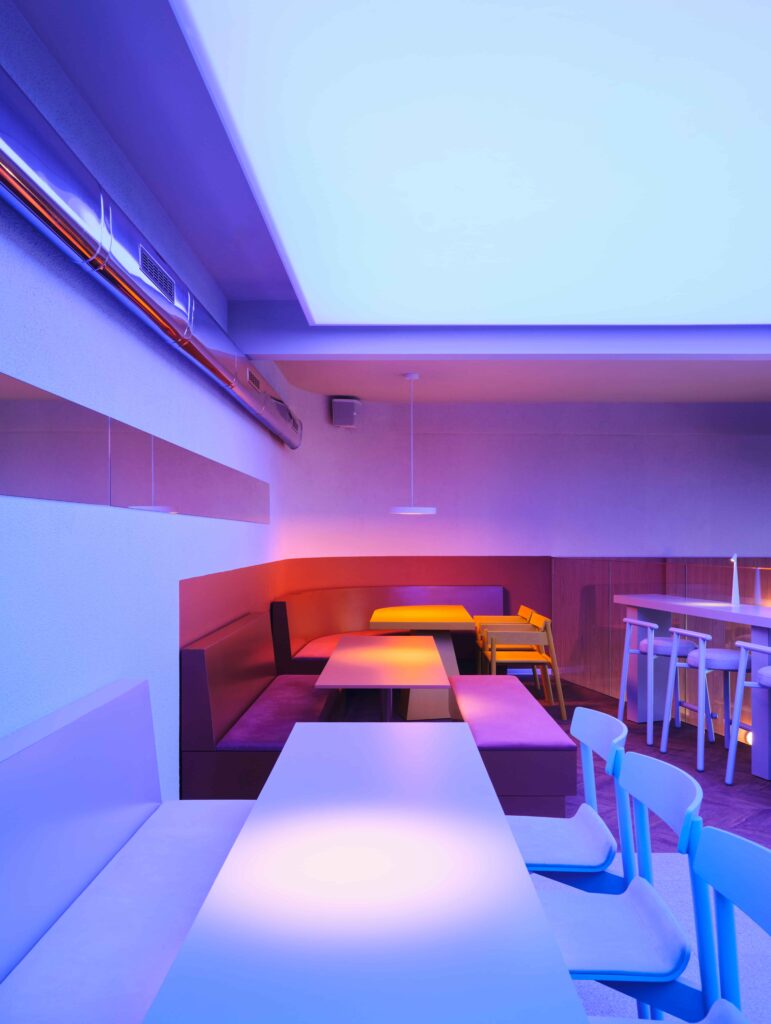
Light is one of the main elements of the KIDZ studio’s project: it is the brush that sketches the space, the creator of sensations and the director of the environment. For example, integrated directly into the structure of the mezzanine through lightboxes embedded in the beams, it serves not only a lighting function but becomes part of the architecture.
Photo by Dmitry Suvorov
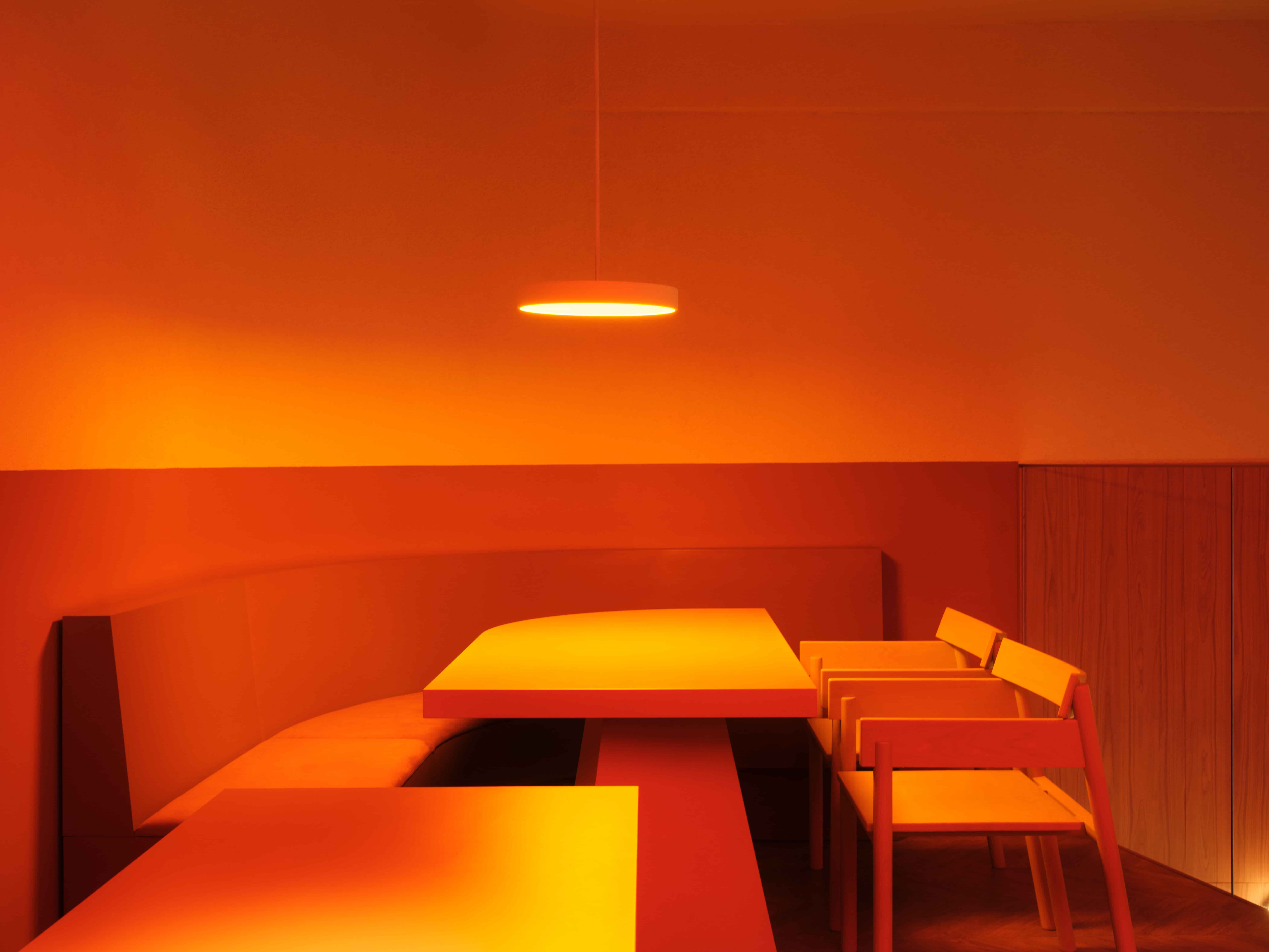
These lighting elements are designed to change color, shifting from red to blue and on to warmer tones like orange, and this alters (to varying degrees) the atmosphere of the space. Depending on the light and the tones, the environment appears warmer, cooler, or more intense. This is not a conventional system, as it is not confined to its primary function—that of illuminating—but, thanks to technical and technological innovations, it crosses partitions, integrates into the walls, and helps to expand or alter the perception of the environment. Light thus becomes a tool capable of creating an immersive and ever-changing space while remaining true to its underlying essence: retro.
Photo by Dmitry Suvorov
Materials, Geometries, and Spatial Construction
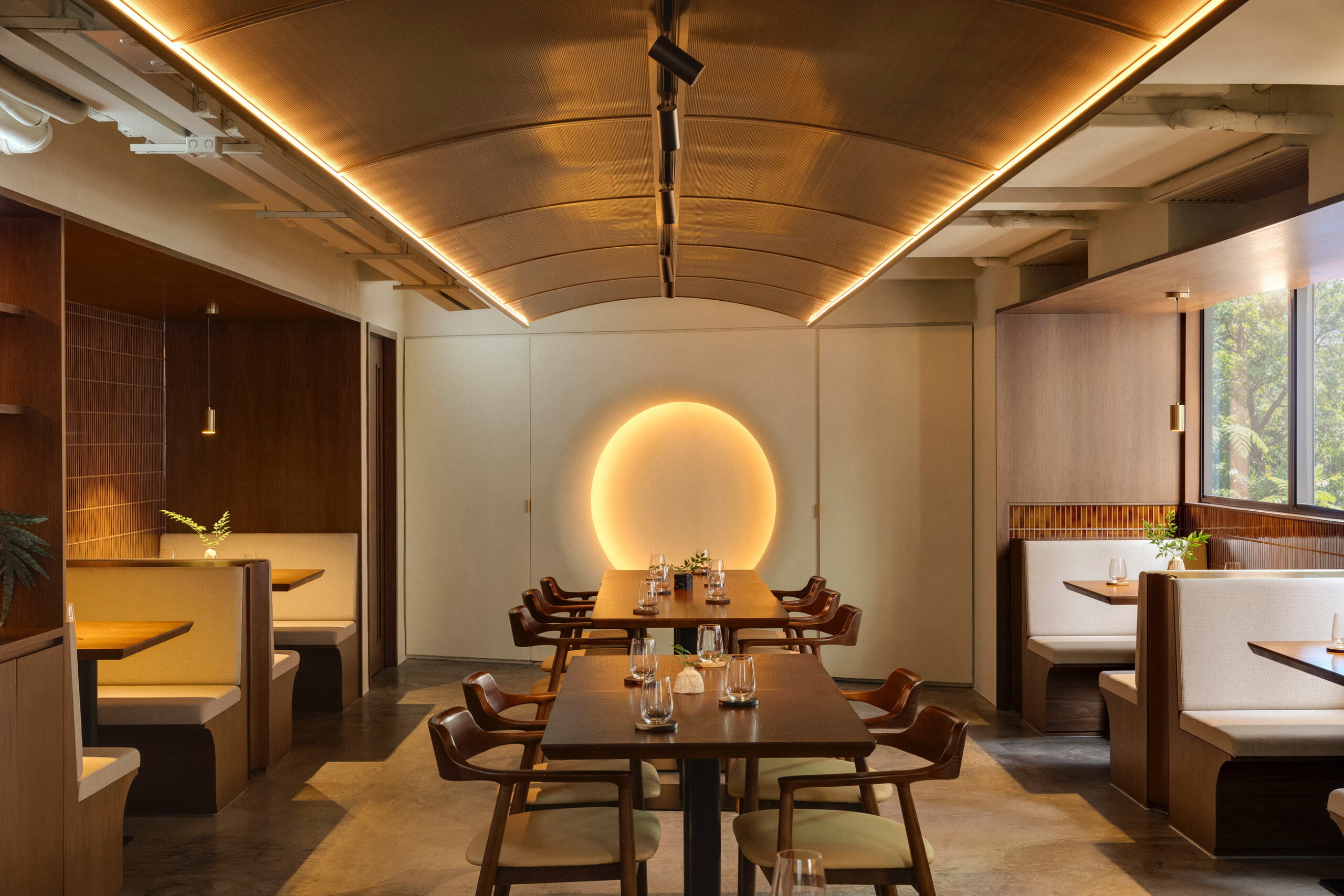
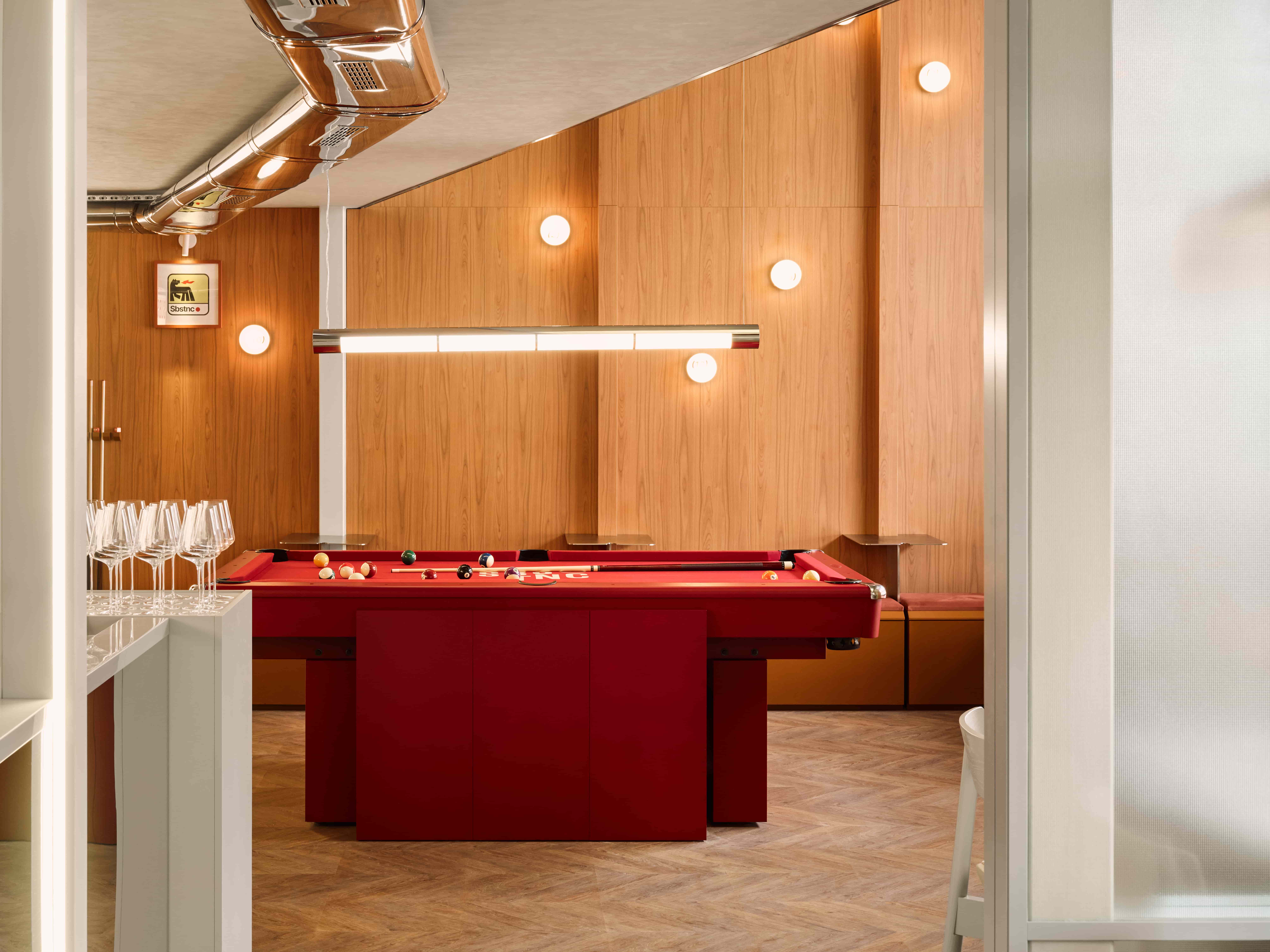
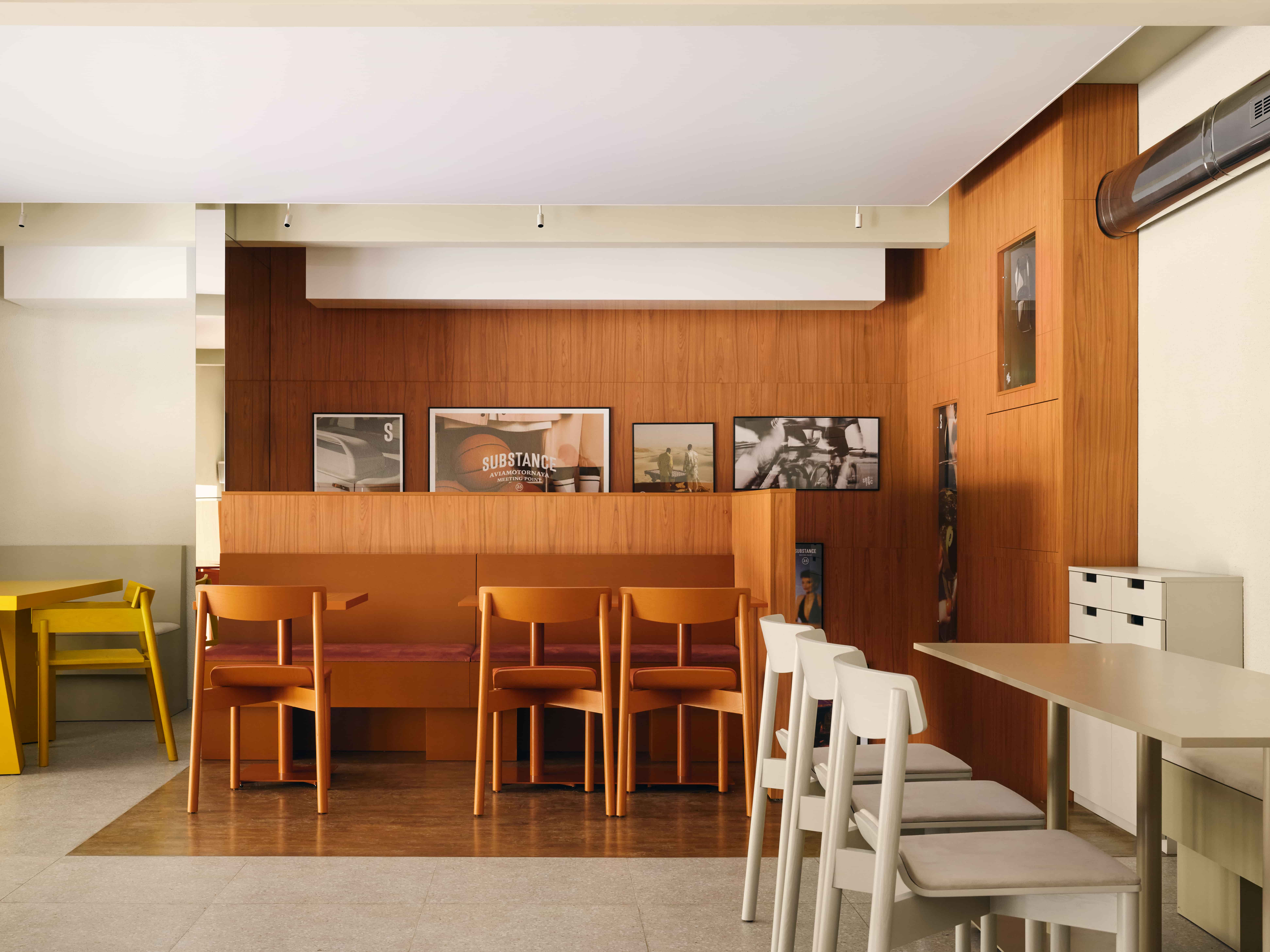
Rounding out the project’s narrative is the selection of materials, colors, and structural elements. Wood paneling extends selectively from the walls to the floor, fostering material continuity, while the wall sconces above the pool tables are arranged irregularly to create a luminous setting for the players. The base palette consists of a variety of grays applied to the walls, which gradually intensify from the entrance toward the bar to create increasing depth as one moves forward.
Photo by Dmitry Suvorov
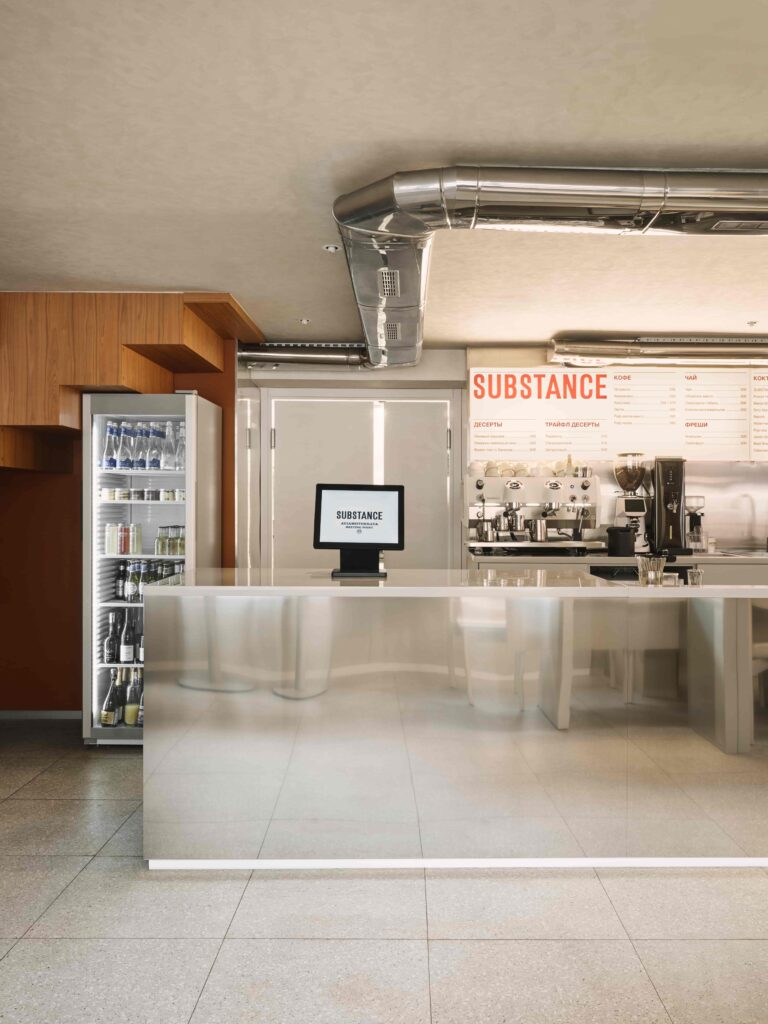
Even vertical elements such as columns are concealed or realigned to create a continuous, fluid spatial rhythm without interruptions. In this setting, the technical components—often hidden—become part of the narrative: the air ducts, redesigned with a flat-oval shape, transform into distinctive visual elements that contribute to the strong industrial accent.
Photo by Dmitry Suvorov
Retro style reinterpreted through light
The result is a cohesive and recognizable space, where one can enjoy playing pool or spending an evening with friends, rooted in retro imagery yet reinterpreted with a contemporary twist. Light is not merely a support element or an ornament, but the device that organizes and transforms the environment and its perception, making it dynamic, eye-catching, and evocative of a familiar yet renewed aesthetic—in both form and content.
Do you have a project to share?
Atmosfera is an open space for dialogue. If light plays a key role in your research or a specific project, we’re ready to listen. We feature lighting design projects, art installations, photography series, and stories that explore the narrative potential of light.
Send us your portfolio or tell us about a project you care about. It could become part of our editorial programming—or spark a new collaboration.
A new installment of the Binaries live series on October 15. Director of photography Marco Filibeck will trace his exploration of theatrical lighting through...
From natural light to ambient lighting, and on to lamps for the desk and the bed: how to design a room that can support play, study, reading, and rest...