The role of light in the stylistic research of French designer Ferréol Babin
From early lamps like Lunaire to collectible pieces for Friedman Benda, the French designer reflects on a professional path that moves across design, craftsmanship, and sculpture.
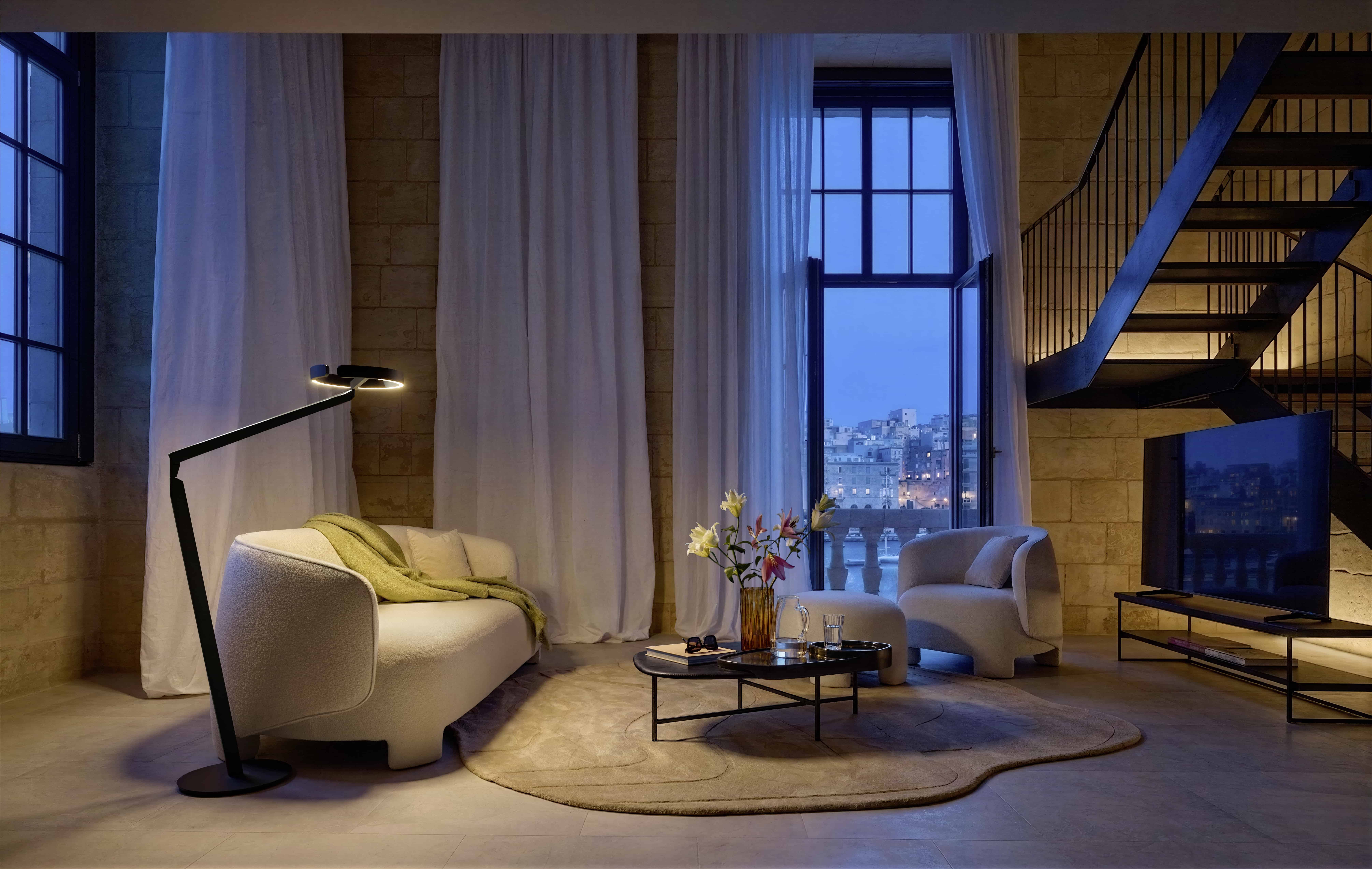
At the Cugó Gran Vittoriosa boutique hotel in Malta—housed in the former residence
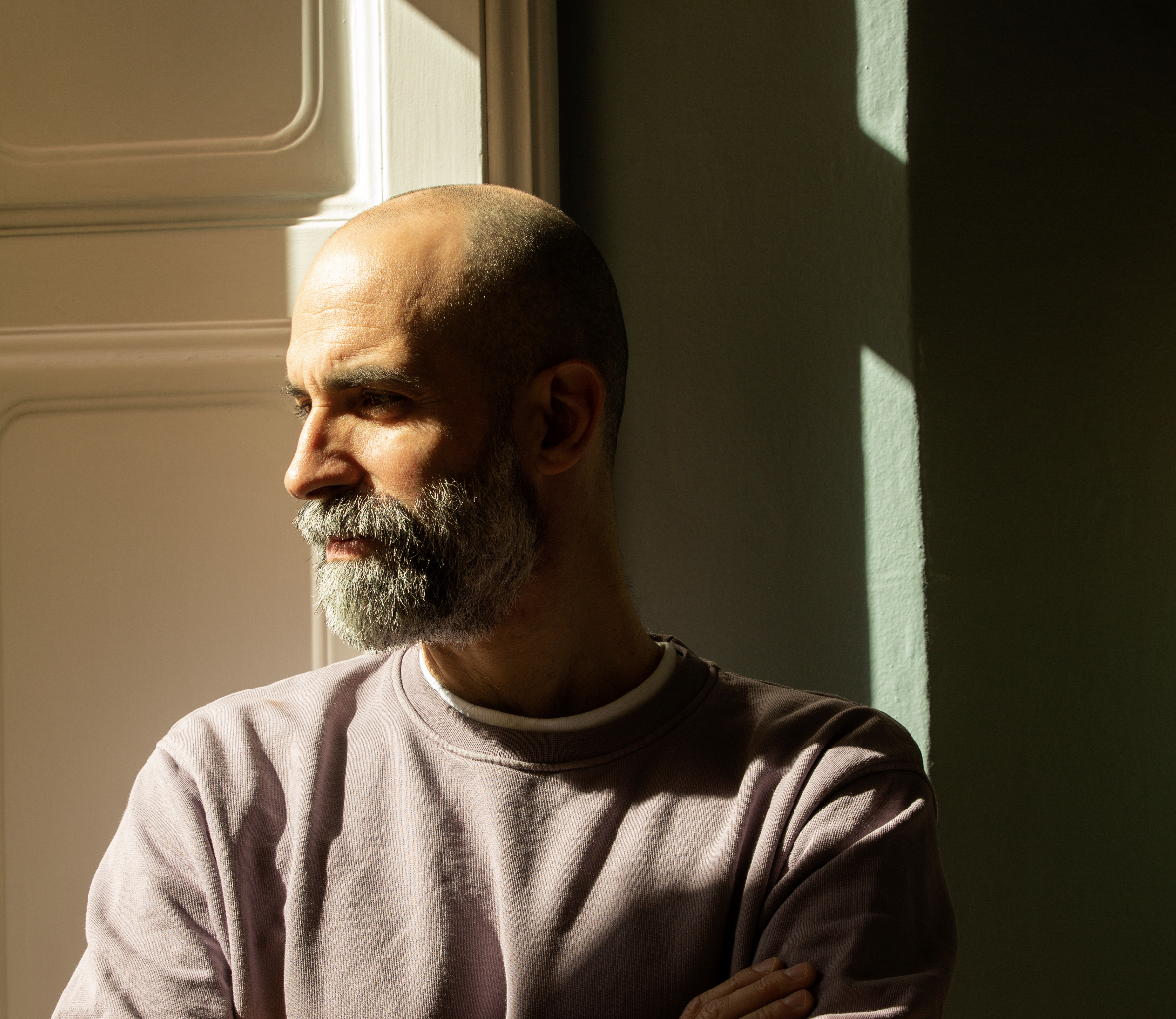
From designing products for industry to creating collectible pieces for galleries, French designer Ferréol Babin finds in light one of the foundations of his work. Through shifts in scale, his practice moves between design and art: it begins with the exploration of lighting fixtures as functional devices and evolves into objects as sculpture, where material and perception become central.
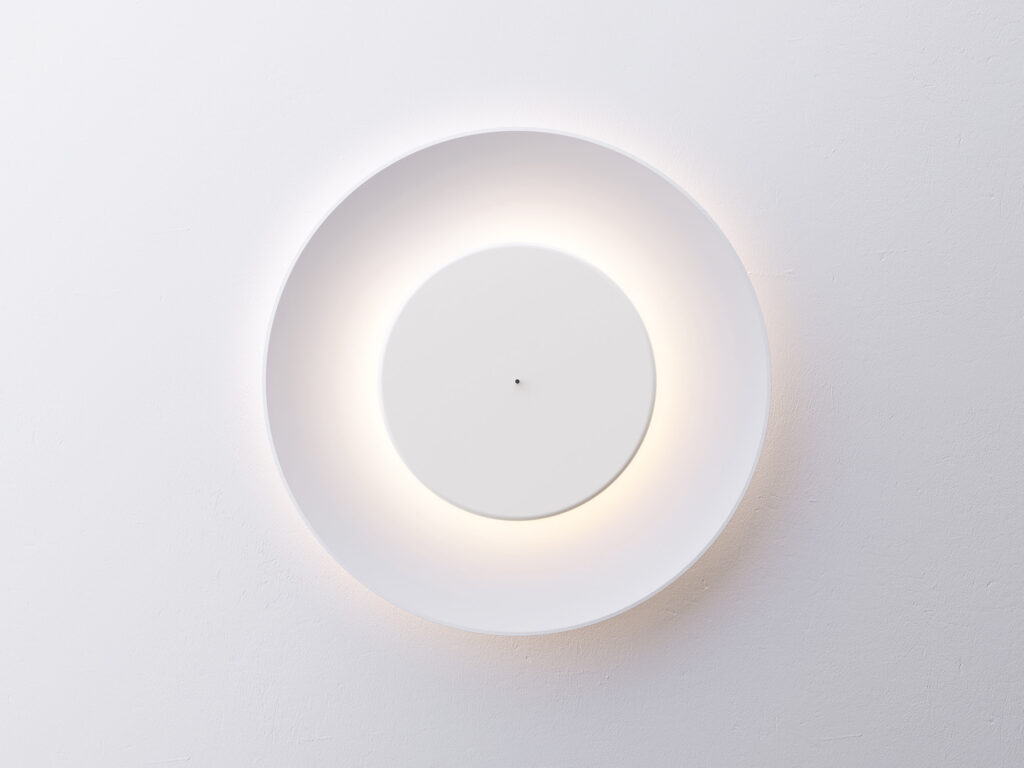
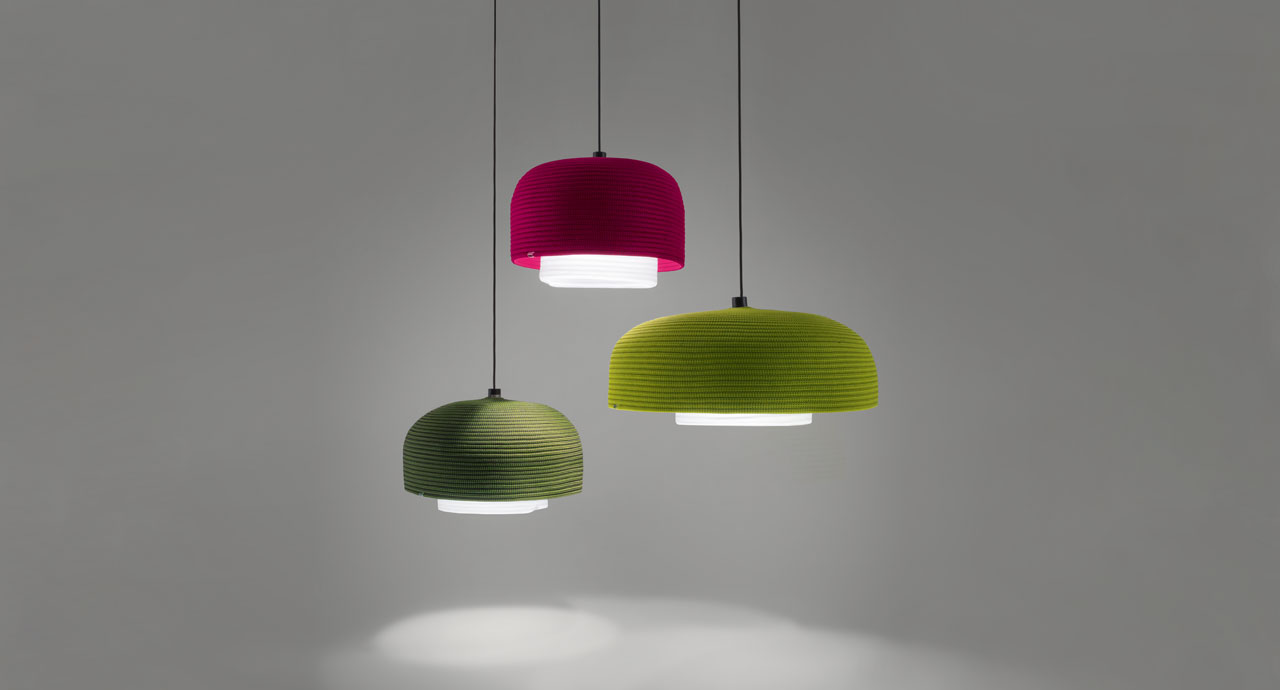
Lunaire, FontanaArte, design Ferréol Babin
Your path in design began with a lamp, Lunaire (2013), produced by FontanaArte. How did this project come about?
«It was my graduation project, and the goal was to create a “wow” effect for the user without relying on accessories or high-tech interfaces. Lunaire can transform both the quality and quantity of light with a simple movement—a gesture of the hand that changes the atmosphere and creates that sense of surprise. I developed all my graduation projects around light because it was the best way to move from architecture to object design. I studied spatial design and then product design because I was interested in working at a scale that felt right for me: I wanted to work with my hands and have control over the outcome. Light interacts with a space while also allowing you to design a small object, so I tried to treat it as a material rather than just the effect of a lamp».
How important is light in your practice today?
«My projects are quite different now, as I mainly work with wood and collectible design, but at the beginning of my career, light was the answer I was looking for. I approached design through lighting fixtures because they allowed me to draw a line between architecture and product, all the way to the user’s hand».
Another project that reflects a key phase of your path is Magma (2019). Can you tell us more about it?
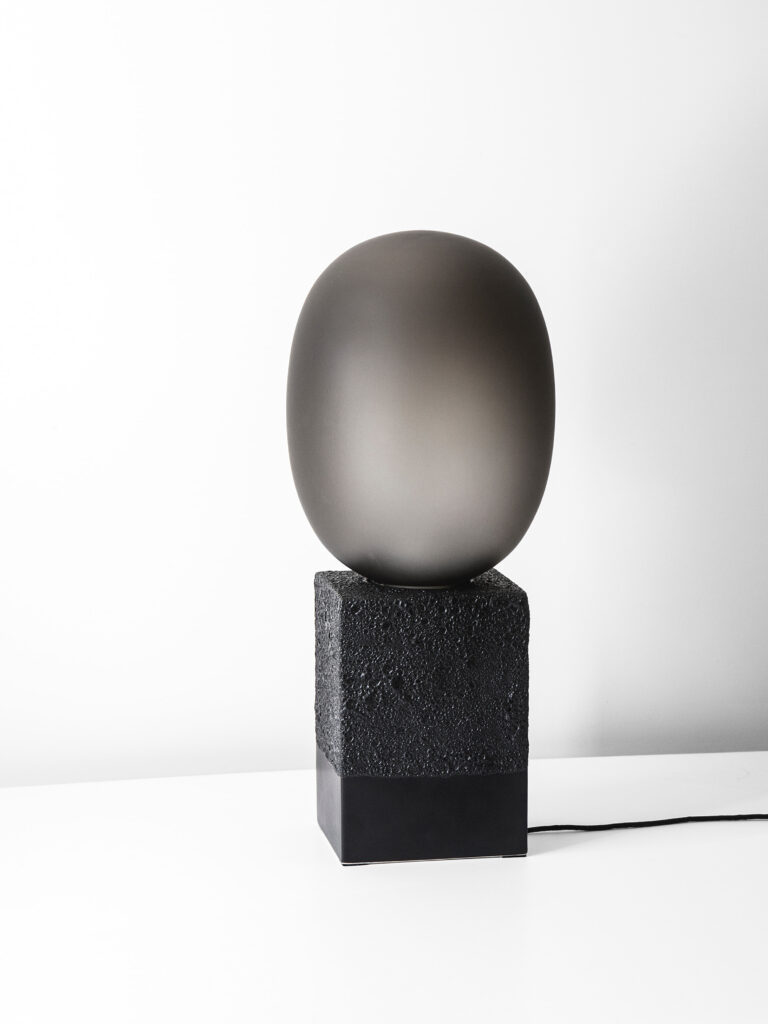
«At that time, I was focusing more on materiality than on the lighting effect itself. After a period dedicated to objects and the production of many lamps, I became more interested in the sculptural dimension. I started experimenting with materials in my studio, and that’s how I began developing different models. Magma is mainly about form and texture, less about interaction with the user. My practice shifted toward a search for tactility, moving from product design toward something between art and design».
What role did Plateau (2013) play in your research?
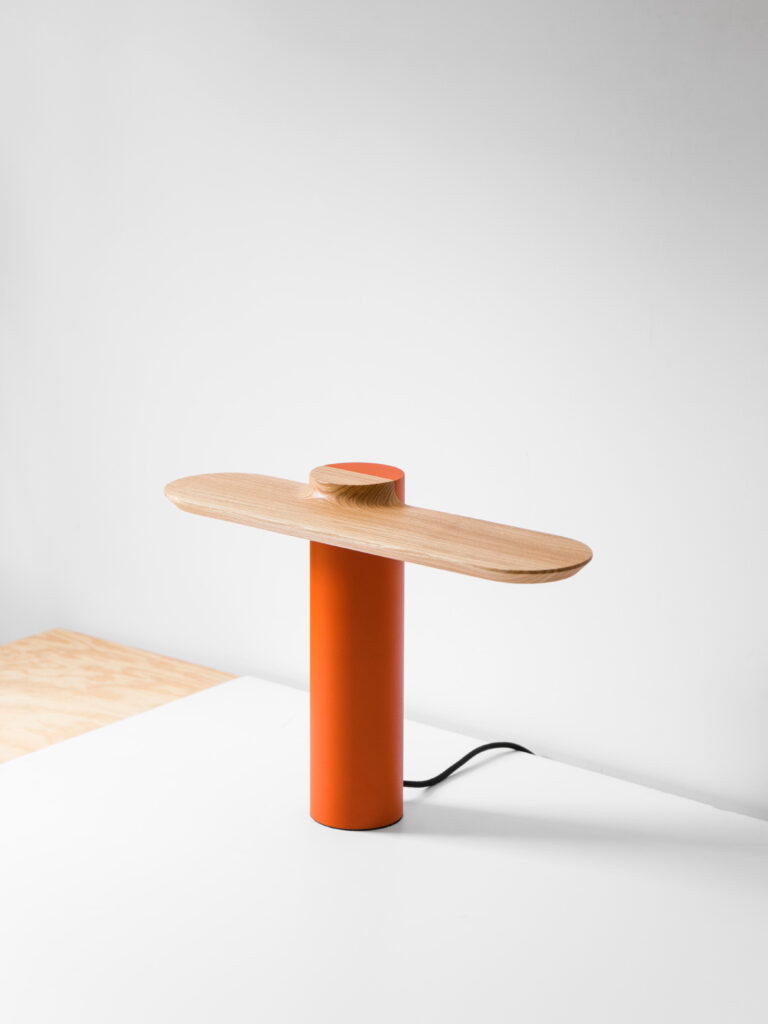
«For Plateau, it took years to find a producer. My strategy as a young emerging designer was to develop many prototypes, photograph them, and send them to magazines to gain visibility. It was a long process, and finding clients is often difficult. For this reason, I gradually shifted toward a more craft-based practice and collectible objects, so I could self-produce my work. I wanted to find my own style and understand how it could evolve. I have always loved working with my hands, and Plateau already anticipated this direction. My idea of sculpture was already there—in the curve I was shaping, searching for a tactile connection with the wood».
Plateau, Daniel, design Ferréol Babin, ph. Maxime Leyvastre
“In a Landscape” is the title of your solo exhibition—currently on view at Friedman Benda. How did your collaboration with the gallery develop?
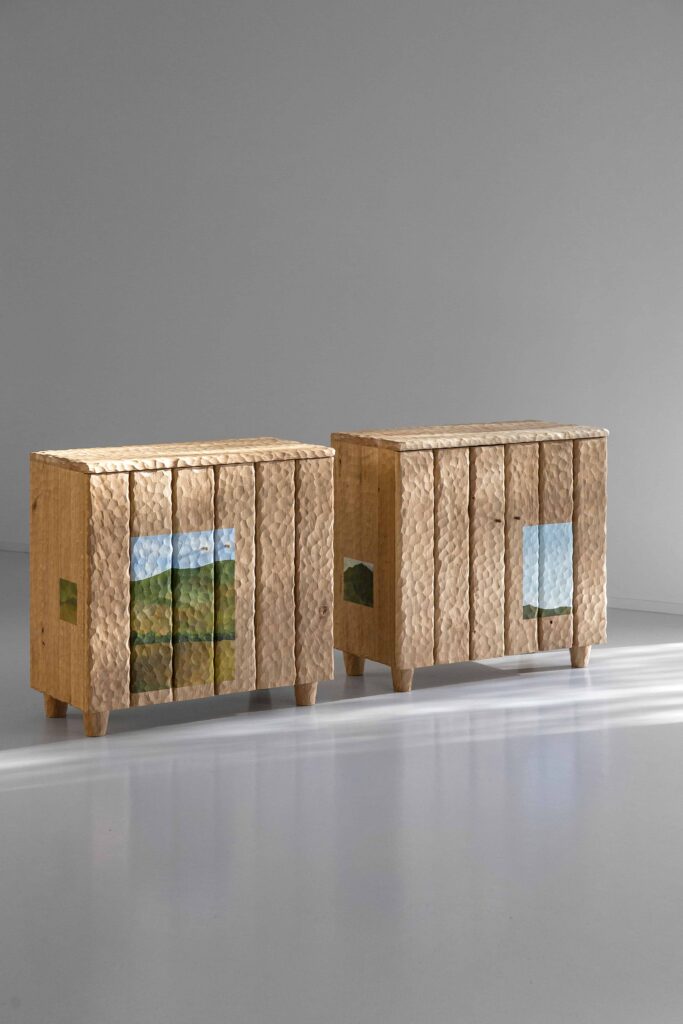
«I first connected with them about five or six years ago, when the gallery owner started collecting the wooden spoons I was making. At some point, he asked if I would be interested in working at a larger scale—benches or cabinets—and even though I had never done that before, I said yes. That’s how everything began. I moved from small sculptural spoons to furniture, and now 99% of my time is dedicated to producing pieces for the gallery. Working on larger objects has brought me closer again to interior design: large pieces installed within domestic environments».
In another 2024 exhibition, you presented a series of lamps called Spectre. How do they relate to your practice?
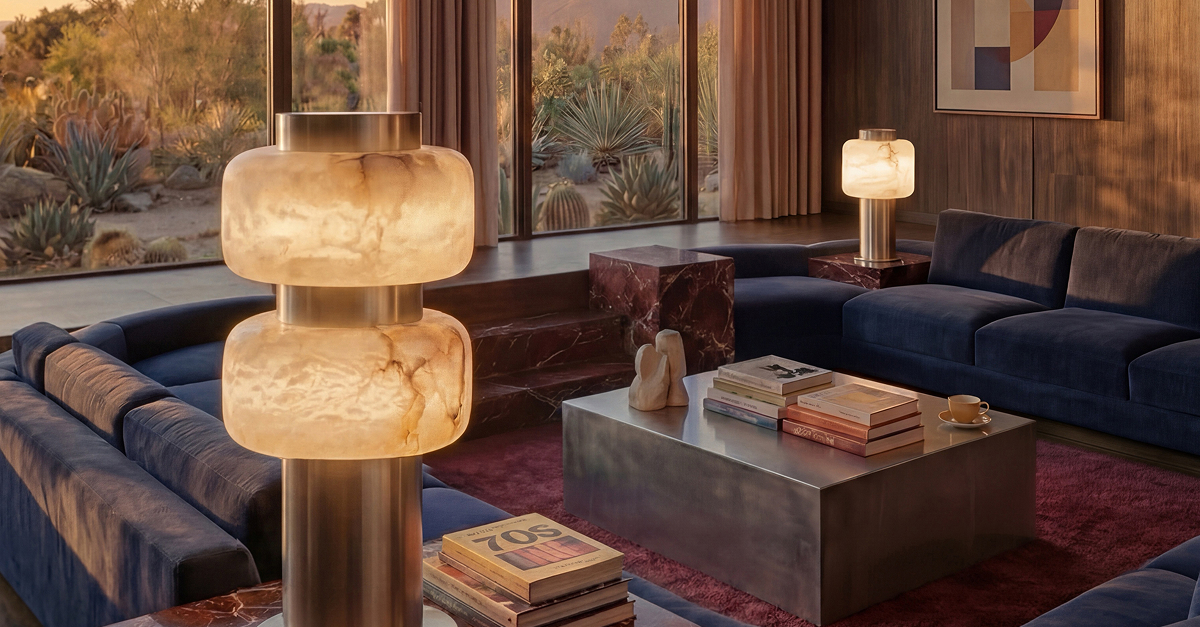
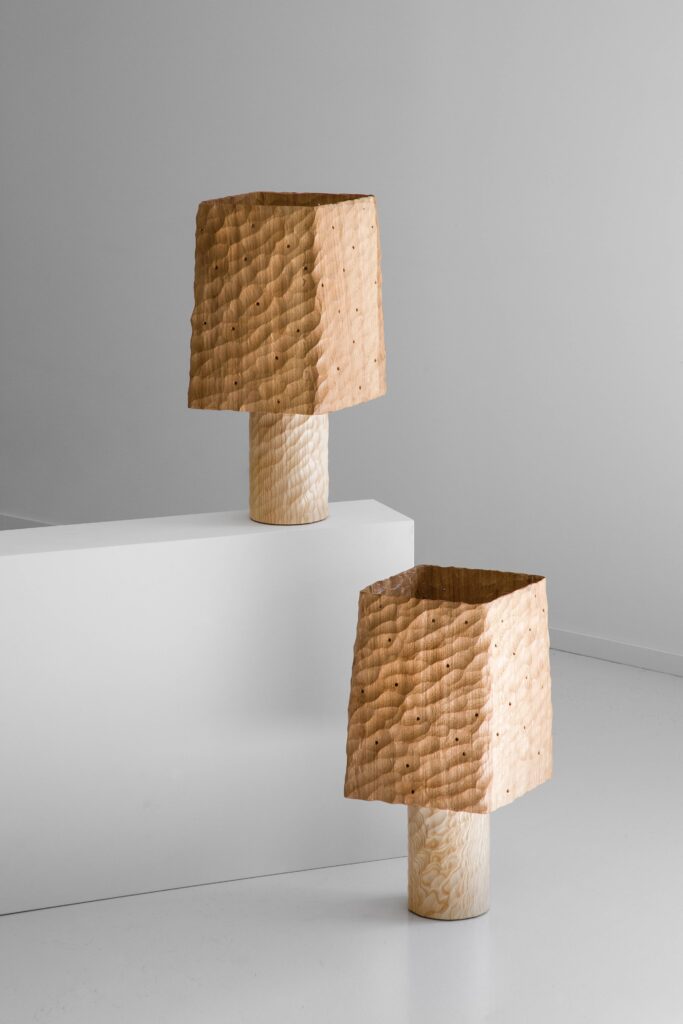
«This collectible piece for Friedman Benda is a strong example of my research: a very simple lamp, an archetypal object where materiality is everything. Hand-carved, Spectre can feel like an artifact from another civilization when seen in person, but once turned on, it becomes a functional lamp that emits a warm and delicate light. With this piece, I wanted to create an object that could engage with both natural and artificial light, taking on different identities depending on the time of day. When sunlight hits the surface, it resembles a moving body of water; at night, thanks to small perforations, it evokes stars and galaxies. Here again, my connection to space is evident: I always consider the interaction with the environment as part of a virtuous cycle that begins with architecture and returns to that scale through light».
Do you have a project to share?
Atmosfera is an open space for dialogue. If light plays a key role in your research or a specific project, we’re ready to listen. We feature lighting design projects, art installations, photography series, and stories that explore the narrative potential of light.
Send us your portfolio or tell us about a project you care about. It could become part of our editorial programming—or spark a new collaboration.
From rattan core and rattan to synthetic cords, from fiberglass to recycled polyester: these designer lamps showcase the ability of weaving to evolve,...
At the Cugó Gran Vittoriosa boutique hotel in Malta—housed in the former residence of the captains of the Order of Malta—Occhio takes on a specific challenge:...