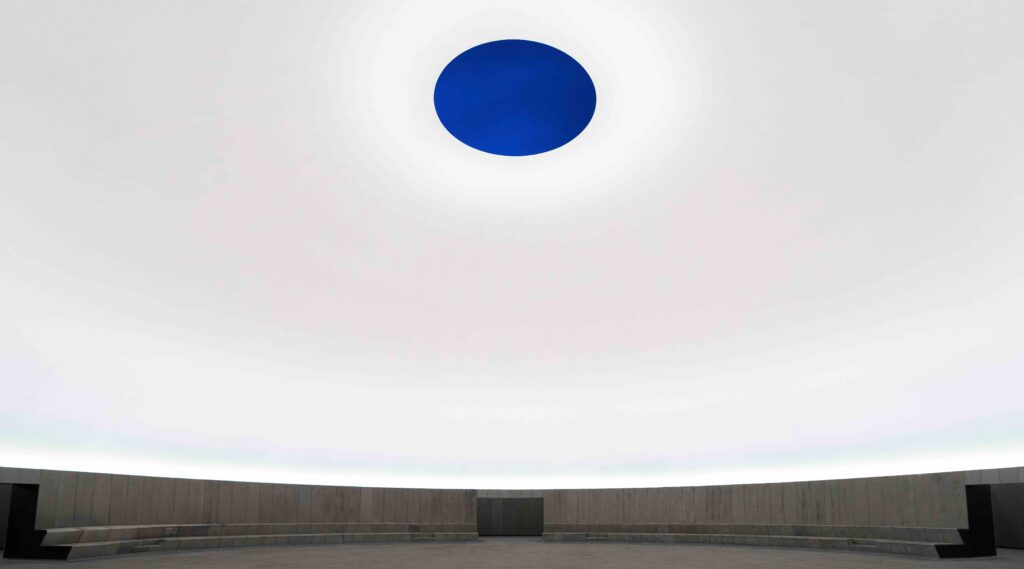
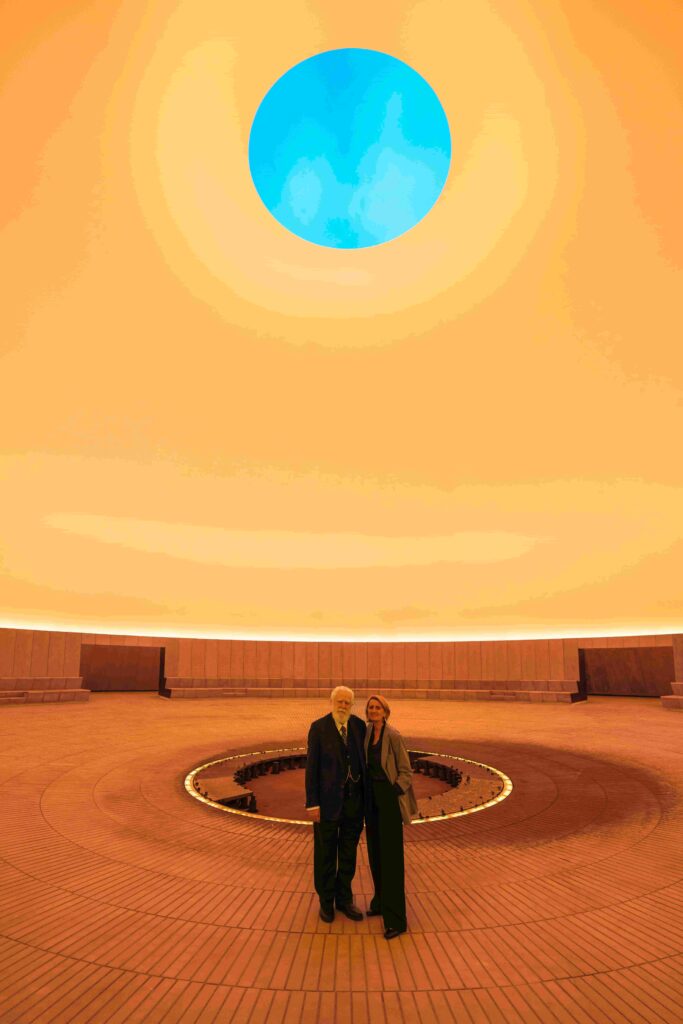
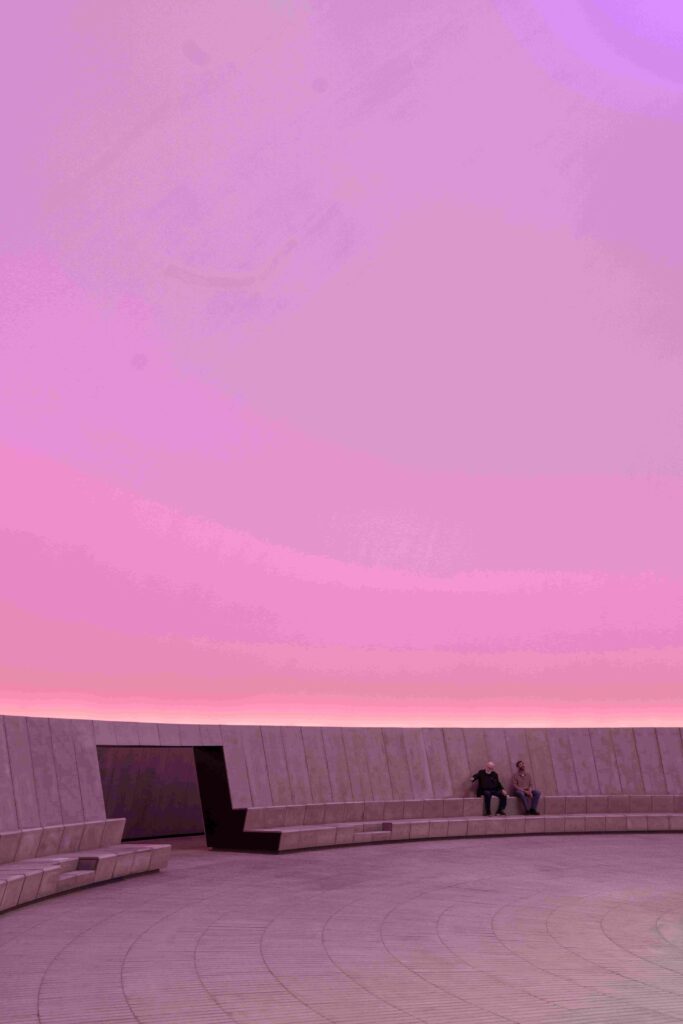
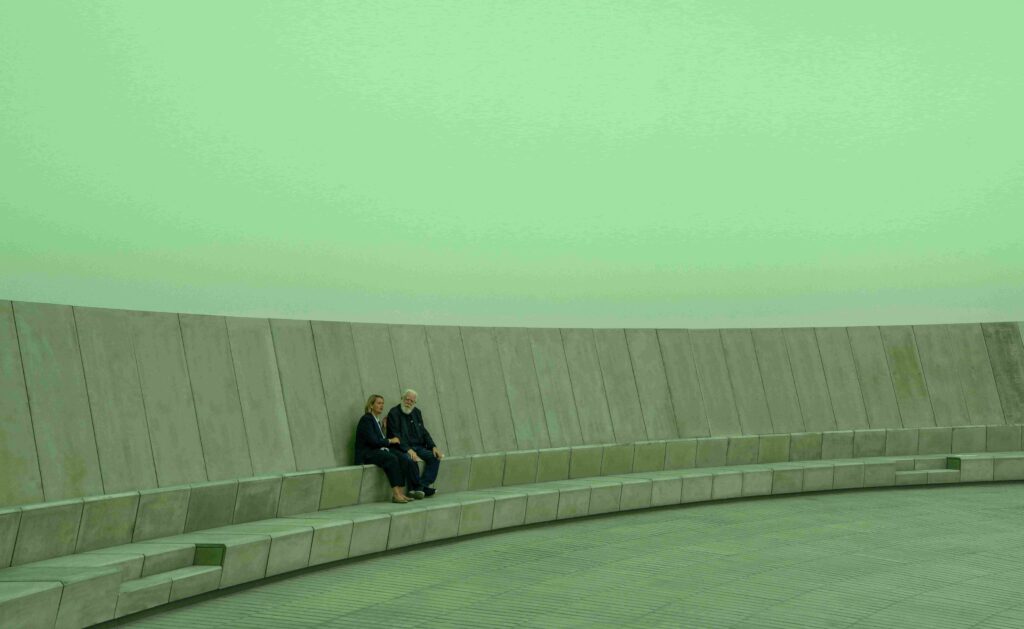

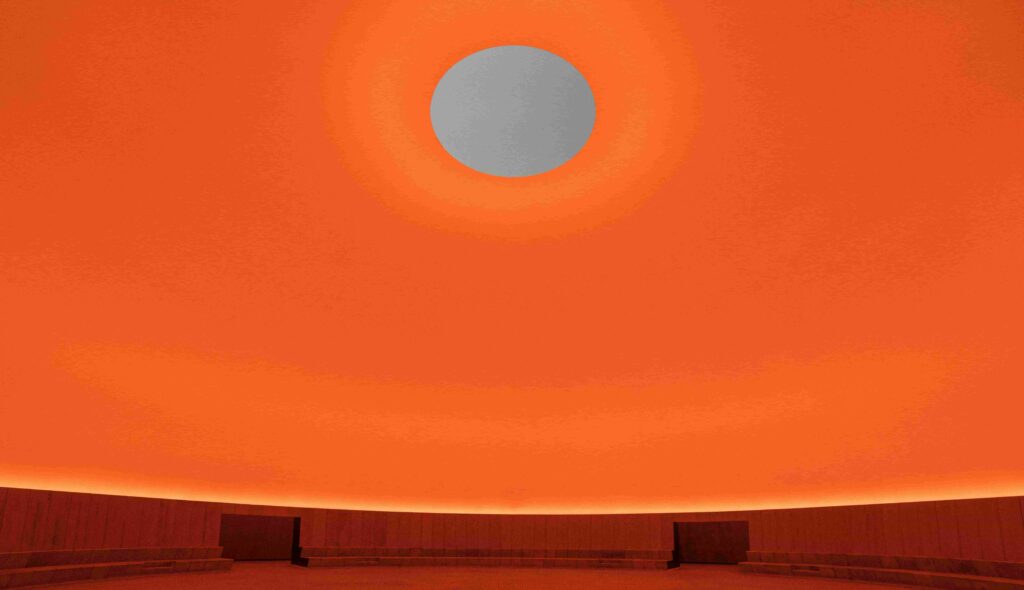
Save the date: June 19, 2026. On this day, visitors to the ARoS Aarhus Art Museum, in the heart of the Danish city of Aarhus, will be able to experience an immersive environment of light and contemplation with the opening of As Seen Below – The Dome, the largest Skyspace ever realized within a museum context by James Turrell, master of light art and a pioneer in the exploration of light and perception.
Conceived as a monumental work, this large-scale dome is defined by an opening that frames the sky, through which light—the true protagonist—enters like a precise yet delicate blade, shaping space and continuously shifting according to the time of day, the season, and atmospheric conditions. Intended as a permanent addition to the museum, As Seen Below is not simply an installation, but a physical and perceptual threshold capable of redefining the relationship between architecture, light, and perception, while inviting visitors to engage with space and time.
The opening marks the culmination of ARoS’s expansion project, titled The Next Level, developed in collaboration with Schmidt Hammer Lassen Architects. It marks the beginning of a new era of artistic experiences for visitors and the city of Aarhus as a cultural hub. As museum director Rebecca Matthews stated, «2026 marks an important moment for ARoS. At its center is James Turrell’s Skyspace: a new threshold for the museum, both physical and symbolic. It expands our collection and sets the direction for a year in which light, perception, and shared experience will guide all of our activities».
As Seen Below – The Dome is the most ambitious Skyspace created to date. This structure, 16 meters high and 40 meters in diameter, covered in grass on the outside to integrate with the landscape, becomes an immersive environment where sunlight—carefully shaped by the architecture and a bespoke lighting system—defines space and transforms the atmosphere.
Visitors enter through an underground corridor before arriving in the central chamber, where the oculus frames the sky and directs the gaze upward, toward a blue horizon that, for a moment, feels close and tangible.
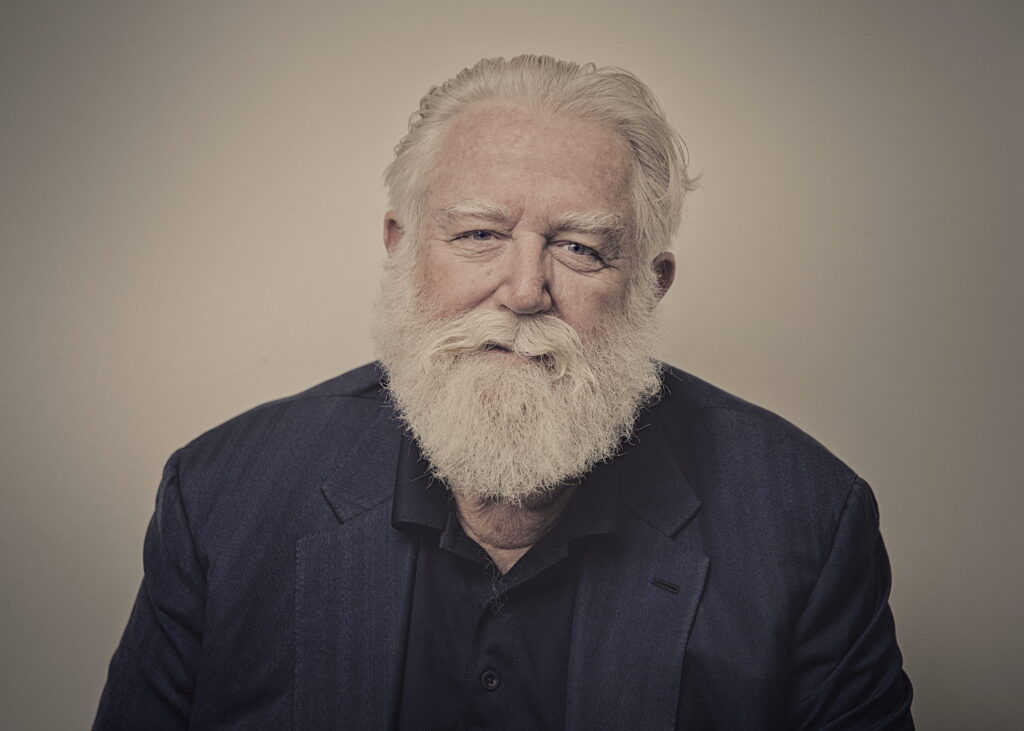
As Turrell himself explains, the installation does not offer something to look at, but rather an exercise for the senses: «The dome has been in development for many years, and I am excited that it will open to the public just in time for the summer solstice of 2026. With As Seen Below, I am shaping the experience of seeing rather than providing an image. The architecture brings the sky closer, recognizing that the act of seeing itself is the work. Here, light does not describe, it is the substance you inhabit».
In an era defined by speed and fragmentation, As Seen Below – The Dome invites visitors to slow down and rediscover the fundamental act of seeing, reminding us that light is not only what illuminates the world, but what connects us to it—shaping it and giving it identity, also through our own perception.
A master, visionary, and pioneer in the study of light as form, language, and material, James Turrell is a central figure in contemporary art. His early fascination with light dates back to childhood, shaped in part by his Quaker upbringing, where silence and reflection played a key role.
This attention extended into his experience as a pilot, which Turrell has described as deeply meditative: flight becomes a privileged space of observation, where light, the colors of the sky, and perception converge. Having studied psychology in the 1960s and joined the Light and Space movement, he started creating environments that could transform the way we see and perceive light.
When speaking about Turrell, it is impossible not to mention his magnum opus, the Roden Crater in Arizona. A monumental project, begun in 1977 and still ongoing, which transforms an extinct volcano into a light observatory.
Atmosfera is an open space for dialogue. If light plays a key role in your research or a specific project, we’re ready to listen. We feature lighting design projects, art installations, photography series, and stories that explore the narrative potential of light.
Send us your portfolio or tell us about a project you care about.
It could become part of our editorial programming—or spark a new collaboration.
EMAIL US AT REDAZIONE@ATMOSFERAMAG.IT