
Infrastructure, villages, and interventions designed to become a lasting legacy for cities and territories: the architecture at the heart of the Milano–Cortina 2026 Winter Olympic Games was either created specifically for the event or redeveloped to host competitions. In every case, they were designed with a strong focus on functionality and environmental sustainability.
Below, we explore the main architectural projects—many by internationally renowned studios—linked to the Milano–Cortina Olympics.
The Milan Olympic and Paralympic Village
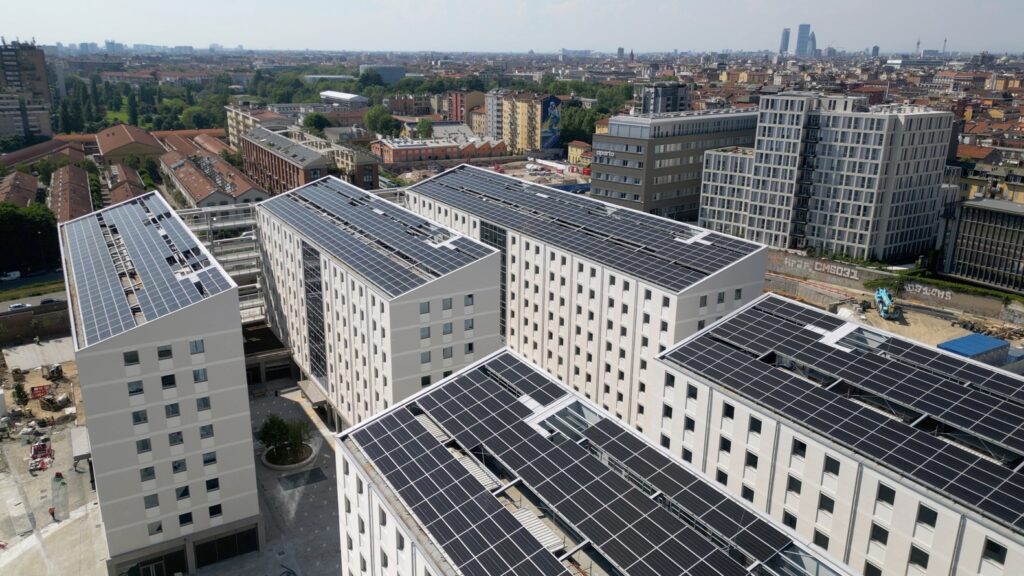
Built on the site of the former Scalo Romana rail yard, directly opposite Fondazione Prada, the Milan Olympic and Paralympic Village draws inspiration from the traditional case di ringhiera, a typical feature of Milanese residential architecture. Designed by SOM – Skidmore, Owings & Merrill (with construction management by local firm Progetto CMR), the village consists of six newly built residential blocks and two former FS railway buildings that have been fully renovated.
The project has achieved LEED Gold certification, thanks to measures that neutralize its emissions, including heat pumps, a 1 MW photovoltaic system, and rainwater recovery systems. After the Milano–Cortina Games, the district will be converted into a university student housing complex with 1,700 beds, complemented by shops, cafés, and public green spaces.
Arena Milano
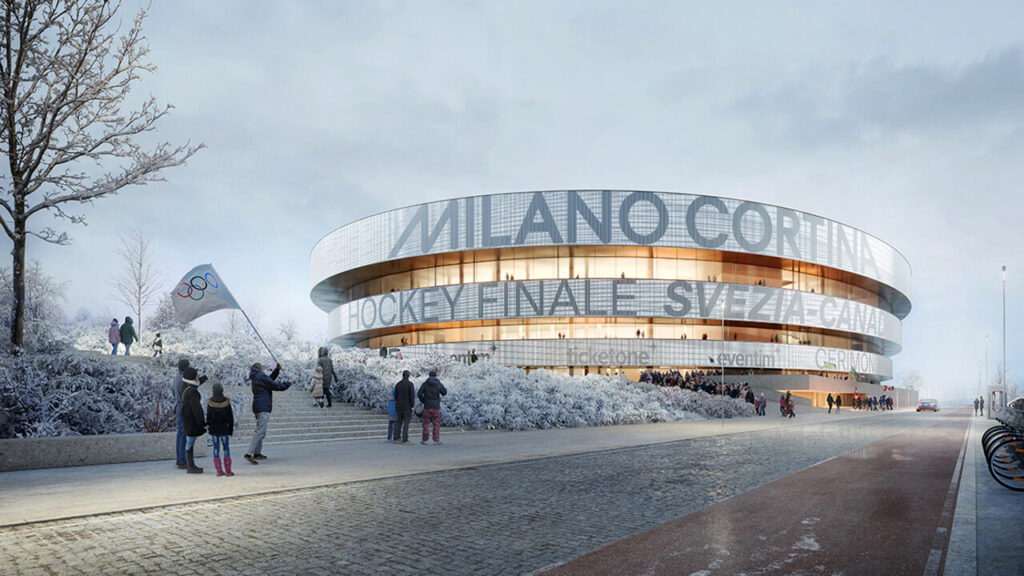
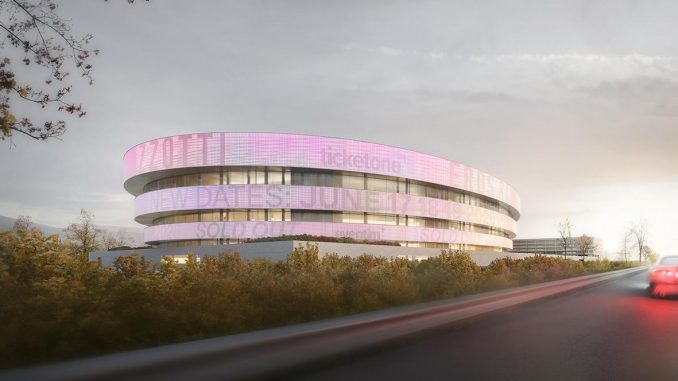
Among the star architects called upon to leave their mark on the Milano–Cortina Olympics is David Chipperfield Architects, working in collaboration with Arup, who designed Arena Milano, a multifunctional indoor arena in the Santa Giulia district.
Likely to become the first step in the regeneration of this long-neglected area, the arena is inspired by Roman amphitheaters and has a seating capacity of 16,000. Inside, it features two levels above the parterre and a top tier with sky boxes and lounges. Externally, the building is composed of three rings that appear to float above one another—giant LED screens that can be programmed with messages and custom graphics for each event.
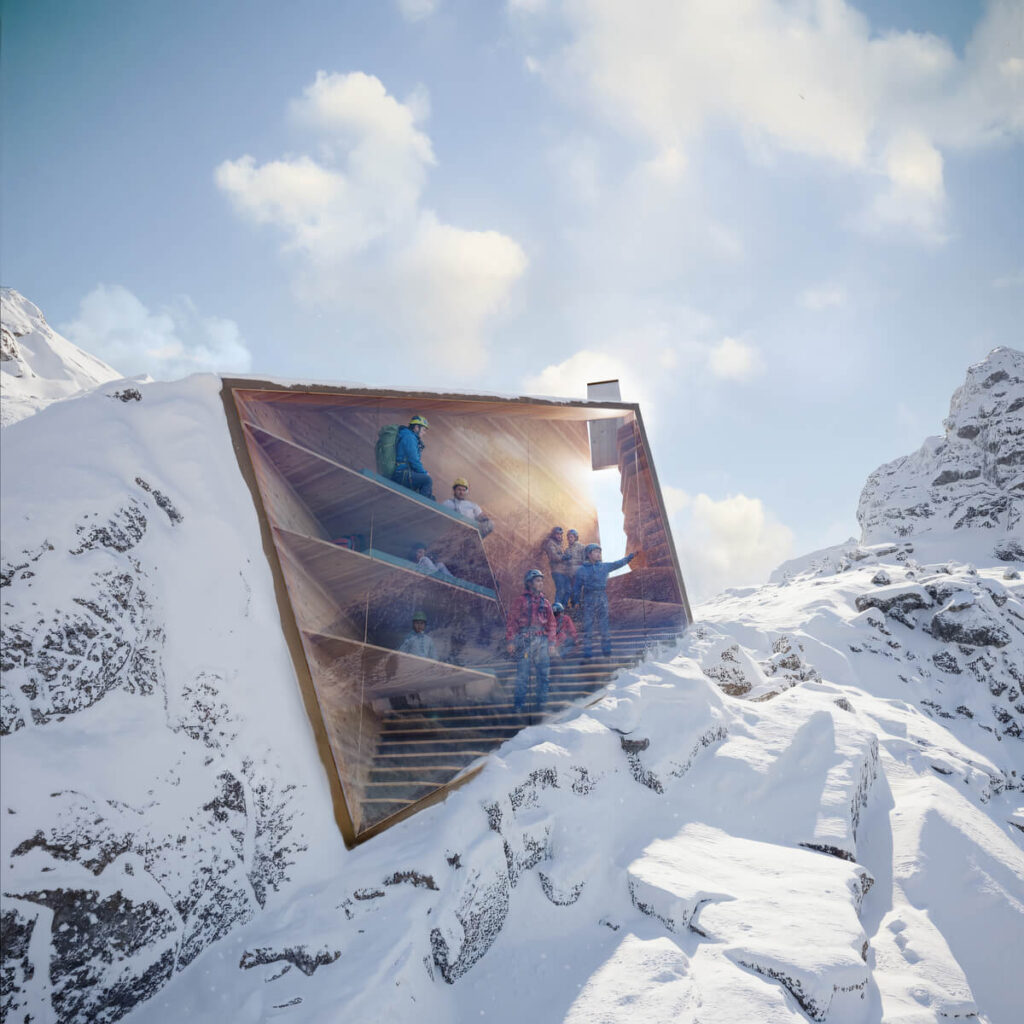
The Carlo Ratti Bivouac
Designed by CRA – Carlo Ratti Associati, in collaboration with Salone del Mobile. Milano, this alpine bivouac reinterprets the concept of a high-altitude shelter for hikers through a contemporary and environmentally sustainable lens.
Constructed from laminated wood, aerogel, and metal, and equipped with an integrated photovoltaic system, it is lightweight and easily transportable while ensuring excellent thermal insulation.
Conceived to blend into the landscape, the structure features a fully glazed façade; in foggy or adverse weather conditions, a red light activates, transforming it into a lantern visible from great distances. During the Olympic Games, the bivouac will function as an urban pavilion, before being transported and installed in a mountain setting.
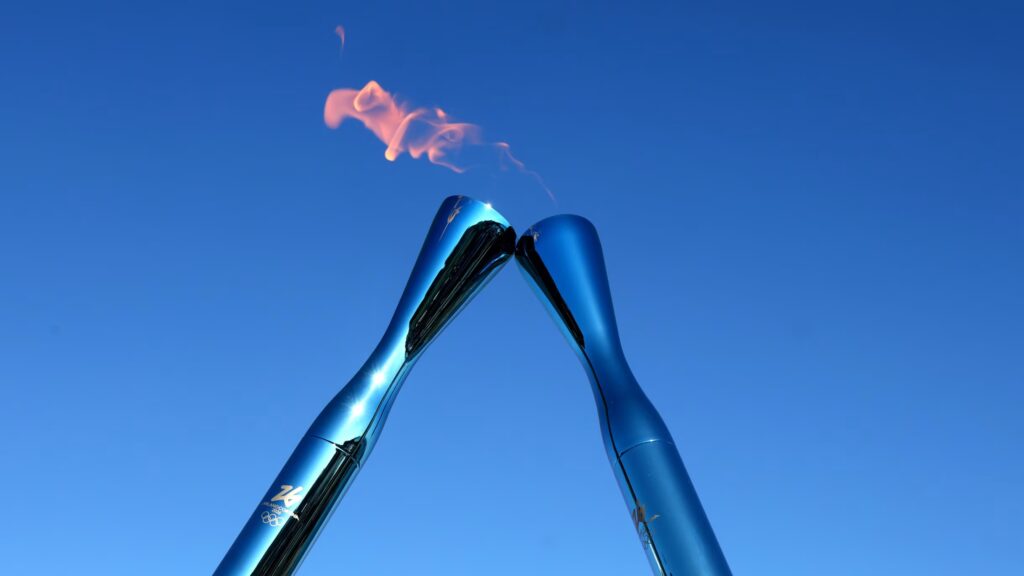
Carlo Ratti also designed the Olympic and Paralympic torches for the Milano–Cortina 2026 Winter Games. Named Essential for their minimalist lines, they are made primarily from recycled materials—an aluminum and brass alloy—and their flame is fueled by bio-LPG.
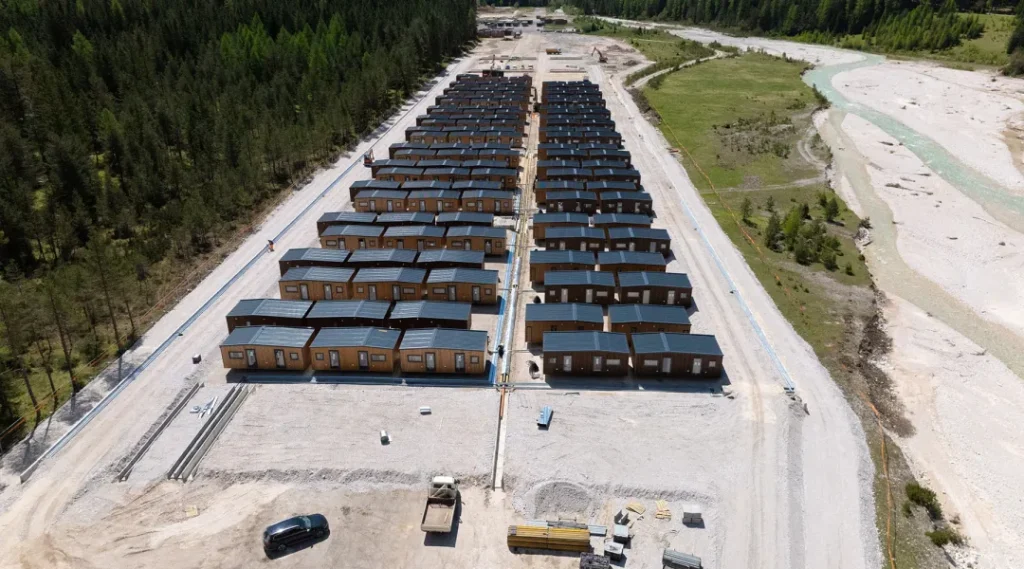
The Cortina and Predazzo Olympic Villages
Two additional Olympic and Paralympic Villages were planned in the mountain locations closest to the competition venues. The Cortina village consists of 377 prefabricated wooden housing units—mobile dwellings equipped with all modern comforts and advanced home automation systems—which will be reused after the Games (although how and where has yet to be announced).
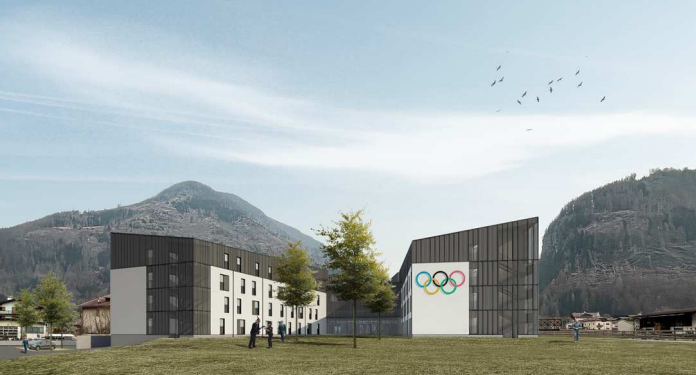
The Predazzo village, located in Val di Fiemme, is composed of a mix of existing areas, renovated pavilions, and new structures within the Scuola Alpina della Guardia di Finanza.
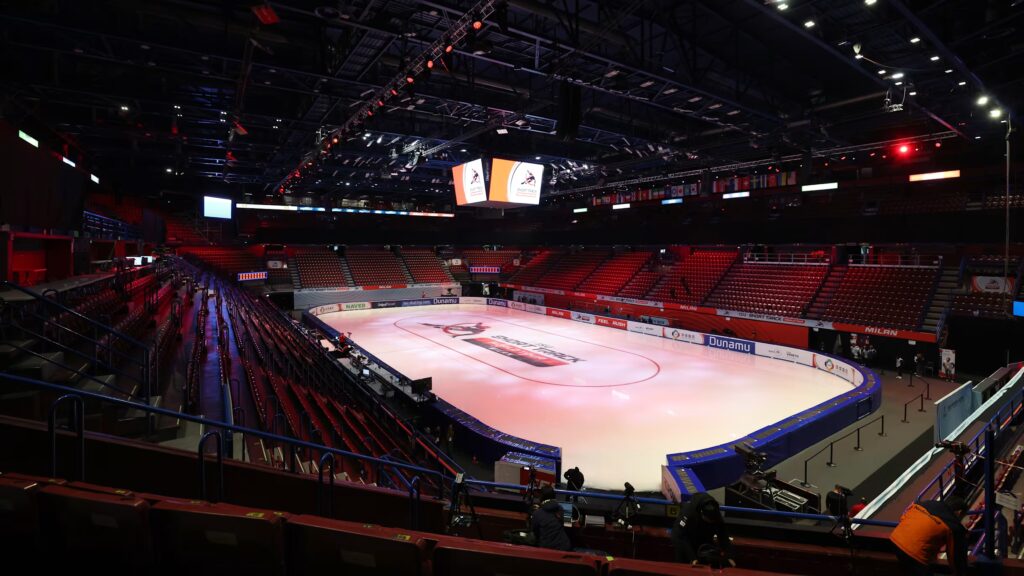
Milan Ice Skating Arena
Upgraded for the occasion, the Assago Forum, on the southwestern outskirts of Milan, will retain a permanent ice rink even after the Olympic Games conclude. The arena can be adapted to meet the needs of all skating disciplines: thinner, more durable ice for short track, and slightly thicker ice for figure skating.
Temporary venues are also planned at Fieramilano, where four halls will host the Milan Speed Skating Arena and the Milan Rho Ice Hockey Arena.
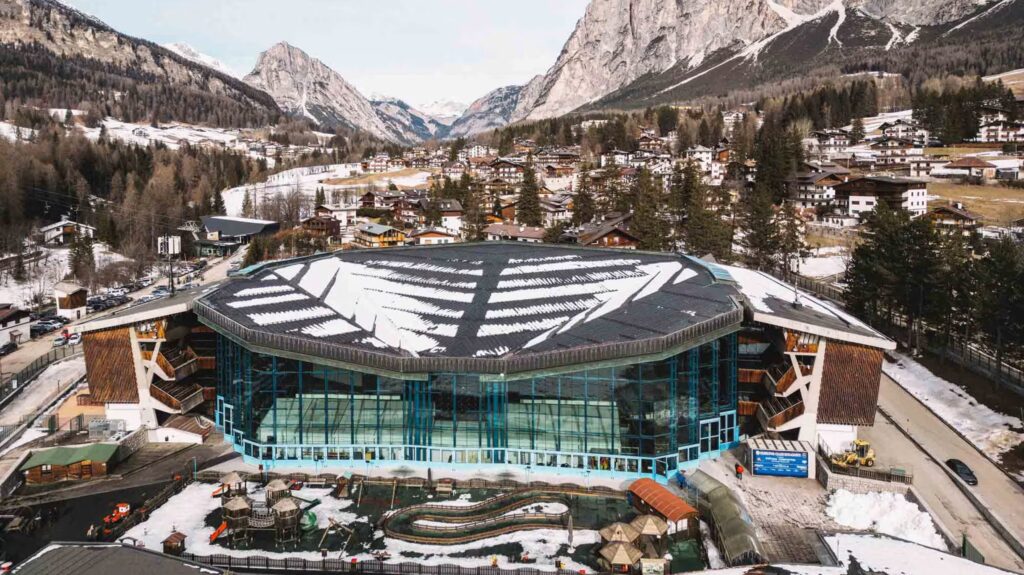
Cortina Curling Olympic Stadium
Originally built in 1955 for the first Winter Olympic Games held in Italy, the venue has been renovated and now offers a seating capacity of 3,500. As its name suggests, it will serve as the home of the curling competitions.
Ski facilities and snow parks: interventions in mountain infrastructure
For the Milano–Cortina 2026 Winter Olympic Games, the ski facilities in Bormio and the Stelvio slopes have been redeveloped. The Livigno Snow Park has also been upgraded, featuring parabolic curves, jumps, whoops, and snow-carved walls designed specifically for snowboard and freestyle skiing competitions.