The genesis of the Parentesi lamp and the Pio Manzù sketch that inspired Achille Castiglioni

Designed in 1971 for Flos, Parentesi grew out of an indirect encounter between Pio Manzù and Achille Castiglioni, who developed one of Manzù’s sketches after the designer’s death. From the mechanism with its sliding spotlight and counterweight to the original packaging and the 50th-anniversary editions: the story and evolution of one of the icons of Italian design.

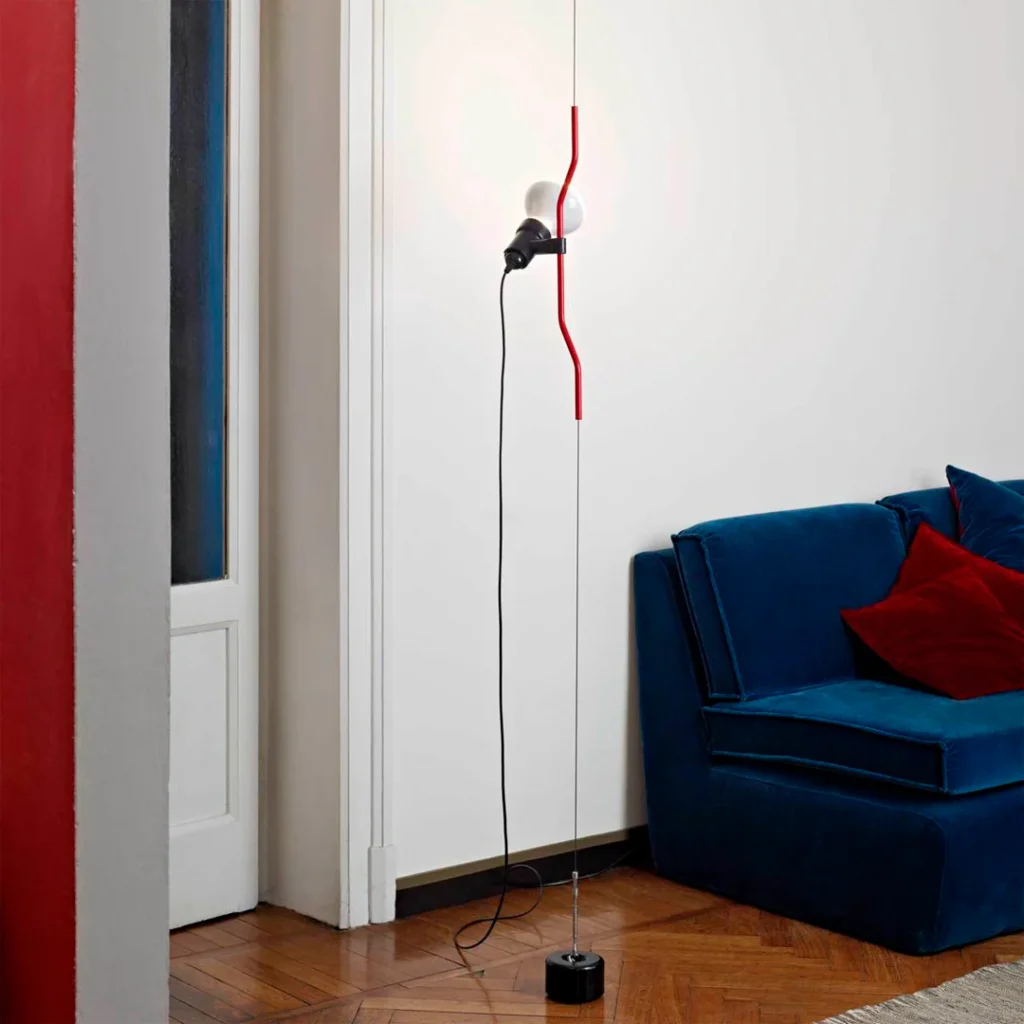
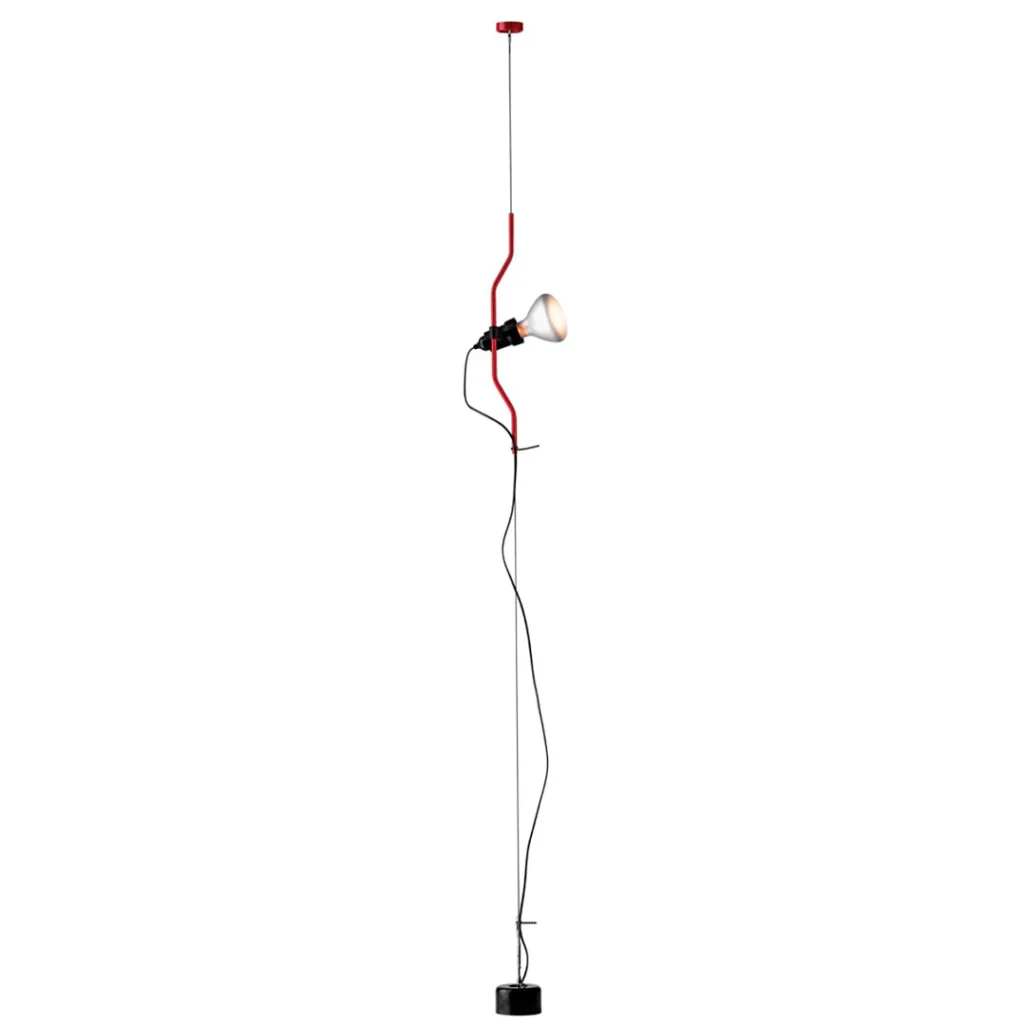
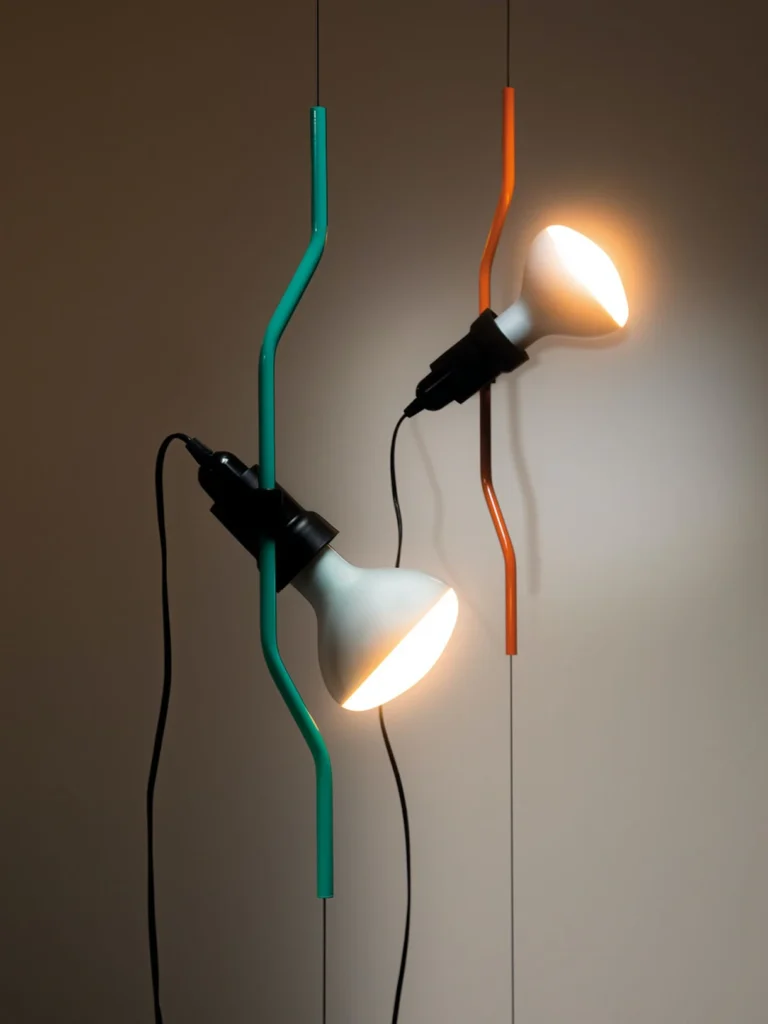
Simple and exceptionally refined, a discreet presence that gets noticed anywhere without raising its voice. This is the Parentesi lamp by Flos, an odd “hybrid” of floor lamp and pendant dating from 1971, signed by Achille Castiglioni and Pio Manzù. It delivers accent light that can be aimed precisely, but also enough indirect light to wash a whole room when turned upward; it takes up almost nothing and sits happily against a wall or in a corner.

Parentesi, Flos

Its structure is as simple as it is innovative. The Parentesi lamp is made of an adjustable spotlight that slides along a metal cable, fixed to the ceiling and held taut by a counterweight on the floor.

Parentesi, Flos

The Pio Manzù sketch that Parentesi came from 

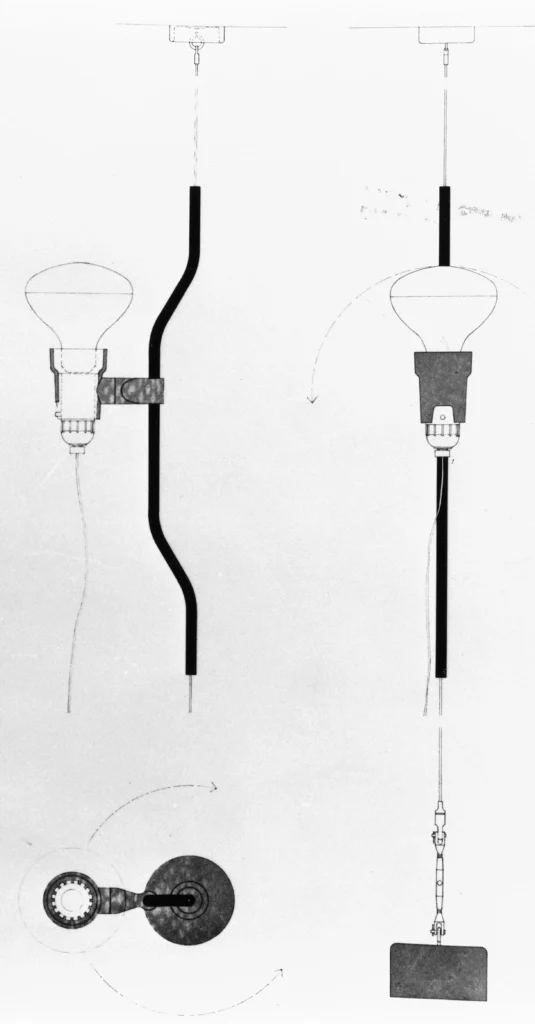
Not everyone knows that Castiglioni and Manzù did not design Parentesi together. The two never even met. The story is a curious one, and it begins in 1969—after Manzù’s death, when his widow showed Castiglioni some of the drawings left by the designer of the Fiat 127. He was immediately struck by the rough sketch of a lamp made from a fluted cylindrical tin mounted on a rod and able to rotate through 180°. The idea, which speaks to Pio Manzù’s obsession with simplicity and cost reduction, was refined by Castiglioni together with the Flos engineers.

Achille Castiglioni’s original drawings

How Achille Castiglioni turned the idea into the Parentesi lamp

The tin was replaced by a bulb, the range of movement was widened, and the rod gave way to a wire to lighten the whole. Finally, to increase friction between the components and hold the source in position, the distinctive metal grip was added. Since Parentesi would never have existed without that drawing, Castiglioni chose to credit his colleague Manzù on the product as well. In the brand’s catalog for 55 years, the Parentesi lamp won the Compasso d’Oro in 1979.

Parentesi, Flos. The special editions for the 50th anniversary

How the Parentesi lamp has changed from 1971 to today

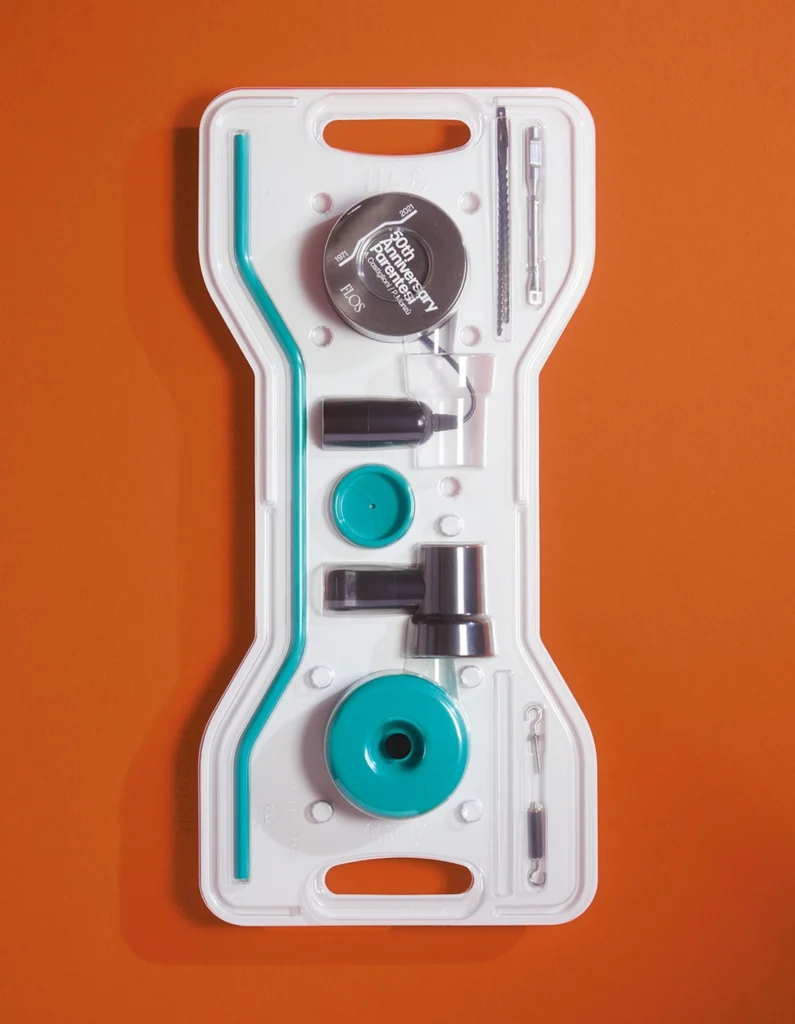
The original Edison-base bulb has given way to an LED retrofit, the counterweight is made from a single material, and the components are designed to be taken apart and recycled at end of life. These are the main “contemporary innovations” of the Parentesi lamp, available in black, red, white, and nickel and sold unassembled, then as now. What has changed is the packaging: a traditional cardboard box today, originally a transparent plastic case inspired by Fiat promotional material—again, out of Pio Manzù’s imagination.

Parentesi, Flos. The reproduction of the original packaging for the special editions marking the 50th anniversary

Flos’s special editions for 50 years of Parentesi

In 2021, Flos and Calvi Brambilla launched two limited editions of the Parentesi lamp. To mark five decades on the market, the original packaging was reissued along with two new shades for the grip: orange, Achille Castiglioni’s favorite color, and turquoise, the tone Pio Manzù chose for his prototypes.

Do you have a project to share?

Atmosfera is an open space for dialogue. If light plays a key role in your research or a specific project, we’re ready to listen. We feature lighting design projects, art installations, photography series, and stories that explore the narrative potential of light.

Send us your portfolio or tell us about a project you care about.
It could become part of our editorial programming—or spark a new collaboration.

EMAIL US AT REDAZIONE@ATMOSFERAMAG.IT

Read also..

Linkedin Facebook
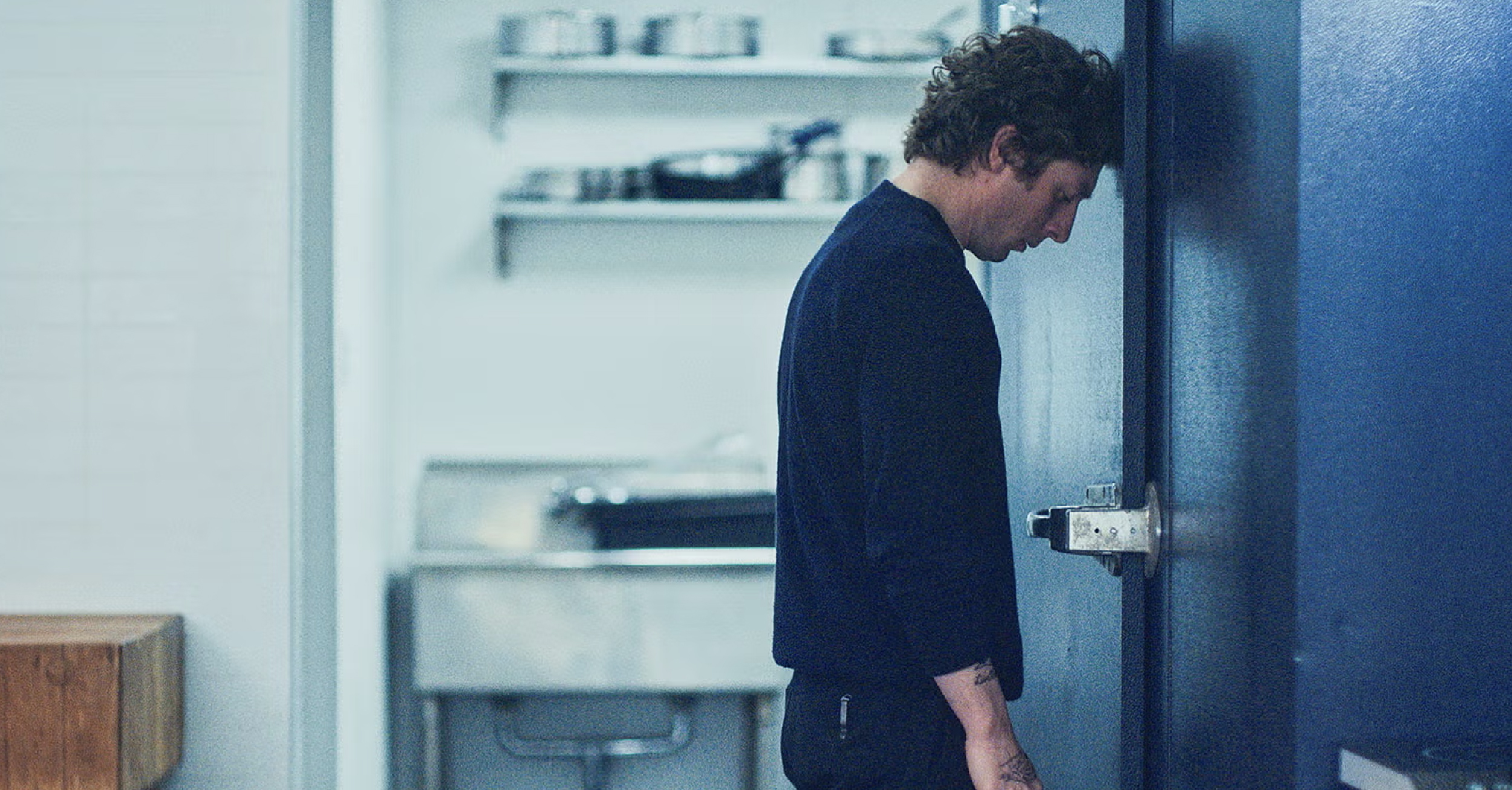
The lighting designed by Andrew Wehde in The Bear is one of the most vivid things we’ve ever seen
A light that shaped the anti-luxury aesthetic of one of the most acclaimed series of recent years, featuring diegetic neon, extreme close-ups, and images...
Read Article
Bazaar Meat @ Michael Kleinberg 2
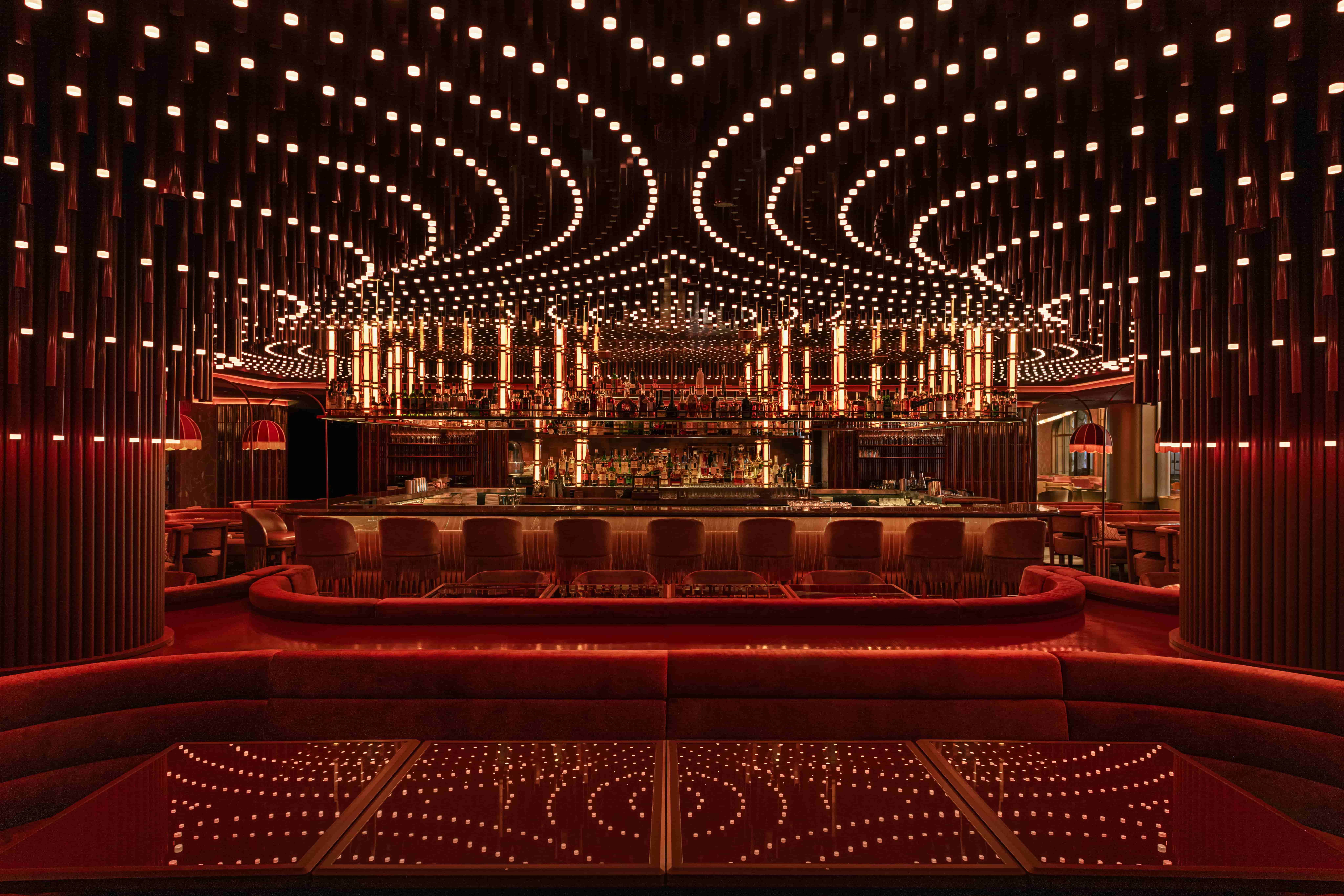
Studio Munge reinterprets the Andalusian Feria de Jerez with the lighting design for the Bazaar Meat restaurant in Las Vegas
In the city that never sleeps, every venue must have something special (and daring) to succeed. Bazaar Meat, located inside The Venetian—one of the Strip’s...
Read Article