Photo BoysPlayNice
Tiny House LUX is Luxembourg’s first 3D-printed home conceived as a response to the country’s housing crisis. With demand currently double the available supply, many cities are exploring ways to activate small, undeveloped plots within existing neighborhoods. The project was born from a simple yet strategic question: what if these sites could become a new resource for high-quality compact housing that allows people to remain close to their communities?
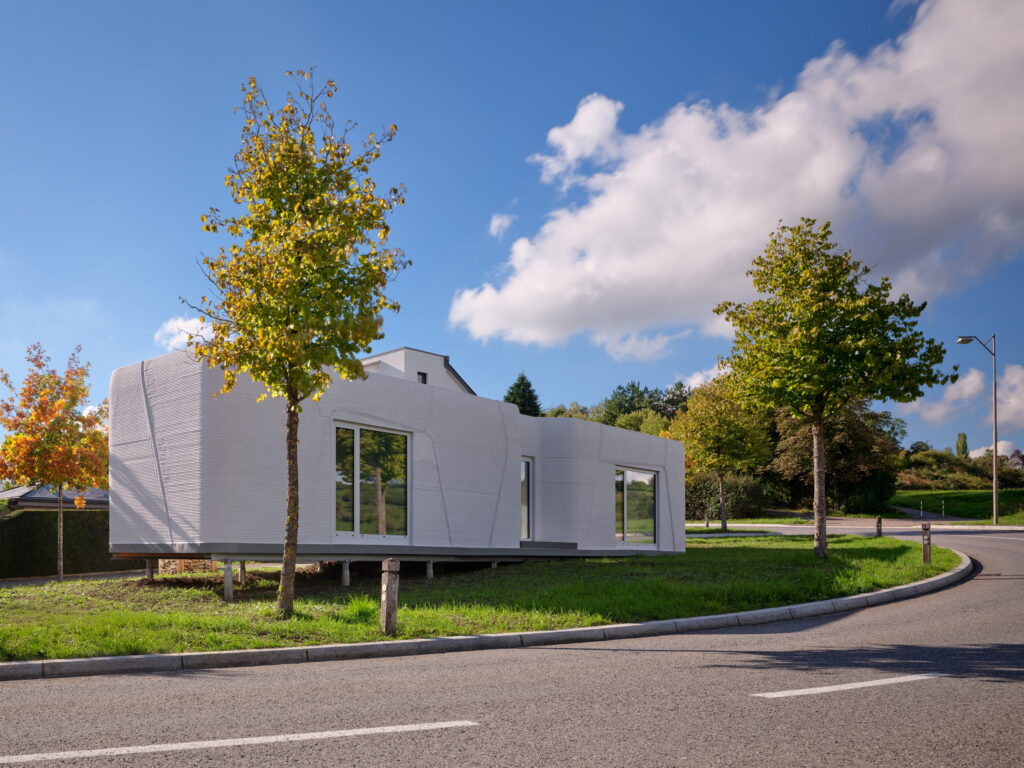
The idea came from architect Bujar Hasani of ODA Architects, who worked closely with the Municipality of Niederanven and Coral Architects, the design arm of Coral Construction Technologies, which focuses on on-site concrete 3D-printing systems.
ODA Architects selected this technology with the intention of building a solid and efficient home quickly and precisely. We discussed the project in depth with Bujar Hasani, the studio’s co-founder.
Tiny House LUX aims to introduce a faster and more sustainable way of building. Could you tell us how the collaboration between ODA Architects and Coral Architects developed?
«The project is not only Luxembourg’s first 3D-printed house, but, to the best of our knowledge, the world’s first habitable residential solution built using local materials. As most of the resources currently available on the market are extremely expensive, our intention from the outset was to make 3D-printed architecture accessible and viable.
Our search for a partner capable of working with local resources and developing a feasible printing process led us to Coral Architects. The collaboration allowed us to faithfully realize the design: after developing the concept, we worked closely with the studio to adapt the project to the constraints of the technology».
How were the technical components integrated into the structure?
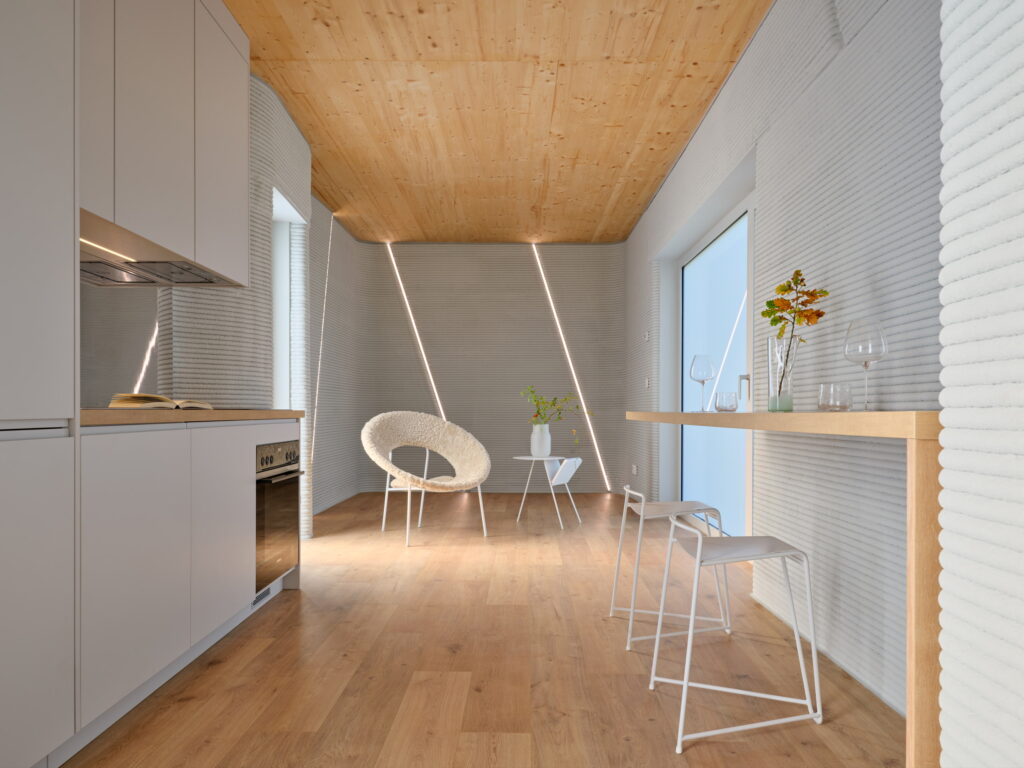
«Tiny House LUX was designed as a modular system to demonstrate that 3D-printed homes can be produced as dismountable, relocatable units. The walls were printed as separate modules and connected through structural joints, allowing the structure to be dismantled if necessary.
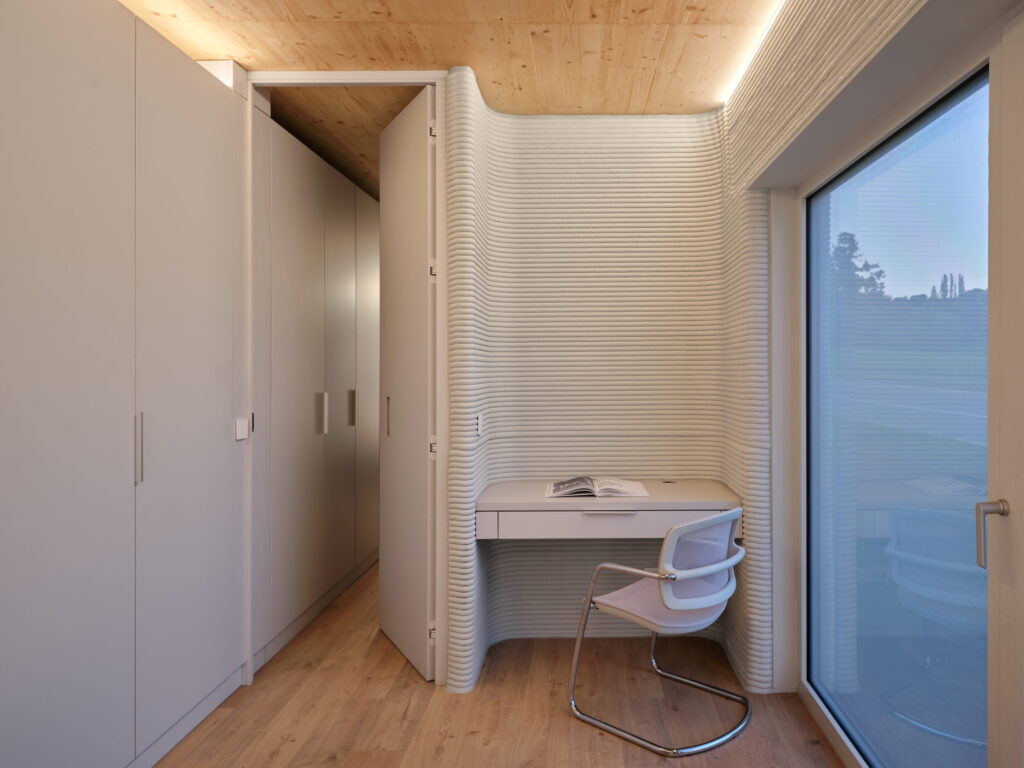
The system consists of two printed layers separated by injected fibreglass insulation. The technical systems were planned from the earliest stages and primarily integrated from the interior. Wall cuts and recesses were designed specifically to accommodate lighting and services. Additional openings were later created, much like in conventional construction.
This approach demonstrates how flexible 3D printing can be when combined with careful planning».
How did the spatial layout and construction method influence the lighting design of Tiny House LUX, both in terms of natural and artificial light?
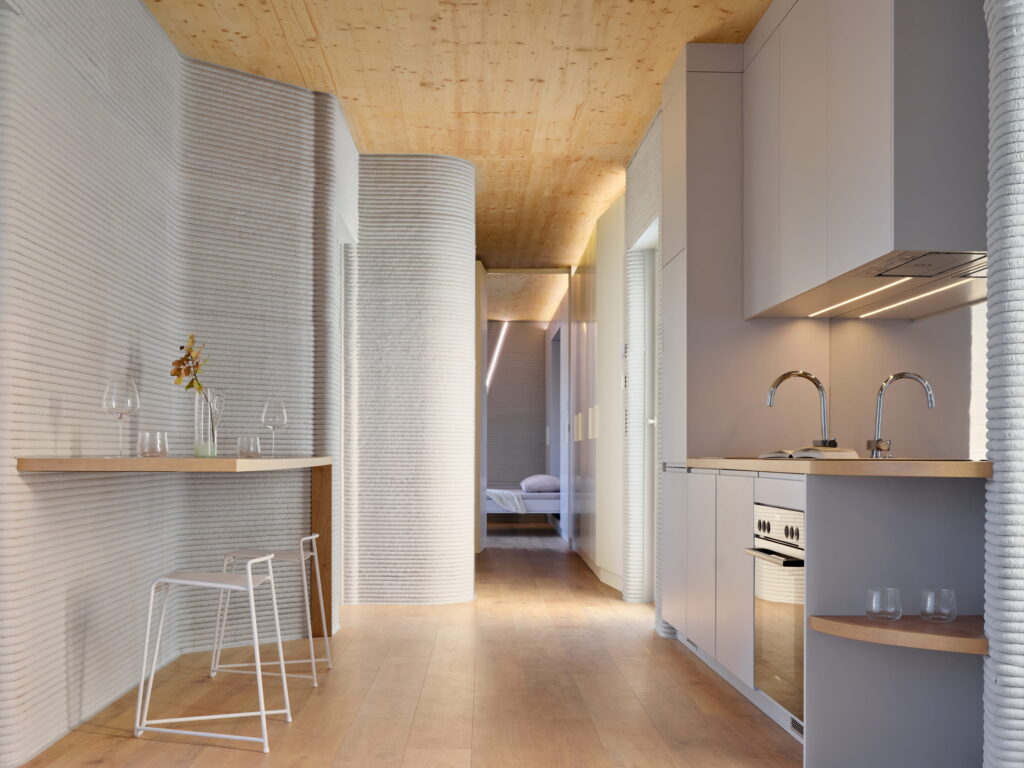
«The building’s form was largely shaped by the buildable area available on the site. We maximized the footprint and softened the volume with rounded geometries. The lighting strategy was closely tied to orientation and context: most of the openings face northwest, framing unobstructed views of the surrounding landscape. Wall recesses were used to integrate LED lighting, concealing cables and technical components within the structure. This made it possible to keep the wooden ceiling fully visible. Both direct and indirect lighting was carefully designed and supported by a smart system that adjusts colour temperature and intensity according to usage and mood».
How did you address the different lighting needs associated with daily activities within such a compact space?
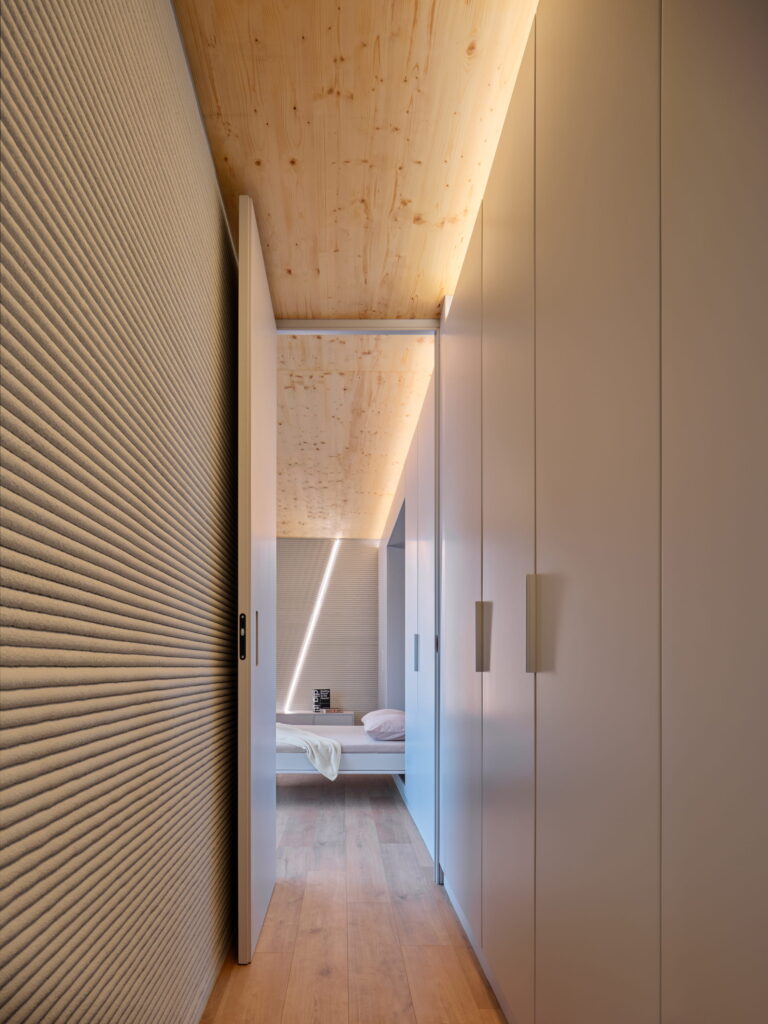
«The spatial organization follows a clear linear logic that we apply in many of our projects. This approach is not only functional but psychological, as it aims to reduce visual and mental overload.
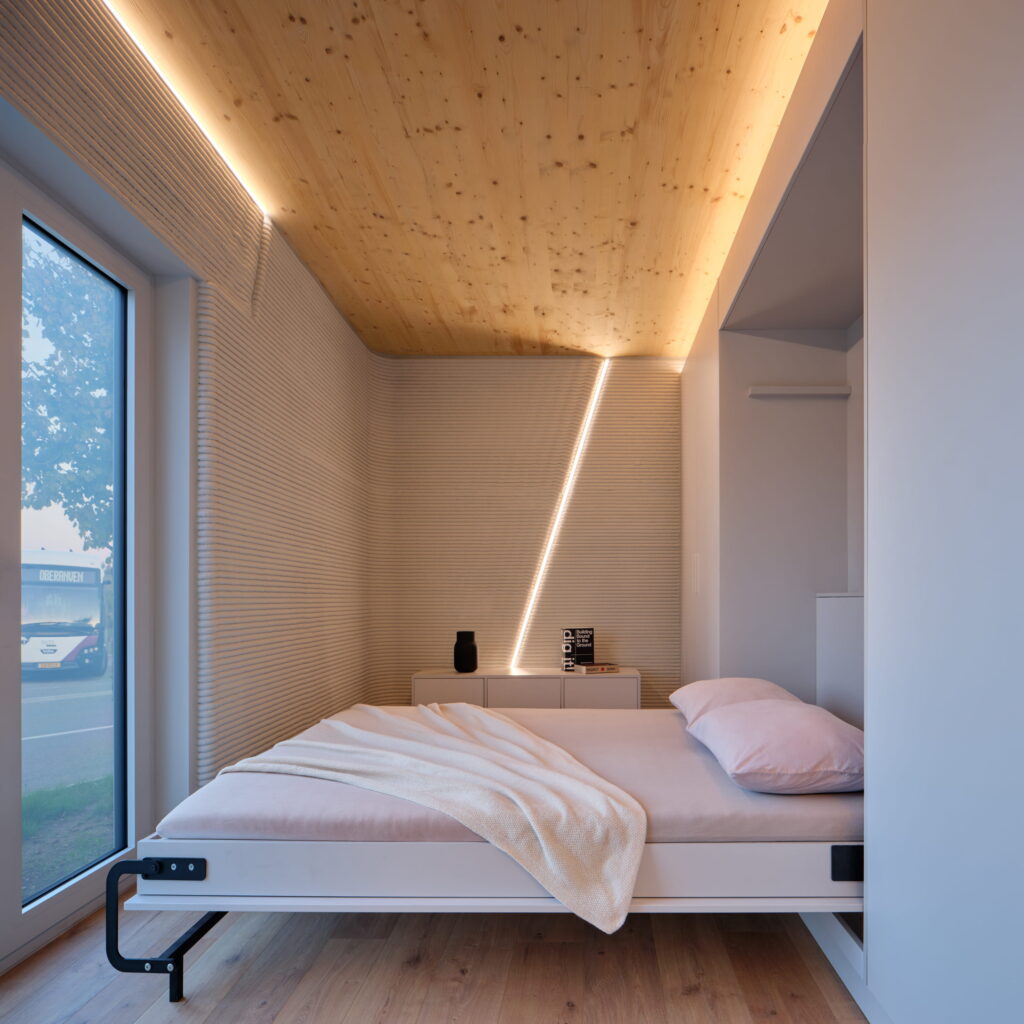
Functional areas—entry, kitchen, living space, bathroom, and sleeping or working zone—are arranged along a single axis, with storage and technical elements grouped. The lighting follows the same linear concept, running continuously through circulation zones, walls, and functional areas. This allows residents to easily adapt the atmosphere depending on whether they are cooking, working, or relaxing, without the need for rigid spatial separations».
What does this project teach us about the future of living and the relationship between technology and architecture?
«We live in a time when we must dare more: rethink architecture, technology, materials, and how we inhabit space. For me, architecture is temporary, just like our presence on this planet, and our responsibility is to create systems that future generations can build upon.
With Tiny House LUX, we achieved something previously considered impossible: 3D printing with local materials at radically reduced costs. While materials for this technology can cost between €700 and €900 per cubic meter, we reduced that cost to approximately €150–€200. This makes the technology accessible.
The process taught us that BIM methodology, material research, and digital fabrication must interact seamlessly. During construction, the technology itself evolved rapidly, enabling faster printing and more efficient logistics.
We are already working on the next step: cement-free 3D printing. This project represents a learning process that proves progress only happens when architects, engineers, and different disciplines collaborate and are willing to take risks together».