
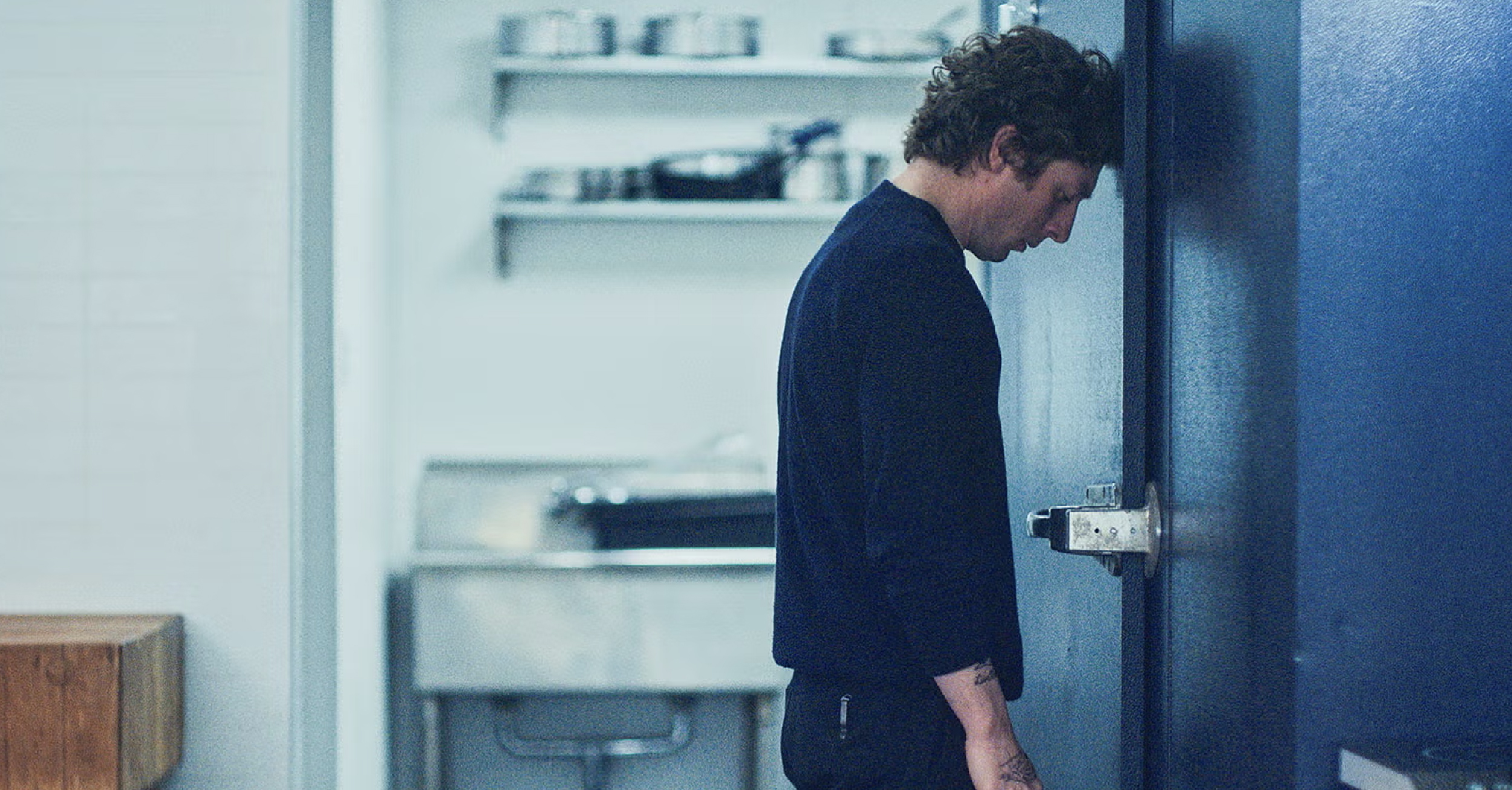
Cover: Stranger Things Season 1. Courtesy Netflix
Stranger Things first landed on Netflix in 2016, created by Matt and Ross Duffer — better known as the Duffer Brothers. From the very beginning, the series won audiences over thanks to the complementary personalities of a small band of nerdy kids — Mike Wheeler, Dustin Henderson, Lucas Sinclair, and Will Byers — soon joined by Eleven, mysterious and immensely powerful, and by a mix of elements that fully immersed us in the 1980s: bicycles, Dungeons & Dragons, and walkie-talkies.
In the background of what has now become a cult series, the echoes of iconic films from the era resonate — from E.T. to The Goonies, all the way to Stand by Me. Yet Stranger Things managed to go beyond easy nostalgia, above all through the inner journeys each character undertakes, young and old alike. In doing so, the series transforms from simple sci-fi into a coming-of-age story that precisely captures that fragile, hard-to-define threshold between childhood and adulthood. Central to this evolution is the role of light: its transformation throughout each season becomes the thematic thread of the series and the exhibition, tracking the characters’ growth, shifting moods, and the battle between innocence and darkness.
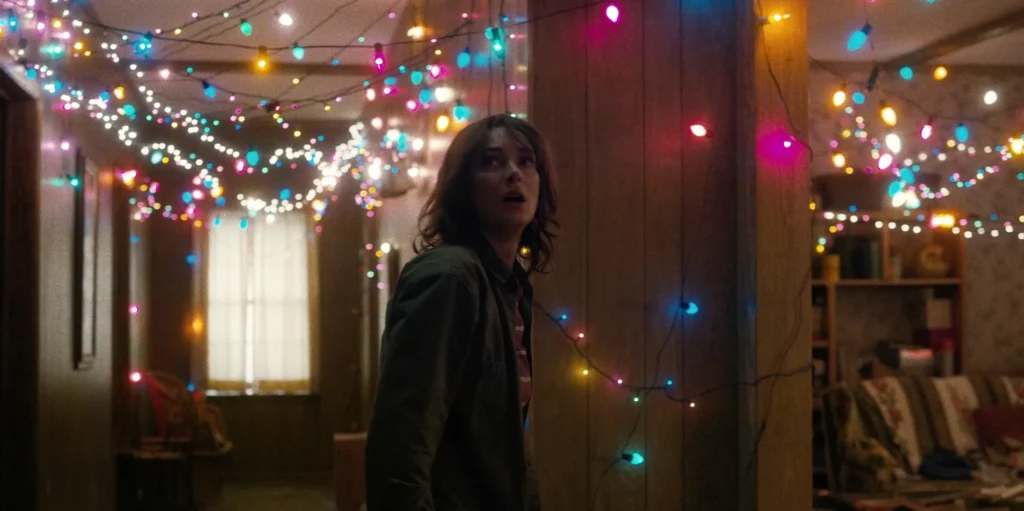
Season 1: light as a signal of the unknown
Set in 1983, the first season was entrusted to cinematographer Tim Ives, who would remain with the project through season three. His task was to reconstruct the visual atmosphere of the era: the series was shot on RED Dragon 6K cameras with Leica Summilux-C lenses, chosen for their ability to deliver a soft, almost analog aesthetic with shallow depth of field.
In domestic interiors, warm tungsten light dominates, sharply contrasted by the cold, lunar blue filtering through windows in night scenes. It’s classic 1980s moonlight, a direct nod to Steven Spielberg’s cinema, intertwined with one of the show’s most iconic images: the unsettling flicker of lights — especially the Christmas bulbs Joyce Byers (Winona Ryder) hangs in her living room. We quickly learn that every flicker signals a possible “presence,” coming from what we later understand to be the Upside Down. Midway through the season, Joyce writes the alphabet on the wall and connects a light to each letter in order to communicate with her mysteriously vanished son, Will. The colored bulbs flash to form messages (“RIGHT HERE,” then “RUN”). It’s the first clear sign that in Hawkins, good and evil are neither abstract nor distant dimensions.
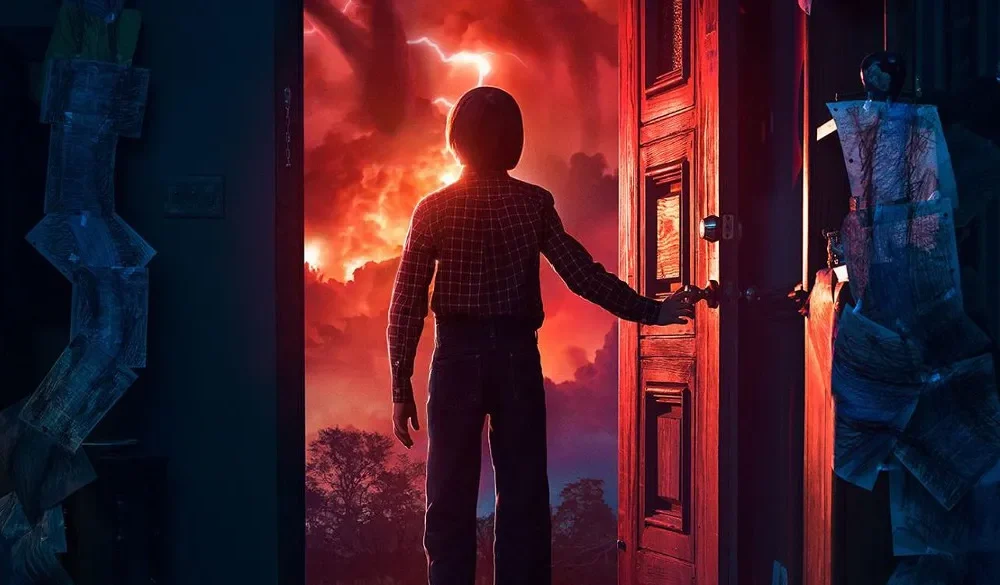
Season 2: infected light
With season two, set a year later in 1984, the tone grows markedly darker. Not so much because the number of frightening scenes increases, but because of a new, irreversible awareness: the monsters are real.
Key locations — the slimy underground tunnels dug by the Mind Flayer, the neon-lit corridors of Hawkins Lab, and even scenes centered on Will, who suffers a form of mental infestation this season — are crossed by greenish flashes, watery reflections, and unstable, distorted chiaroscuro. It’s a distinctly ’80s palette, built from blue-green fluorescent tubes paired with orange incandescent bulbs, rooted in pre-LED lighting technology. When normalcy seems to resurface — during the season’s final Snow Ball — the light returns to a warm, golden glow. But it’s only a brief truce, destined to fade quickly.
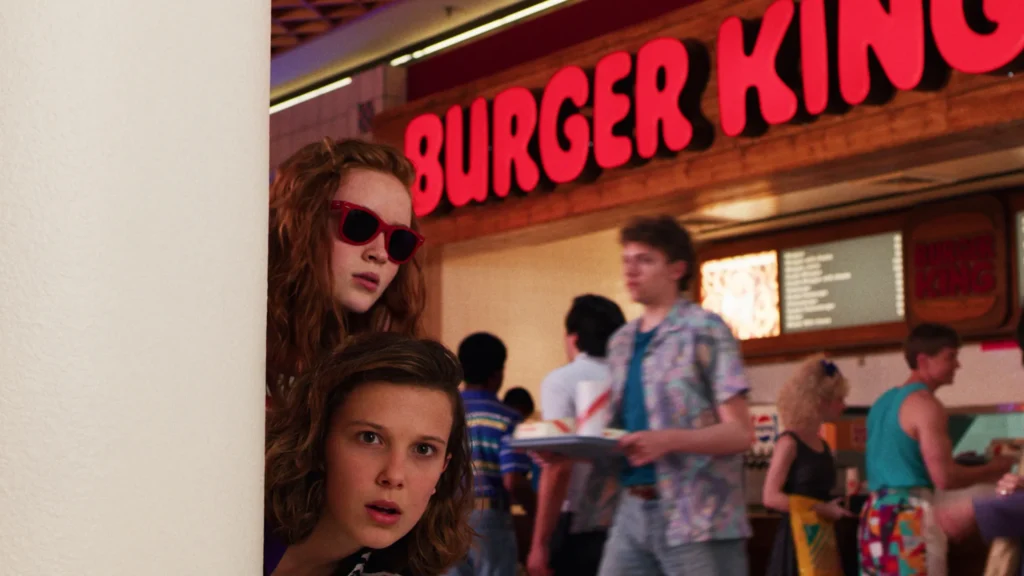
Season 3: color as deception
With the third season — summer 1985 — Stranger Things undergoes a striking, almost disorienting visual shift. Tim Ives initially returns as director of photography, joined by Australian cinematographer Lachlan Milne, chosen by the Duffers to shoot half the episodes. It’s summer in Hawkins, and for the first time, the characters move through broad daylight, outdoors: public pools, parking lots, bike rides under a blazing sun.
Shot on RED Monstro 8K Full Frame cameras paired with Leica Thalia lenses, the images are wide and radiant, with a deliberately dreamy tone.
Everything converges in a single location: the Starcourt Mall, a perfect symbol of Reagan-era America. Steve and Robin work there; it’s also where Eleven and Max experience carefree moments, like any other teenagers. Everywhere you look, there are pink and blue neon signs, aqua mercury lights, carnival strobes, alongside the ever-present warm tungsten glow of classic bulbs. For the first time, Stranger Things wraps us in color — but it’s an illusion. Inside the Mall, the confrontation with the Mind Flayer takes place in its terrifying physical form, a fused mass of limbs.The lights fail, red sirens flash, and the shopping center shifts from artificial paradise to a stage of pure nightmare.
Season 4: the light of trauma
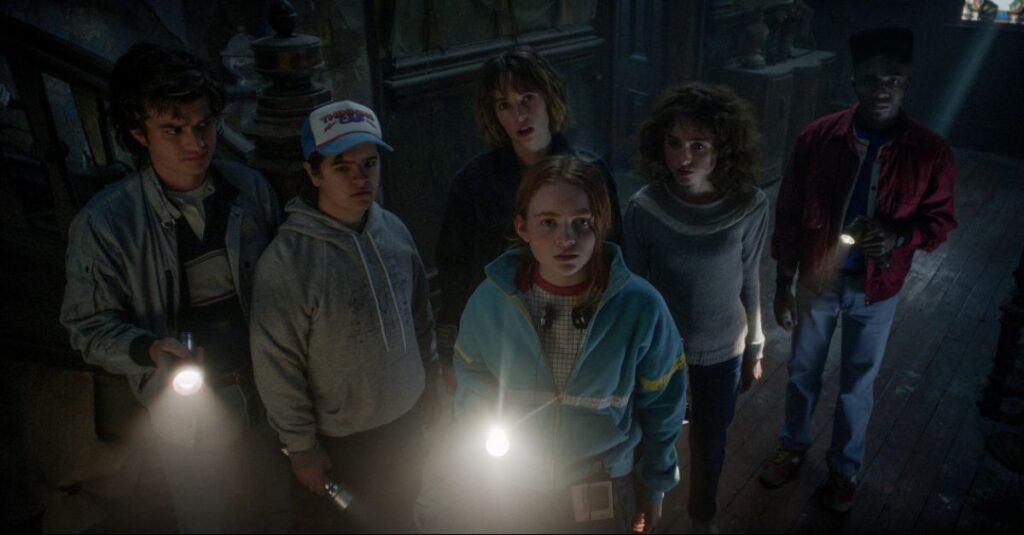
Season four marks a turning point, both narratively and visually. We’re in 1986, and for the first time, the protagonists no longer share the same space: instead, they’re scattered across radically different settings — suburban California, a Soviet prison in Kamchatka, and, of course, Hawkins.
A new lead cinematographer steps in: Caleb Heymann, joined by Brett Jutkiewicz and “veteran” Lachlan Milne. The technology changes as well: the RED cameras are abandoned in favor of Arri Alexa LF (large-format digital), paired with vintage 1960s lenses to achieve a more organic, tactile, deliberately “old-school” image. In Hawkins, nights remain blue, and forests grow increasingly ominous, but with the arrival of Vecna, light undergoes a transformation. It becomes theatrical, defined by sharp beams, streaked with cadaverous greens, violent reds, and unnatural blues. To depict the victims’ “mental worlds,” Heymann and the Duffers openly draw from 1980s horror films, from A Nightmare on Elm Street to Hellraiser. The Upside Down itself is described by Heymann as “a liminal space between a normal moonlit night and a kind of perpetual twilight” — a visible marker of trauma.
Season 5: two lights on the battlefield
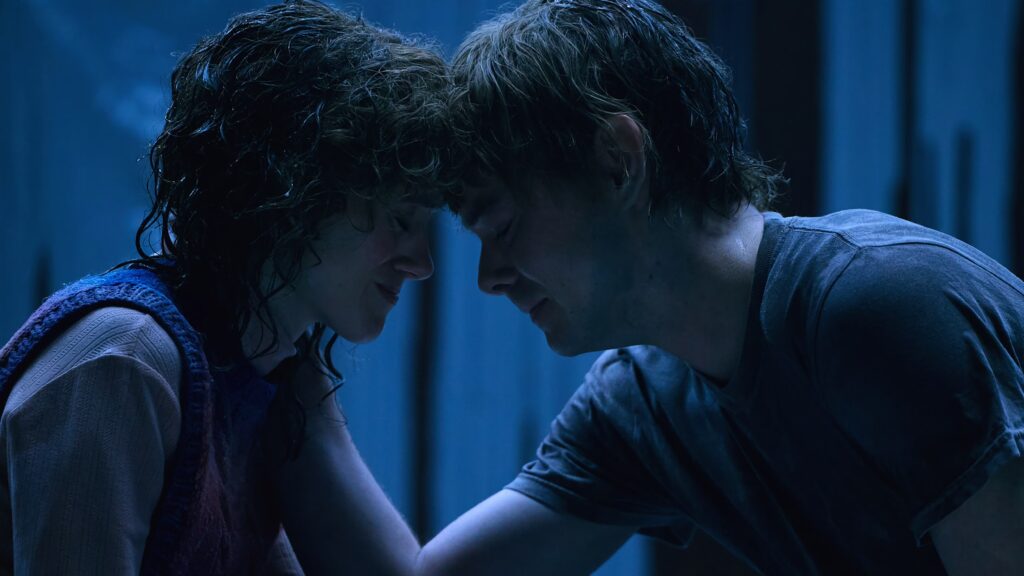
This brings us to the fifth and final season, conceived — as the creators have stated — with a precise goal: to return to the original visual language and push it to its extreme. Behind the camera, we find the same team from season four: Caleb Heymann and Brett Jutkiewicz. The technical choice continues as well: Alexa LF cameras paired with vintage lenses, for an image that grows increasingly analog and tactile. Added to this is the use of Auroris technology, a large overhead LED system that simulates blazing skies — the same skies Steven Spielberg himself praised in a letter to the Duffer Brothers. But now Hawkins is a true battlefield: a borderland between two worlds, where light itself is unstable, contested. That iconic blue is constantly violated by spectral red flares, sudden ruptures from another dimension. Two lighting registers clash without respite: on one side, the light of innocence — lunar blue, starry white; on the other, the light of apocalypse and ruin — blood red, fire orange, toxic green. In this sense, Stranger Things’ cinematography closes the circle: light, born as a “thermometer of fear,” becomes a symbol of resistance — of humanity refusing to surrender to darkness.