

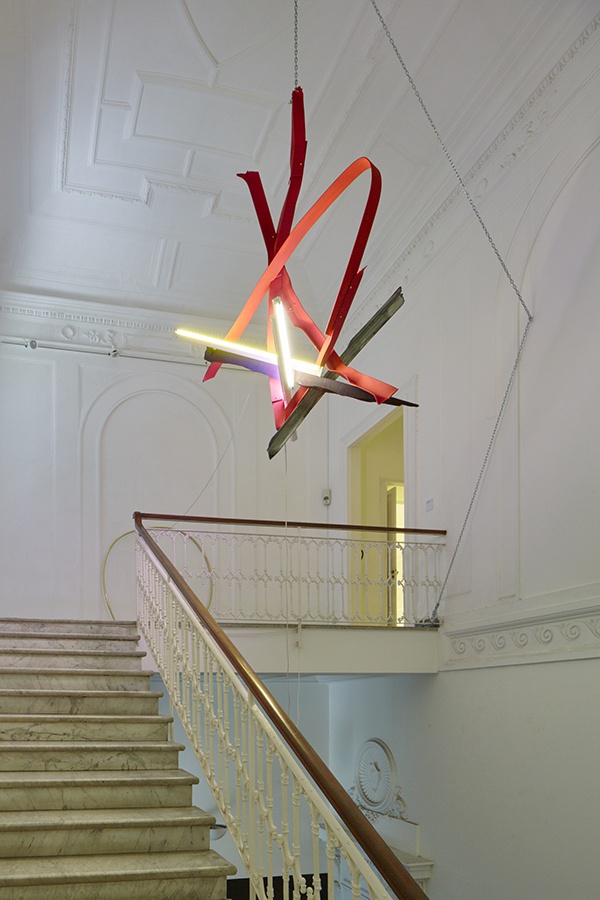
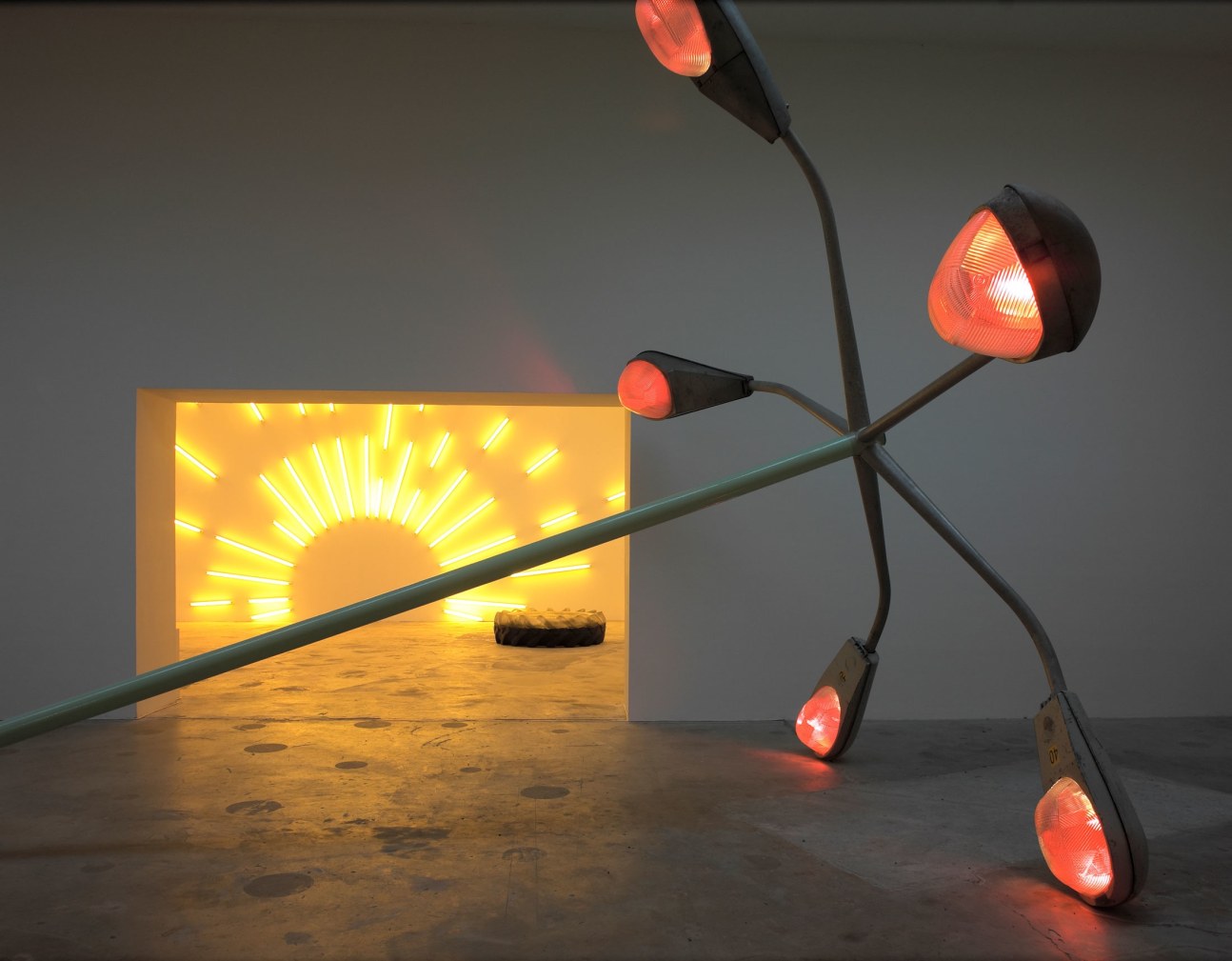
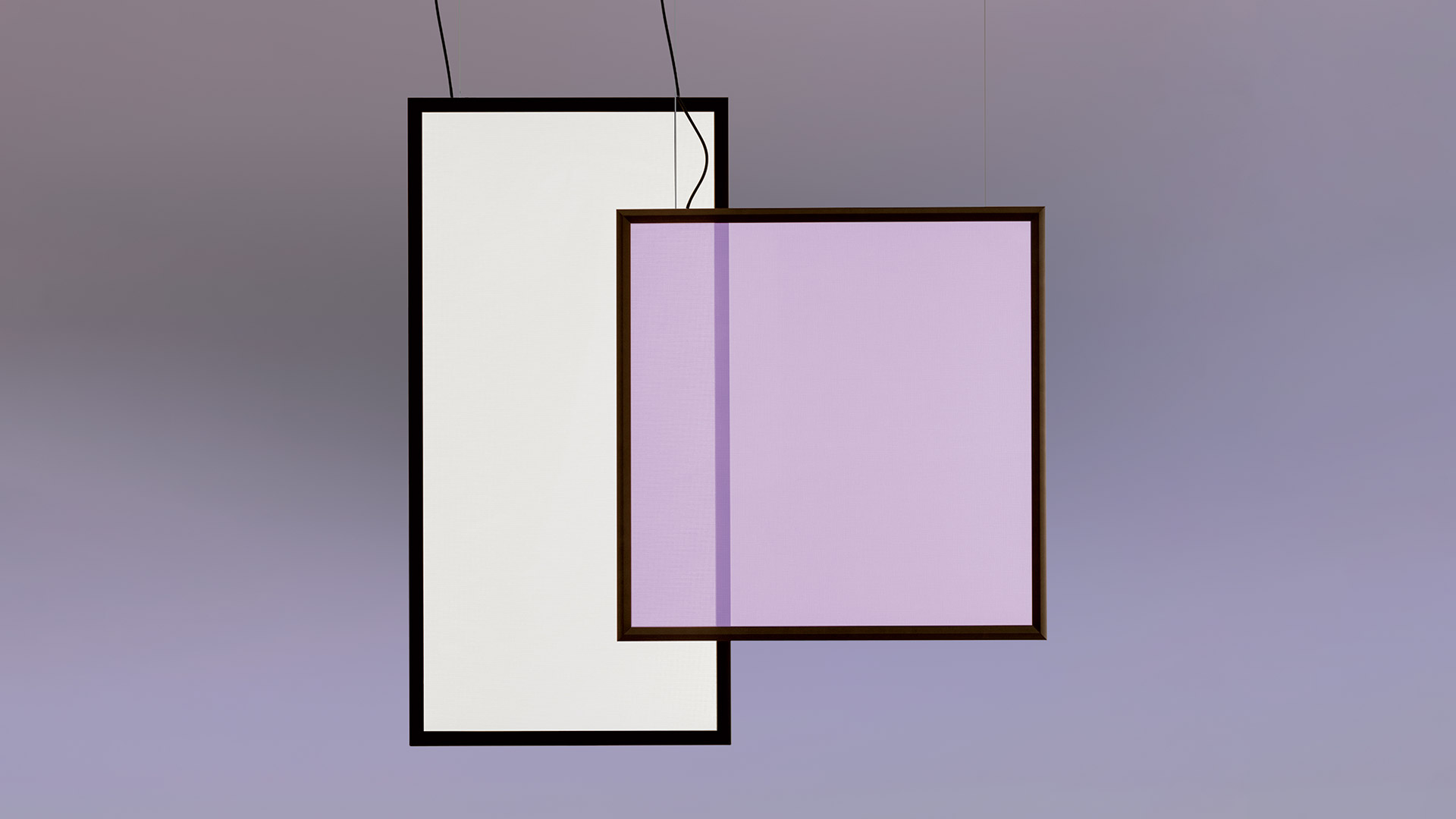
Photo: Mark Handforth, White Light Whirlwind, 2021, steel, lights, and electrical fixtures, h 14 meters. Courtesy the artist and Galleria Franco Noero. Photo Ilario Piatti
Mark Handforth’s practice is grounded in a constant reflection on light as both material and phenomenon, capable of redefining how space is perceived. Through sculptures built from elements of the urban landscape — industrial streetlights, fragments of infrastructure, and artificial light sources — the artist constructs a visual grammar in which light becomes a constructive force. His works, often simple in form yet complex in effect, generate new ways of looking at everyday life and the city, with its rhythms and materials.
Born in Hong Kong in 1969 and raised in London, Handforth studied at the Slade School of Fine Art and at the Städelschule in Frankfurt, an environment deeply committed to sculptural experimentation. Since 1992, he has lived and worked in Miami, a city whose artificial light, heterogeneous landscape, and layered visual culture have decisively shaped his imagination. Over time, he has developed an articulated exhibition practice, alternating museum installations with large-scale public projects, always centered on the relationship between environment, matter, and light.
Light as sculptural material
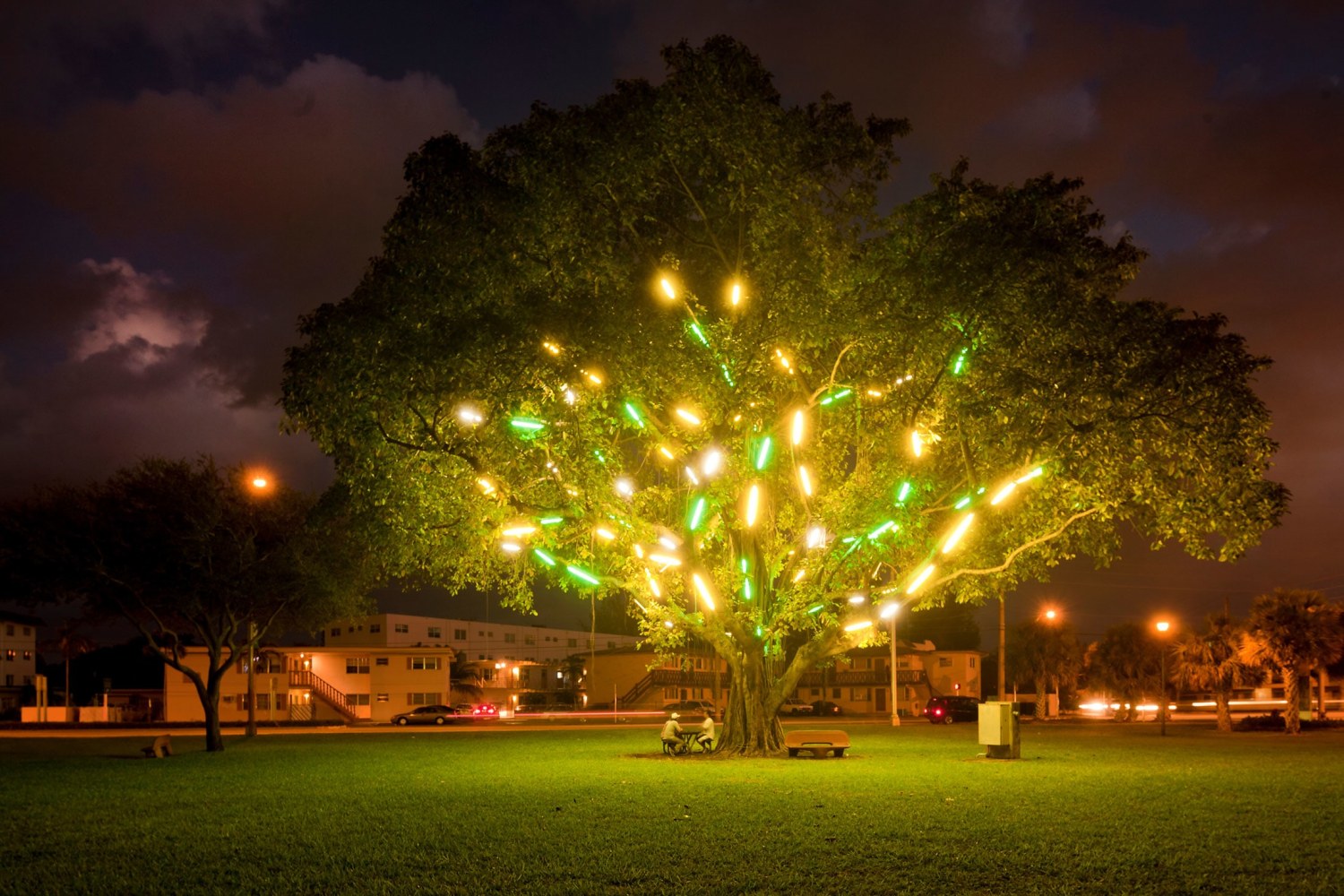
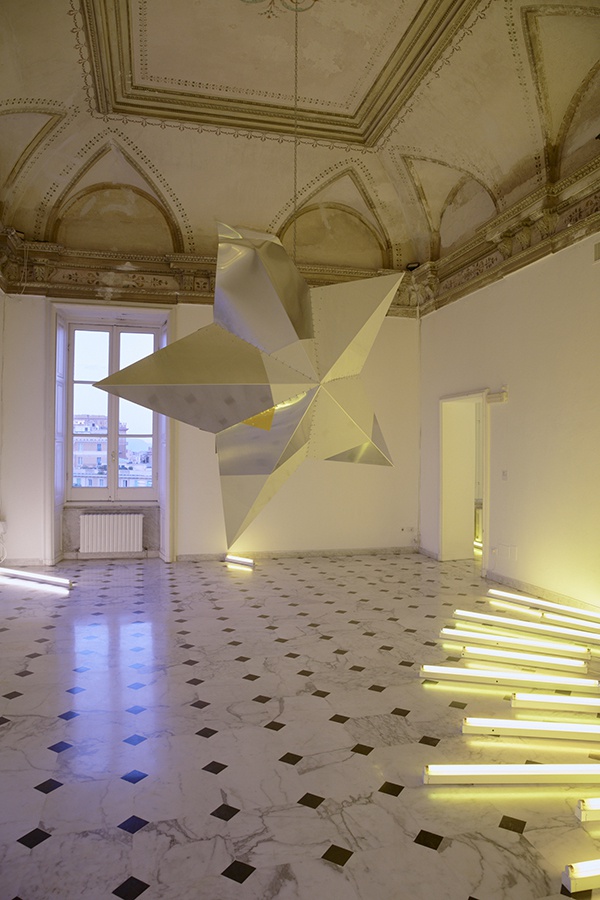
In Handforth’s work, light plays a structural role. Elements such as neon tubes, streetlamps, or fluorescent lights are woven into compositions that use luminosity as line, sign, or surface. The artist often intervenes on the chromatic component, filtering light through colored gels or studying how illumination behaves on metallic surfaces. The outcome is a luminous geometry that alters spatial perception, creating zones of intensity, expanded shadows, or unexpected reflections.
Neon and fluorescent tubes
Works composed of neon and fluorescent tubes form one of the central axes of Handforth’s research. These luminous elements, often arranged in modular formations, create essential drawings that unfold along walls or cut across space. The color of the light generates shifting atmospheres, making luminosity feel like a living material that transforms the environment.
Urban objects transformed by light
Bent or tilted streetlamps, poles resting on the ground, or twisting around themselves become protagonists of works that question the relationship between the city and its lighting infrastructure. The deformation suggests a temporal dimension: viewers seem to witness the aftermath of an imaginary event, as if the object were shaped by a force no longer present. Combined with artificial light, these elements transform the urban environment into a field of narrative possibilities. These symbolic figures rely on luminosity as a structural component: light traces their contours, turning them into suspended diagrams and releasing them from the rigidity of everyday forms.
Revealing the ordinary
Through slight deformations, subtle shifts, and a precise use of artificial light, the artist constructs a poetics that does not aim for spectacle but for a slow revelation of the ordinary. Handforth invites viewers to look at their surroundings with renewed attention: what we recognize can reorganize into essential, almost elementary structures, revealing a different way of inhabiting and perceiving space.