Design as a shared (and synergistic) cultural practice
Key collaborations, including those with Marc Sadler and Marcel Wanders, have strengthened his innate and multifaceted creativity. Co-founder of the Controvento collective, Gabriele Chiave also served as Vice President of Creative Direction, Design, and Innovation at Estée Lauder Companies, with whom he continues to collaborate as a consultant.
How does lighting design change when neuroscience, environmental psychology and architecture come into
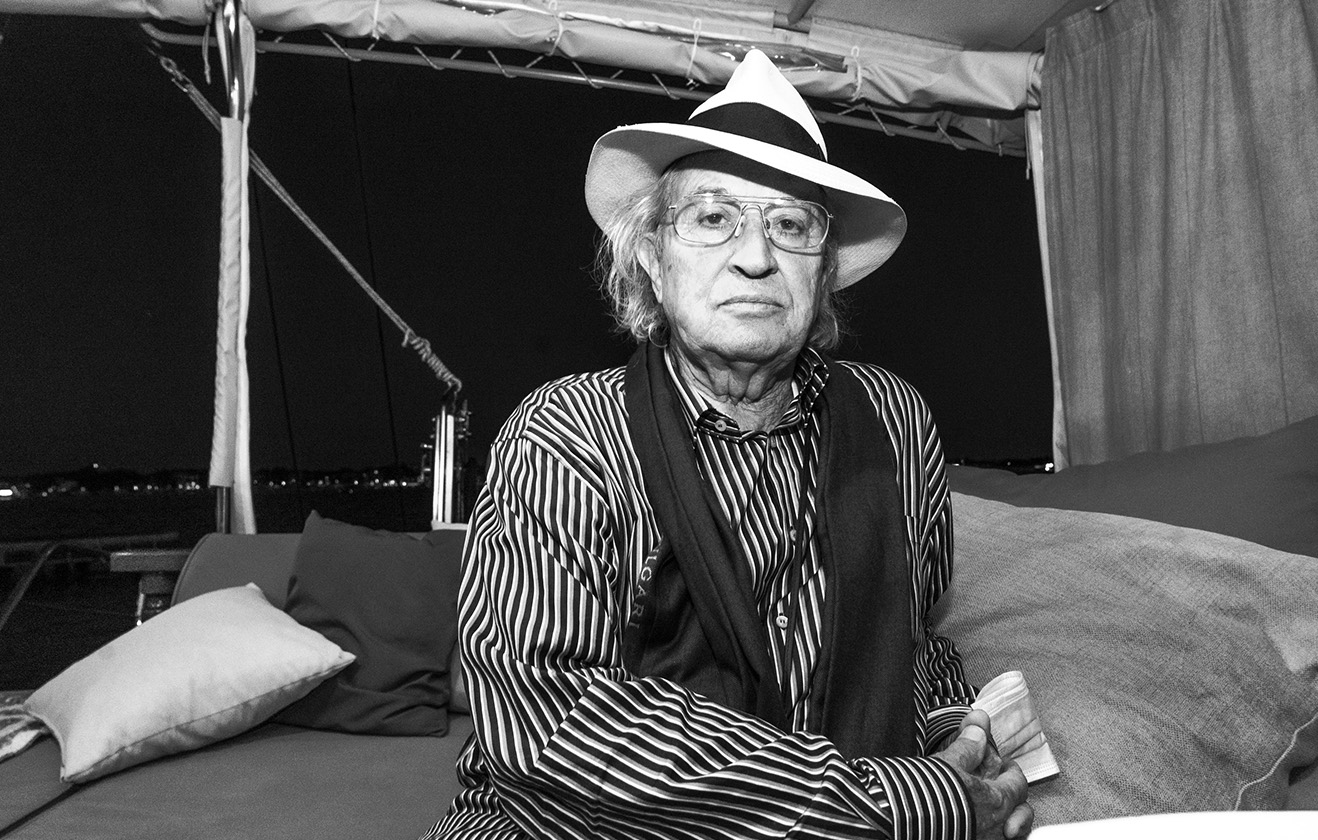
A true traveler and global citizen with a deep passion for design, art, and music, Gabriele Chiave possesses a distinctive ability – call it talent, attitude, or mindset – to create and seek out shared ground and synergistic connections between different design spheres that intersect across disciplines.
After studying industrial design at the IED in Milan, he broadened his experience by working in Marc Sadler’s studio for three years before joining Marcel Wanders in Amsterdam in 2007. He remained there for fifteen years.
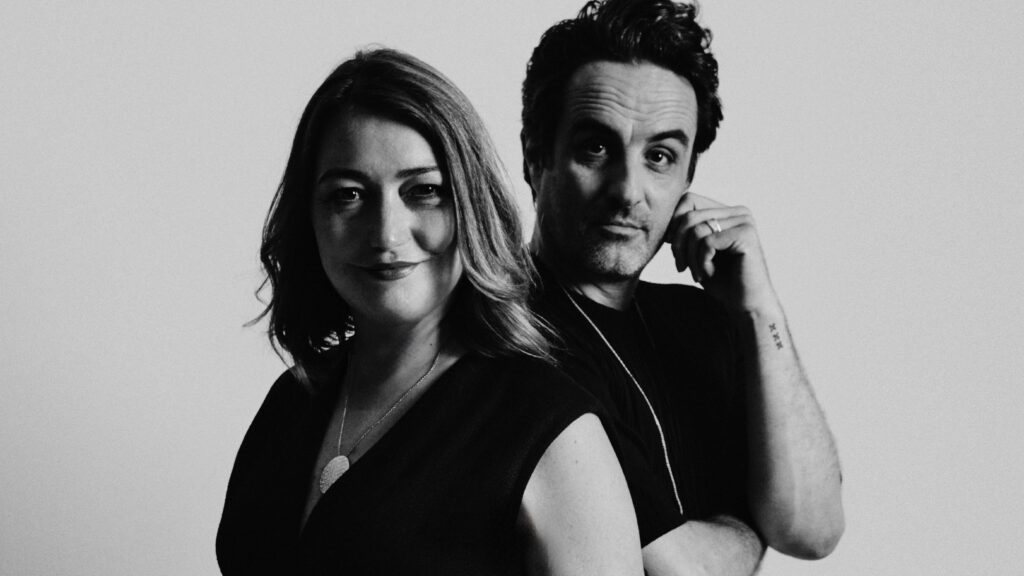
1. Gabriele Chiave with Verdiana Vannini, co-founders of the Controvento collective. Courtesy Controvento
What kind of mindset did you have when you began collaborating with Wanders, and how did it evolve?
«When I arrived in the Netherlands, I was carrying a solid set of experiences, beliefs, and an idea of what design was to me.” My background was rooted in industry, in Italian design culture, the tradition of the great masters, and serial production. I had worked with Marc Sadler in a technical context focused on functional innovation.
Arriving in the Netherlands was a creative shock: I found myself immersed in a radically different world, where design is much closer to art, craftsmanship, and free experimentation, and where the codes were almost the opposite of what I was used to. After five years, I became Creative Director alongside Marcel. That phase marked a new and intense period of growth. During the first year, I immersed myself in everything from products to interior design and limited-edition pieces. My perspective expanded: I began thinking strategically, building strong relationships with brands, managing a multidisciplinary team of over fifty people, and giving narrative depth to every project».
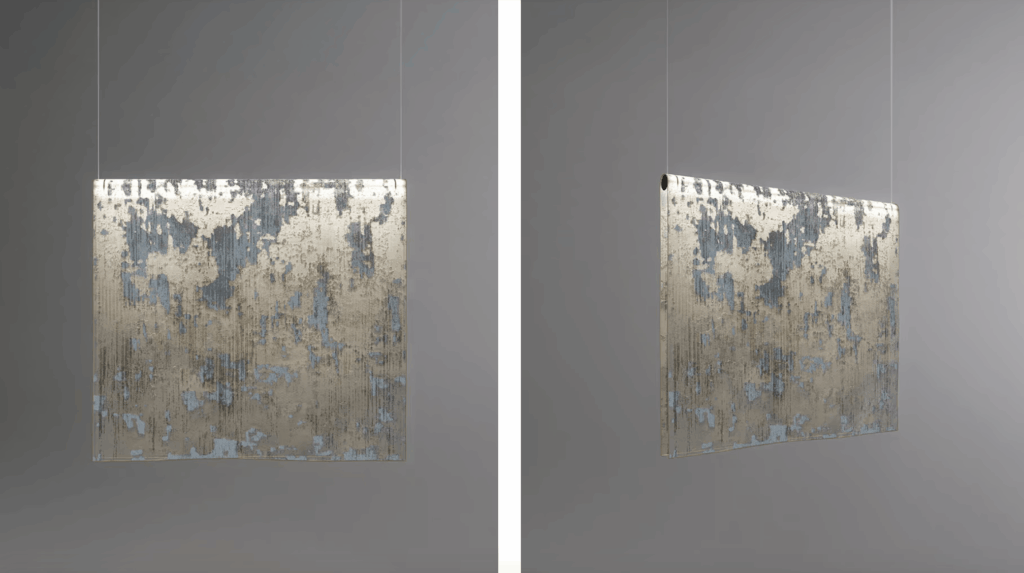
2. D-Burned, design by Diesel Living with Lodes, a denim pendant lamp designed under the creative direction of Glenn Martens in collaboration with Controvento. Courtesy Controvento
What were the most valuable lessons?
«I learned what it means to build a vision, carry it forward with coherence, and adapt it over time to changes in the market and in culture. I realized how essential it is to listen, while also knowing how to lead. I realised that design is a collective endeavour: beauty never comes from a single hand, but from the harmonious convergence of different skills, intuitions and sensibilities».
Following this experience, Controvento was founded in Amsterdam in 2022, co-founded by Gabriele Chiave and business manager Verdiana Vannini, with Chiave serving as Creative Director.
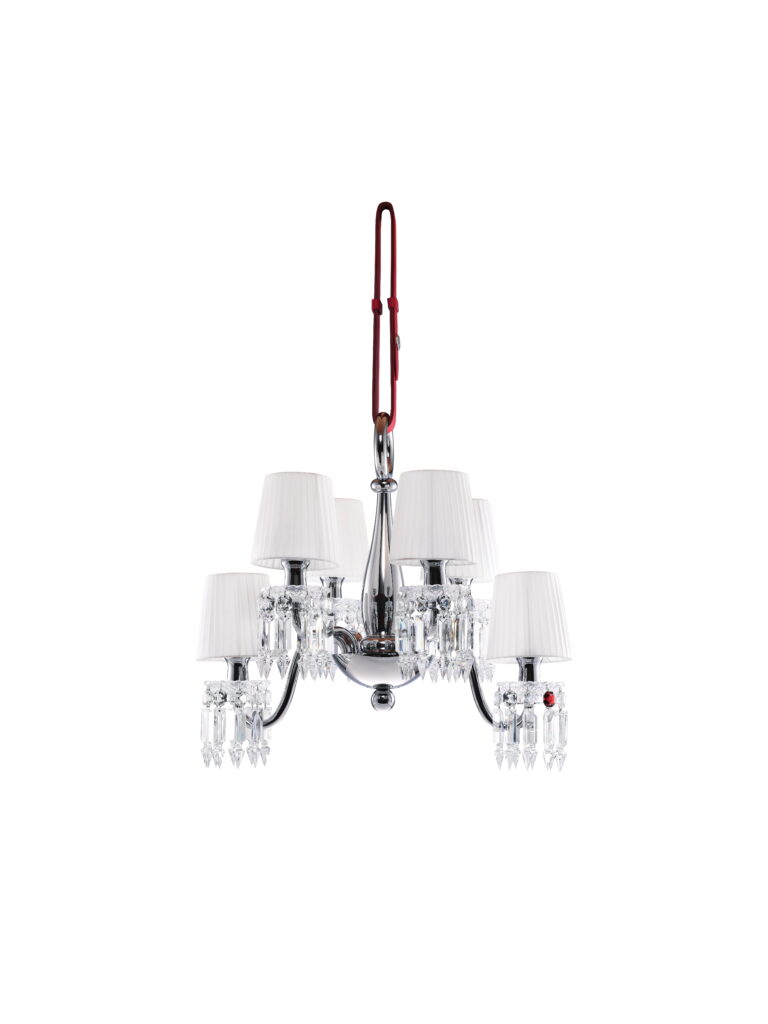
3. Zénith Nomade chandelier, design by Controvento for Baccarat. Courtesy Controvento
«When Marcel and I decided to close the studio – shortly before my move to New York – it felt natural to want to give continuity to some projects that were already underway. That’s how the idea of Controvento emerged, and it soon became something much more: a platform, a multidisciplinary laboratory that no longer represents the vision of a single author, but the energy and talent of a creative community.
Controvento is based on a collaborative and inclusive approach to design, where every project emerges from the dialogue. We design for and with people, basing our work on objective criteria and pursuing aesthetic, functional, and sustainable solutions. This means our approach is grounded in objective criteria when searching for aesthetic, functional, and sustainable solutions. We never lose sight of the emotional and experiential dimension. A design capable of telling stories, enhancing craftsmanship, and engaging with the cultural heritage of brands, always with a contemporary perspective».
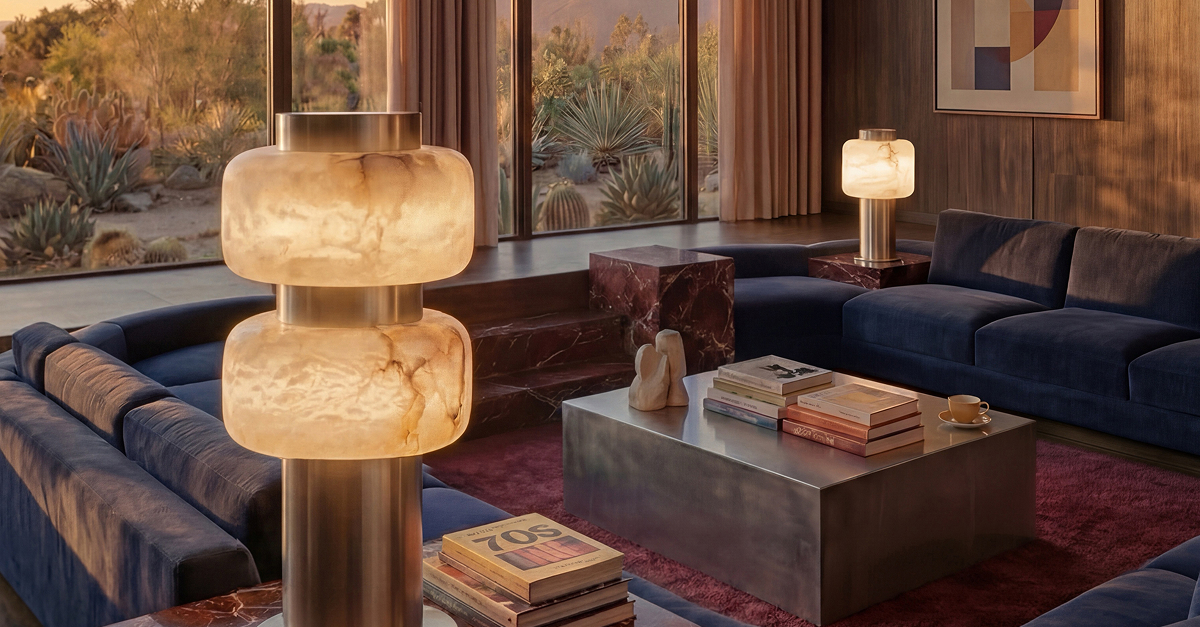
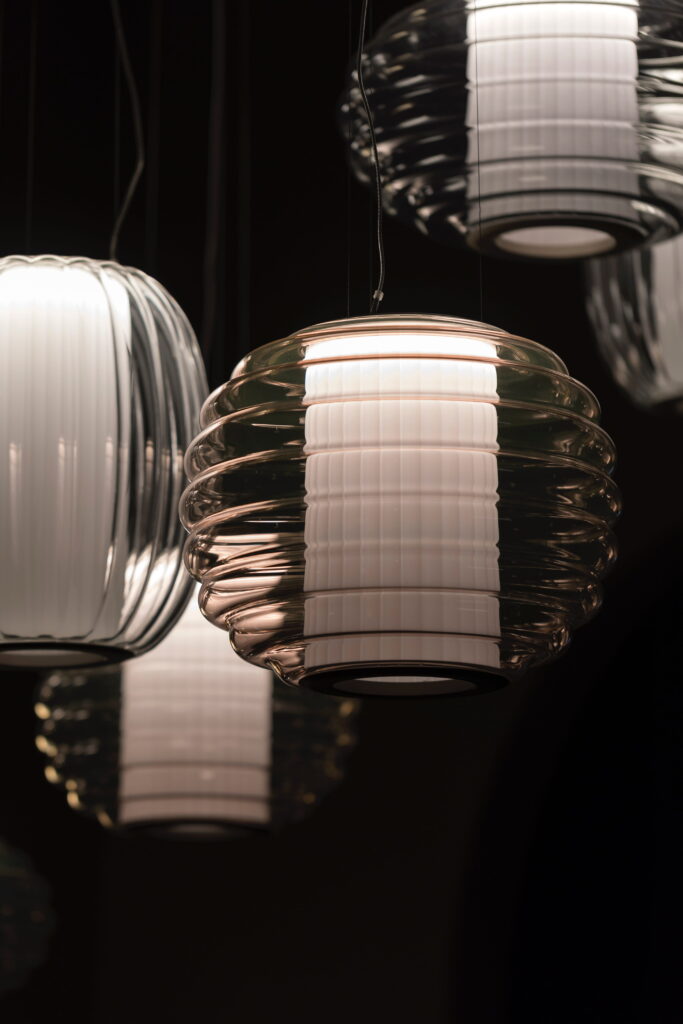
4. Alma, presented at Euroluce 2025, design by Controvento for Contardi Lighting. Photo Marco Reggi
Sustainability and design: how ready are we, really?
«The truth is that we are still only at the beginning of a collective awareness around sustainability. We should first refuse, reduce, reuse, and adapt what we already have, leaving recycling as a last resort. It’s a matter of mindset, as well as individual and systemic responsibility, on both an environmental and cultural level.
Today, design can no longer be limited to being beautiful or functional: sustainability must be integrated at every stage, starting from the concept. Many designers, in terms of awareness, are ready for this shift – to design with respect – but at a systemic level, we are still behind. The market continues to promote planned obsolescence, the frenzy of constant novelty, and often operates through opaque supply chains.
As designers, however, we can help build a new imaginary in which value lies in durability, uniqueness, and imperfection that tells a story. I strongly believe in the idea of emotional sustainability, which is the practice of not discarding objects and instead passing them down and allowing them to age well. This kind of beauty that lasts over time is the most authentic and powerful form of sustainability».
Your definition of light?
«It is an essential, ethereal element, fundamental to life and to design. Without light, there is only darkness, and therefore nothingness. Through light we create atmospheres, emotions, moments. That’s why it must be approached carefully and sensitively, taking into account different times of day, shadows, and colour temperature.
But light is not only about function. There is always an emotional and artistic component that drives us to design luminous objects that are not just tools, but true protagonists of space. They have a decorative and experiential role: they help create identity and tell a story».
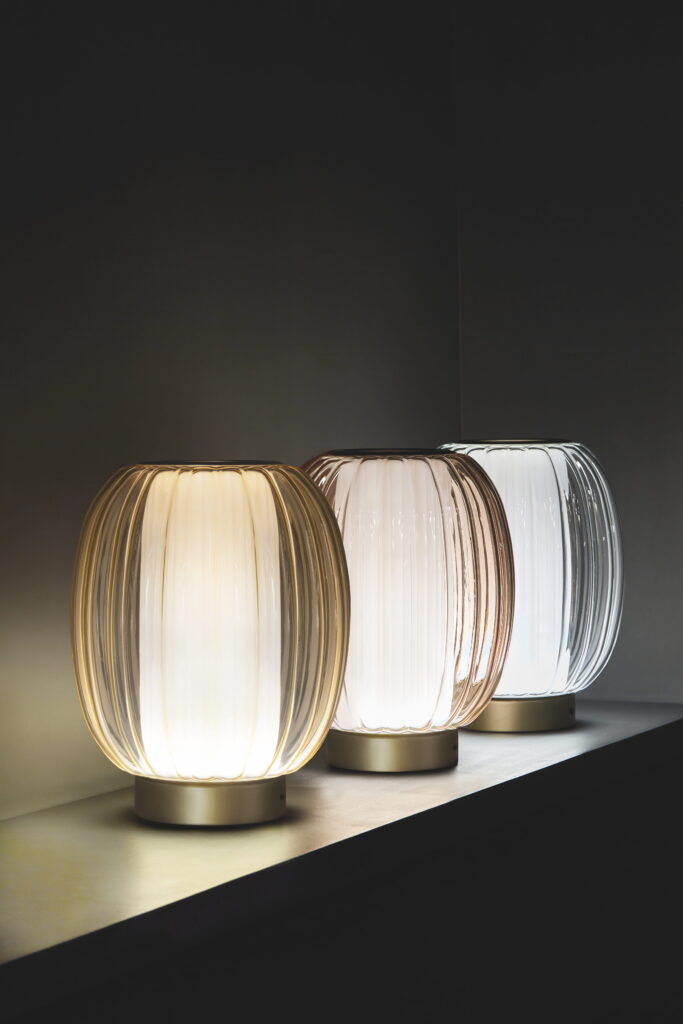
5. Alma, design by Controvento for Contardi Lighting. Photo Marco Reggi
Speaking of stories: can you tell us about the Alma collection, developed with Contardi?
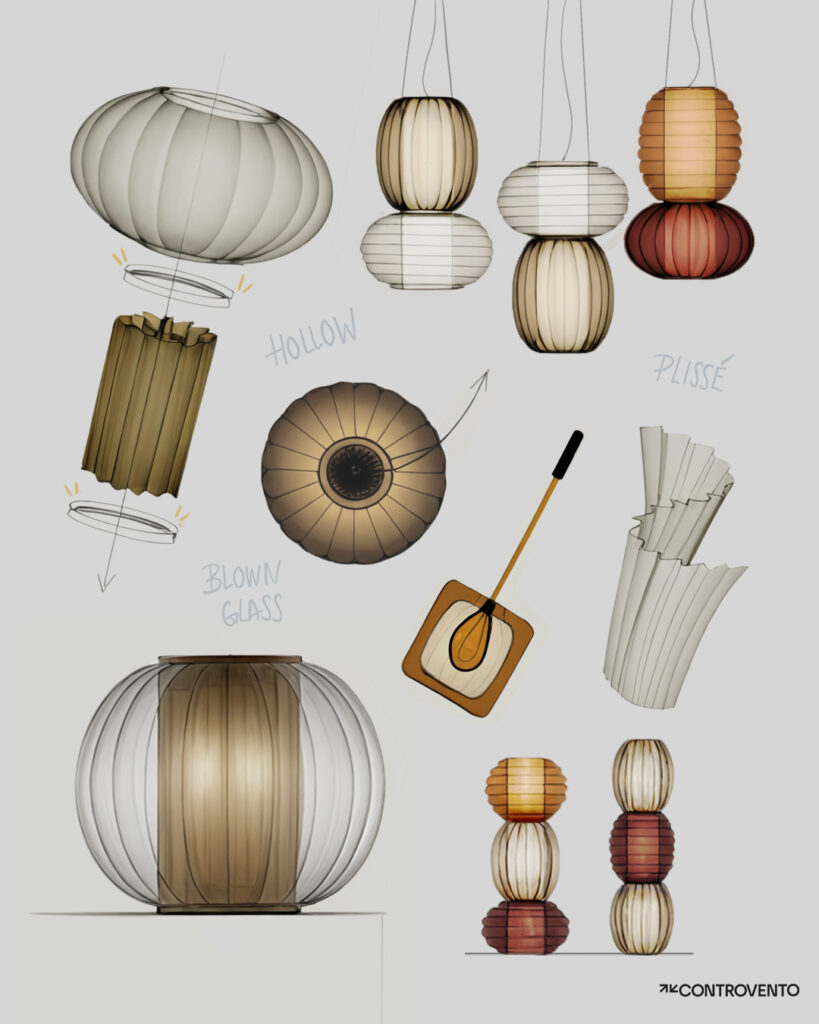
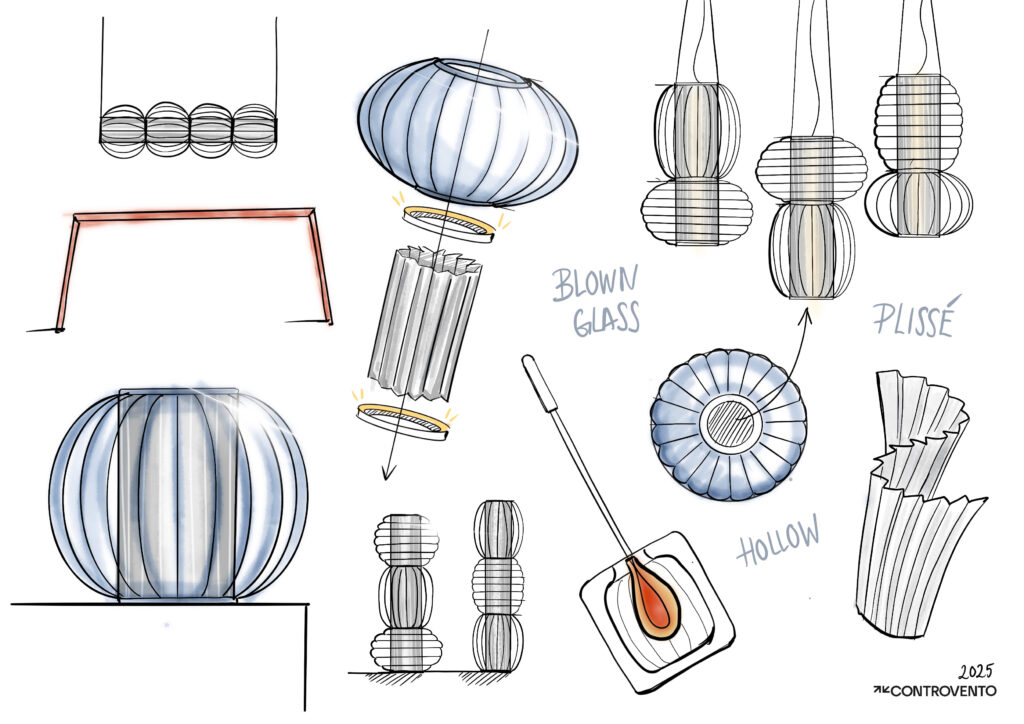
«This project touches on several key points: technical innovation, emotional value, tradition and craftsmanship, sustainability, and cultural relevance. We aimed to combine two iconic materials that are traditionally used in lighting: glass and pleated fabric. This seemingly unexpected combination has resulted in a completely new lighting effect with an elegant yet surprising aesthetic.
6. Alma sketch. Courtesy Controvento
The technology and expertise of Contardi Lighting allowed us to take a further step forward: visually eliminating the light source by concealing it at the center of the pleated element. The result is a light that emerges almost magically, and it’s a perfect example of how technology can be used intelligently, not to show itself, but to amplify effect and emotion.
In response to the growing demand for modularity in various sectors, we have designed a system featuring ultra-thin bayonet rings that can create multiple combinations. With three glass shapes and three different finishes, the lamps can be assembled in horizontal or vertical configurations, offering great versatility of use».
7. Alma sketch. Courtesy Controvento
A very current topic: what do you think about Artificial Intelligence?
«I see it as a powerful and inevitable revolution, an enormous opportunity, as long as it is used with awareness and vision, guided by critical thinking. No algorithm will ever replace the gaze of someone who has lived, traveled, observed, and experienced the world’s complexity firsthand. The future of design is not only technological: it is deeply human».
Do you have a project to share?
Atmosfera is an open space for dialogue. If light plays a key role in your research or a specific project, we’re ready to listen. We feature lighting design projects, art installations, photography series, and stories that explore the narrative potential of light.
Send us your portfolio or tell us about a project you care about. It could become part of our editorial programming—or spark a new collaboration.
Architect and lighting designer Alessandra Reggiani discusses the new lighting project for the Vatican Necropolis, carried out by Osram and Zumtobel, balancing...
How does lighting design change when neuroscience, environmental psychology and architecture come into dialogue? On 27 October 2026, at Roma Tre University,...