
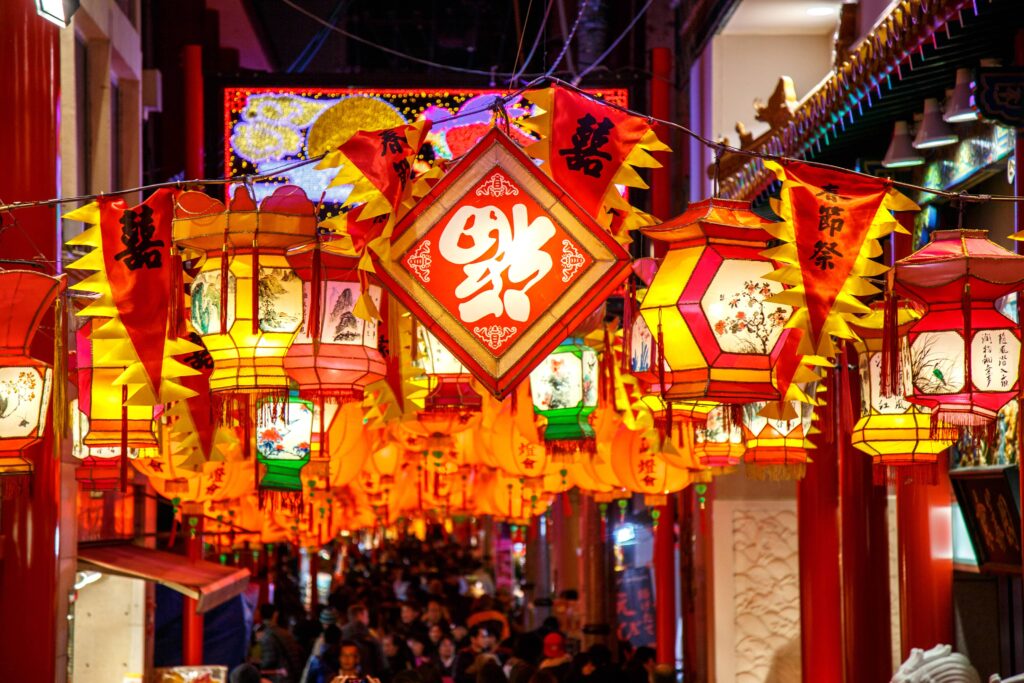
Renowned in Japan and worldwide for its explosion of light, parades, and performances, the Nagasaki Lantern Festival takes place on the fifteenth day of the first lunar month, marking the end of the New Year celebrations. Deeply felt by the local community, the festival is nevertheless a relatively recent tradition, dating back to the 1990s, when Chinese merchants and families in the Shinchi Chinatown district – today one of the festival’s main hubs – began to preserve and reinterpret the rituals, symbols, and celebrations of their childhood.
Among these traditions is the custom of displaying lanterns during this time of year as a gesture of good fortune, along streets, parks, waterways, and arcades. Over time, what began as a local practice evolved into an event of international significance. Today, the festival is one of the most anticipated moments of Japan’s winter calendar: more than 15,000 lanterns and light installations illuminate the city to celebrate the arrival of spring and, at the same time, Nagasaki’s history as a place of harmonious cultural exchange.
The 2026 edition, scheduled from February 6 to 26, continues this spirit of continuity, promising an atmosphere that is even more vibrant and immersive.
Where the Nagasaki Lantern Festival takes shape
The main areas involved include Shinchi Chinatown, Minato Park, Central Park, the Nakashima River, and several squares and streets throughout the city center. However, the entire city becomes a luminous landscape, animated by suspended lanterns, monumental installations, illuminated mythological figures, and decorations that shift to the urban context.
There is no single “festival site”, but rather a constellation of locations connected by light, designed to be explored slowly, on foot.
A festival to experience, step by step
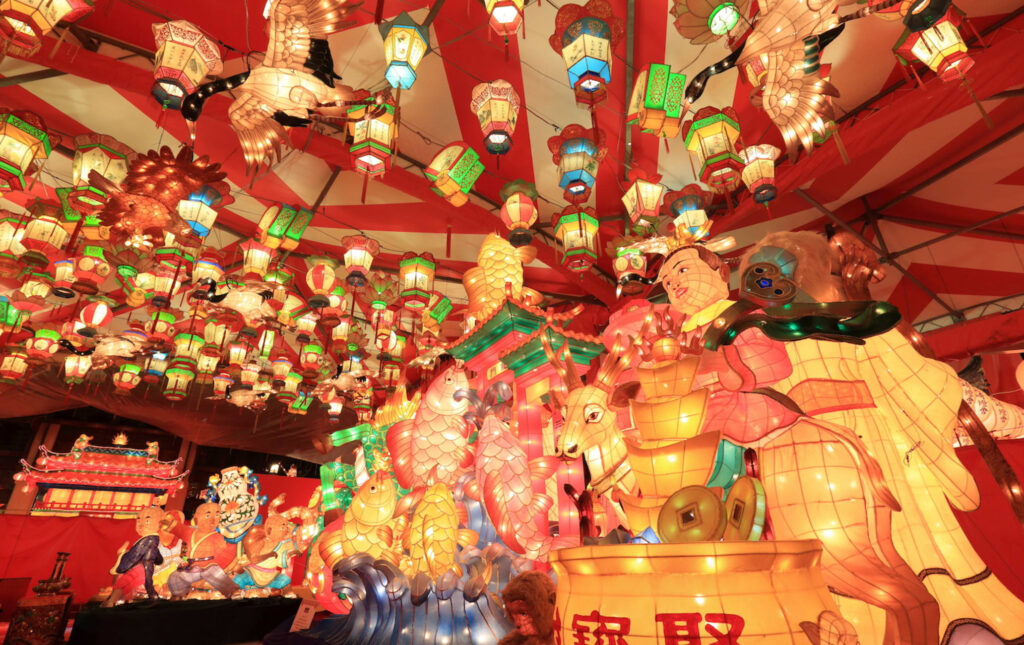
The Nagasaki Lantern Festival is a fully immersive experience. Lanterns – red and gold, decorated with zodiac symbols and figures from Chinese tradition – appear everywhere: in costumed parades, traditional music performances, and shows by local artists. The atmosphere is unmistakably festive: street food stalls, Lunar New Year sweets, families strolling in the evening, and children playing beneath glowing installations. Beyond its spectacular dimension, light carries a symbolic and spiritual meaning – protection, prosperity, renewal – which shapes an experience marked by contrasts and sudden transitions from dense, animated areas to unexpectedly quiet spaces.
Over the roughly two-week duration of the festival, lanterns are lit every evening from sunset until late at night, which is why there is no single “highlight night.” Admission to the Nagasaki Lantern Festival is free and open to all. No tickets are required to access the illuminated areas or main events. While some activities and indoor performances may require reservations, the festival is intended to be enjoyed by simply moving through the city.
Getting around during the festival
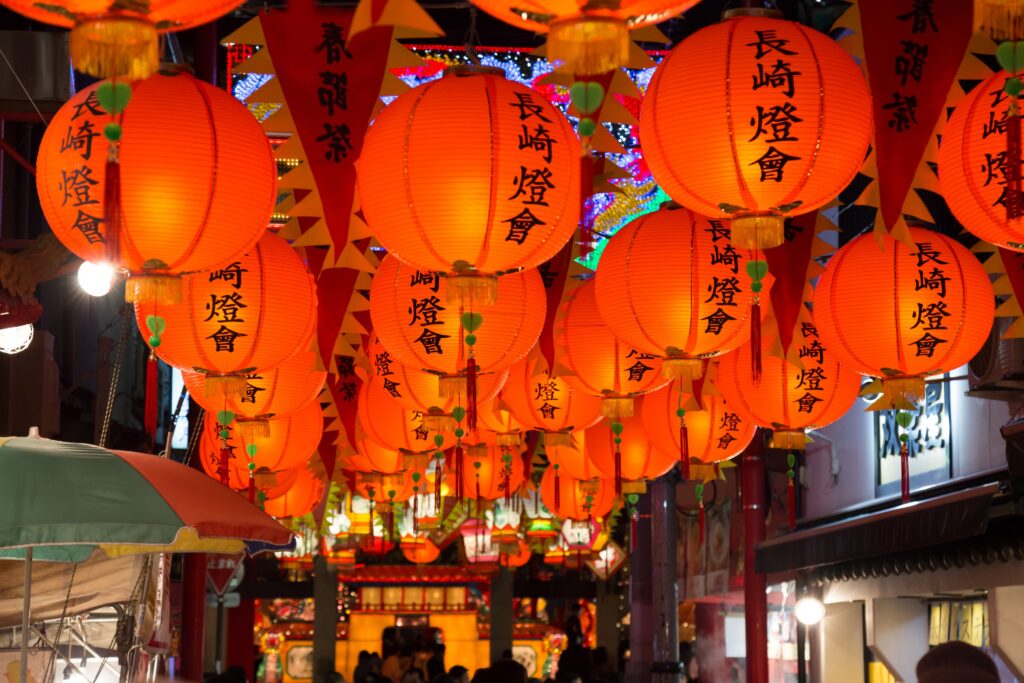
The festival is best experienced without a car. The main areas are easily reached by the city tram, with stops near Chinatown and Minato Park, as indicated by the Japan National Tourism Organization (JNTO). The ideal time to arrive is at sunset, when the lanterns begin to light up, around 5:00 pm. From there, the best approach is to follow instinct (and the glow of the lights), without the need for a carefully planned itinerary. Like all authentic celebrations, it works best when you allow yourself to get a little lost.