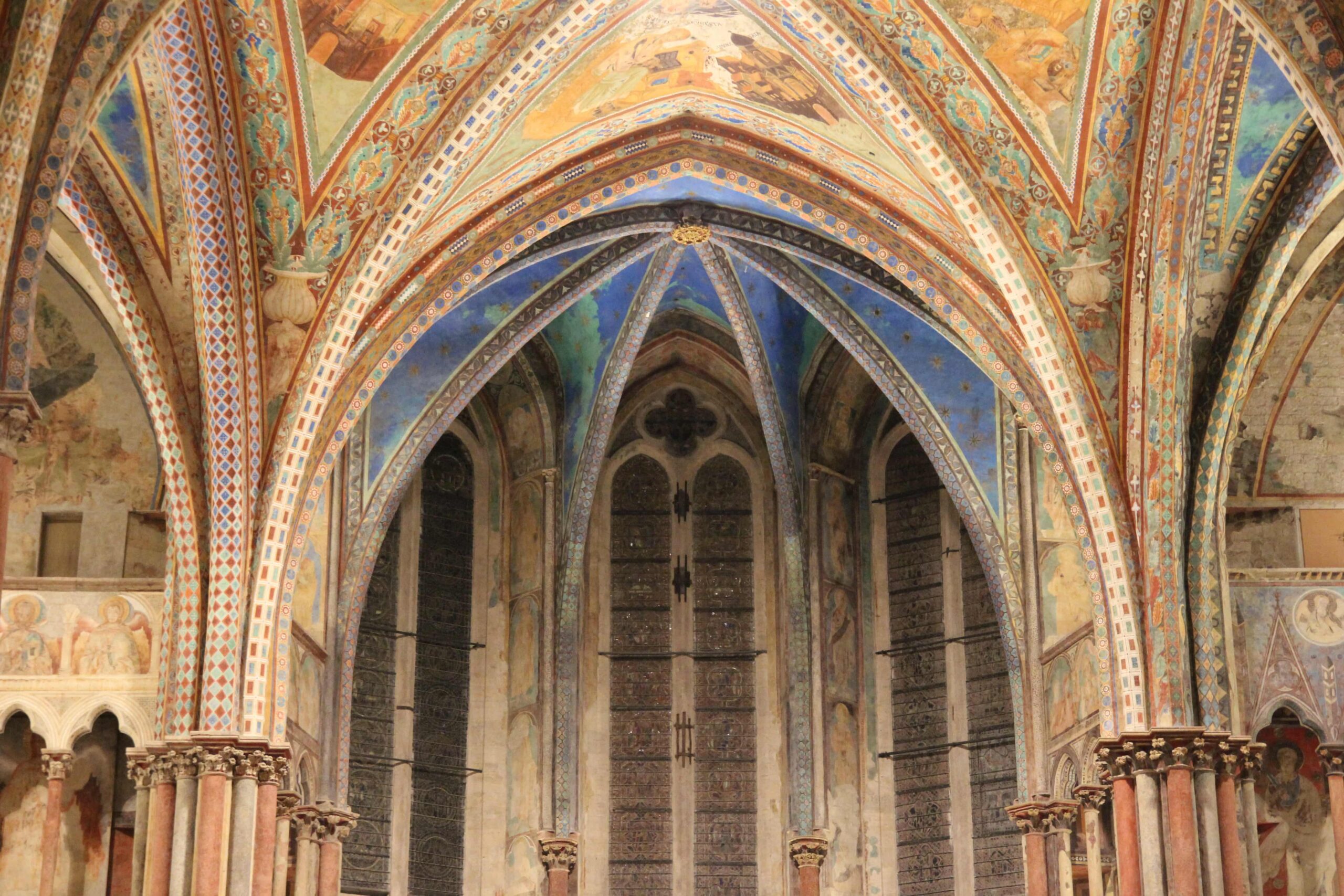
Basilica of Saint Francis of Assisi © courtesy Fabertechnica
Stella Cardella, an architect and lighting designer, is an Associate Partner at the international studio Foster + Partners in London, where she collaborates closely with multidisciplinary teams on complex projects spanning architecture, urban design, and beyond. Her academic training in Rome and professional experience in international contexts allowed her to develop a unique sensitivity to light as both a narrative and functional tool. Today, in her role, she continues to pursue research on the integration between architecture and lighting design, helping define a visual language that reflects the studio’s identity.
From your studies and early career in Rome to your international experience in London—how has your vision of light evolved over time?
«I encountered light during my academic journey—not as a mere subject of study, but as a language with its own poetry. At the Faculty of Architecture in Rome, the lighting courses were divided into two parts: the first, technical, focused on physics, optics, and the mechanics of light; the second explored the dialogue between light and architecture. I was fortunate to attend lectures by Professor Corrado Terzi, who first introduced me to the extraordinary ability of light to interact with the built environment. A few years later, while working with Professor Marco Frascarolo on major Italian cultural heritage sites, my focus shifted to more technical aspects, including calculations, regulations, and compliance checks. Numbers provided structure and safety, but thanks to my mentor’s vision, I began to understand that the true essence of light goes beyond measurements: it is a medium for emotional and spatial transformation. The turning point came with the lighting project for the Basilica of Assisi. Working closely with curator Sergio Fusetti, we achieved a unique balance of light and shadow across the frescoed surfaces—a result that was both technically measurable and perceptible through emotion. That’s when I realized that light cannot be reduced to mere technical expertise: its essence lies in its ability to redefine perception and enhance spatial experience. My years in London brought a new level of awareness. At Foster + Partners, I continue to learn how to integrate light naturally into architecture, where technology and atmosphere merge into a singular language.»
In the projects by Foster + Partners, defined by a strong balance between technology and architectural poetics, how is lighting design applied? In what way does light contribute to reinforcing the studio’s stylistic identity?
«Architecture must be projected toward the future, capable of anticipating the world we want to live in. In this sense, design serves as a tool for responsible transformation, a catalyst for positive change that benefits both the environment and people. As a lighting designer within Foster + Partners, sustainability is the starting point for every project. The daily challenge is to strike a balance between energy efficiency, visual comfort, and spatial perception, while also enhancing the overall well-being of users. The integrated approach, combining architecture and engineering teams, enables us to define lighting strategies that align with the project’s identity, where light is never an afterthought but a structural component of the architectural language.
That’s why we develop tailor-made solutions, often using advanced technologies and custom luminaires designed to blend with the materials, geometries, and atmosphere of the building.»
Can you tell us about a recent project where lighting design played a key role, both technically and conceptually?
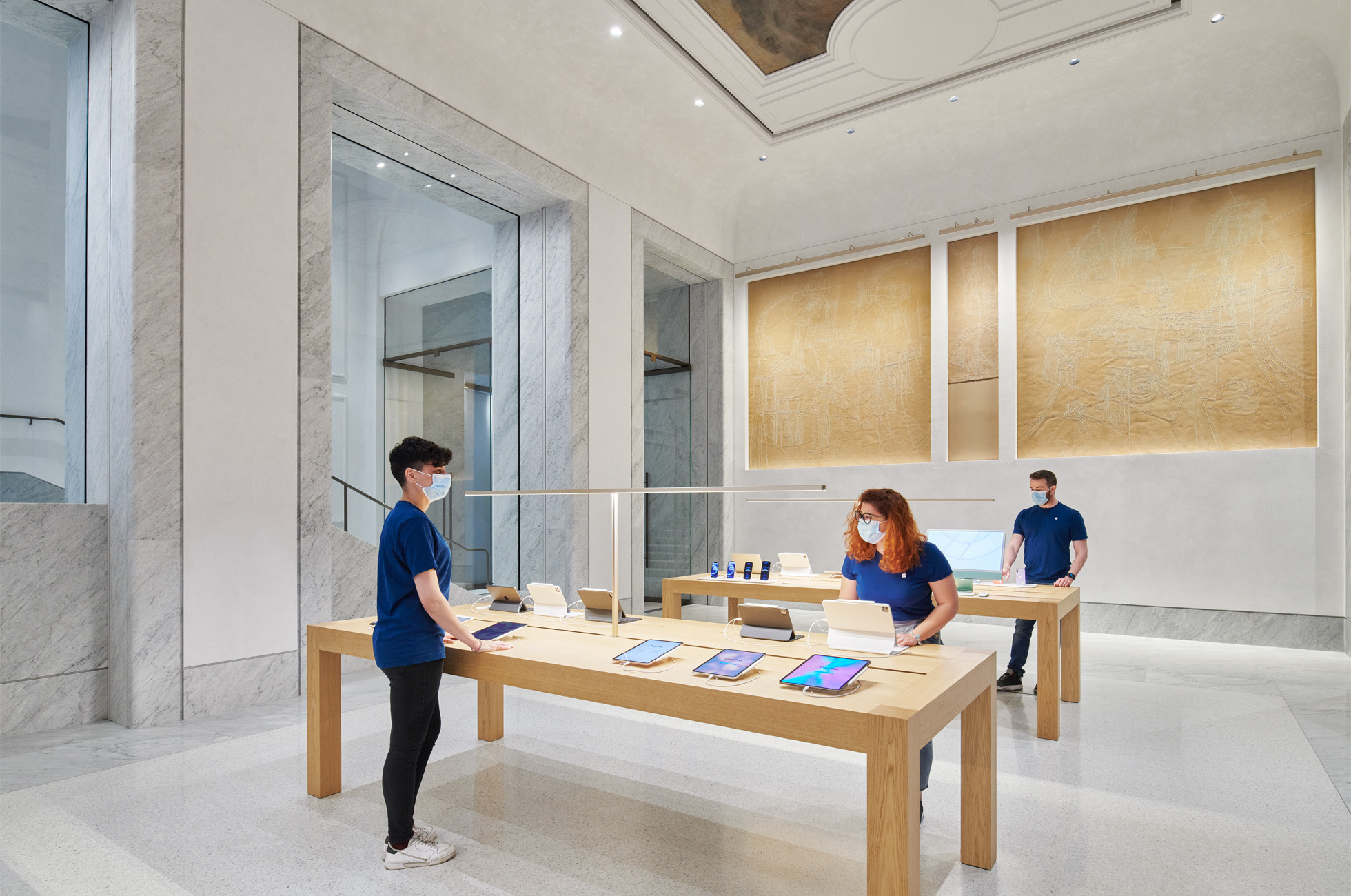
«The project for the Apple Store on Via del Corso in Rome was a revelatory experience for me. It confirmed that lighting design isn’t just about compliance or atmosphere—it is a true exercise in integration, where light and architecture become inseparable elements of a shared language.»
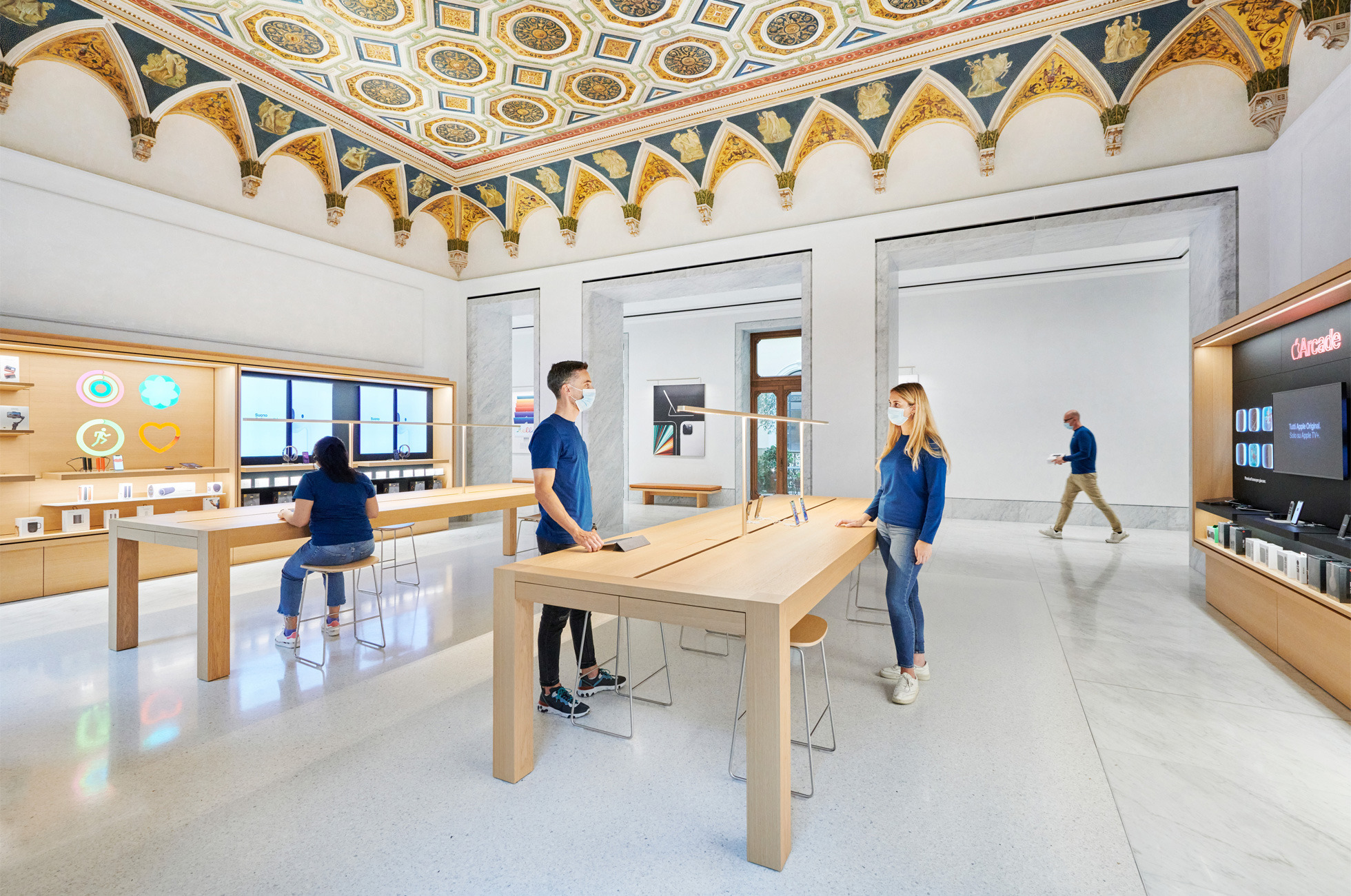
«In the restoration of the historic Palazzo Marignoli, light plays the role of interpreter of time: it brings layers of history back to life, revealing the 19th-century frescoed ceilings alongside modern graffiti from the 1950s. Light was essential in unveiling and celebrating these layered narratives, creating a space where the city and its history truly meet.
From a technical perspective, the main challenge was integrating advanced lighting systems in a subtle, almost imperceptible way, while preserving strong perceptual and poetic impact.»

«The monumental staircase, originally built by Marignoli to access his residence, was meticulously restored, maintaining the original Carrara marble details. The skylight, added during a previous renovation, was also restored and now emits artificial light calibrated to mimic natural daylight. In the internal courtyard, once part of a 16th-century monastery, the historical lanterns were restored by local artisans and fitted with high-efficiency LEDs designed to reproduce the softness and depth of candlelight.»
The lighting design team at Foster + Partners brings together diverse skillsets: how important is this multidisciplinary approach, and how does it impact your design process?
«The lighting design department is part of the Environmental Engineering group, whose working method is based on the belief that a building’s systems must be fully integrated with architecture, to create spaces that are sustainable and coherent.
Within this framework, our team combines diverse expertise, with designers, creatives, analysts, and technologists working in synergy from the early phases of a project, sharing goals, conducting cross-reviews, and collaborating on research and development. We often create full-scale mock-ups, which are essential tools for studying how both natural and artificial light interact with materials, geometry, and spatial perception.
In this interdisciplinary approach, light is never an add-on—it is conceived as an integral component of the project, tightly interwoven with form, matter, and atmosphere.»