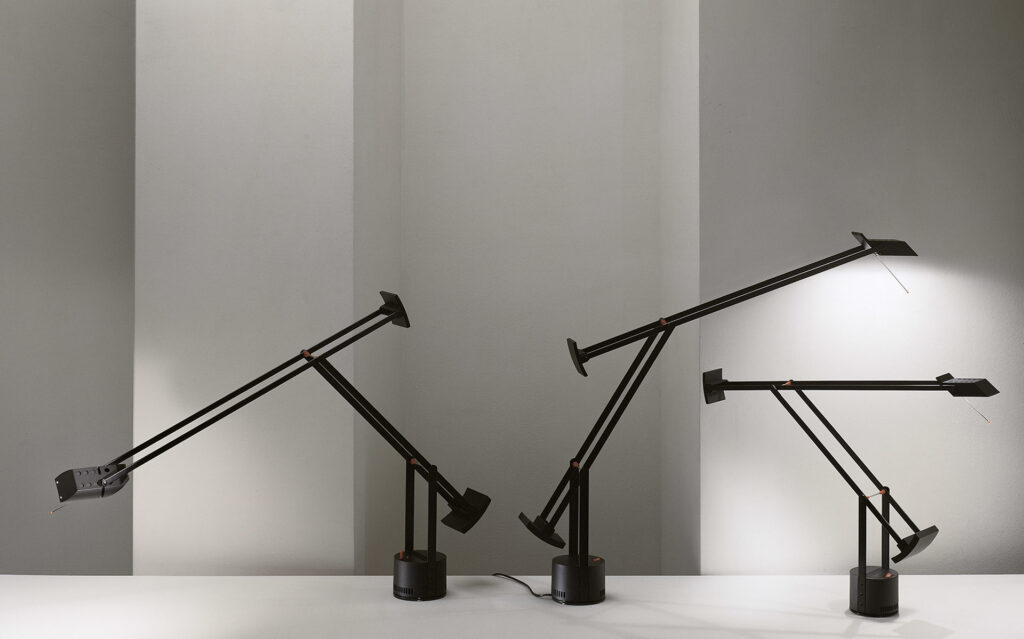
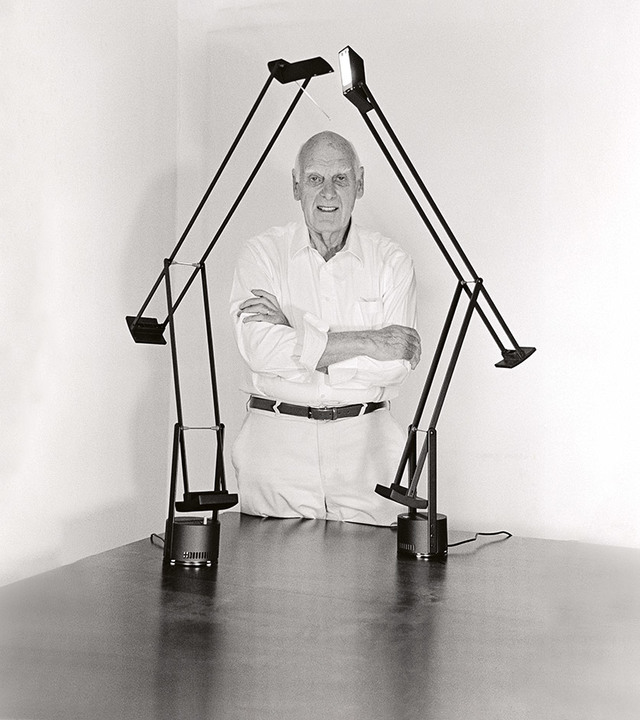
The idea for the Tizio lamp was conceived in the early 1970s during a conversation between German designer Richard Sapper and Ernesto Gismondi, founder of Artemide, both of whom were passionate about sailing. Sapper, who often worked at night, felt the need to rethink the classic desk lamp. He wanted a light that could be easily directed with a single touch, one that would illuminate the work surface without glare, and, above all, would not collapse over time due to loose joints. «I wanted a desk lamp adjustable with one finger that wouldn’t fall over because of loose joints», Sapper explained. After a series of experiments with shapes and mechanisms, he arrived at a counterbalanced arm structure reminiscent of a small technical crane — often likened to a toy or a puppet for its agile movement: this was the birth of the Tizio lamp. From the start, it was recognized as an iconic object and eventually became part of the permanent collections of major museums such as MoMA, the Metropolitan Museum of Art, and the Victoria & Albert Museum in London.
Tizio, because it’s a lamp for everyone
In 1972, Artemide began producing Richard Sapper’s lamp. «When we introduced it, there was nothing like it on the market; it was revolutionary. Tizio is beautiful in every position, a harmonious object in all its parts; you move it with one hand and it’s always incredibly precise. It’s not that we don’t change anything because we can’t — we don’t change it because it’s perfect as it is», Ernesto Gismondi recalled in 2014. Sapper and Gismondi named it “Tizio,” inspired by the Italian expression “Tizio, Caio e Sempronio” — as if to suggest it was designed for anyone and everyone. Gismondi joked that, given the success of the project and Sapper’s skill, he had hoped to commission lamps “Caio” and “Sempronio” to complete the set. In no time, the Tizio lamp became not just a technical tool for professionals but also a status symbol for the masses.
The technical innovations of the Tizio lamp
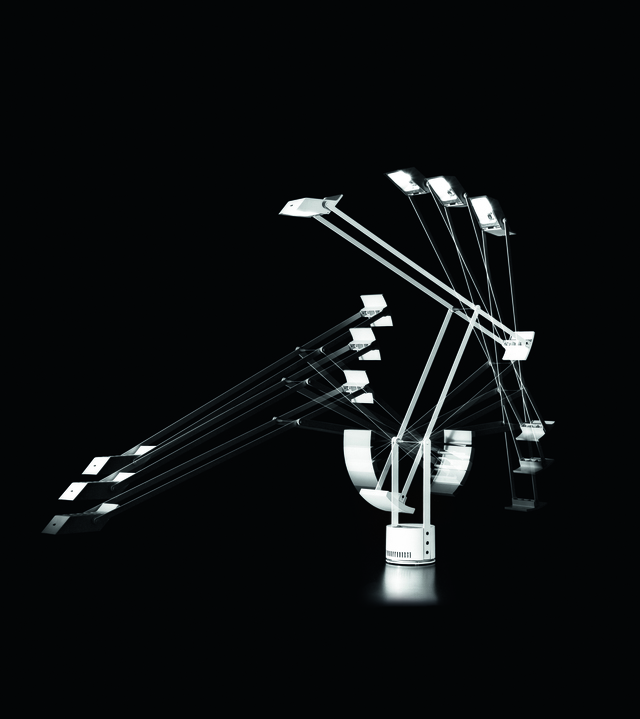
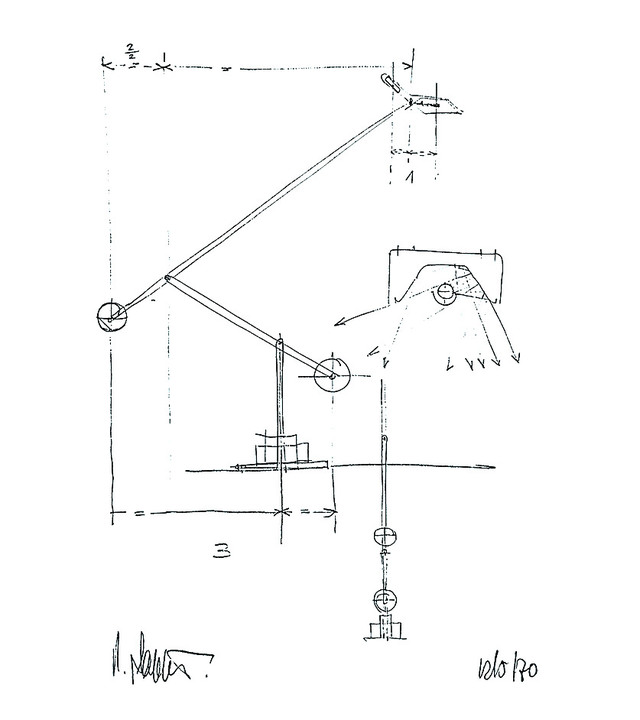
Tizio’s success is largely due to the clever engineering solutions it introduced. Instead of springs or clamping screws, Sapper chose a system of precisely calibrated counterweights that hold the arms in position. This allows the lamp to be moved and remain stable without drooping. According to Artemide, Sapper created a prototype using jam jars filled with different amounts of water as makeshift counterweights — a hands-on trick to find the perfect balance.
The halogen bulb: a spark from the automotive industry
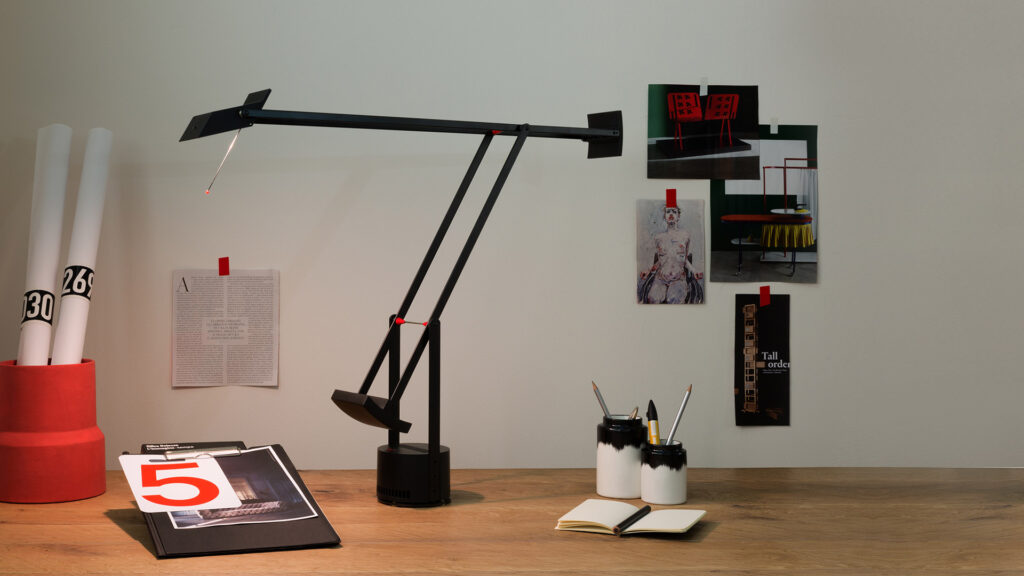
Another bold innovation was the use of a low-voltage (12V) halogen bulb, which was mainly used in car headlights at the time. Thanks to a small adjustable reflector, this provided a more intense, directional light than traditional incandescent bulbs. This allowed for something unprecedented: eliminating visible power cables along the arms. The metal rods themselves became conductors, carrying current from the transformer to the bulb. This gave the lamp a clean, ultra-minimalist look, setting an example for future designers exploring cable-free systems.
Arms, joints, and counterweights: the secret to its lasting durability
Another ingenious detail is the push-button joints, similar to snap fasteners (“poppers”), which allow both mechanical movement and electrical continuity. They are designed to disconnect under impact, preventing breakage. Sapper’s functional design philosophy emphasized real-world durability. As for materials, Tizio blends metal (matte black-painted aluminum and light alloys) with durable plastics like nylon and polycarbonate — typical of high-tech products of the era.
Curiosities and anecdotes: from the red knob to Sapper’s design ethos
As with many revolutionary objects, Tizio comes with its own set of stories. One such anecdote concerns the distinctive red knob atop the lamp’s head. This element was added later at the request of Artemide’s Danish distributor, due to local safety regulations. The concern was that the hot lamp head might damage surfaces if laid flat. Sapper added a red-tipped rod to keep the head elevated. This small but smart fix became a visual hallmark of the lamp, reflecting Sapper’s love of using red accents on critical points — a feature also evident in the joints.
An immediate success, even inspiring Michele De Lucchi.
From its launch, Tizio was met with enthusiastic acclaim and quickly became one of Artemide’s best-known products. In 1979, it won the prestigious Compasso d’Oro, Italy’s top design award. It also influenced a generation of designers, including Michele De Lucchi, who once said, «When I saw the Tizio for the first time, I started thinking about how to design a desk lamp that wasn’t the Tizio. It felt like there was no other path, no hope» — though that path eventually led him to design the Tolomeo. Today, Tizio remains a commercial success, with hundreds of thousands (if not millions) of units in homes, offices, and studios worldwide.
From the desk to the big screen
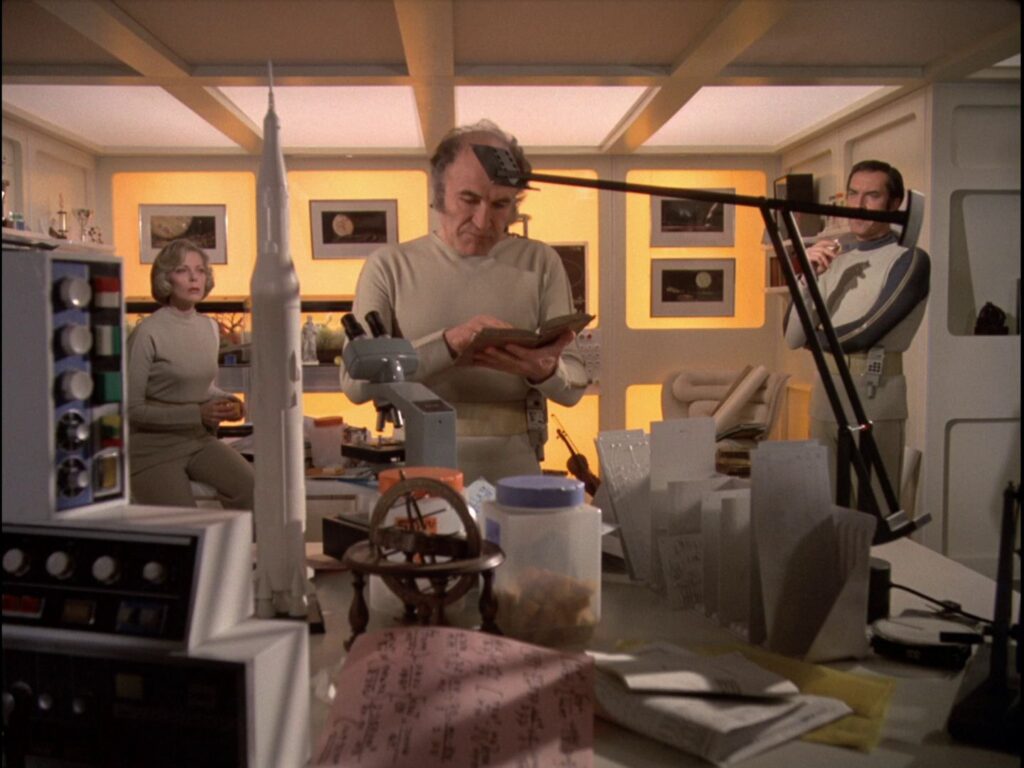
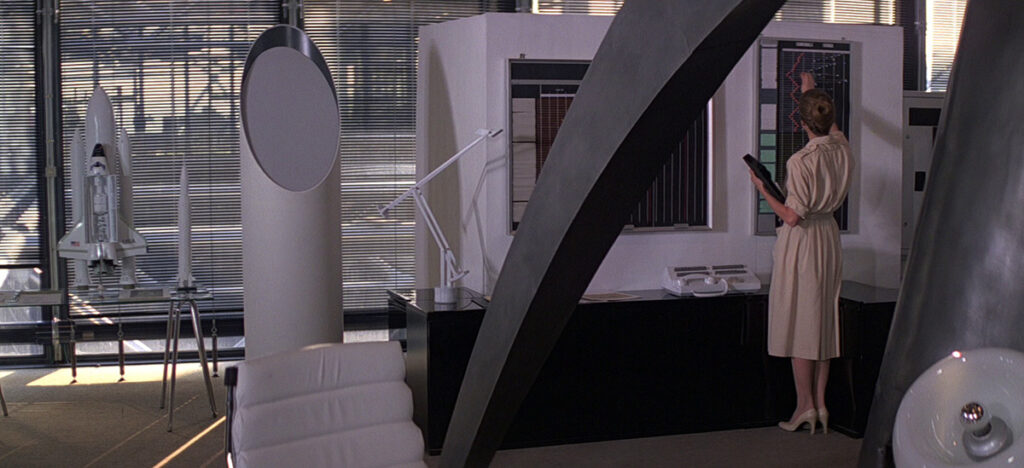
Tizio’s widespread fame is underscored by its frequent appearances in film and TV. Its futuristic elegance made it a favorite among set designers. Ridley Scott placed it on Rick Deckard’s desk in Blade Runner (1982). It was also seen in Space 1999, the British sci-fi series. The lamp appeared in two James Bond films: Moonraker (1979) in a rare white version, and No Time To Die (2021) in classic black. It even featured in cult classic 9½ Weeks (1986), sitting on the protagonist’s desk.
Evolutions and new versions: how the Tizio has changed over time
While Tizio’s original design has remained largely untouched, Artemide introduced updates over the years. The Tizio Plus featured a head that could pivot horizontally and vertically, and included a dimmer switch, whereas the original only had two light levels via a dual-position switch.
From Tizio Plus to LED: when an icon embraces the future
The biggest change occurred in 2008 with the introduction of the Tizio LED, which retained its iconic form while adopting a high-efficiency LED module. This update removed the red-tipped rod (no longer needed due to lower heat emission) and replaced the red switch with a green one — a subtle way to distinguish between LED and halogen versions. The new model also includes a gradual dimmer. It aligns with energy-saving standards and modern user habits, responding to regulations phasing out halogen bulbs.

Tizio 50th: red, rare, and radiant
In 2022, to mark its 50th anniversary, Artemide released a limited edition Tizio 50th, with only 5,000 numbered pieces in solid red — Sapper’s favorite accent color. It features his signature in silkscreen print and honors both his legacy and Artemide’s identity (red being central to the brand). Alongside this, Artemide reintroduced the matte white version, offering today’s audience all the historic colorways of this timeless classic.