Main dining room – Photo Jason Varney
Opened in New York at the end of 2024 and designed by Rockwell Group and L’Observatoire International, La Tête d’Or is the steakhouse by chef Daniel Boulud, covering 1,250 square meters on the ground floor of One Madison Avenue. The space merges culinary excellence with design, offering a unique sensorial experience in which lighting becomes the protagonist — starting from the exterior. Observing the restaurant from outside, you immediately perceive its intimate warmth, drawing the eye and inviting guests to step in.
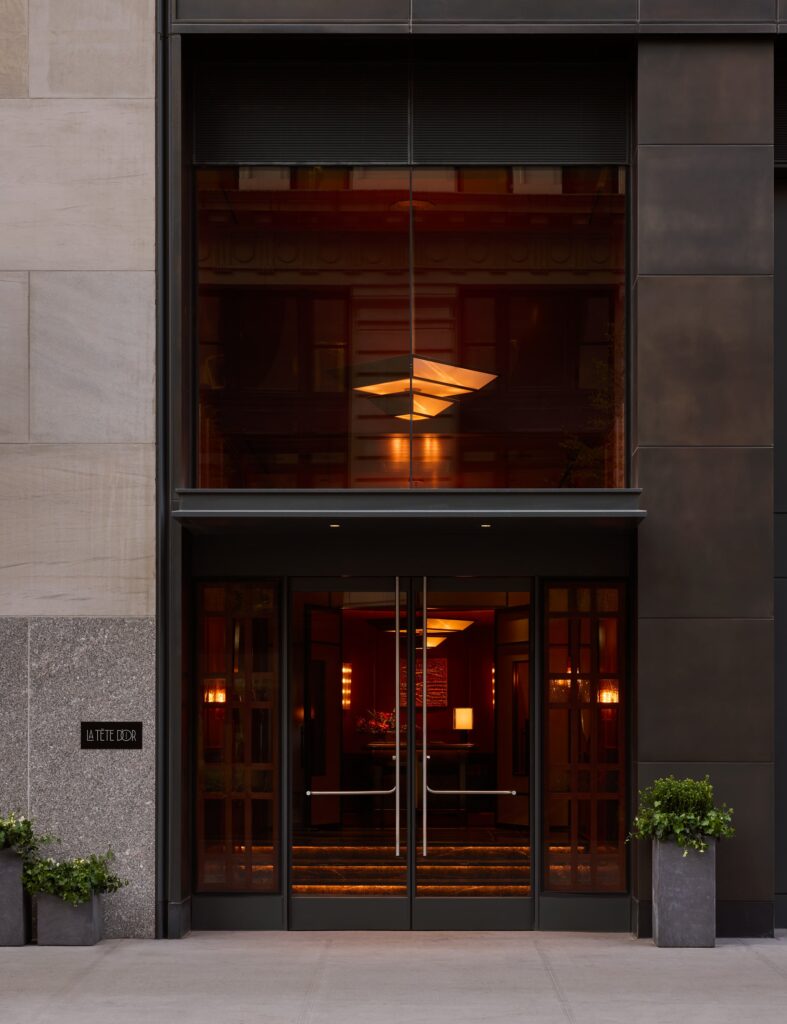
This dialogue with the architecture begins with the lighting concept designed by L’Observatoire International, founded and led by Hervé Descottes. Carlos Garcia, Associate Project Director, explains:
«From the very beginning, our ambition was to craft an atmosphere where light doesn’t simply illuminate, it breathes life into the space. We wanted every glow to feel intimate and human, to draw out the textures of the materials, and to reveal the quiet beauty of the architecture. The lighting was conceived as an invisible host, shaping the mood of the restaurant as much as the design itself, in dialogue with the surfaces, the rhythm of service, and even the color of the food.» says Carlos Garcia, Associate Project Director at L’Observatoire International».

Materials, geometries, and a light that guides the eye
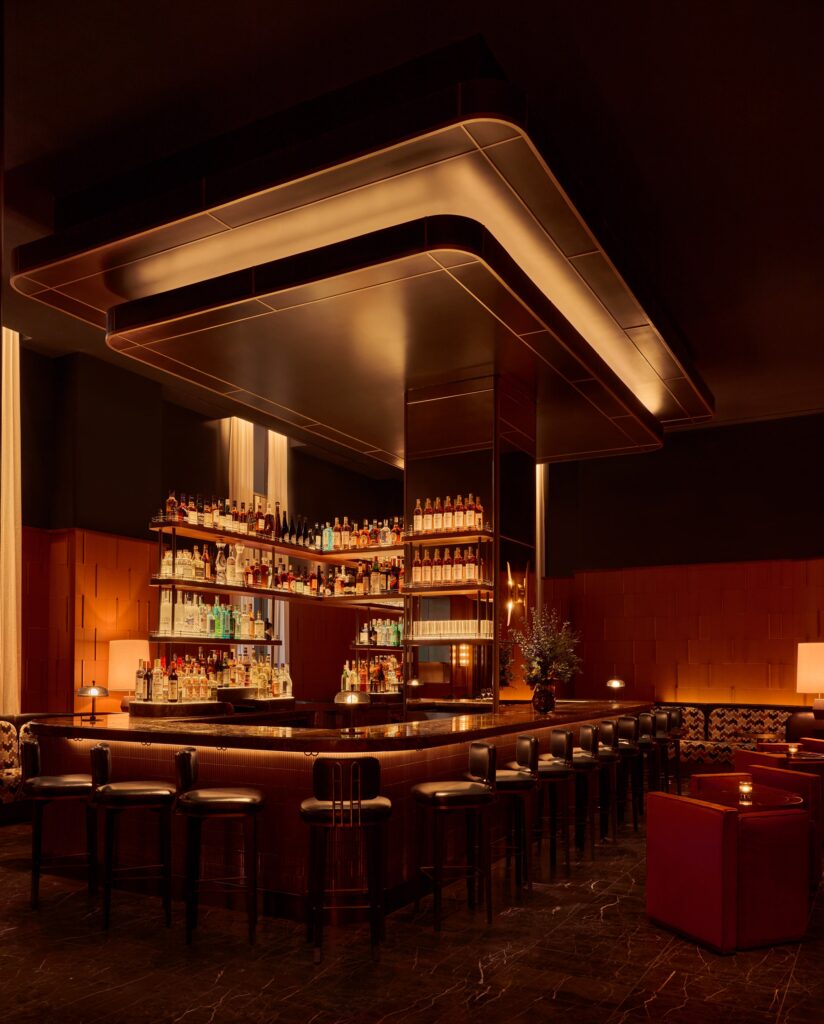
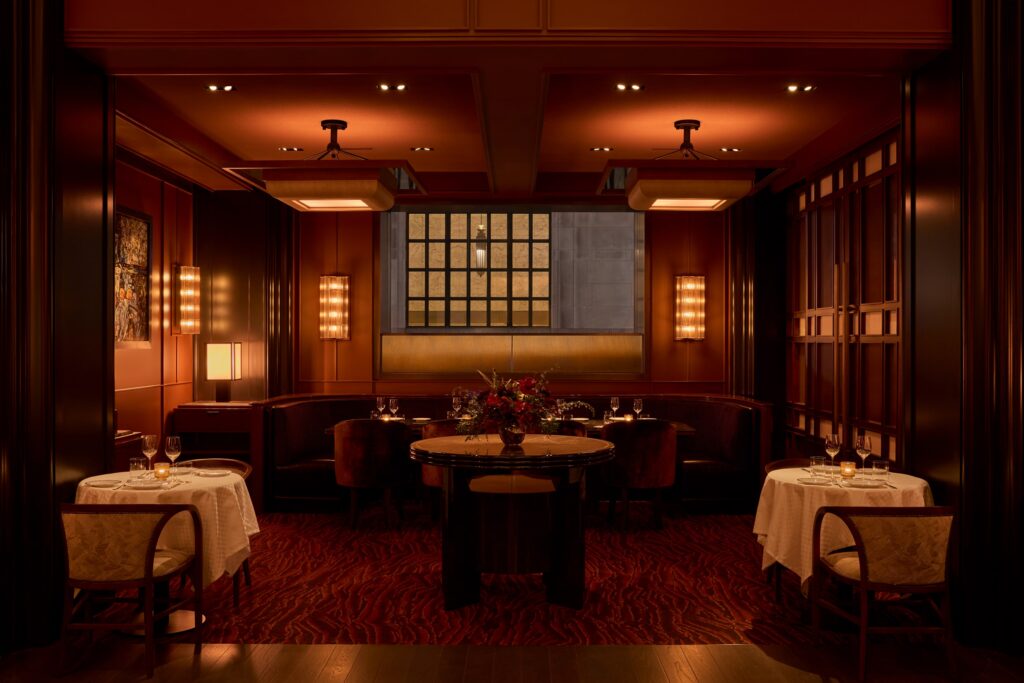
Guests enter through a double-height entrance leading to the bar area, designed with soft lighting that highlights furniture details and the counter while echoing New York’s Art Deco influences. From here, guests access the main dining room, which features a symmetrical layout of tables and seating and a selection of high-quality materials: marble, leather, wood finishes, and metals.
In this part of the restaurant, the atmosphere is defined by coffered lighting that creates a diffused glow and by four pendant fixtures, each composed of four cylindrical light sources, introducing pauses in the spatial rhythm. The curved velvet seats feature integrated LEDs in the boiserie which, paired with a series of spotlights, add depth to each table area. The perimeter seating also includes ribbed-glass wall sconces with brass details.
At the center of the space lies the open kitchen, topped by a metal artwork inspired by Belgian artist Jesse Willems and crafted by De Castelli.
From the main dining room, guests can access two more intimate rooms: one fully clad in wood, and another dedicated to Wagyu, defined by a horseshoe-shaped stone table.
The role of light in shaping the guest experience
Lighting becomes the key element that shapes the atmosphere, aligned with La Tête d’Or’s ethos: discreet elegance without ostentation. This lighting project required a balance of technical precision and sensitivity, and we asked the studio how they brought this vision to life. Carlos Garcia explains:
«One of the greatest challenges was finding harmony between function and emotion. The restaurant unfolds as a sequence of distinct atmospheres: the intimacy of the dining rooms, the pulse of the bar lounge, and the theater of the open chef’s counter – each demanding its own light, its own temperature, its own heartbeat. Together with Daniel Boulud and his team, we crafted layers of illumination that transition gracefully between these worlds: ambient light that softens and calms, accents that reveal form and texture, and decorative gestures that bring warmth and poetry. Every beam and reflection was considered to feel effortless yet intentional, guiding guests intuitively through the experience and wrapping them in a quiet sense of comfort and belonging. We worked in close coordination with the millworkers to integrate each fixture seamlessly into the architecture, ensuring that light, not hardware, became the true focus».
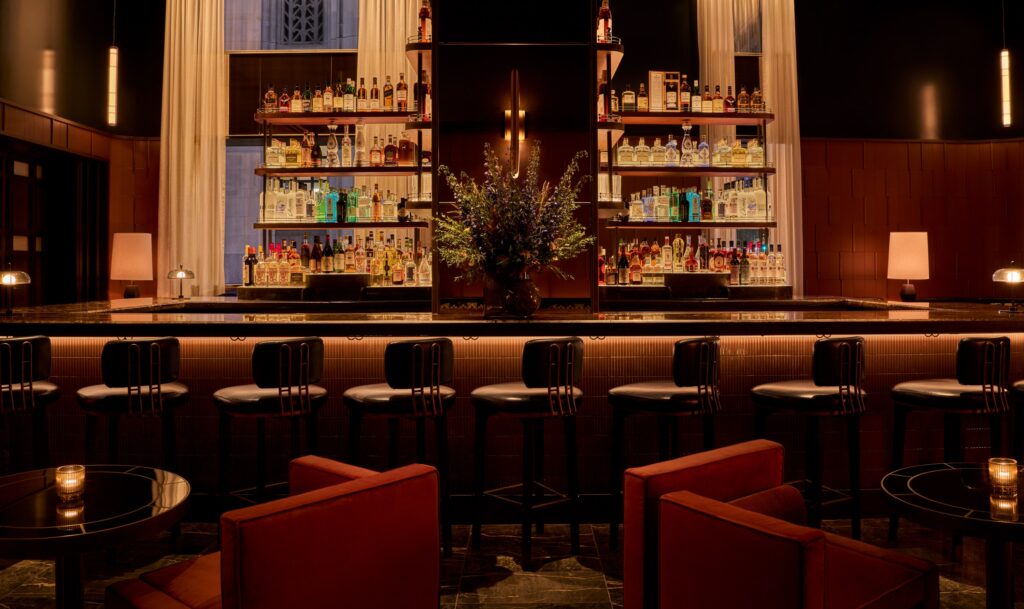
«Equally essential was our collaboration with the interior designers at Rockwell Group on the decorative lighting. Many of the fixtures are seamlessly woven into the architecture, concealed or revealed with deliberate intention. Their alignment, proportions, and material finishes were approached with the same care as a crafted piece of furniture. Each light source and surface became a tactile choice, seeking not only the right tone of light, but also the texture and material warmth that would allow it to melt into the spirit of La Tête d’Or».