Cover photo: Ryanlans
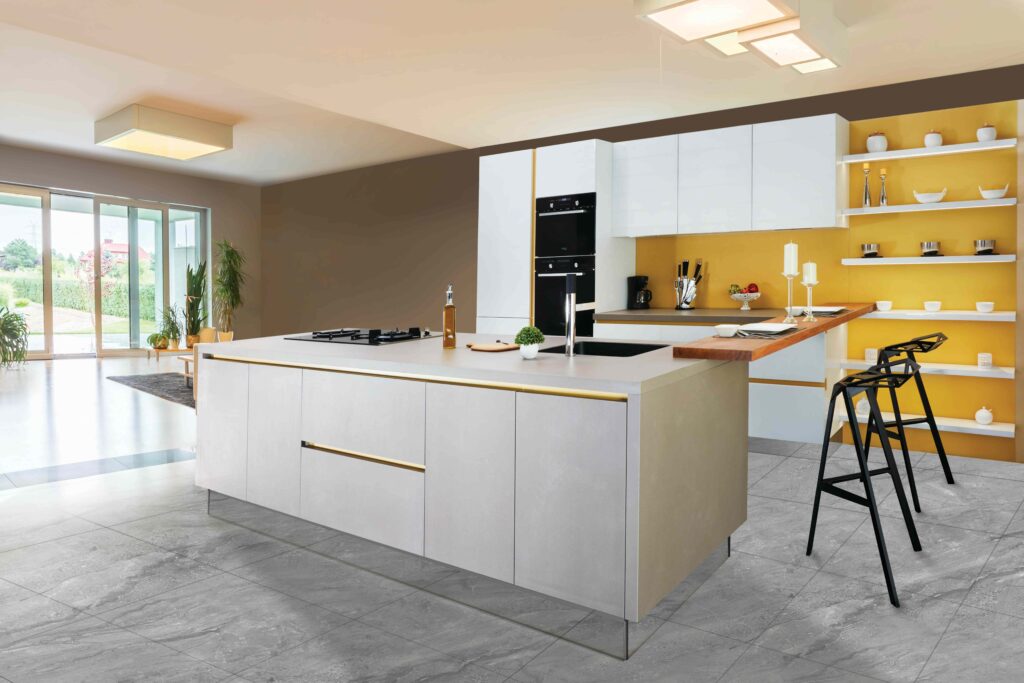
The kitchen is the most used space in the home. Far from being limited to food preparation, it is also where families gather, where friends are welcomed informally, and where you can take a short coffee break or work on your laptop in a smart-working setup.
This underscores the importance of designing effective lighting, one that enhances the space while ensuring appropriate illumination levels, especially on work surfaces. To light a kitchen effectively, both natural light from one or more windows or glass doors and a zoned approach are required.
Ambient light and general lighting
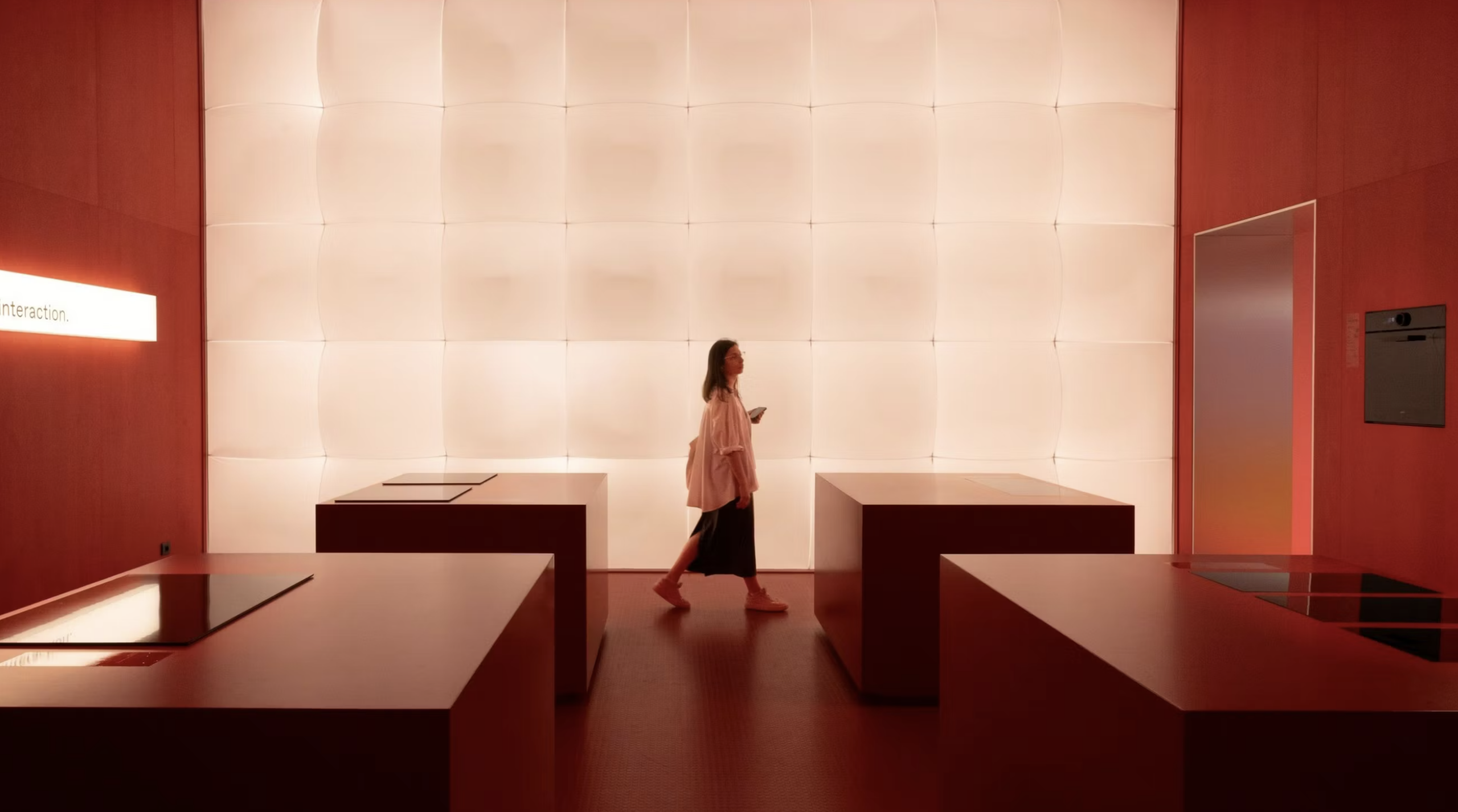
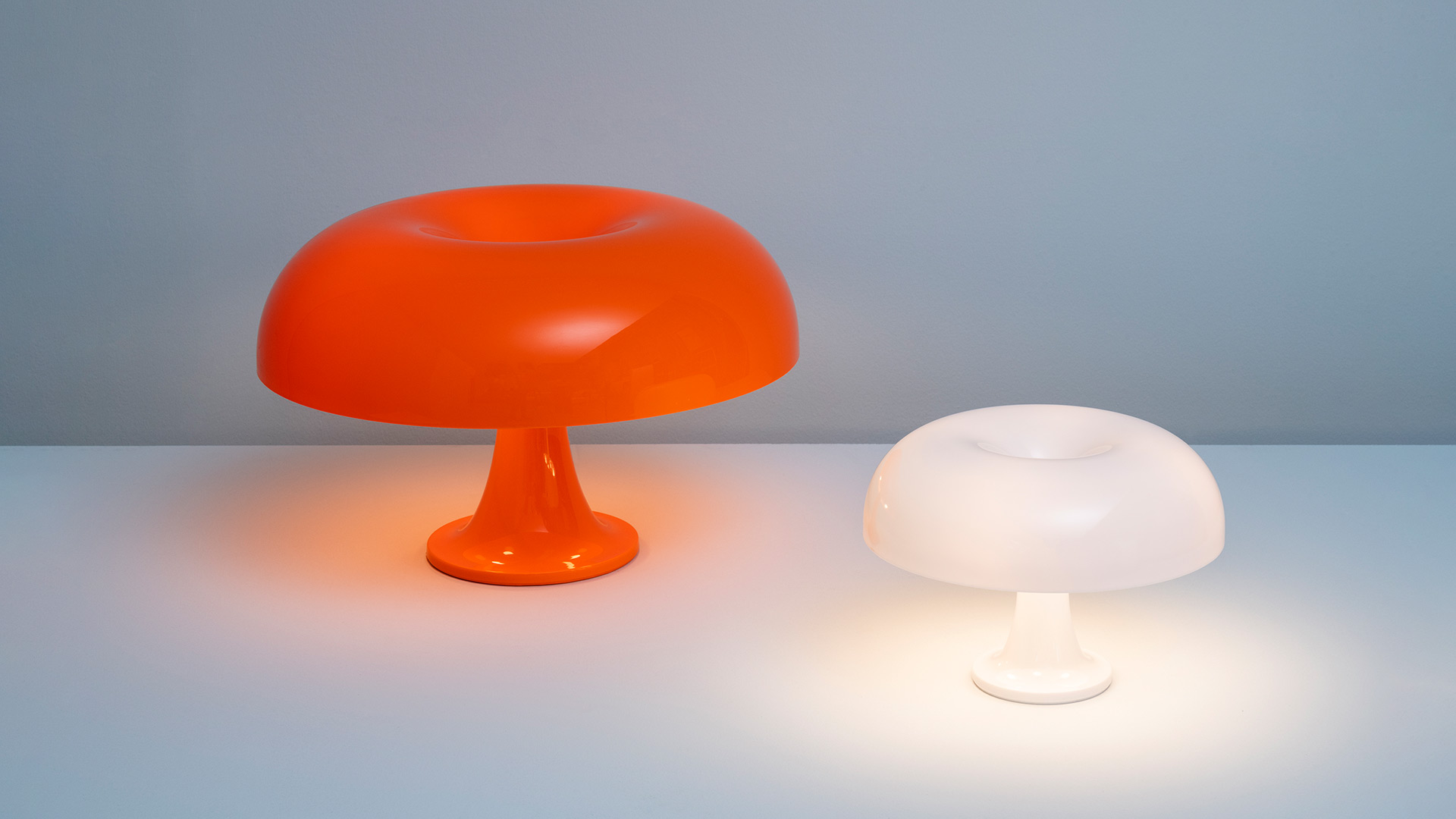
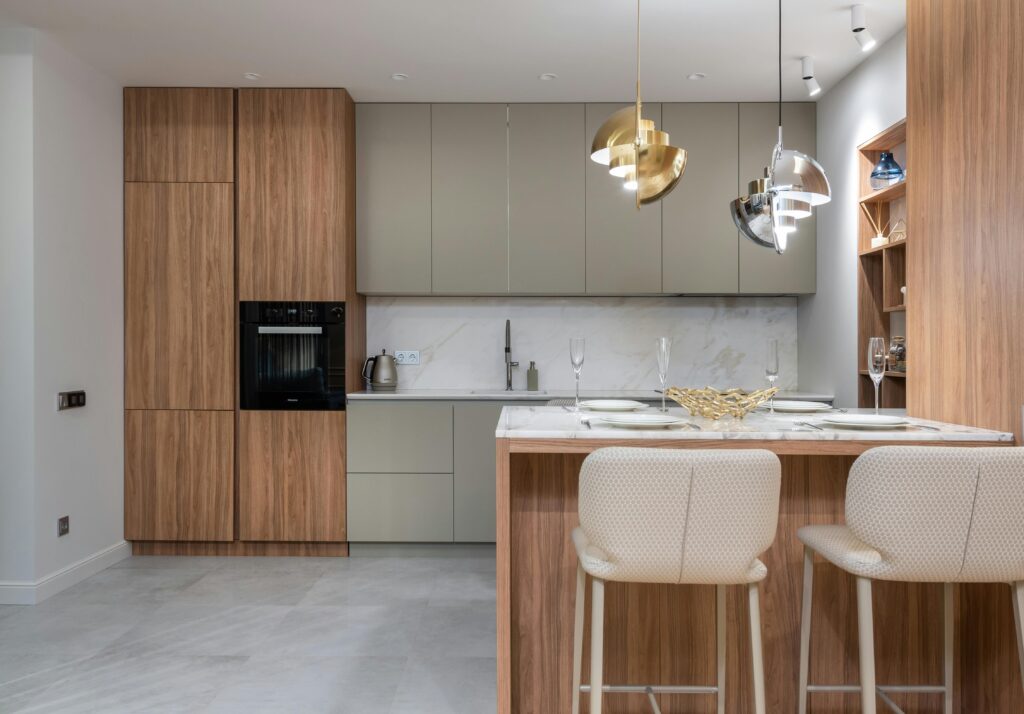
As with any other room in the house, there are mainly two ways to light a kitchen. You can use direct lighting, coming from a pendant or a ceiling fixture, or rely on indirect lighting by installing wall sconces that direct the light toward the ceiling. In modern, minimalist kitchens, you might also consider incorporating a recessed cove lighting system. What matters most is achieving even illumination, with particular attention to the island and the dining table, if present.Adjustable lamps, clamp lights, and small pendants can help illuminate more challenging corners or support the main lighting. From a more technical standpoint, it is recommended to choose products with a high CRI to ensure food colors are rendered accurately—an essential aspect when assessing freshness—and light sources with a color temperature between 2700K and 4000K.
How to light kitchen work surfaces
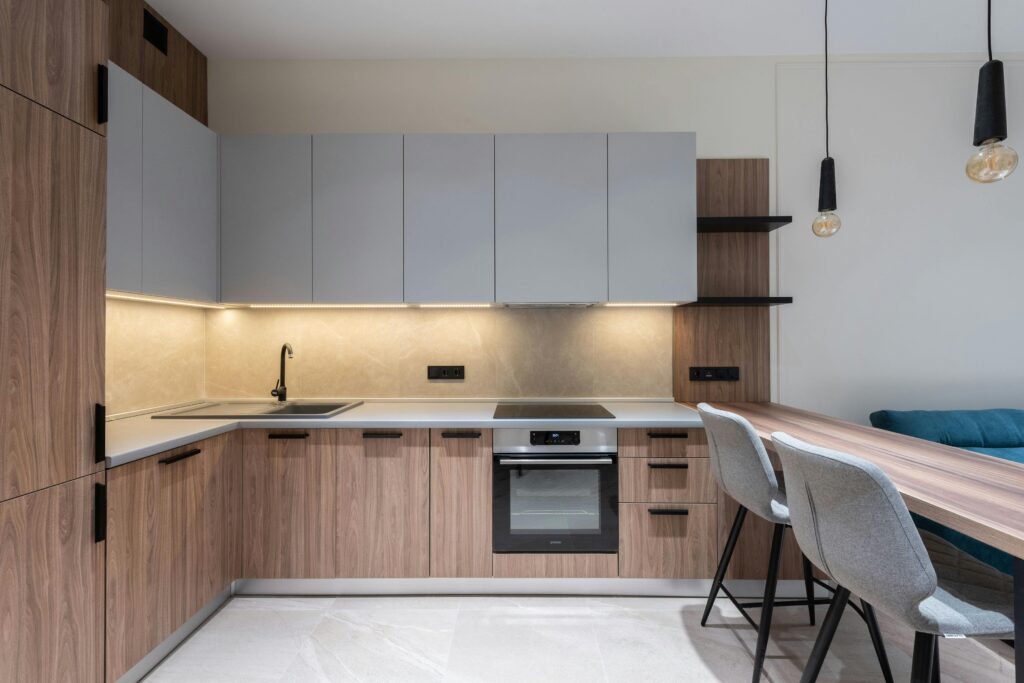
When designing the layout and organization of a kitchen, it is best to position it so that natural light does not come from behind when using the work surface, in order to avoid casting shadows. Artificial lighting should ideally be integrated into wall cabinets or shelves, as it should come from above and slightly in front. In the past, fluorescent tubes were commonly used, but over time, they would create uneven color patches and lose efficiency. Today, the recommendation is to install LED strips, which provide uniform light and have an extremely long lifespan. They can be housed in metal profiles or mounted under cabinets, providing a practical way to upgrade lighting in older kitchens without costly or invasive work.
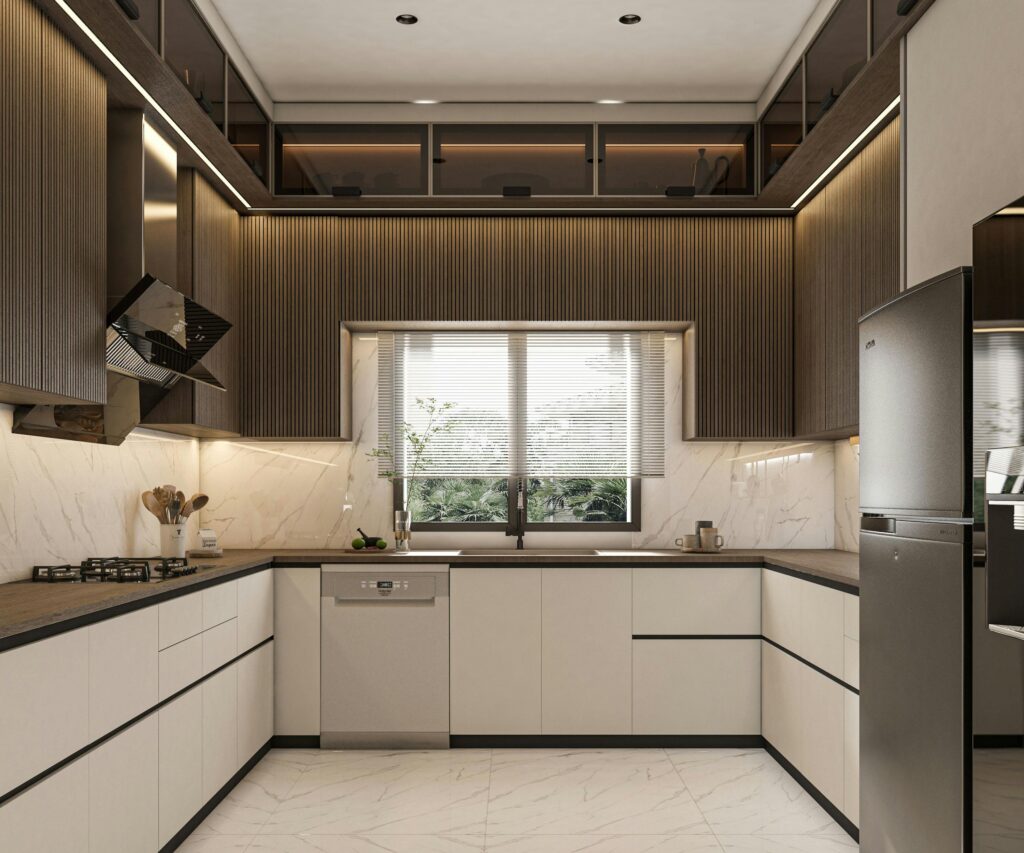
Integrated lighting in cabinetry: function and atmosphere
Many furniture manufacturers now offer the option to integrate lighting directly into cabinets and drawers. These LED systems turn on when doors are opened, making it easier to see and select stored items and packaging. Lighting integrated into glass cabinets or furniture with transparent doors can also remain on to create a soft ambient glow. This allows for safe movement in the kitchen during evening hours, enhances the overall atmosphere, and provides a gentle background light, ideal for relaxing or watching TV when the kitchen is open to the living area.