

Cover photo: Artemide, Nesso
Versatile and malleable, plastic is one of the materials most widely explored in postwar design. Its different chemical compounds allowed designers—especially in the 1970s—to experiment boldly with color, alternate glossy, matte, transparent, or satin finishes, and push forms and proportions beyond conventional scale. Plastic lamps are a perfect example of how the material’s possibilities were stretched to their limits. Some lighting icons were born from brilliant intuitions—such as Joe Colombo’s decision in 1962 to use methacrylate as a light conductor in Acrilica—or from the adoption of cutting-edge techniques for the time, such as rotational molding. High production volumes and low raw material costs enabled the introduction of beautiful, affordable lighting elements to the market—truly democratic objects.
Today, plastic continues to be used, but it is conceived with durability in mind and designed for end-of-life recovery.More and more brands have replaced older-generation plastics with recycled PET or PMMA, while startups and young designers focus on lamps made from bioplastics or based on upcycling—for instance, melting and recombining colorful bottle caps to create terrazzo-like amalgam effects.
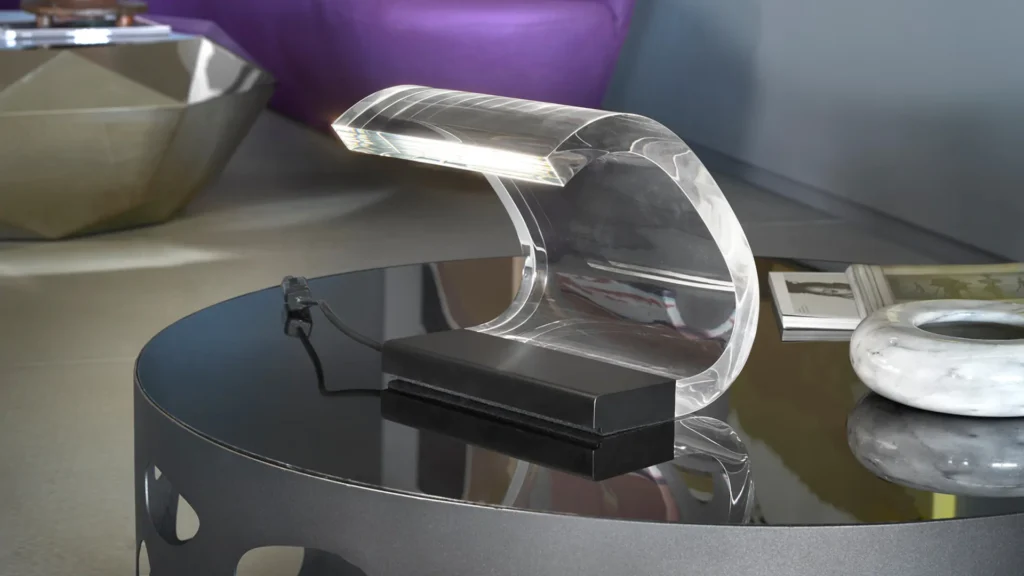
Acrilica by Oluce
A major design classic created in 1962 by Joe Colombo for Oluce, initially called 281, later became known as Acrilica in homage to its primary material. Methacrylate—at the time mainly used in thin sheets for lampshades—was applied experimentally by Colombo: its curved shape and substantial thickness act as a conductor for the light source (originally fluorescent, now a high-performance LED) housed in the base. The light travels upward through the transparent body, illuminating it all the way to the head.
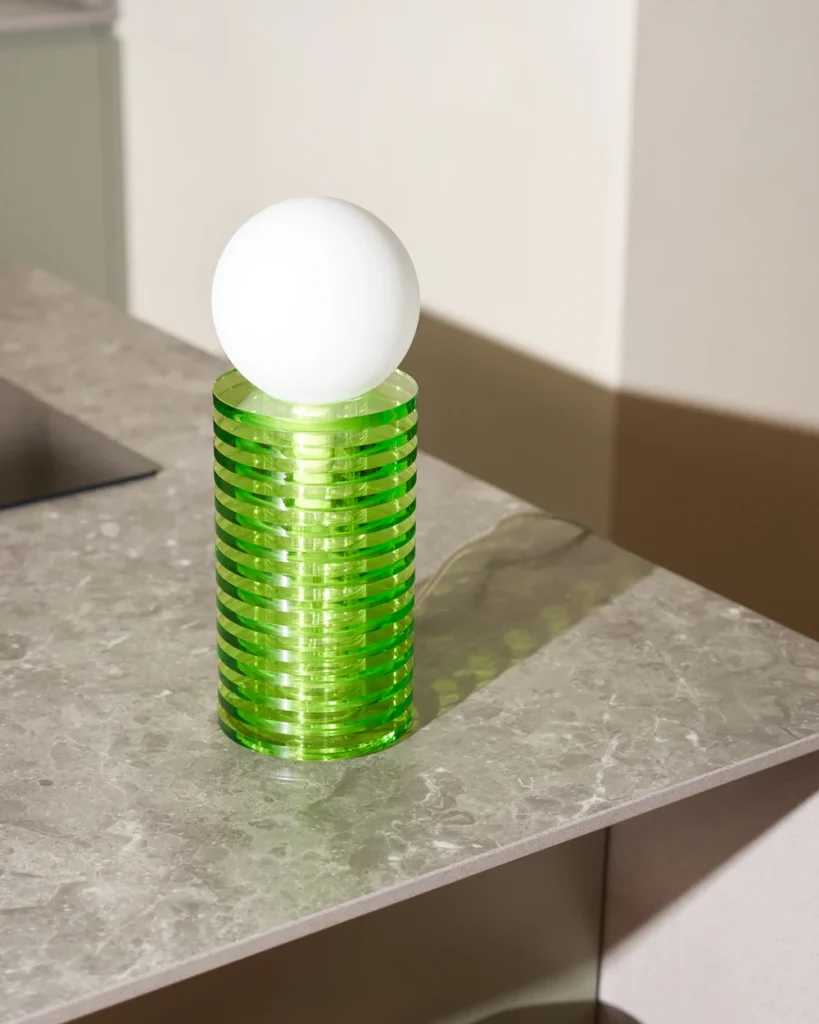
Lampcake by Aalf
Aalf is a small family-run brand founded in the Milan loft where Alessia Colonna and Federico Bonamici live. Together with their children Achille and Leonardo, they created a table lamp with a green core, made from 100% recycled cast acrylic Green Cast®. The first numbered edition is available in four colors: transparent, orange, green, and blue.
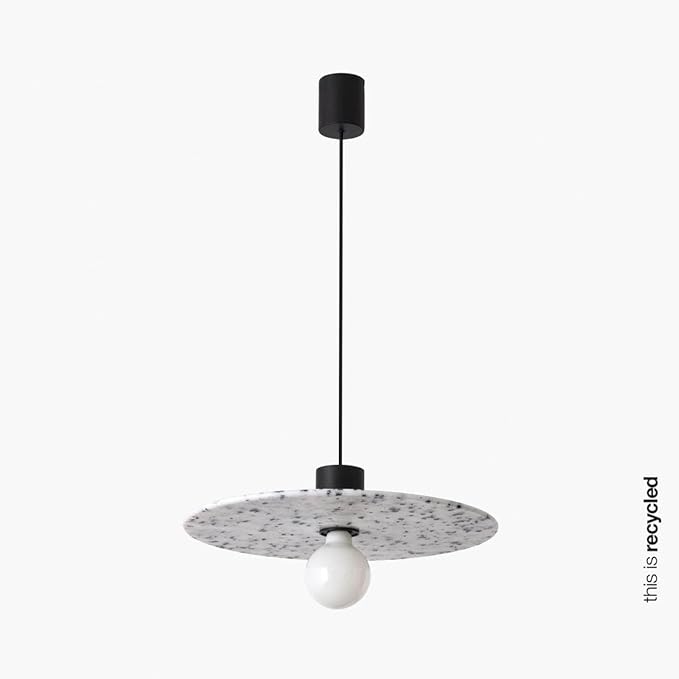
Confetti 400 by Faro
From Barcelona, Faro presents an elegant pendant inspired by terrazzo aesthetics. The speckled shade is handcrafted by blending recycled plastic from multicolored bottle caps.
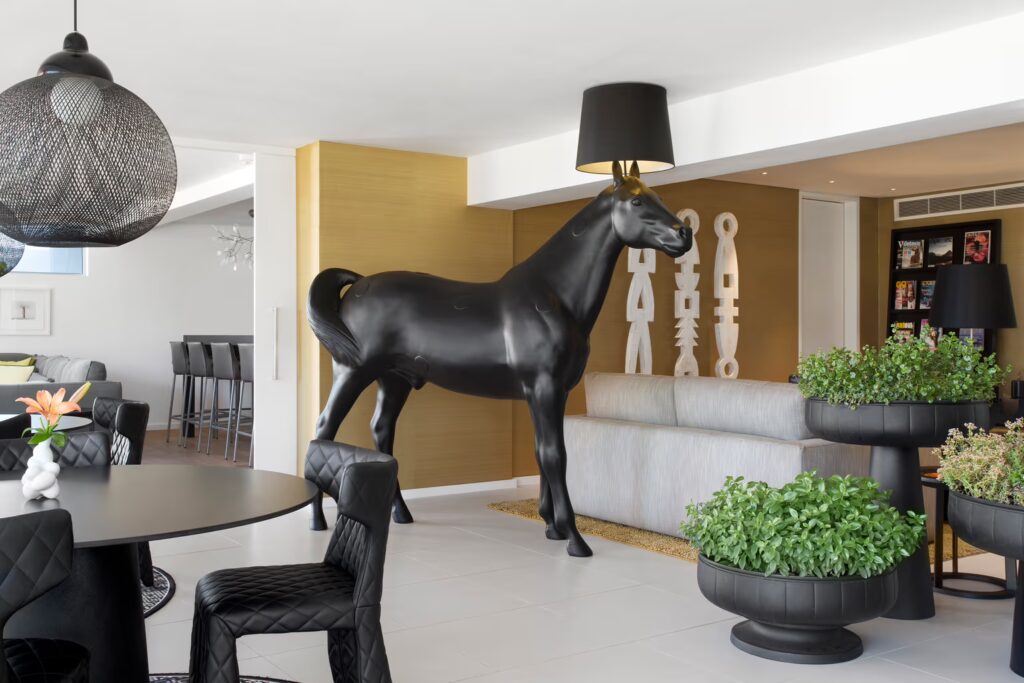
Horse Lamp by Moooi
The irreverent, at times unsettling spirit of Moooi—the Amsterdam-based brand founded by Marcel Wanders—translates into objects of deliberate, playful madness. The Horse Lamp, designed by Front in 2006, is an equine-shaped floor lamp in life-size proportions, made of PVC with metal supports. The fairytale touch is the lampshade perched like a hat on the horse’s head.
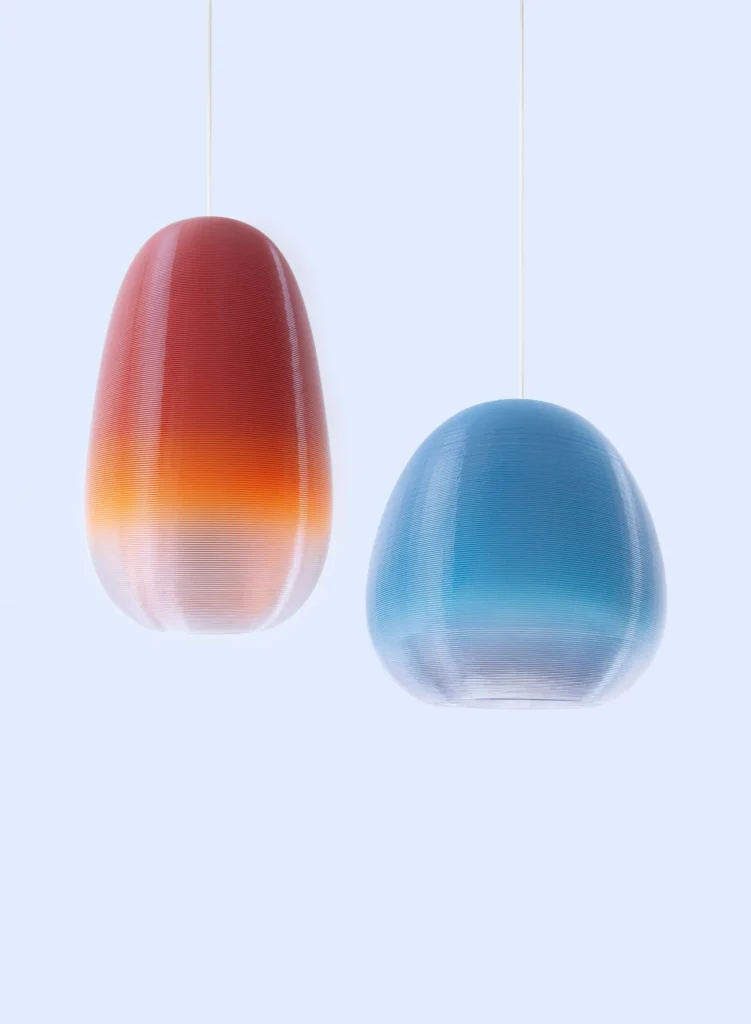
Degradé by Ici et là
Ici et là experiments with 3D printing to create these gradient pendants. The chandeliers are monolithic forms made from 75% recycled PETG, printed by a robotic arm that gradually adds pigment to achieve the degradé effect.
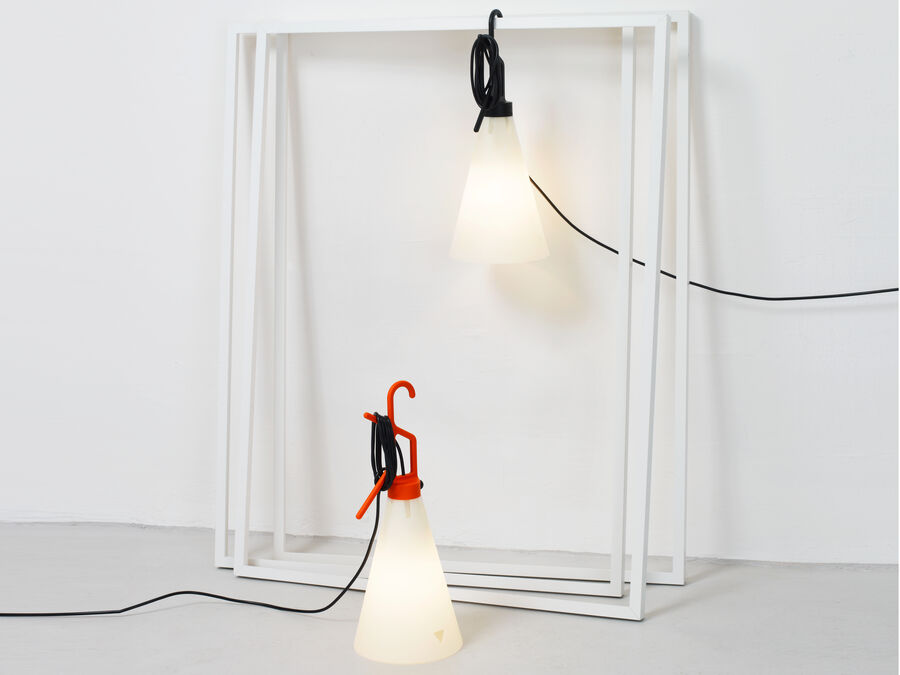
Mayday by Flos
Back in 2000, Konstantin Grcic designed this product for Flos, inspired by industrial “worksite” lamps. The hook/handle also functions as a spool for the long cable, which is fixed—without glue, to facilitate proper end-of-life recycling—to an opaline conical diffuser made of injection-molded polypropylene. Now an instant classic, Mayday is available in black, orange, and lilac.
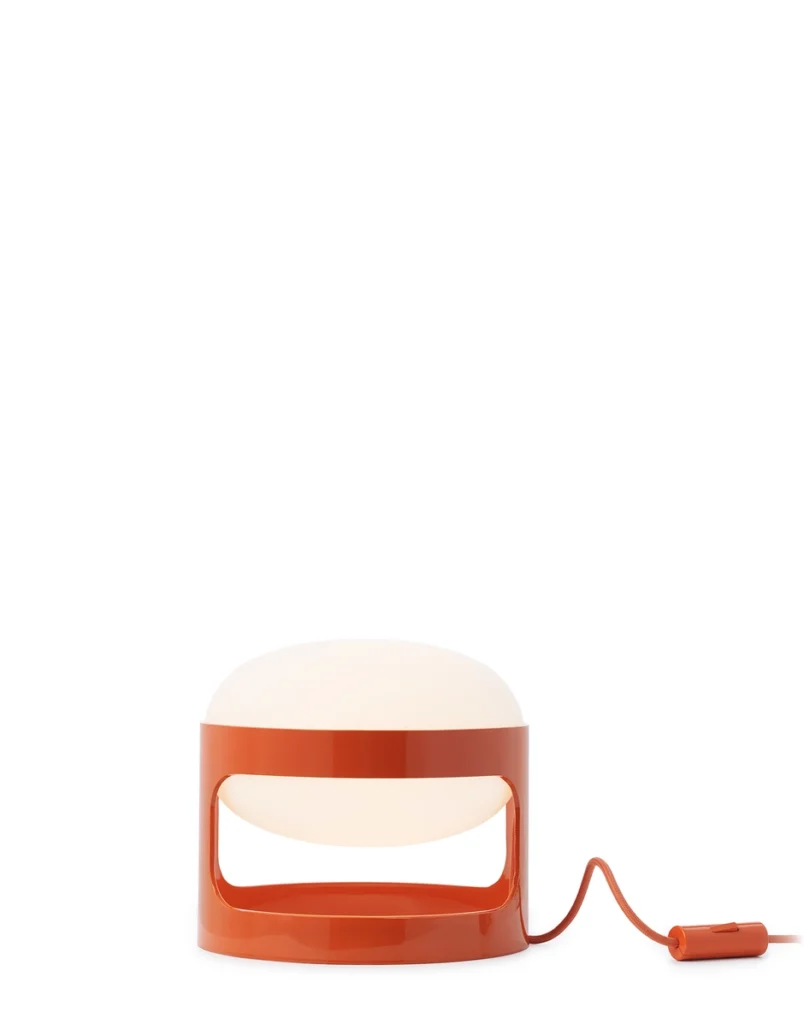
KD28 by Kartell
Recently reintroduced into Kartell’s catalog, this table lamp was originally designed by Joe Colombo in 1967. Its lines are unmistakably sixties, but the materials and technologies have been updated, using recycled PMMA and a satin-finished dome (the original was transparent). What detail makes the difference? The fabric-covered power cord is the same color as the base.
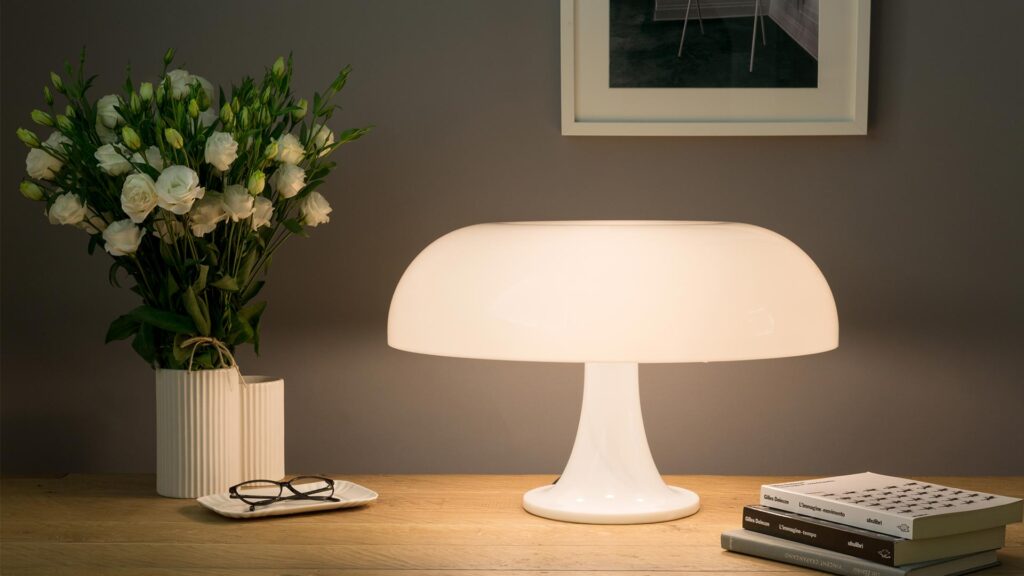
Nesso by Artemide
An icon among icons, Nesso by Artemide is made of injection-molded ABS—an innovative technology in the 1960s when it was conceived by Giancarlo Mattioli. Available in orange or white, it is part of the MoMA’s permanent design collection in New York.
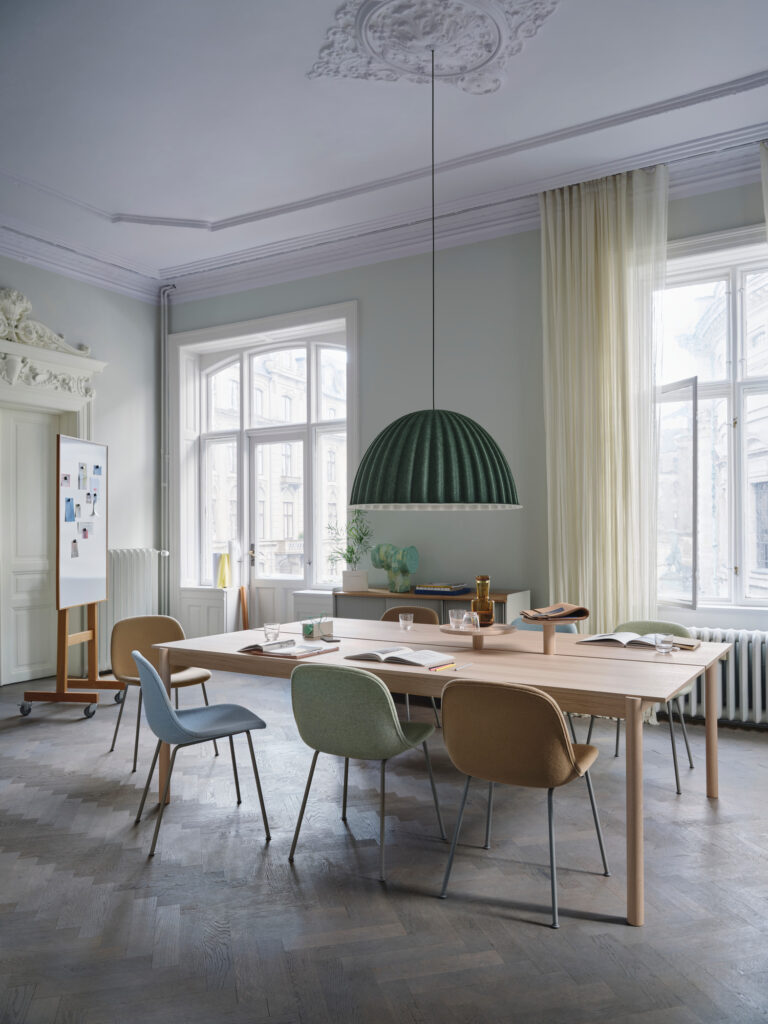
Under the Bell by Muuto
This Muuto pendant has generous proportions, becoming a true spatial focal point. Its “textile-like” shade is made from a material containing up to 49% fibers derived from recycled plastic bottles and also features sound-absorbing properties.
Banana Leaf by Slide
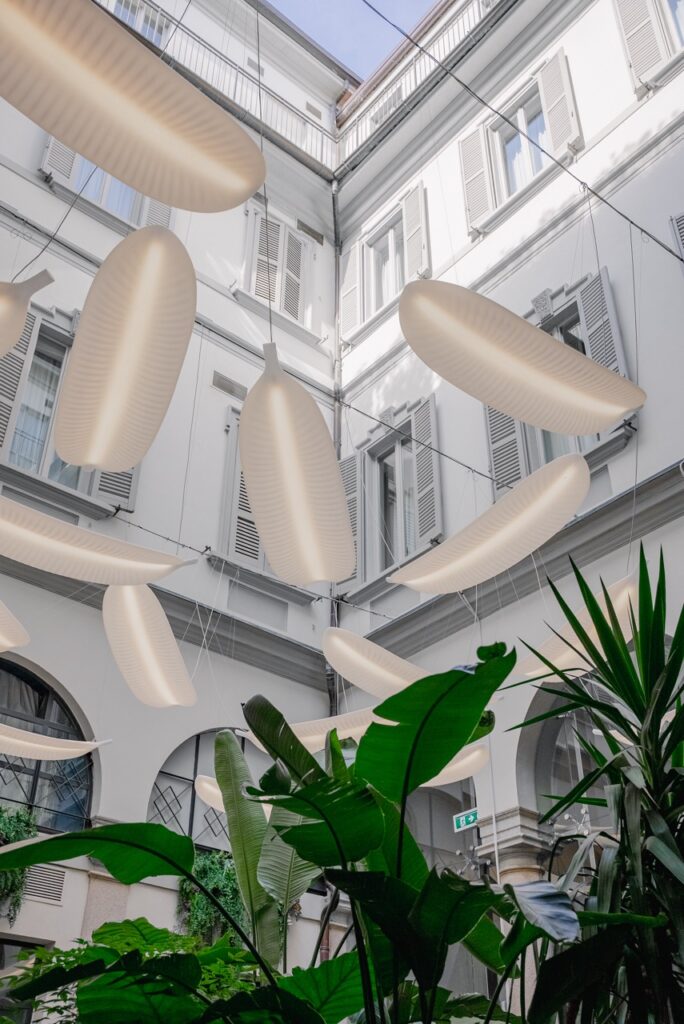
Marcantonio designs for Slide a striking pendant whose stylized shape clearly references large banana leaves. Suitable for large outdoor installations—or indoors in its wall-mounted version—it is made of white plastic material and reproduces the veins with remarkable precision.