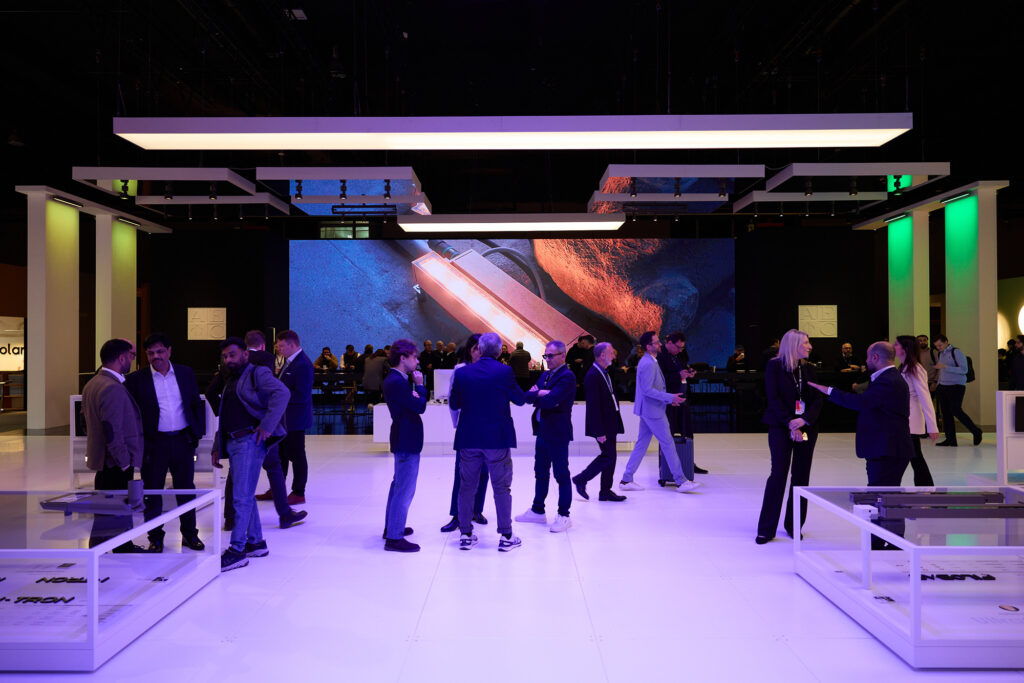
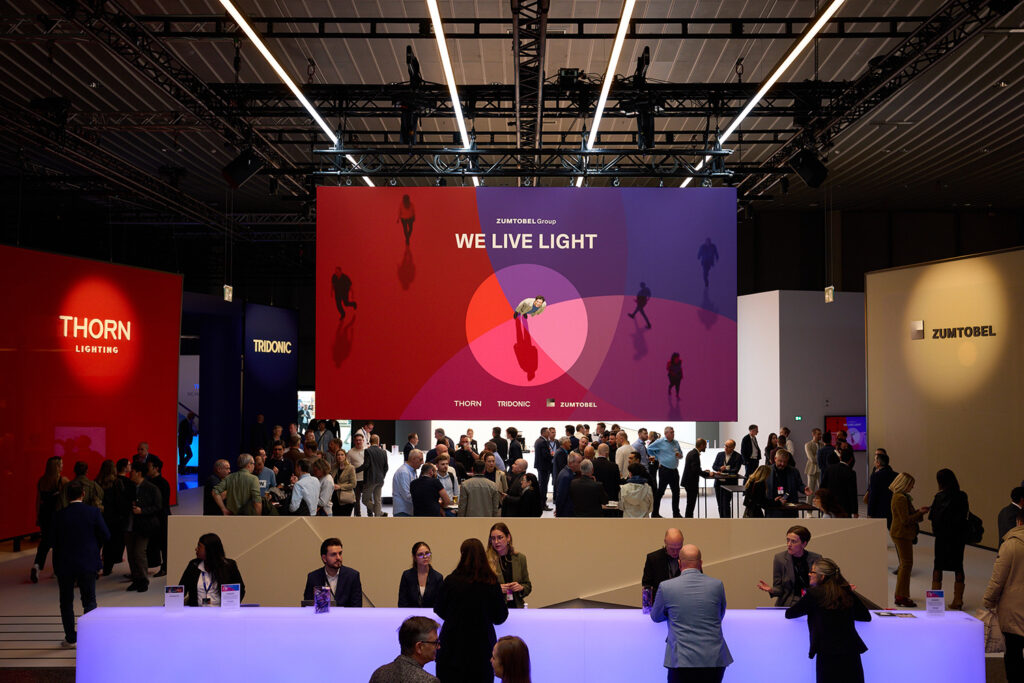

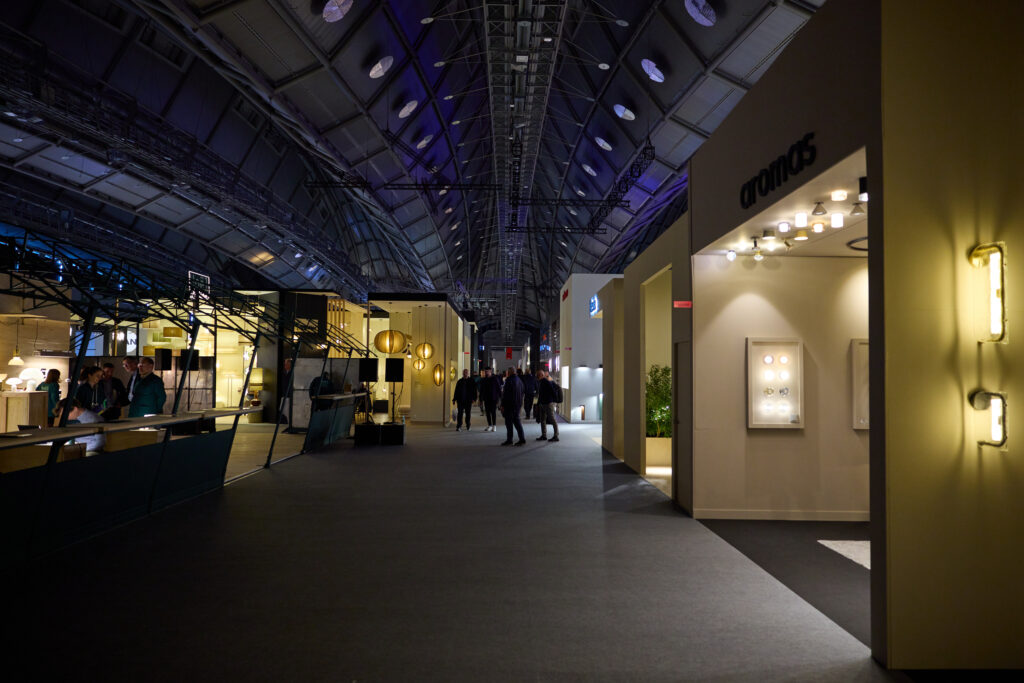
After the first walk through the booths, reported during the opening days, attendance increases in the following days of the fair: the halls feel livelier, the flow of visits becomes steady, and attention increasingly gathers around the recurring themes of this edition: lighting control, energy efficiency, and technologies applied to space.
AEC (Hall 3.0 – Booth E60) focuses on urban lighting and architectural illumination. The new solutions presented at Light + Building 2026 emphasize reliability, energy efficiency, and light quality. Among them is the AEC Forms platform, comprising the QUBI and FALKO projectors and the FILOBAR linear systems, which introduce advanced color-mixing technologies in the FullColor versions, ensuring color saturation and uniformity through precise LED research.
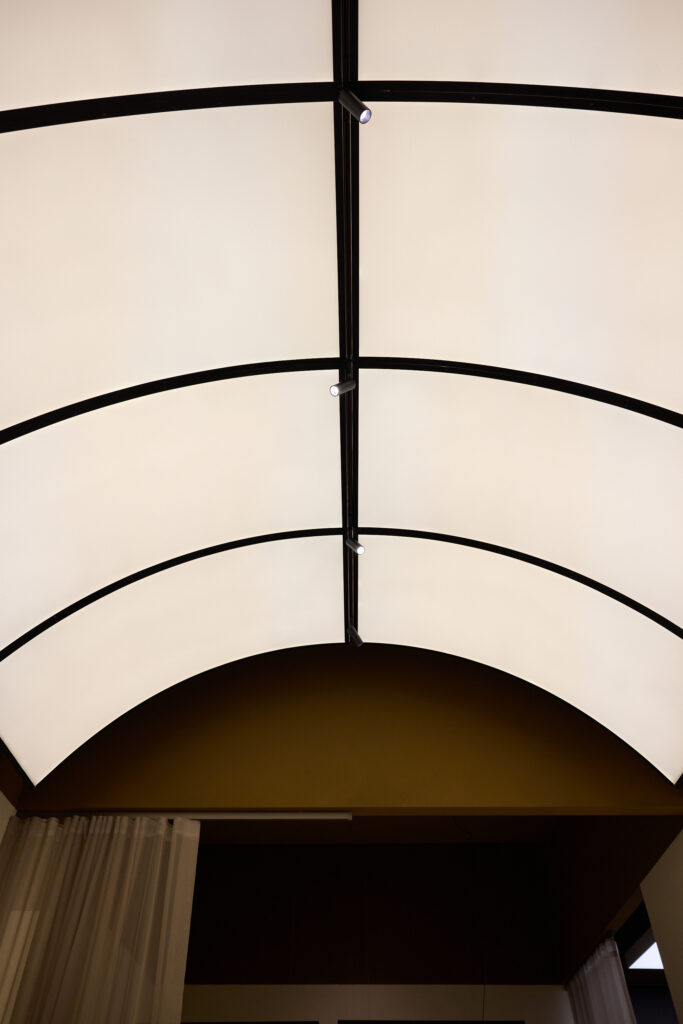
Folio (Hall 3.0 – Booth E51) confirms the technical solidity that has distinguished the company for years. A luminous barrel vault dominates the entrance to the booth—both a scenic gesture and a demonstrative one. Luminous surfaces—long a field of experimentation for the brand—reveal here their capacity to bend, curve, and become architecture. Not a simple visual effect, but a clear statement of how light can turn into a continuous and moldable surface.
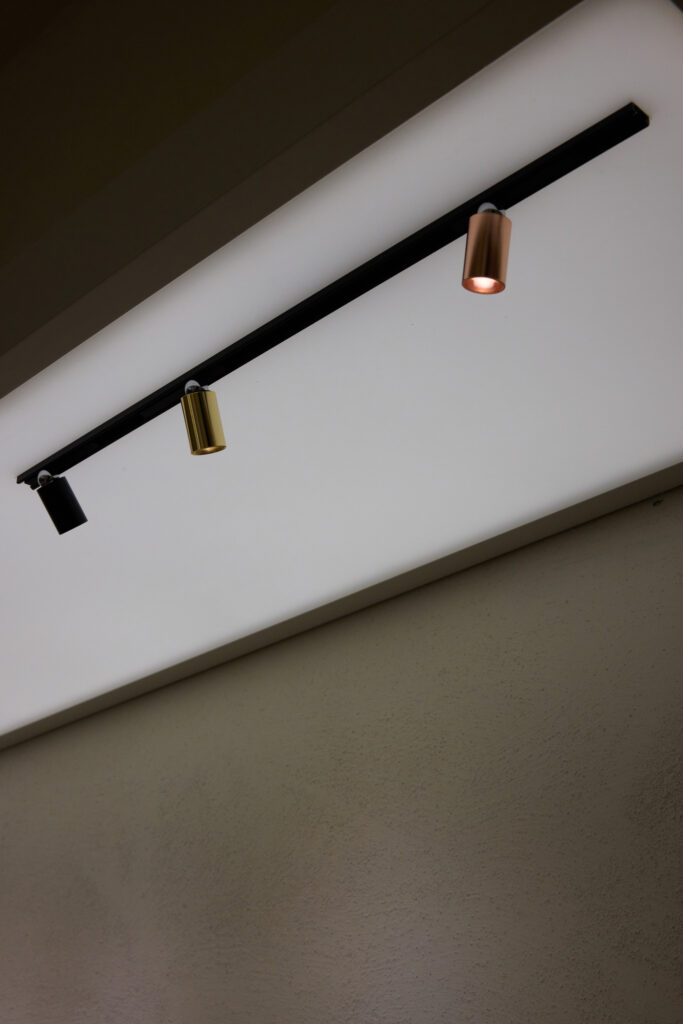
Alongside these more immersive installations, Folio also presents a series of mini-projectors designed to be integrated directly into the luminous surfaces.
The refined finishes—conceived primarily for luxury retail environments—transform these fixtures into small jewels of light, discreet in size but carefully refined in their light quality. The idea is a system capable of combining surface and accent lighting, offering designers a single, coherent, and highly customizable language.
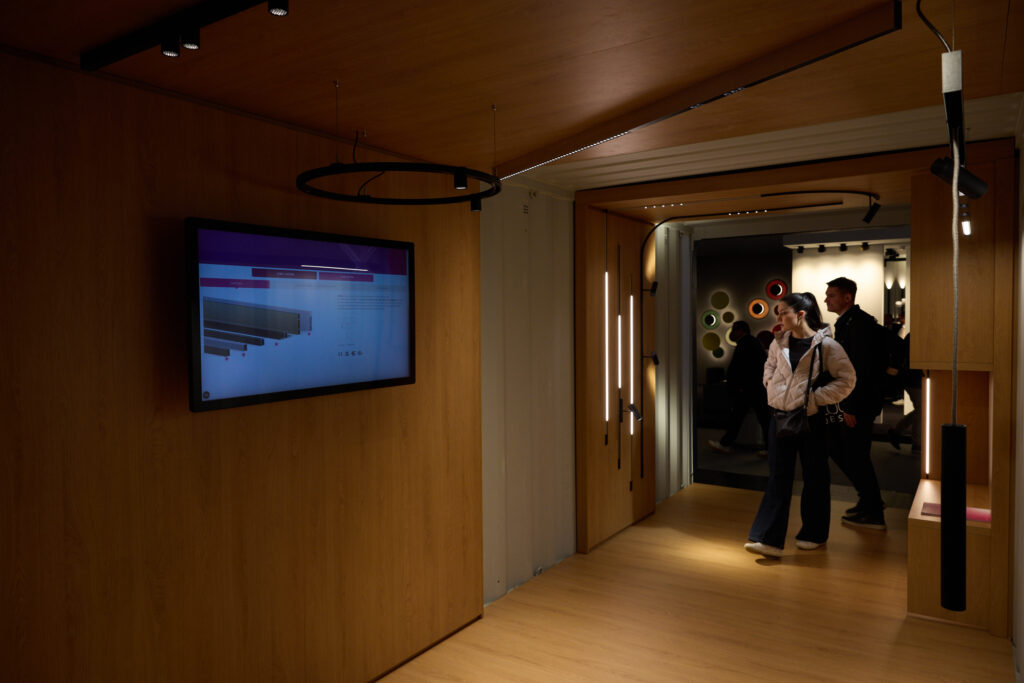
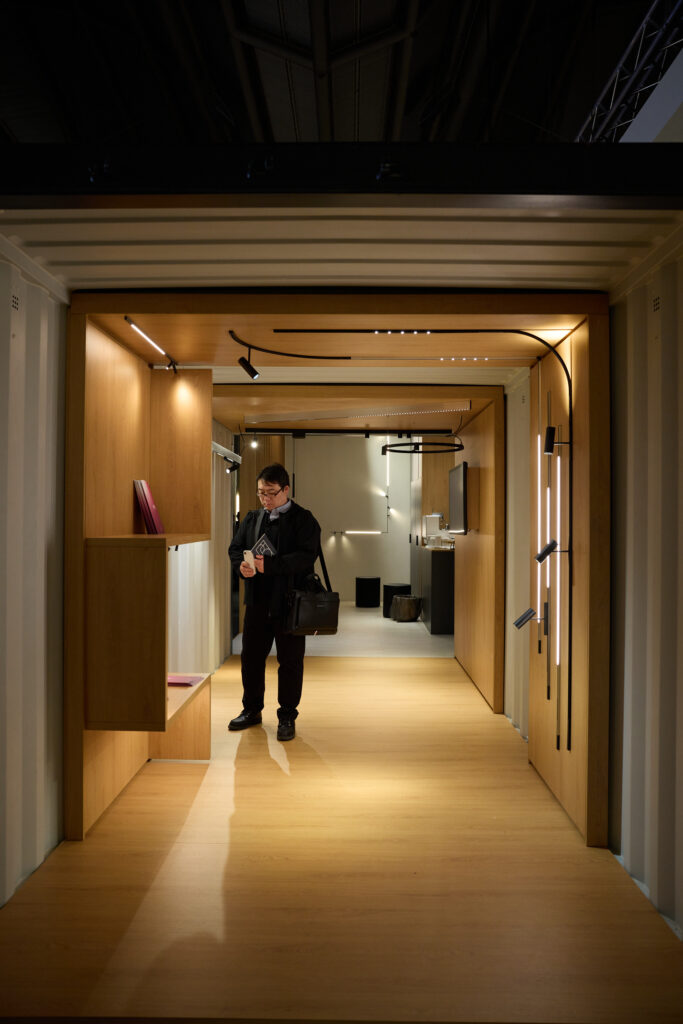
Arriving at the A.A.G. Stucchi booth (Hall 3.1 – Booth D81), the direction the brand has chosen for this edition becomes immediately clear: to present itself as a company with a strong technological focus. The booth, built around two containers used as true technical vaults, stages the company’s identity: the structural side of lighting—tracks, connections, systems—as the invisible yet essential core of lighting projects.
Inside, Stucchi presents the CORE 11 and CORE 5 systems, low-voltage platforms designed to follow the trend toward the miniaturization of light sources and to enable the integration of increasingly compact fixtures within clean and lightweight architectural environments. Alongside the low-voltage systems comes the new HYPER 2.0, an evolution of the 220V track with 11 conductors, offered in three versions that respond to different design needs: Hyper Soul, the most essential and technical version; Hyper Shape, with a more architectural profile designed to integrate visually into ceilings; and Hyper Style, conceived to offer more distinctive aesthetic variations, suitable for contexts where the track itself becomes part of the formal language.
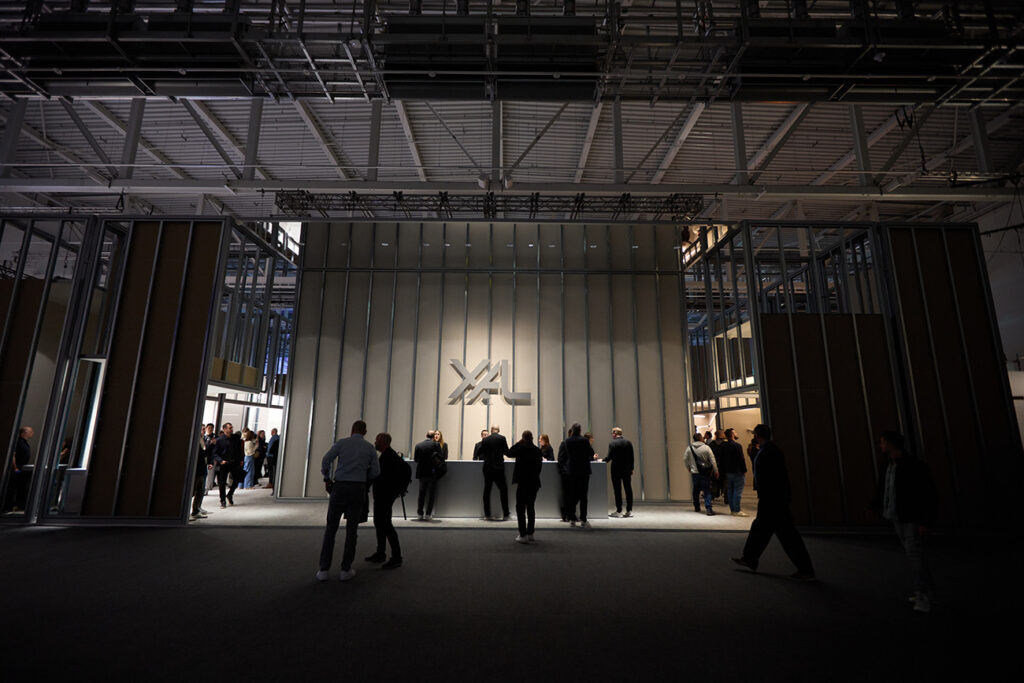
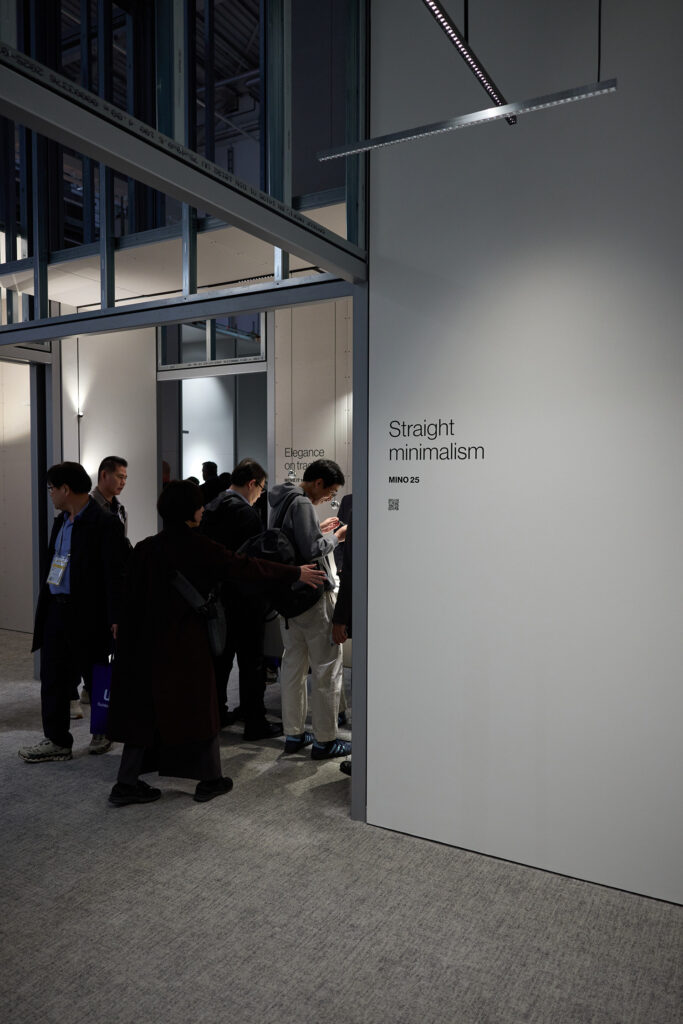
In Hall 5, XAL (Hall 5.1, Stand B70) revisits the key concept of its stand from two years ago, presenting the idea of ‘raw structure’. Pure light”. The ephemeral architecture is constructed using raw plasterboard panels and exposed metal studs, designed to be dismantled and reused. A coherent choice that underlines the company’s commitment to a more sustainable approach.
Here, ENVIVA makes its debut, a suspension and floor lamp awarded the iF Design Award 2026 and certified Cradle to Cradle®, recognition that highlights production processes genuinely oriented toward the circular economy. The XILENCE division is also at the heart of the booth, featuring MOVIT PRO 45 tracks with 11 conductors and Fractal Code sound-absorbing panels. This texture combines aesthetic quality with improved acoustic comfort.
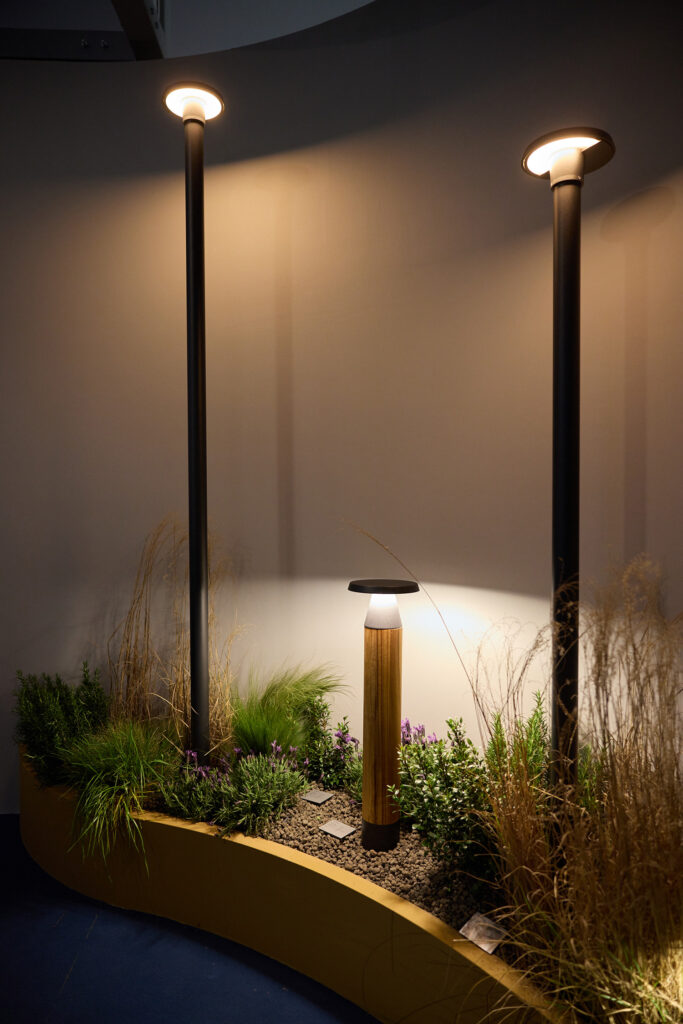
Another focus on outdoor lighting appears at the Luce&Light booth. The new range of exterior lights is designed to withstand particularly demanding conditions, also thanks to the AC19 treatment applied to stainless steel, a process that increases resistance in marine environments, wellness areas, and contexts characterized by chemical agents or aggressive microclimates.
Among the products, the Do Re Mi family stands out, characterized by spherical and semi-spherical forms that become light and discreet presences: a soft, enveloping light designed to integrate naturally into the landscape. The bollard versions are ideal for flowerbeds, shrubs, and pathways, while the suspension versions adapt well to porticoes, verandas, pergolas, outdoor seating areas, and even among tree canopies.
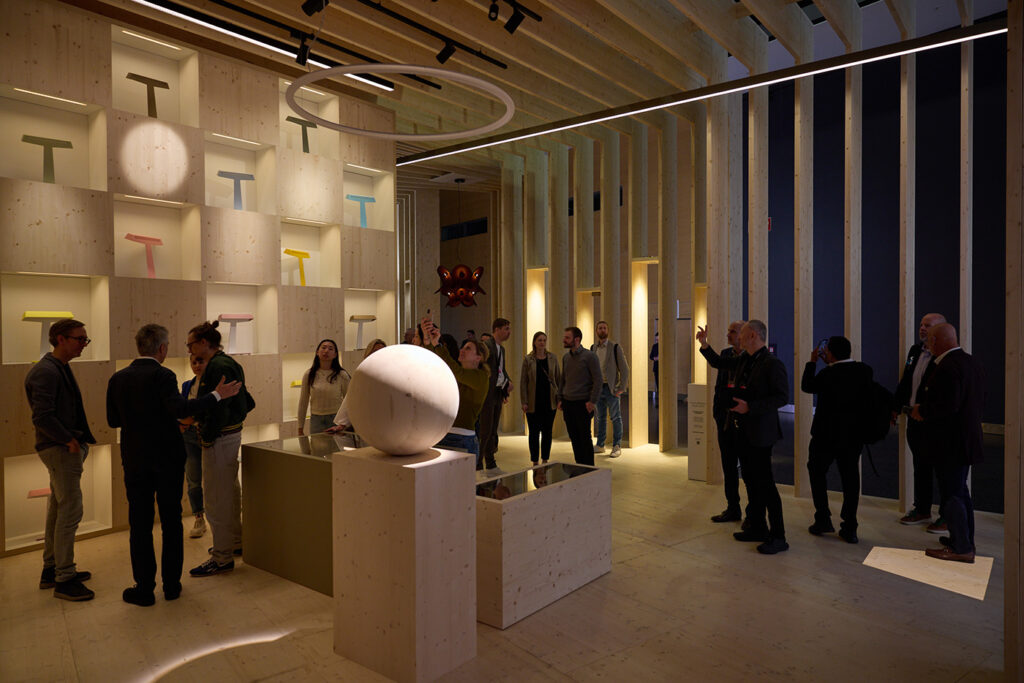
In response to the growing interest in the integration of artificial intelligence and lighting, Zumtobel, an Austrian company, has conducted research (Forum 0, A10). Alongside updates to some of its historic product families—including TECTON II, developed in collaboration with Pininfarina—the company presents a particularly interesting prototype: a smart suspension lamp designed together with the studio BAID (Borchardt Architektur Interior Design).
Thanks to an advanced sensor integrated with AI, the lamp can dynamically adapt the light distribution over the table, modulating intensity and direction based on the presence of people and the type of activity taking place. If the table fills with people, if someone leans closer to read a document, or if someone is working on a computer—avoiding disturbing reflections on the screen—the system recognizes the situation and adjusts the light accordingly. An approach that looks beyond technical performance, focusing instead on the quality of the user experience and everyday comfort.
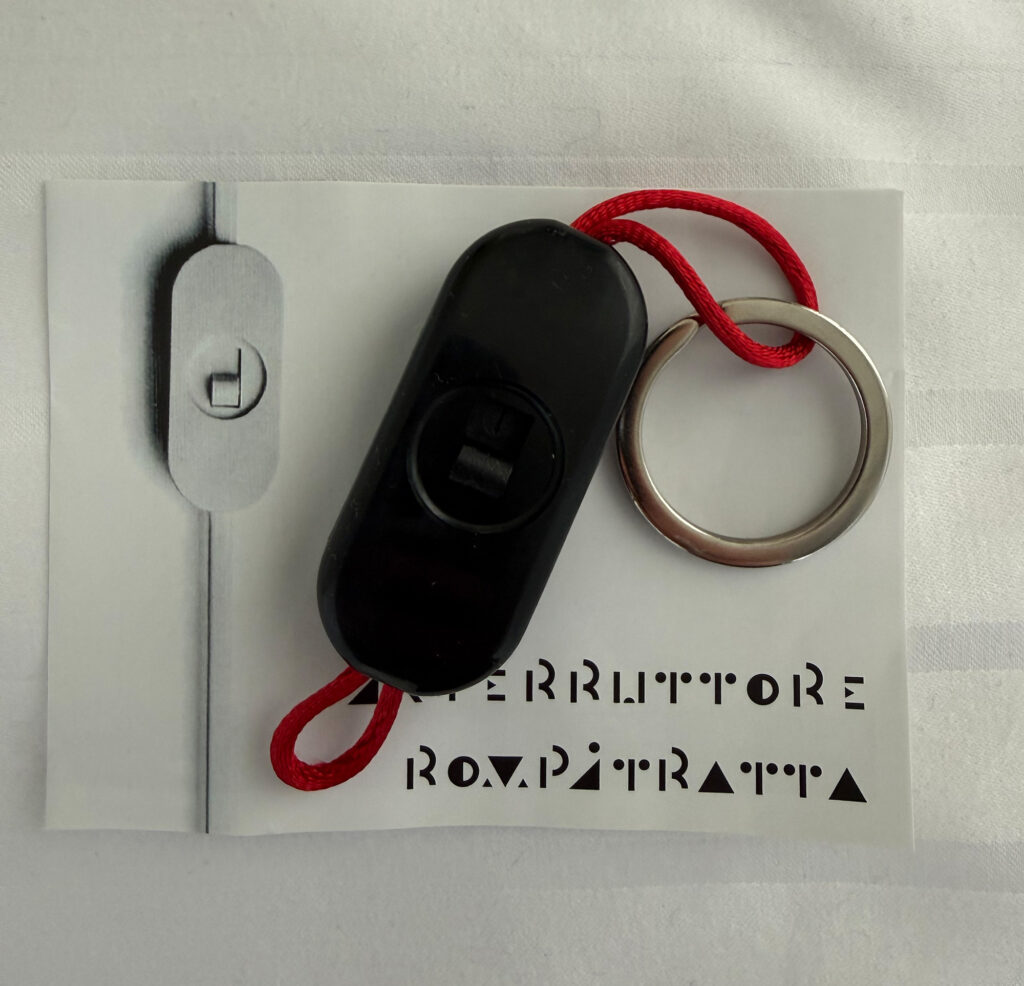
An honorable mention—and a sympathy award, but also recognition of research that digs into the history of Italian design—goes to the gadget distributed by Relco (Hall 3.1 – Booth F50), an online retailer of lighting equipment. The gift for visitors is a keychain based on the rompitratta switch designed by Achille and Pier Giacomo Castiglioni, a small, silent protagonist of countless interiors.
Atmosfera is an open space for dialogue. If light plays a key role in your research or a specific project, we’re ready to listen. We feature lighting design projects, art installations, photography series, and stories that explore the narrative potential of light.
Send us your portfolio or tell us about a project you care about.
It could become part of our editorial programming—or spark a new collaboration.
EMAIL US AT REDAZIONE@ATMOSFERAMAG.IT
Un progetto a cura di A.A.G. Stucchi
A.A.G. STUCCHI s.r.l. u.s.
Via IV Novembre 30/32,
23854 Olginate (LC)
R.I. Lecco,
Cod. Fisc.
P. IVA IT 02855630139
Cap. Soc. €10.000.000 i.v.
© 2025 A.A.G. STUCCHI
Legals
Stay updated
Become a vital part of our thriving community:
subscribe to the ATMOSFERA Newsletter.
A.A.G. STUCCHI s.r.l. u.s. Via IV Novembre 30/32, 23854 Olginate (LC) – R.I. Lecco, Cod. Fisc. P. IVA IT 02855630139 Cap. Soc. €10.000.000 i.v.
Cookie Policy – Privacy Policy
ATMOSFERA è un progetto a cura di A.A.G. Stucchi
© 2022 A.A.G. STUCCHI
ATMOSFERA è un progetto a cura di A.A.G. Stucchi
A.A.G. STUCCHI s.r.l. u.s. Via IV Novembre 30/32, 23854 Olginate (LC) – R.I. Lecco, Cod. Fisc. P. IVA IT 02855630139 Cap. Soc. €10.000.000 i.v.
Cookie Policy – Privacy Policy
© 2025 A.A.G. STUCCHI