Cover photo: The Handmaid’s Tale. Courtesy Hulu
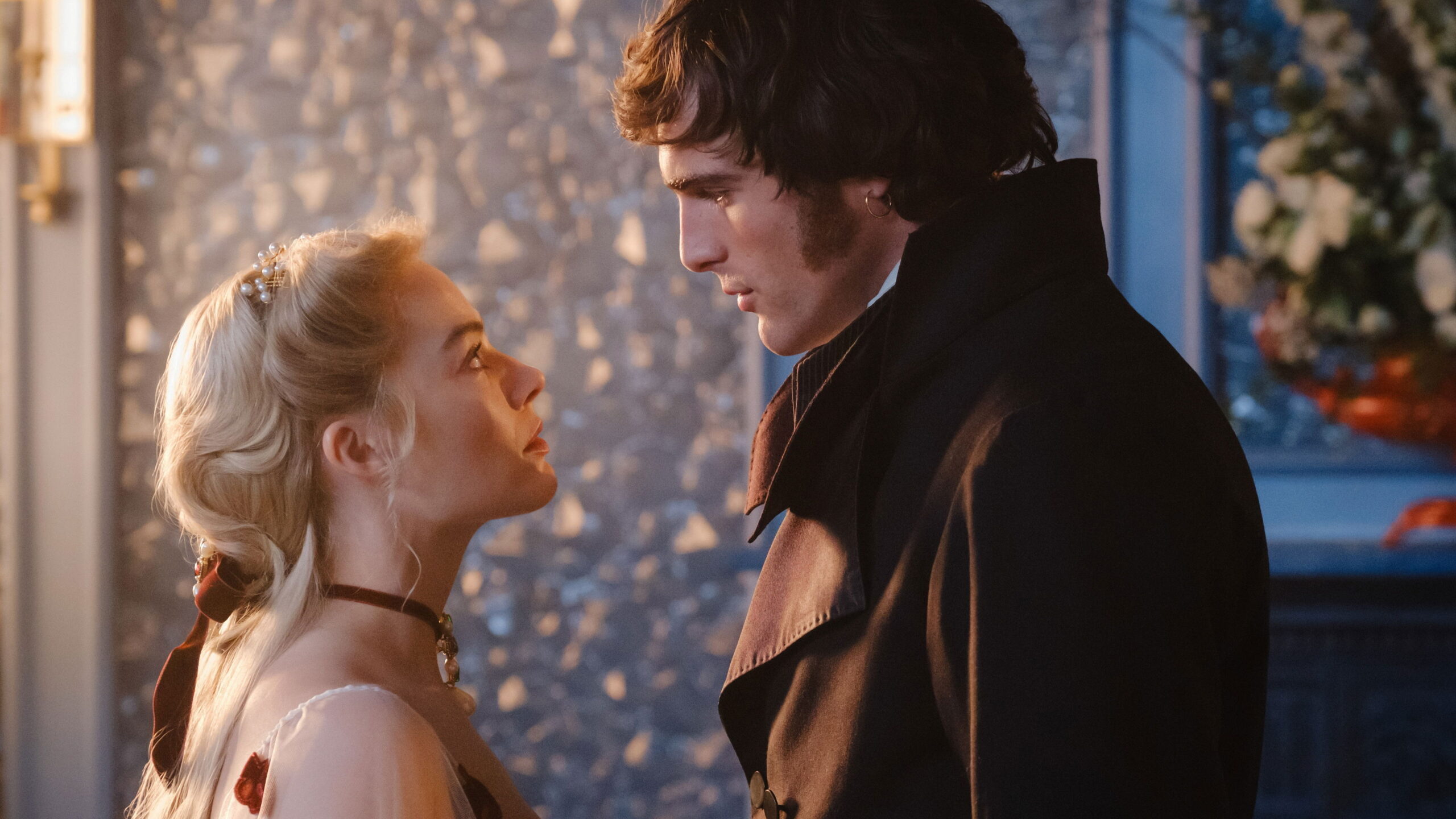
It was April 2019 when The Long Night, the entirely night-set episode of Game of Thrones, left viewers disoriented. Who turned off the lights? “Too dark,” fans complained on (what was then) Twitter. “Exactly,” replied director Miguel Sapochnik and cinematographer Fabian Wagner.
Seven years later, in an era of digital experimentation and artificial intelligence, auteur TV cinematography has taken on futuristic trajectories—echoing Blade Runner—consolidating what began as a niche into a sub-trend now shared across multiple productions. But what exactly does it mean? It refers to a deliberate creative choice: a dark visual universe built on minimal lighting, deep tones, and pronounced shadows. “Dark cinematography” as an artistic engine for contemporary TV series.
Why TV series choose darkness: contrast, perception, and immersion
This trend, common across sci-fi, political fiction, adventure, gothic, and horror series, could be described as a kind of “darkness effect,” something that goes beyond aesthetics. Turning down the lights creates a way of guiding the viewer’s gaze into a world that distances itself from the bright colours of advertising and social media, as well as other highly stylised series such as Bridgerton and Squid Game.
The intent is almost mystical: partly a detox, partly a shift in perspective. This aesthetic does not appeal to everyone, of course, but there are alternatives.
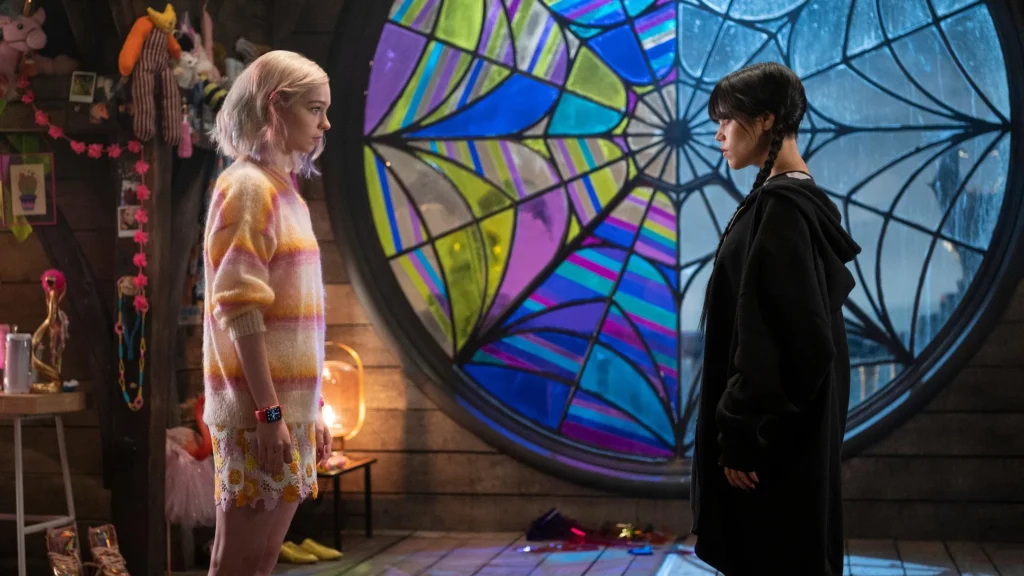
Andor, The Last of Us, Wednesday, Blade Runner 2099: darkness tells the story, and technology plays a key role. High-sensitivity digital sensors allow filming in near darkness, RGBW LED systems enable extensive experimentation, and authorship itself becomes a form of visionary austerity.
At the same time, a contradiction emerges between technology and distribution. Although production tools allow for precise manipulation of darkness, streaming platforms often compress the tonal range. Dark gradients require greater bandwidth to preserve the nuances of shadow that cinematographers carefully construct, ensuring that even a less illuminated world remains fully dimensional.
The Last of Us, Andor, The Handmaid’s Tale: cinematography as radical naturalism
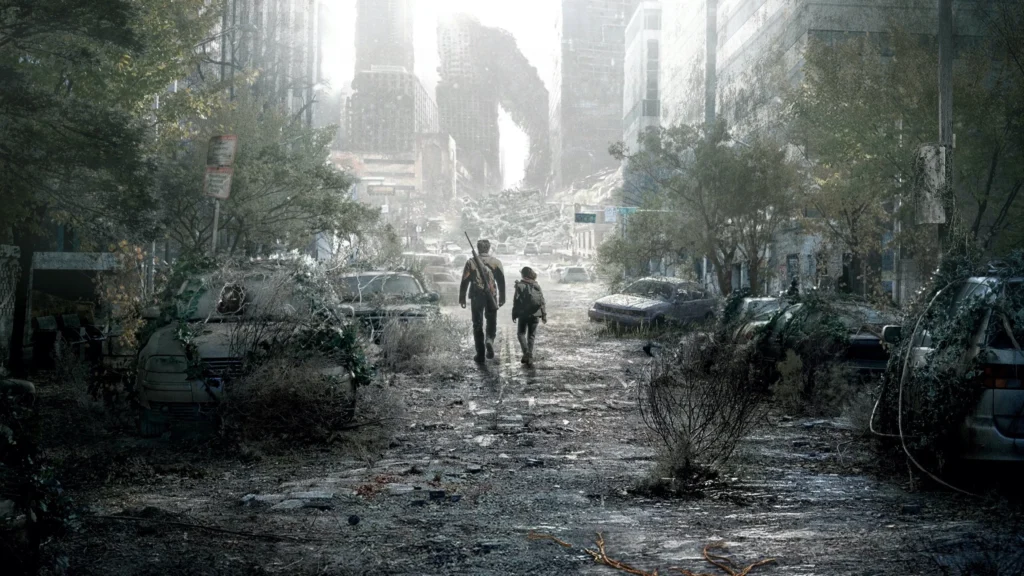
The dark horizon of recent series unfolds through different artistic approaches. One group of directors and cinematographers has returned to a form of natural lighting—echoing, in part, the legacy of the Nouvelle Vague and Italian Neorealism, though applied here to darkness-driven narratives. The underlying idea is simple: if there is no light, we do not add it. The Last of Us, for example, embraces darkness as a matter of narrative plausibility. In a post-apocalyptic world where electricity is scarce, it becomes essential for viewers’ eyes to adapt to dimness—just as the characters’ do.
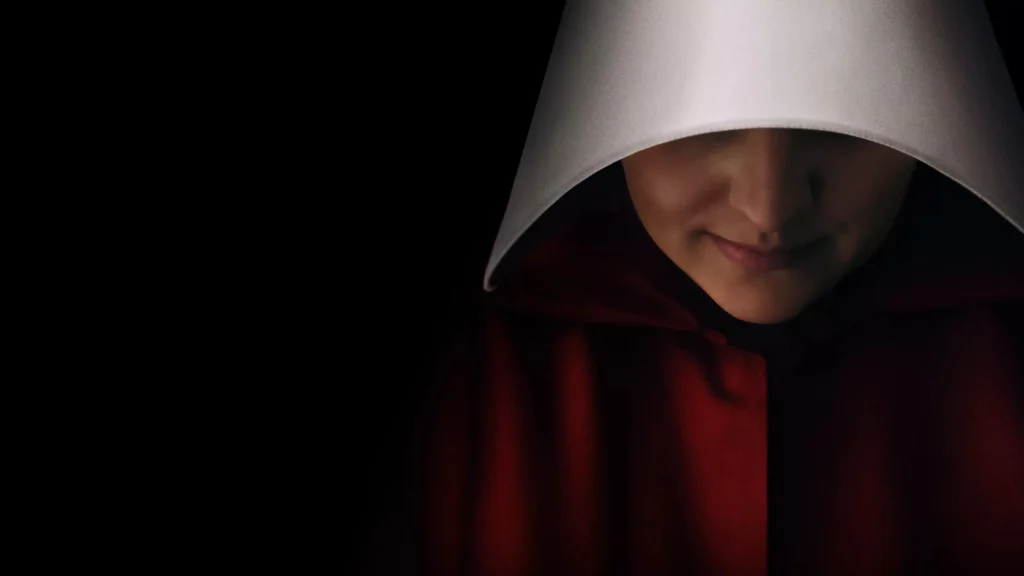
A different kind of radicalism defines The Handmaid’s Tale, where light is withheld to immerse the viewer in a spiral of horror shaped by a distorted, post-apocalyptic reality. The palette of muted dark grays forms part of a contrast-based chromatic system developed by cinematographer Colin Watkinson, amplifying the visual impact of the Handmaids’ red cloaks.
The lighting here is deliberately unsettling and is often motivated by natural or diegetic sources, such as sunlight, candles, and torches. This reinforces a dystopian narrative that resonates uncomfortably with contemporary reality.
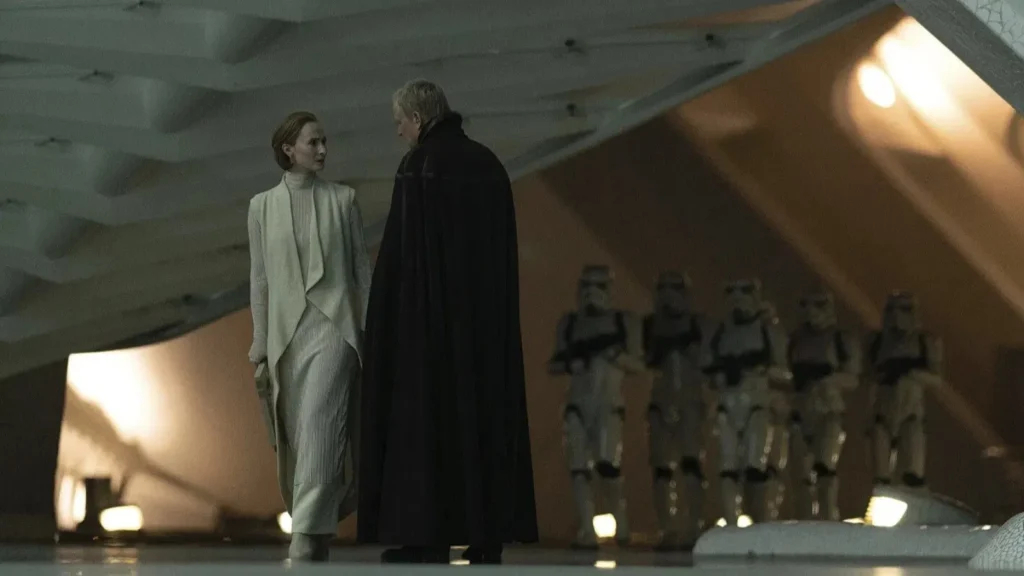
Andor, the Star Wars prequel, represents another distinctive experiment. Cinematographers Damián Garcíaand Christophe Nuyens brought a “Star Wars without fill light” into a more grounded, material reality. For lunar scenes, Nuyens used a hard backlight to create halos around the characters’ edges, combined with a soft toplight to illuminate faces. This setup reveals expressions without breaking the darkness, separating bodies from blackness through light contours rather than traditional frontal illumination. The result is a gritty, realistic aesthetic that makes the Star Wars universe seem more like a documentary.
Wednesday, Stranger Things: darkness as a contrast between worlds
Other series adopt a more symbolic approach, using light as a marker of different worlds. Stranger Things, in a straightforward way, distinguishes the Upside Down from 1980s Hawkins through its cinematography. The former is dominated by darkness, while the latter features warmer, domestic tones—tungsten and soft salmon hues.
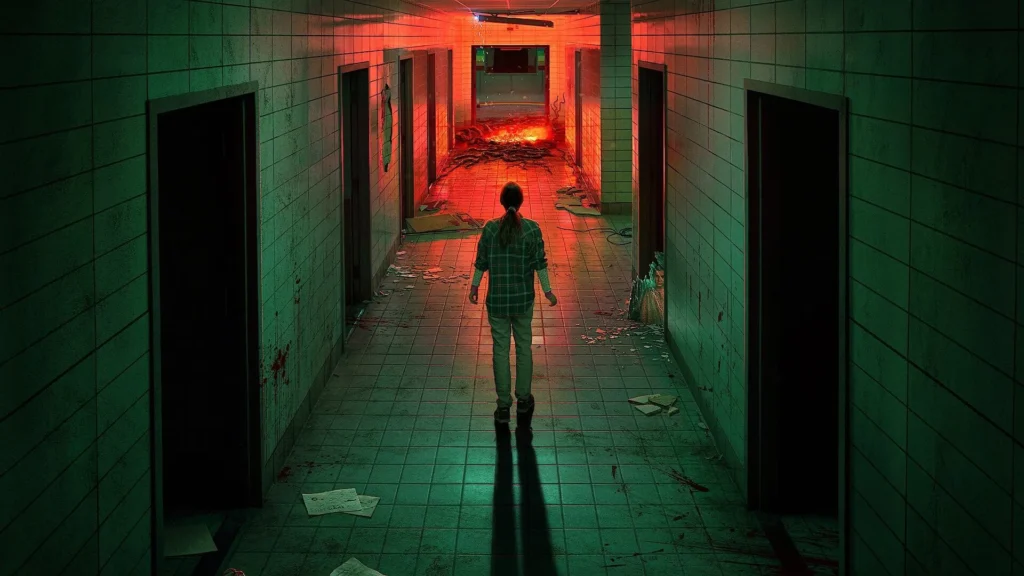
The upcoming Blade Runner 2099 appears to bring neo-noir into the Los Angeles of the future, with a digital chiaroscuro that contrasts endless rainy nights with neon glows, a contemporary reinterpretation of Ridley Scott’s visual language, adapted for serialized storytelling. In Blade Runner, darkness is something primordial: how could the neon lights that define the replicants’ world be visible in full daylight?
Tim Burton uses darkness not as a triumph of nature, but as an expression of his signature gothic style. The mise-en-scène of his Netflix series revolves around black and white as an emotional state, a declaration of difference that Wednesday carries with pride into a world that is, for her, excessively colorful. Shadows also lend themselves to expressionist architectures, emphasized by sculptural contrasts and cones of darkness. Cinematographer David Lanzenberg explored this chromatic universe using Orbiter lights to create sharp, moonlike beams entering Wednesday’s room.
Black Rabbit, The Gentlemen: contemporary noir
Dampening the overwhelming flood of color that defines our daily, screen-mediated reality is the aim of other series that build their strength on calibrated restraint, including a controlled use of light. Critics have praised this “darkness effect”—even if not by that name—but only when it serves the story rather than obscuring it through stylistic excess.
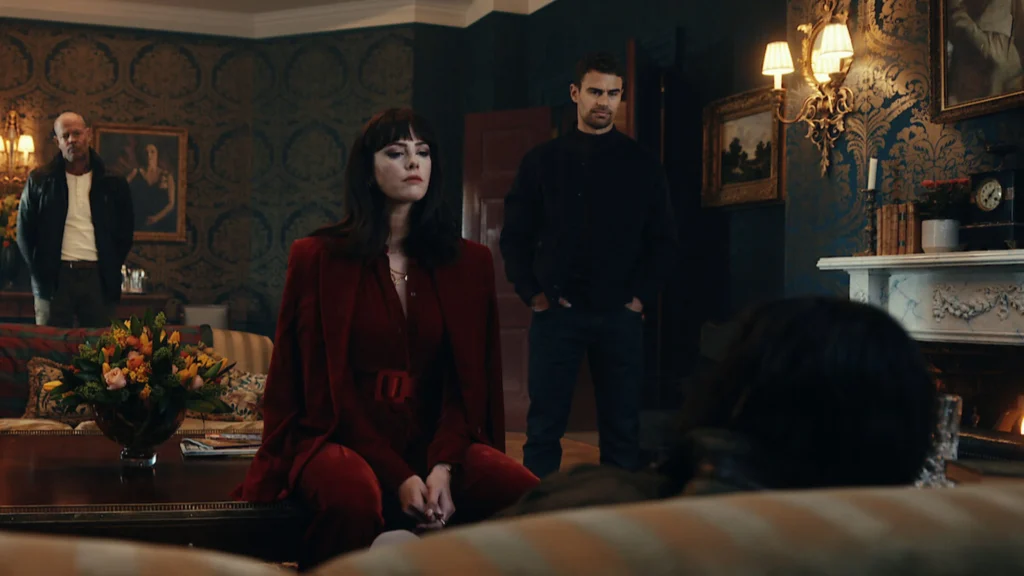
Like Tim Burton, Guy Ritchie remains faithful to his own aesthetic, darkening The Gentlemen with strong contrasts, copper tones, and settings steeped in the cool atmosphere of British country houses.
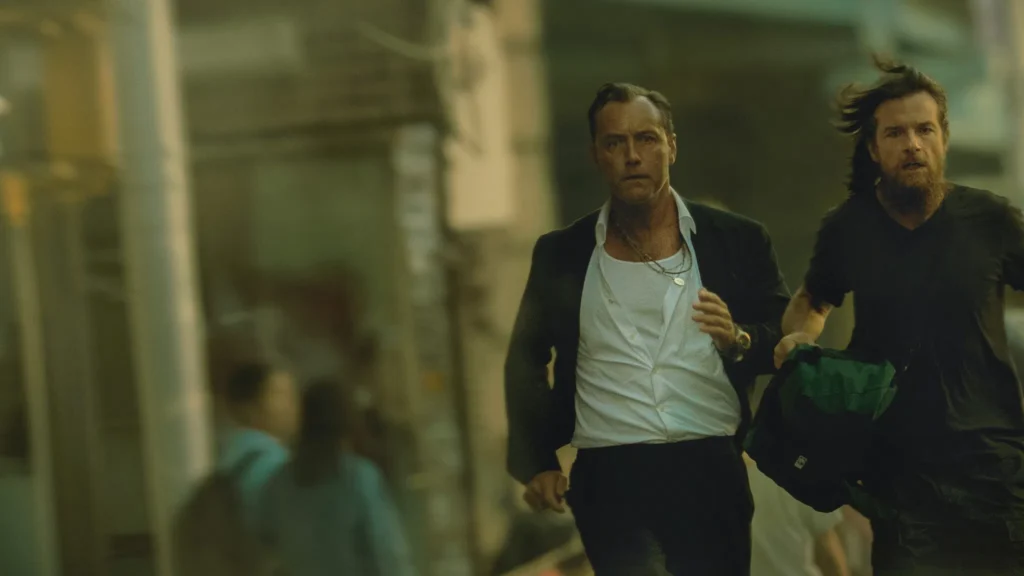
Black Rabbit, on the other hand, edges toward a paradox where darkness becomes both an ally and an obstacle. Zach Baylin‘s Netflix crime drama, starring Jason Bateman and Jude Law, uses the language of contemporary urban noir to depict a dark world of grey-green tones, endless New York nights, and low-key lighting. Yet here emerges the most important lesson of “darkness effect”: the series leans so heavily on dark lighting and idiosyncratic compositions that it becomes distracting rather than functional. As noted by Roger Ebert, and even more sharply by The Daily Beast, which describes the experience as inducing a “headache” just to follow the story.
Turning off the lights is entirely legitimate, and often compelling—but only when the story does not suffer as a result. What matters is not how dark it is, but why it is dark. Some use it as a form of virtuous naturalism, as in Andor or The Handmaid’s Tale. Others use it to create a contrast between worlds, as in Stranger Things or Blade Runner. Others still use it as an expression of authorship, as in Wednesday or The Gentlemen. Black Rabbit, perhaps, pushes it a little too far.