Photo Kristen Pelou ©Curiosity
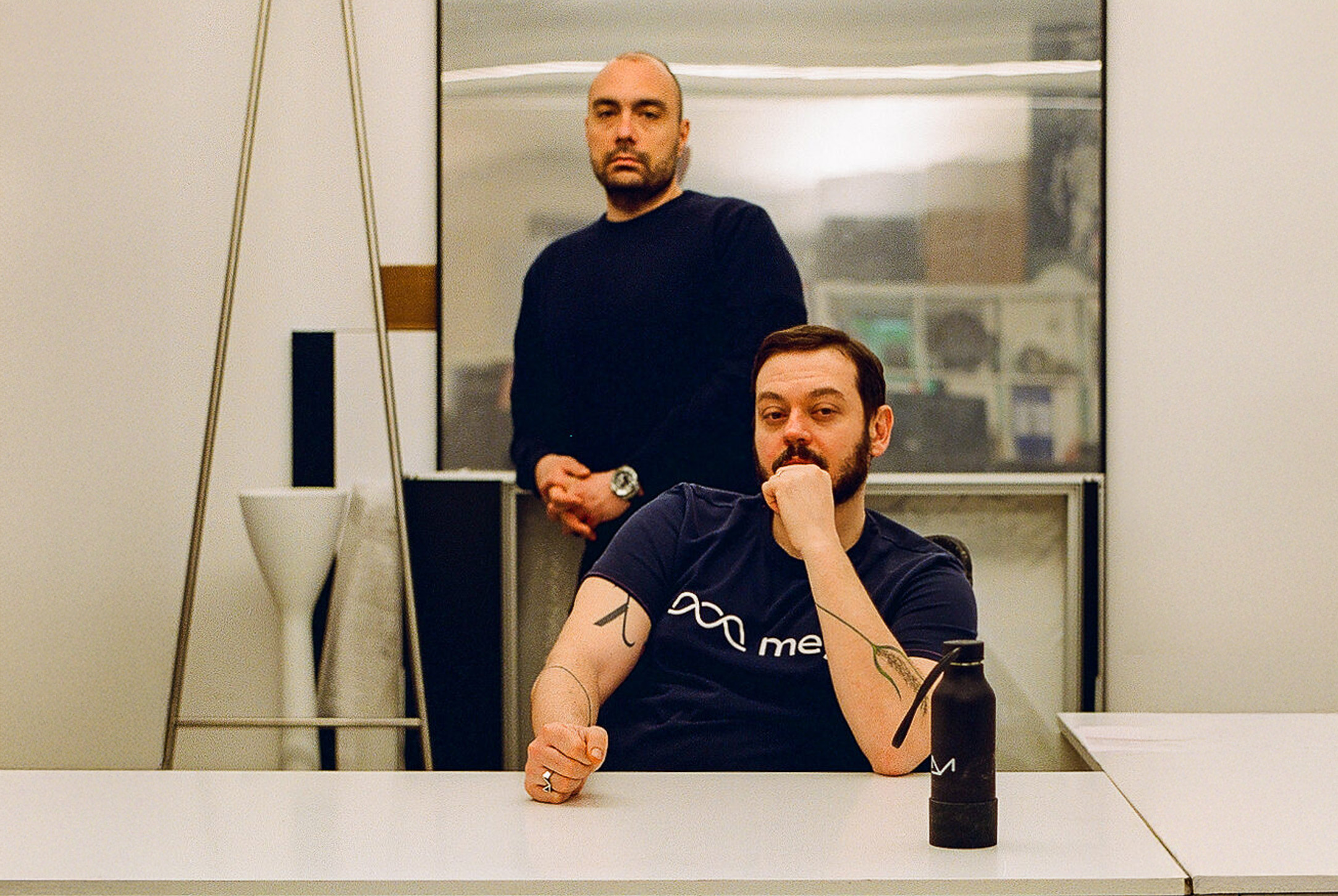
Cristian Miola is an Italian lighting designer based in Milan and founder of his eponymous studio, specializing in lighting design for luxury retail and hospitality environments. His experience in high-end retail—where his studio has developed a particular sensitivity to detail, fixture integration, and the dialogue with materials and architecture—forms the methodological foundation through which hospitality contexts are approached as well.
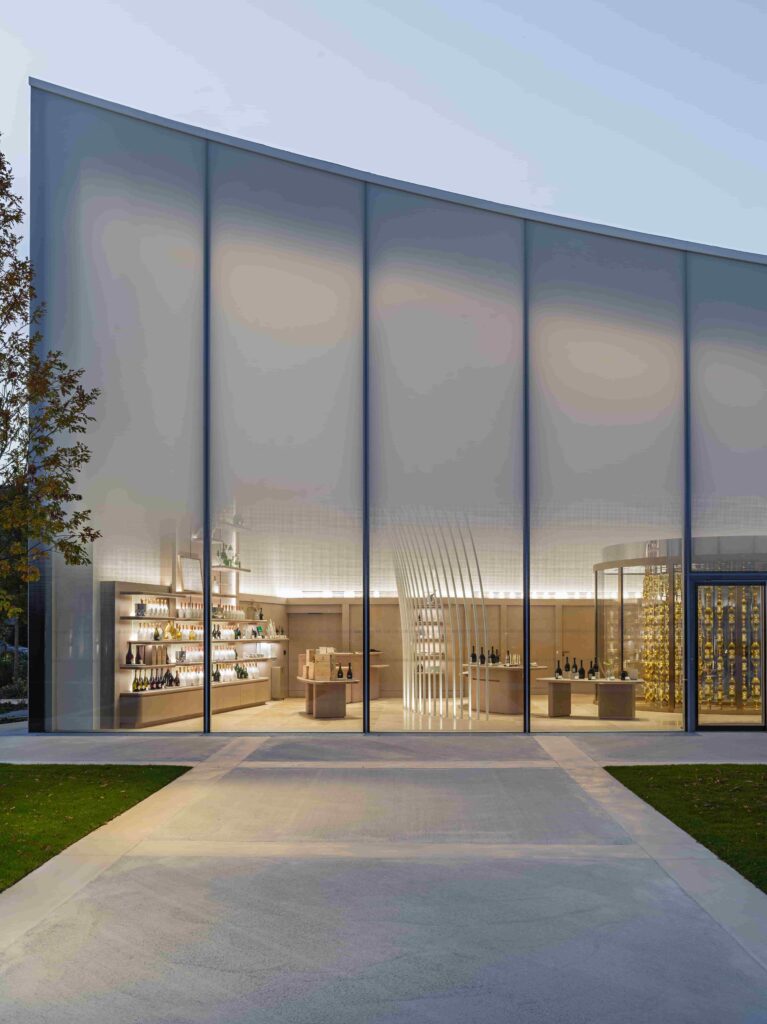
Among his most significant works is the Maison Ruinart Pavilion in Reims—one of the oldest Champagne houses in the world—designed in 2024 by Japanese architect Sou Fujimoto, with interior design by Gwenaël Nicolas and landscape design by Christophe Gautrand. The project clearly expresses Cristian Miola’s approach to contexts where retail and hospitality intertwine within a coherent spatial narrative.
What is the guiding vision behind your approach to lighting design, and which principles consistently recur in your projects, from retail to hospitality?
«Light is not just a functional tool, but a true design language, capable of interacting with space on multiple levels. What guides us is the search for a balance between emotion and function, where light is conceived as an integral part of architecture, in a harmonious and never intrusive relationship. Across our projects—from retail to hospitality—certain principles consistently return: attention to context and materials, care for detail, the intention to construct a conscious visual reading, and the use of light as an element capable of guiding and accompanying the gaze. Each intervention is built around the human scale and the quality of experience, to create environments that are both recognizable and enduring over time».
The Ruinart Pavilion marks a shift from retail toward more experiential environments. In what way does this project represent a key step in the evolution of your studio?
«The Nicolas Ruinart Pavilion is one of the projects that opened the way for the studio’s natural evolution toward more narrative and experiential contexts. In this work, light not only enhances the spaces and architectural design but alsocontributes to building a perceptual sequence, guiding the visitor along an immersive path. The project also posed significant technical challenges, prompting us to reflect more deeply on how light integrates within space and on the solutions adopted. This combination of vision and feasibility has enriched our design approach, positioning the Pavilion within a broader research trajectory that continues to guide our work toward contexts where light becomes a means to create relationships, reinforce identity, and generate a unique experience».
In the Ruinart Pavilion, light strongly interacts with architecture and materiality. What lighting strategies did you adopt to enhance volumes and surfaces?
«The project develops in close relationship with materials and fluid geometries, following the path through the different functions of the space, to highlight volumes, the relationships between solids and voids, and transitions between environments.
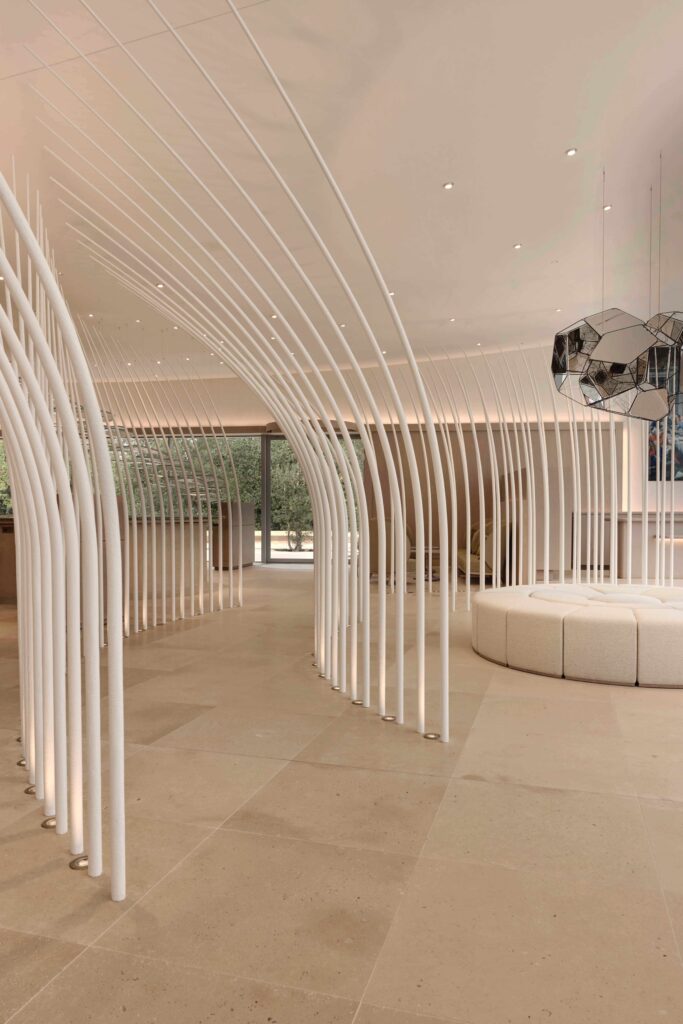
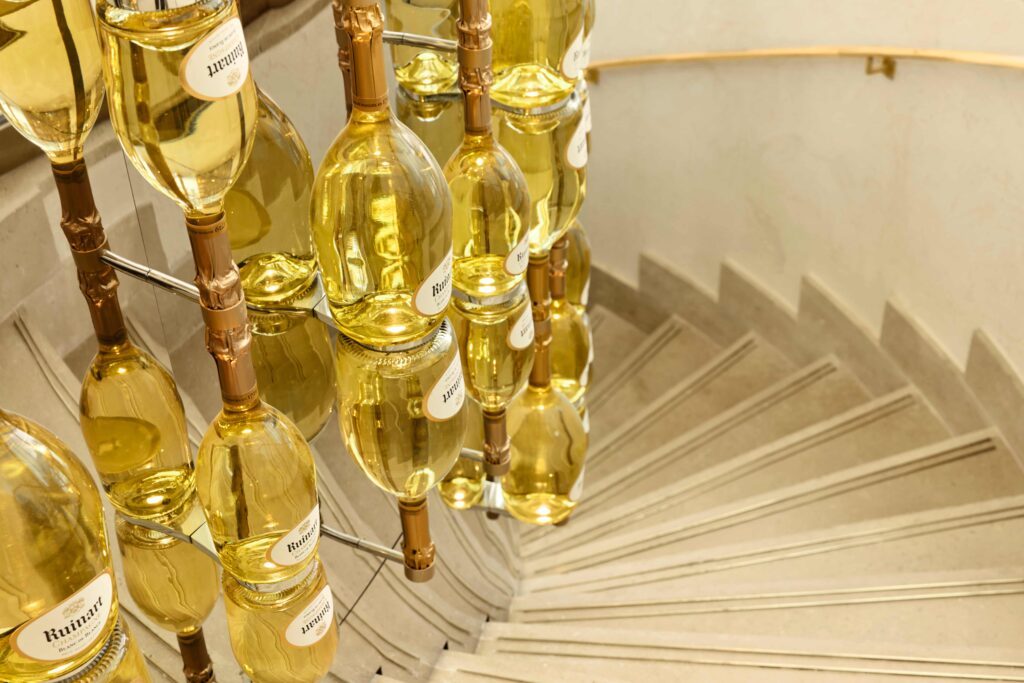
Light—whether architectural or integrated into furnishings—is distributed to emphasize the three-dimensionality of surfaces, create calibrated contrasts with shadows, and define focal points within the different areas. Boutique, bar, reception spaces, and exhibition paths—each requiring different lighting qualities—are connected through visual continuity and a clear spatial coherence. Natural light filtered through the large glass façade was considered with care, allowing the artificial lighting to be controlled through a system capable of generating different lighting scenarios, particularly useful for special events».
How did you address visual comfort and the balance of light contrasts?
«From the individual fixture to architectural or furniture details, the light source is never directly visible. We carefully calibrated luminance levels to avoid excessive differences between areas, also in relation to the natural light coming from the large glazed façade. In more intimate areas, such as tasting zones, light is used to create soft and welcoming atmospheres. In more active areas, such as the boutique, the contrast is slightly more pronounced to enhance functionality and guide the eye.
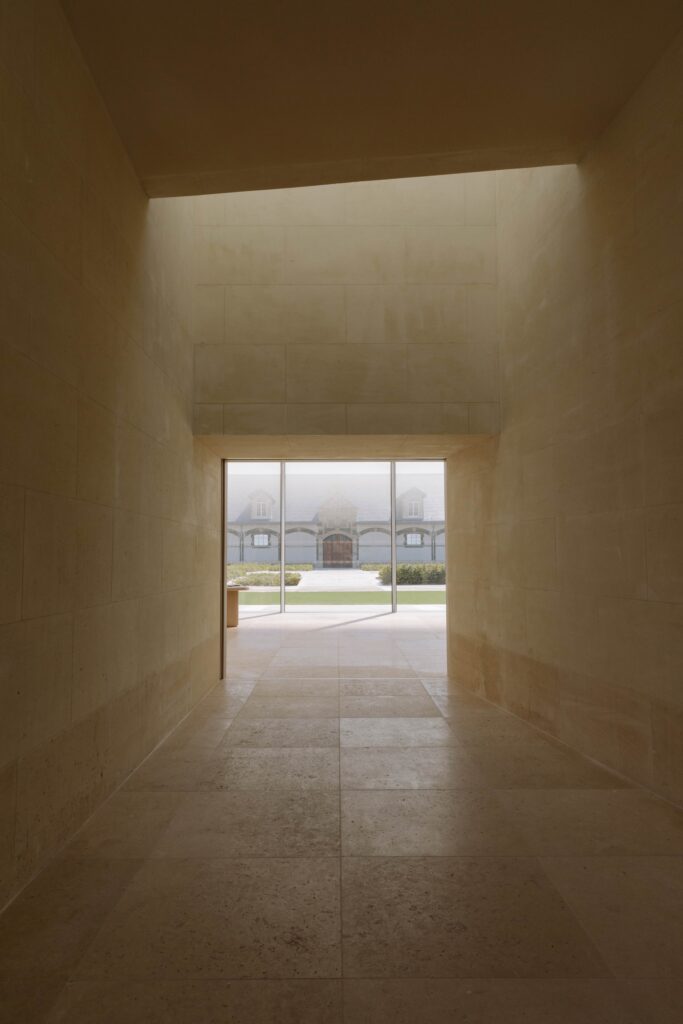
The flexible and efficient lighting system can be adapted to suit different needs and seasons, ensuring consistent lighting across the pavilion’s various spaces and functions. The choice of fixtures represents the final synthesis of the process, with particular attention to glare control, energy optimization, and the use of solutions that are sustainable from an energy perspective».
Attention to detail is central to your work, especially in retail. How did this approach translate into the Ruinart Pavilion, and what did it teach you about the role of light in different contexts?
«Constructing a “detail of light” has always been at the core of our projects and of the way we interpret lighting. Shadow, shielding of the sources, intensity, and direction of the light beam define our approach, from the single fixture to the construction of a complex lighting scene. In a more elaborate setting such as the Ruinart Pavilion, attention to detail is not just about aesthetic precision; it becomes a tool that can guide perception. Light reveals the qualities of materials, creates depth, accompanies the gaze, and suggests paths. Each element of the space was analysed in terms of its visual impact and how long visitors spent there. From observing the bottles and their colors to more intimate tasting moments, the space transforms, and light follows these variations. Engaging with this level of sensitivity in contexts beyond traditional retail has been an opportunity to explore a light capable of taking on increasingly flexible roles. Working in such complex environments pushes us to develop projects where the construction of atmosphere becomes central, shaping a broader emotional experience capable of evolving throughout the day».